

What happens after the hospital sends you home, when bathing, getting dressed, preparing meals, and moving around the house still take extra effort? Planning post-hip replacement surgery care at home can make the first days more manageable. Start by deciding who can help with everyday routines and which questions need answers from the healthcare team.
It’s natural to have questions about stairs, fall risks, and how much assistance a loved one may need. A steady home routine can ease uncertainty, while the surgeon’s instructions and prescribed rehabilitation guide medical decisions and recovery exercises. A caregiver can help with daily living, but that support does not replace the healthcare team or physical therapy.
This guide explains how to prepare the home before discharge, organize help with bathing, dressing, meals, mobility, and other routines, and build a practical plan around the surgical team’s instructions. You’ll also learn how non-medical surgery recovery and post-hospitalization care can support Orlando families as a loved one settles back in at home.
Key Takeaways
- Plan post-hip replacement surgery care at home before discharge by considering the home setup and the support available throughout the day.
- Identify which personal care and everyday tasks may need assistance, while leaving clinical care and rehabilitation to the healthcare team.
- Compare family help with scheduled or extended-hour caregiving based on the support needed, household availability, and caregiver rest.
- Use a pre-discharge checklist to make pathways, bathroom access, daily essentials, and a resting area more practical.
- Elite Caregivers United LLC provides non-medical personal care and surgery recovery support for Orlando families who need help with daily living.
Why Plan Post-Hip Replacement Surgery Care at Home Before Discharge?
Coming home after hip replacement can feel reassuring: familiar rooms, personal comforts, and loved ones nearby. It can also bring new demands as the patient adjusts to moving around and completing everyday routines. Planning before discharge helps families prepare both the physical space and the practical support that will be available at home.
A useful plan connects the clinician’s recovery instructions with the realities of daily life. Consider who can help with meals, getting dressed, bathing, or moving through the home, and whether that person will be available when needed. Recovery pace and precautions vary, so follow the surgical team’s guidance rather than assuming a particular timeline. For general background on the procedure, see this Hip Replacement Surgery Overview.
Home support can make daily tasks easier, but clinical decisions belong to the patient’s healthcare team. Family members and non-medical caregivers can help with routines and practical needs while the patient follows clinician instructions and prescribed rehabilitation. Keeping those roles clear helps everyone provide consistent support.
What may change during the first days at home?
Familiar tasks may temporarily take more effort, from standing up and walking between rooms to getting dressed or preparing food. The patient may use a walker, crutches, or another mobility aid as directed by the surgical team. Rather than guessing how quickly independence will return, arrange flexible help that can adapt to the patient’s needs and instructions.
Keep discharge paperwork in an easy-to-find place, and make sure everyone helping knows where it is. A shared written routine can help family members and caregivers follow the same guidance without relying on memory or guesswork.
What should families clarify before discharge?
Before leaving the hospital, identify who will be available for daily activities and when. Plan practical coverage for meals, personal routines, and moving around the home, including times when the usual family helper may be away or resting. A clear schedule can reveal gaps early and give the patient and helpers a more predictable start at home.
Ask the healthcare team to explain the instructions that apply specifically to the patient, including:
- Mobility guidance, use of a walker or other aid, and any movement precautions.
- Wound-care instructions and whom to contact with concerns about the surgical site.
- Medication directions, including how to keep track of the prescribed schedule.
- Follow-up appointments, rehabilitation plans, and whom to call with questions.
Write down the answers and keep contact information with the discharge papers. If a safety or care instruction remains unclear, raise it with the healthcare team before leaving. That conversation helps families plan everyday support without asking caregivers to interpret clinical directions.
What Does Home Care After Hip Replacement Involve?
In this guide, home care means practical, non-medical assistance with personal care and everyday activities while someone recovers at home. A caregiver may help the patient prepare for a routine, gather needed items, or move through the home in keeping with the patient’s instructions. This support can ease daily demands, but it is not skilled nursing, clinical procedures, or physical therapy.
Caregivers can assist with daily living, while clinical decisions and treatment remain with the patient’s healthcare team. Families can arrange help with tasks and routines, then rely on clinicians for medical instructions, treatment, and changes to the recovery plan. Caregivers should follow the patient-specific directions they receive and share concerns with the family or appropriate clinical team, rather than trying to assess or treat a medical issue themselves.
Which everyday activities may need extra help?
Temporary assistance can make personal routines less demanding while allowing the patient to retain as much choice and independence as possible. Depending on the person’s needs and instructions, support may include:
- Preparing bathing supplies or helping with dressing and toileting in a respectful, unhurried way.
- Making meals, placing commonly used items within reach, or helping keep the kitchen routine manageable.
- Offering practical help as the patient moves through familiar home spaces, while following directions for mobility aids and movement precautions.
- Handling errands or light household routines so the patient can focus on rest and the recovery plan.
The right approach is personal. Before helping, ask what the patient would like assistance with and explain what you’re going to do. Protect privacy during personal care, respect a request to do a task independently when that fits their instructions, and adapt support to their preferences, comfort, and cultural routines. Offering help rather than assuming it is wanted can preserve dignity.
Families looking for practical background on everyday activities and precautions can review Post-Hip Replacement Home Care Instructions. Use general resources for context, not as a substitute for the patient’s discharge guidance.
What remains under the healthcare team’s direction?
Medication decisions, wound treatment, exercise plans, and mobility restrictions must follow directions from qualified clinicians. A caregiver can help the patient follow the routine established by the family and clinical team, but should not change a dose, provide wound treatment, prescribe exercises, or decide that a restriction no longer applies.
Follow the patient’s discharge instructions rather than general online timelines, since guidance is individual. If a new or concerning change or symptom arises, promptly contact the appropriate clinical team. For Orlando families, surgery recovery home care support from Elite Caregivers United can complement the plan set by the patient’s clinicians with non-medical assistance for daily routines.
How Can Families Compare Home Support Options After Hip Replacement?
The right support arrangement depends on the patient’s everyday needs, the household’s availability, and guidance from the surgical team. Some families share assistance among relatives; others arrange scheduled non-medical caregiving or more extended-hour support. These approaches can also work together, with family members coordinating around planned caregiver hours. No arrangement guarantees safety or replaces clinical recommendations, so use the patient’s care plan as the foundation.
To compare options, map out the day instead of relying on a general estimate of how much help someone may need. Note when support could be useful with personal routines, meals, errands, or moving around the home. Then consider:
- Assistance needed: Which tasks does the patient want or need help with, and when do they usually arise?
- Household availability: Who can be present, and can they cover the times support is needed?
- Caregiver rest: Can family helpers take breaks, sleep, work, and manage other responsibilities?
- Continuity: How will helpers share the patient’s preferences and coordinate everyday routines?
This review may reveal gaps, such as a relative being available for meals but not for a morning routine. Families planning support around different recovery needs can also consult this home care after surgery guide.
When might family support be enough?
Family help may work well when trusted relatives or friends are available at the times assistance is needed and can share responsibilities without becoming overextended. Write down who will help with which routines, and identify backup coverage if someone’s work or family commitments change. Review the schedule with the patient, then revisit it if their needs or the household’s availability shifts.
When could professional non-medical support help?
Scheduled caregiving can provide planned help with personal care and daily routines. Extended-hour support may suit households that need more consistent assistance throughout the day. The right arrangement depends on the patient’s care plan, family availability, and personal preferences. Discuss the schedule together, including which tasks family members will handle and where additional help would be useful.
In Orlando, Elite Caregivers United LLC provides non-medical surgery recovery and post-hospitalization support through a professional CNA team, with hourly, daily, and 24-hour caregiving options. This assistance supports daily living while the patient follows clinician guidance and prescribed rehabilitation. Keep clinical questions with the healthcare team, and adjust the household schedule as practical needs become clearer.
How Should You Prepare the Home and Daily Routine for Recovery?
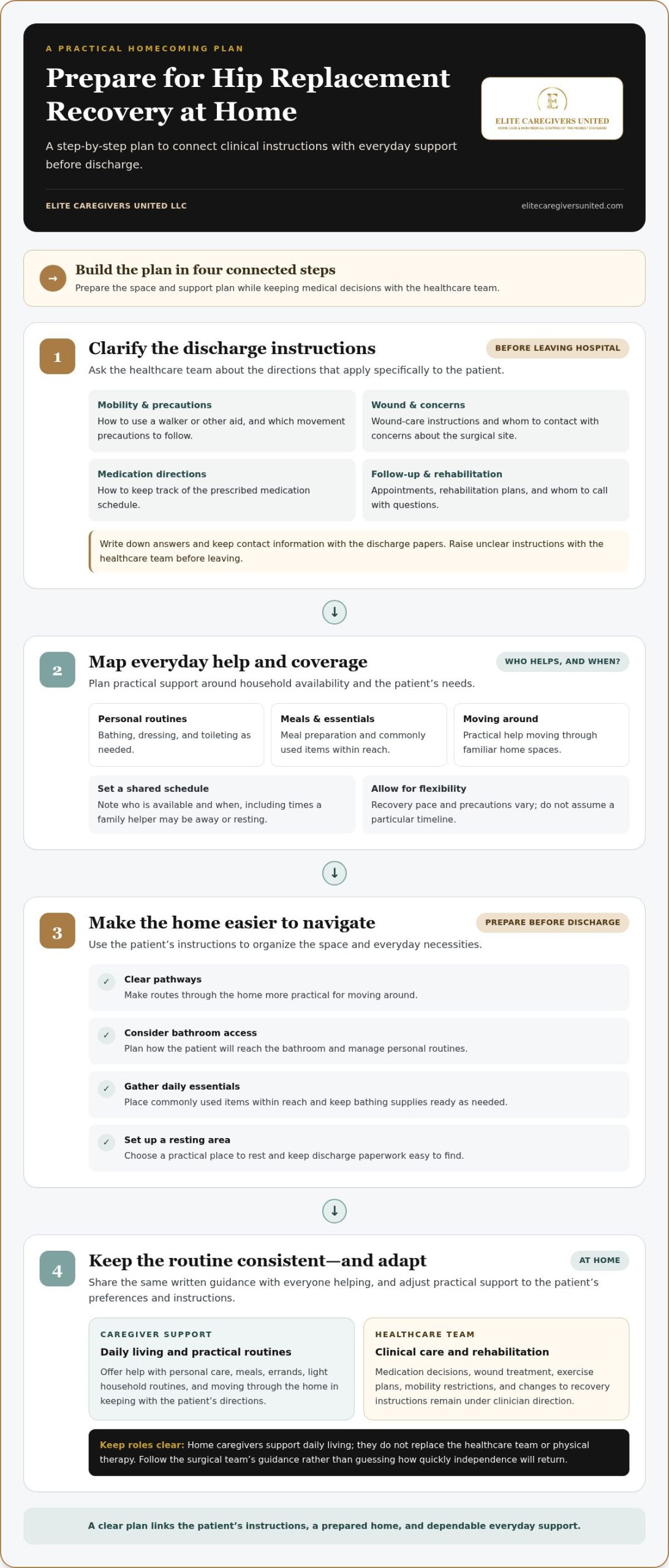
A well-prepared home connects the physical setup with the help available to use it. Follow the patient’s discharge guidance rather than making changes by guesswork, and prepare spaces and daily routines around those instructions. This four-step sequence gives family members and caregivers a shared starting point for post-hip replacement surgery care at home.
- Review the instructions. Read the surgical team’s guidance together, noting mobility restrictions, recommended equipment, and directions for getting around the home. Keep the instructions and important clinical contact details in one easy-to-find place so everyone can refer to the same information.
- Organize the spaces. Clear walking routes between the areas the patient will use, such as the resting area, bathroom, and kitchen. Remove loose items and other trip hazards. Place frequently used belongings nearby so the patient does not have to bend, reach, or move in a way that conflicts with their instructions.
- Assign support. Decide who will help with meals, personal routines, and moving around the home, and when that help will be available. Include household tasks that would otherwise fall to the patient. Make sure the plan reflects the patient’s preferences and the family’s actual availability.
- Check the plan. Walk through the routine with the patient and helpers before the return home. Confirm that planned routes are clear, everyday essentials are accessible, and everyone knows where to find instructions and contact information. Adjust the setup if it does not fit the guidance or the patient’s needs.
Which home setup changes are worth making first?
Start with the route the patient is expected to use most, especially between the resting area and bathroom. Move clutter, loose rugs, cords, and other obstacles out of the way, and keep necessary supplies within comfortable reach. Arrange a practical resting area that fits the household routine. Use only the mobility aid and equipment recommended by the surgical team, following their directions for use.
How can families organize the first days at home?
Build a simple schedule around meals, personal care, rest, and planned assistance, leaving room to adapt as the patient’s needs become clearer. Identify who will prepare food and who will be available for routines that require help, rather than assuming one person can cover every task. Share the schedule and written instructions with everyone involved. Coordinate household responsibilities so the patient and family helpers have opportunities to rest.
A practical setup works best when everyone providing support knows the plan and can follow it consistently. Orlando families arranging non-medical help with daily routines can learn about surgery recovery care support from Elite Caregivers United LLC.
How Elite Caregivers United LLC Supports Hip Replacement Recovery at Home in Orlando
After discharge, families may be balancing work, household responsibilities, and the practical needs of a loved one returning home. Elite Caregivers United LLC provides surgery recovery and post-hospitalization support in Orlando. Its professional CNA team offers non-medical personal care and assistance with daily living. Support can be arranged hourly, daily, or 24/7 to help build a routine around the patient’s instructions and preferences.
Caregiving complements the recovery plan; it does not replace the surgeon or other clinicians. Caregivers do not provide physical therapy or skilled nursing. The patient’s healthcare team remains responsible for clinical direction, including treatment and rehabilitation guidance. Clear communication about household routines helps caregivers provide appropriate everyday support while the patient follows those instructions.
What can a caregiver help with at home?
Support can be shaped around the patient’s daily routines and delivered with respect for privacy, consent, and independence. A caregiver may assist with personal care, dressing, meals, or other everyday activities that feel more demanding during recovery. The patient’s preferences matter. Families can explain how their loved one likes routines handled and which tasks they prefer to do independently.
Practical help can also give family members more room to coordinate other responsibilities. Assistance with a daily routine may allow relatives to focus on household tasks or take time to rest, while the patient continues following the clinical plan. Families and caregivers can communicate routine-related observations, while medical concerns should go to the appropriate clinical team.
How can families begin planning Orlando home support?
Before arranging support, note the routines the patient may need help with, the times family members can be present, and the household tasks that still need attention. Include the patient in the conversation so the plan reflects their comfort and preferences. This outline gives the family a practical starting point for deciding what type of assistance and schedule may fit.
Elite Caregivers United LLC provides support suited to family circumstances, from scheduled help to more extended coverage. Families exploring non-medical home care in Orlando can consider how daily-living support fits into the home routine. A clear outline of tasks and availability helps organize assistance while leaving clinical decisions with the healthcare team.
Orlando families can learn about support from Elite Caregivers United for everyday recovery routines.
Make the Next Step a Thoughtful One
A recovery plan does not need to answer every question in advance. It should give the patient and family a practical place to begin, with room to adjust as routines and needs become clearer. Keep the patient involved in decisions, and bring uncertainties about symptoms, precautions, or changing abilities to the clinical team. Respectful check-ins can help the household adapt without making the patient feel that every choice is being made for them.
As you consider post-hip replacement surgery care at home, focus on what would make the coming days more manageable for your loved one and those supporting them. A conversation about personalized assistance can help your family plan a routine that reflects its needs.
Connect with Elite Caregivers United to discuss home recovery support in Orlando and take the next step toward a plan that fits your family. Thoughtful preparation and practical support can help your loved one approach recovery with greater comfort and confidence.
Frequently Asked Questions
How long does someone need help at home after hip replacement surgery?
It depends on the patient’s mobility, daily needs, home setup, and clinical instructions. The first two weeks are often when people need the most help, but that is not a fixed schedule for everyone. Ask the surgical team what support to plan for at discharge, then reassess as routines change. A family can arrange help for specific tasks or periods and adjust the schedule as the patient’s needs become clearer.
Can you stay alone after hip replacement surgery?
Some people may be able to spend time alone, but whether that is appropriate depends on the individual and the discharge plan. Ask the healthcare team what level of supervision or assistance is recommended before making arrangements. Consider practical questions too: can the person reach a phone, get food and water, and follow mobility instructions without help? If needs change or the patient feels uncertain, revisit the plan with the care team.
What should I prepare at home before hip replacement surgery?
Before surgery, make the main routes through the home easier to use and set up a resting place with a phone, water, and frequently used items nearby. Arrange meals or simple meal options to reduce cooking demands during the initial transition home. Keep discharge paperwork and contact details together. Confirm with the clinical team which mobility aid or equipment the patient should use, rather than buying items based on general advice.
Which daily activities may require help after hip replacement surgery?
Getting dressed, bathing, using the toilet, preparing food, and moving between rooms may take extra effort. Someone might also appreciate help carrying laundry, picking up groceries, or getting to an appointment. Needs vary, so ask the patient which tasks feel difficult instead of assuming they want help with everything. Agree on a discreet way to offer assistance, preserving privacy and independence while making support available when requested.
Can a home caregiver provide physical therapy after hip replacement surgery?
No. A non-medical home caregiver does not provide physical therapy or replace a prescribed rehabilitation plan. The patient’s healthcare team directs exercises, movement restrictions, and therapy arrangements. A caregiver may offer practical support around the routine, such as helping the patient prepare for a planned activity, while following the instructions provided. If an exercise or movement direction is unclear, contact the clinician or therapist responsible for the plan.
What warning signs after hip replacement surgery should prompt a call to the healthcare team?
Follow the discharge paperwork for patient-specific warning signs and contact instructions. Call the appropriate clinical team promptly about concerning changes, such as a fever, increasing redness or drainage around the incision, or a sudden worsening of pain. New calf swelling also warrants prompt medical advice. For chest pain, difficulty breathing, or another emergency, seek emergency care immediately rather than waiting for a routine callback.
How can families arrange post-hip replacement care at home in Orlando?
Start by listing the routines the patient may need help with, the hours family members can cover, and where additional assistance would be useful. Elite Caregivers United provides surgery recovery and post-hospitalization support in Orlando through a professional CNA team, with non-medical personal care available hourly, daily, or 24/7. Families can discuss an arrangement that fits their needs while keeping clinical guidance with the healthcare team.