

After discharge, your loved one may be home, tired, and still need help with everyday routines. A caregiver for post-cardiac surgery recovery can assist with daily life while the surgeon and clinical team direct medical care.
It’s natural to wonder whether help is needed with meals, bathing, errands, or keeping the day manageable while family responsibilities continue. Non-medical home care can provide practical assistance, but it doesn’t replace skilled nursing, clinical procedures, physical therapy, or the plan provided by the medical team.
This guide explains what post-hospitalization support at home in Orlando can include, how it fits alongside clinical care, and how to identify useful help for your family. You’ll find practical ways to organize daily-living assistance, medication reminders, meal preparation, light housekeeping, transportation, and family communication. A personalized home assessment can help shape support around your loved one’s routines and your family’s availability.
Key Takeaways
- A caregiver for post-cardiac surgery recovery can help with everyday routines at home while the clinical team directs medical care.
- Understand the difference between clinical responsibilities and non-medical support, including medication reminders versus medication management.
- Use a needs inventory to identify where help with daily activities, meals, companionship, or family schedules would be useful.
- Prepare for the transition home by gathering care instructions, mapping daily tasks, and deciding how family members will stay informed.
- Elite Caregivers United’s Surgery Recovery & Post-Hospitalization Care can provide practical home support shaped around a home assessment.
Home Support for Post-Cardiac Surgery Recovery
Coming home after heart surgery can bring relief, along with questions about how ordinary routines will work. A caregiver for post-cardiac surgery recovery provides practical, non-medical help at home, such as personal care, meal preparation, medication reminders, and companionship. This support can make daily life easier to manage without replacing the surgeon’s discharge instructions or clinical care.
Recovery and daily support needs vary from person to person. A caregiver can offer a reassuring presence and help with agreed-upon tasks, while family members stay involved in ways that work for them. Start by identifying the parts of the day that feel most difficult, such as getting dressed, preparing meals, or keeping household routines on track.
What may change when a loved one returns home
Tasks that once felt routine may take more planning after a hospital stay. Your loved one might appreciate help setting out clothing, preparing a meal, or organizing the day around rest and follow-up appointments. Depending on the person’s needs and discharge instructions, bathing and dressing may also require assistance.
Moving around the home can call for patience, too. A caregiver can help with everyday routines and provide a steady presence, following the family’s directions and the care plan. Use the discharge instructions for individual precautions about activity or movement. If an instruction is unclear, ask the clinical team rather than relying on a caregiver to interpret it.
Heart recovery may also involve a clinical program such as cardiac rehabilitation. The overview of Cardiac Rehabilitation after surgery describes this as distinct from ordinary help at home. The clinical team can explain whether it belongs in your loved one’s plan.
What a non-medical caregiver does, and does not do
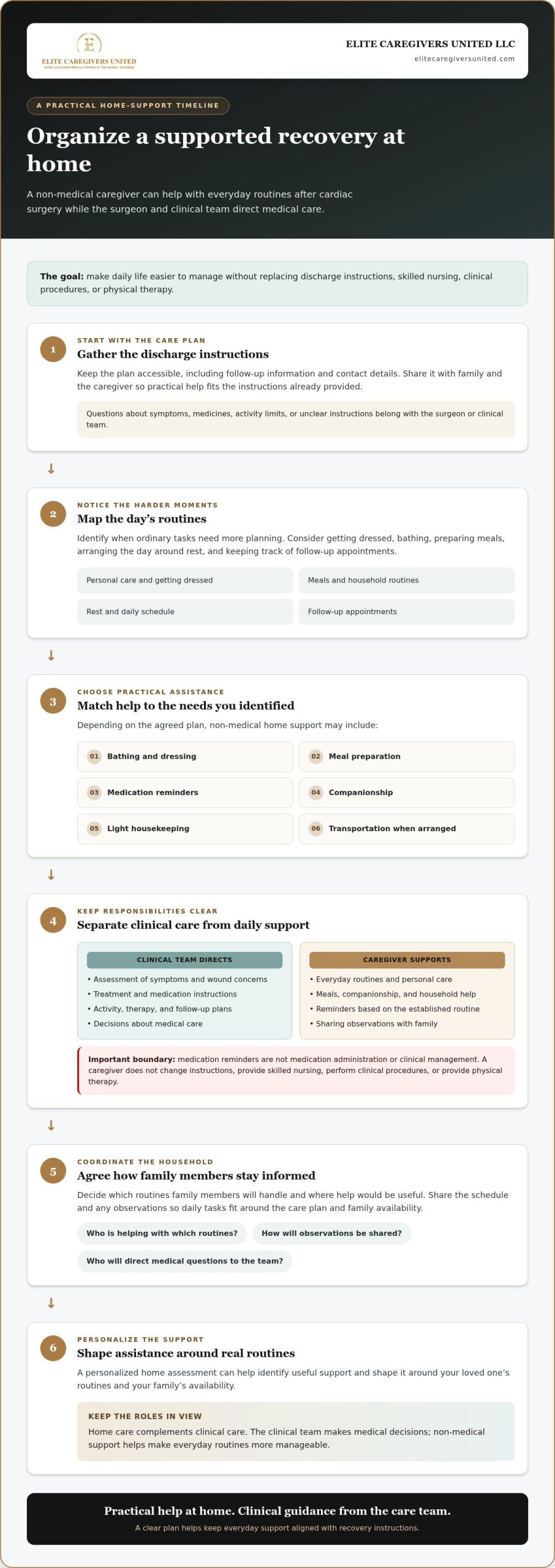
Home support can include help with bathing and dressing, companionship, meal preparation, light housekeeping, transportation, and medication reminders. These practical tasks can help organize the day while supporting the patient’s dignity and participation in everyday routines. Medication reminders are reminders, not medication administration or clinical management.
Personal-care support helps with daily living; clinical treatment assesses, treats, and manages medical needs. A non-medical caregiver doesn’t provide skilled nursing, clinical procedures, or physical therapy. They don’t change treatment instructions or decide whether a symptom needs medical attention. Questions about symptoms, medicines, activity limits, or changes to the recovery plan belong with the surgeon or clinical team. Keeping responsibilities clear helps families coordinate home assistance without confusing it with medical care.
Before support begins, share the discharge plan and explain which routines feel difficult. This helps align practical assistance with the instructions already provided and gives everyone a clear starting point for the transition home.
Integrating Home Care with Clinical Recovery Teams
Clear roles help everyone support recovery without confusing practical assistance with medical care. The surgeon and clinical team set treatment instructions, assess health concerns, and guide follow-up. A caregiver for post-cardiac surgery recovery can make the day-to-day routine easier to manage while following the clinicians’ plan.
| Clinical team responsibilities | Non-medical home support |
|---|---|
| Assess symptoms, address wound concerns, and answer treatment questions | Share observations with the family and direct clinical concerns to the care team |
| Prescribe or change medication instructions and provide clinical management | Offer medication reminders based on the established routine |
| Recommend activity, therapy, and follow-up plans | Assist with daily routines and transportation to appointments when arranged |
| Determine whether medical care or treatment is needed | Provide personal care, meal preparation, companionship, and household help |
Home caregivers complement clinical care, but they don’t replace the professionals who assess, treat, and direct recovery. Clinicians make medical decisions; home support helps with everyday routines around the care plan. A caregiver can help the household stay organized, but shouldn’t interpret or change medical instructions.
Which questions belong with the surgeon or clinical team?
Contact the clinical team about symptoms, medication changes, wound concerns, or uncertainty about treatment and activity instructions. Keep the discharge plan accessible so family members can find contact details and follow-up information. If a concern seems urgent, follow the plan’s instructions to reach the clinical team or emergency services as appropriate. A caregiver can help communicate what the family has noticed, but shouldn’t decide what a symptom means.
Which daily tasks can a caregiver help with?
Practical support can ease pressure on the patient and family without crossing into clinical care. Depending on the agreed care plan, a caregiver may assist with bathing and dressing, prepare meals, provide companionship, and help maintain everyday routines in line with the discharge instructions. Share the schedule you’ve received so reminders and daily tasks fit around it.
Medication support means reminders only. A caregiver doesn’t prescribe, dispense, administer, or make clinical decisions about medication. If instructions change or a dose is missed, direct the question to the appropriate clinician or pharmacist rather than asking a caregiver to interpret the situation.
Transportation to follow-up appointments may also be part of practical support. When arranged, a caregiver can help keep appointment details organized and share routine observations with the family. Clinical coordination and treatment decisions remain with the care team.
For help with everyday needs while medical decisions remain with clinicians, personalized post-hospitalization support can be shaped around your home routines and responsibilities.
Matching Caregiver Support to Your Family’s Needs
You don’t have to predict exactly how recovery will unfold before arranging practical help. Start by listing the everyday tasks that feel difficult, the times relatives can be present, and the routines that would benefit from an extra pair of hands. This gives a home assessment a useful starting point without trying to set a medical schedule or forecast recovery milestones.
Build a practical list of daily support needs
Before discussing support, note what a typical day looks like and where assistance could help. Be specific: “help getting dressed before breakfast” gives a clearer picture than “help in the morning.” Needs may change, so describe current challenges and be ready to discuss what is working as the family settles into a routine.
- Personal care: Note whether bathing, dressing, grooming, or other daily activities currently require another person’s assistance.
- Meals and home routines: List meal preparation, housekeeping, and everyday tasks that are hard to manage alongside family responsibilities.
- Companionship: Consider whether the patient would value conversation or a reassuring presence during parts of the day.
- Transportation: Record appointments or errands where help getting there would be useful.
- Family availability: Describe when relatives are usually home, their work or caregiving commitments, and how they prefer to share updates.
This inventory helps distinguish daily support needs from tasks family members can comfortably manage. It also gives everyone a concrete list to discuss when deciding how home assistance can fit into the household’s routine.
Understand how a personalized care plan takes shape
Elite Caregivers United creates personalized care plans after a home assessment. Use the assessment to explain your loved one’s usual routines, the tasks that now feel challenging, and the practical support that would ease pressure at home. For example, describe when meals are usually prepared, which personal-care tasks need assistance, and who in the family should receive updates.
Sharing discharge instructions can help clarify which routines the family is following, but the caregiver doesn’t decide clinical needs, interpret medical directions, or set recovery milestones. Those responsibilities remain with the clinical team. The assessment focuses on matching non-medical support to daily-life priorities, with the opportunity to discuss what is helpful as circumstances change.
For more ideas about planning practical support at home, explore this guide to home care after surgery. A caregiver for post-cardiac surgery recovery should fit the family’s actual routines and support needs, rather than impose a one-size-fits-all schedule.
Prepare the home and family for a supported recovery
A little preparation can make the return home feel more organized for the patient and family. Focus on four practical steps: gather the instructions, map daily tasks, agree on communication, and identify where extra help would be useful. Keep individual safety precautions and medical decisions with the clinical team.
- Gather discharge instructions and follow-up details. Keep the clinician-provided plan, appointment information, and contact instructions somewhere family members can find them. If several relatives are helping, make sure everyone knows where the current information is kept. Direct questions about symptoms, treatment, or precautions to the clinical team rather than filling gaps with assumptions.
- Map the daily routine. Write down ordinary tasks such as getting dressed, preparing meals, tidying shared spaces, and keeping track of appointments. Note where the patient may appreciate assistance and what family members can already manage. This isn’t a medical timetable; it’s a practical picture of the support needed at home.
- Agree on communication. Decide who will receive updates, how family members prefer to communicate, and where to record routine information. Elite Caregivers United provides family communication by call or text, with 24/7 availability and same-day scheduling or emergency support. An agreed point of contact can help relatives stay informed without asking the patient to repeat updates.
- Assess the home and available support. Consider how easily your loved one can move through the home and access commonly used items and spaces. Follow the clinical team’s guidance for individual precautions. Then compare family availability with the daily task list to identify where personal care, meals, housekeeping, or transportation assistance could help.
Coordination matters, too. If follow-up appointments involve therapists or specialists, keep dates and transportation details together and share relevant arrangements with the caregiver. Clinical providers remain responsible for therapy and medical decisions; practical coordination helps the household keep track of the plan without confusing home assistance with treatment.
A caregiver for post-cardiac surgery recovery can help with agreed daily routines while family members and clinicians retain their respective roles. For more guidance on planning a hospital-to-home transition, consider how household routines and support can be organized around your loved one’s needs.
If your family is ready to discuss practical support at home, connect with Elite Caregivers United to talk through your loved one’s daily routine and care needs.
Arrange post-cardiac surgery recovery care with Elite Caregivers United
Returning home after heart surgery can leave families balancing new routines with work, household responsibilities, and concern for a loved one. Elite Caregivers United’s Surgery Recovery & Post-Hospitalization Care provides non-medical support at home, helping with everyday needs while the surgeon and clinical team guide medical recovery. The aim is practical assistance shaped around the person and family, not a replacement for clinical care.
Elite Caregivers United’s CNA team can provide personal care and daily-living assistance, along with meal preparation, housekeeping, and medication reminders. Reminders support an established routine; they aren’t medication administration or clinical management. Families can also discuss transportation and communication needs to make everyday responsibilities easier to coordinate during the transition home.
What families can discuss during a home assessment
A home assessment gives families an opportunity to describe daily life and where support would be most useful. Share personal-care needs, meal routines, household tasks, family availability, and practical challenges that are making the day harder to manage. A clear picture of your household’s routine makes it easier to discuss support that fits.
Elite Caregivers United creates personalized care plans after a home assessment. Families can discuss whether hourly assistance or 24/7 care would better match their needs. Individual medical instructions and recovery decisions remain with the clinical team.
Pricing is customized, so contact Elite Caregivers United for an estimate. The estimate can reflect the assistance and care arrangement your family is considering, rather than relying on a generic rate.
How to take the next step in Orlando
To begin arranging support, use the website to schedule a home assessment and discuss your loved one’s routines, personal-care needs, and household priorities. Elite Caregivers United offers 24/7 availability, same-day scheduling, and emergency support. Sharing the discharge plan and your family’s practical concerns can help make the assessment conversation clear and useful.
If you’re looking for a caregiver for post-cardiac surgery recovery, compassionate daily support can help your family organize home routines while medical guidance remains with the clinical team. Take the next step and schedule a home assessment with Elite Caregivers United.
Take the Next Step Toward a Supported Recovery
You don’t need every detail figured out before arranging help. Start with a conversation about what would make home life more manageable, and bring your questions and priorities to the assessment. A clear starting point can turn uncertainty into a practical plan that respects your loved one’s preferences and keeps medical decisions with the clinical team.
Choosing a caregiver for post-cardiac surgery recovery can make room for family members to be present without carrying every household responsibility alone. After a home assessment, Elite Caregivers United can shape support around your family’s needs with its CNA team. The agency offers 24/7 availability, same-day scheduling, and emergency support. Pricing is customized, so contact the team for an estimate.
Schedule a home assessment and take a thoughtful first step toward compassionate support at home. Your family can move forward one practical decision at a time.
Frequently Asked Questions
How can I tell if my loved one needs in-home care after cardiac surgery?
A loved one may benefit from in-home support if bathing, dressing, eating, or walking requires another person’s help, or if companionship would make time at home feel less isolating. A caregiver for post-cardiac surgery recovery can assist with practical routines, but can’t assess medical progress. Follow the discharge plan, discuss daily-living needs during a home assessment, and bring symptoms or other medical concerns to the clinical team.
How does Elite Caregivers United care for someone recovering at home?
Elite Caregivers United provides personalized, non-medical home support based on a home assessment and the family’s practical priorities. Depending on the plan, help may include personal care, daily activities, meal preparation, housekeeping, transportation, medication reminders, and family communication. For example, describe which household tasks are difficult to manage and discuss appropriate assistance. Caregivers don’t replace the surgeon or provide skilled nursing or physical therapy.
Does Elite Caregivers United provide skilled nursing at home in Orlando?
Elite Caregivers United provides non-medical home care, not skilled nursing, clinical procedures, or physical therapy. The team can help with daily activities and medication reminders, while the surgeon and clinical team direct medical care. Keep the discharge instructions available for routine questions, and contact the appropriate clinician about treatment, medication changes, wound concerns, or symptoms. This distinction helps families know where to turn for practical assistance and where to seek medical guidance.
Which Orlando-area communities does Elite Caregivers United serve?
Elite Caregivers United serves Altamonte Springs, Apopka, Celebration, Dr. Phillips, Hunters Creek, Lake Buena Vista, Lake Mary, Maitland, Ocoee, Orlando, Oviedo, Wekiva Springs, Windermere, Winter Garden, Winter Park, Winter Springs, Clermont, Kissimmee. Families in these communities can arrange a home assessment to discuss daily routines, personal-care assistance, meal or household support, and family communication preferences.
How much does post-cardiac surgery home care cost?
Pricing is customized to the person’s needs and the care arrangement requested, so there isn’t one price that applies to every family. Contact Elite Caregivers United for an estimate after describing the support you’re considering, such as personal care, meals, or help with household routines. A home assessment helps shape a personalized care plan.
How quickly can post-hospitalization care be arranged?
Elite Caregivers United offers 24/7 availability, same-day scheduling, and emergency support. Use the website’s contact or home-assessment pathway to discuss the practical help needed and your preferred timing. For urgent medical concerns, follow the discharge plan and contact the clinical team or emergency services as appropriate.