

What if round-the-clock support could ease safety worries without taking away the comfort of home? For families concerned about meals, personal care, or getting through the night, 24/7 home care can provide steady, non-medical help with daily routines. It is not a substitute for skilled nursing, but it can support an older adult’s comfort and dignity while giving family caregivers room to rest.
It can be difficult to know when occasional help is no longer enough or what continuous care includes. This guide explains signs that additional support may help, the daily-living assistance and respite care caregivers can provide, and how non-medical support differs from skilled nursing.
For Orlando families, the right plan starts with the person, not a preset schedule. Elite Caregivers United offers personalized home care plans following an assessment, along with 24/7 availability, same-day scheduling, and emergency support. Learn what to consider when arranging care and how a home assessment can shape support around your loved one’s needs and your family’s circumstances.
Key Takeaways
- Notice when bathing, dressing, meals, mobility, memory, or companionship needs are becoming harder to manage without help.
- Understand how 24/7 home care provides personalized, non-medical assistance at home and how that differs from skilled nursing.
- Compare occasional help, respite, and continuous support by looking at daily routines, companionship needs, and family availability.
- Prepare for a home assessment by noting your loved one’s challenges, preferences, routines, and family communication needs.
- Learn how Elite Caregivers United’s CNA team and assessment-based care plans can support daily living in Orlando.
When Can 24/7 Home Care Help an Older Adult Stay Supported at Home?
Support needs can shift gradually or become more noticeable after a change in health or routine. If you’re worried that a loved one is struggling with everyday tasks, asking about help is a thoughtful step, not a loss of independence. 24/7 home care is ongoing, non-medical assistance provided in a person’s home throughout the day and night. It focuses on daily living and companionship rather than clinical treatment. For a general overview of the purpose and scope of home care, consider how different forms of assistance can respond to individual needs.
Look for recurring difficulties rather than treating one challenging day as the whole picture. Note which tasks are becoming harder, when they happen, and what kind of assistance your loved one accepts or prefers. Signs to pay attention to include:
- Bathing or dressing takes much longer, feels difficult, or is being skipped.
- Preparing meals, eating regularly, or carrying food and drinks has become challenging.
- Walking around the home or moving between rooms requires more help than before.
- Memory changes make familiar routines harder to follow, or the person seems unsettled when alone.
- There are fewer conversations or social moments, and your loved one expresses loneliness or a desire for company.
Which changes in daily life may signal a need for more support?
Consider how each difficulty affects the day. Trouble getting dressed might mean your loved one would appreciate help choosing clothes or hands-on personal care. Challenges around meals may call for help with preparation or companionship at mealtime. If walking around the home is becoming difficult, note which movements or routines require support. Memory changes and reduced social contact matter, too. Talk calmly with your loved one about preferences, routines, and worries, and listen before suggesting changes.
How can continuous support benefit families as well as older adults?
Help with daily activities can make it easier for an older adult to maintain familiar routines and personal comfort at home. Support can be shaped around their preferences, helping preserve dignity during tasks that feel private or difficult. Companionship can bring conversation and a reassuring presence into the day. These are practical forms of support, not promises of a particular health or safety outcome.
For family caregivers, sharing ongoing responsibilities can create time to work, rest, attend appointments, or care for other family members. Respite care can provide a planned break, while more continuous assistance may suit needs that arise throughout the day and night. Consider the pattern: Is help needed at predictable times, or are several routines and overnight hours becoming difficult to manage? Writing down examples can help family members discuss needs clearly and identify support that feels appropriate to the older adult.
What 24/7 Home Care Includes, and How It Differs from Skilled Nursing
Families comparing care options may encounter similar language for very different kinds of support. Non-medical home care supports daily living, while skilled clinical care is a separate service category. Understanding the difference helps you describe what your loved one needs and identify the kind of assistance that fits.
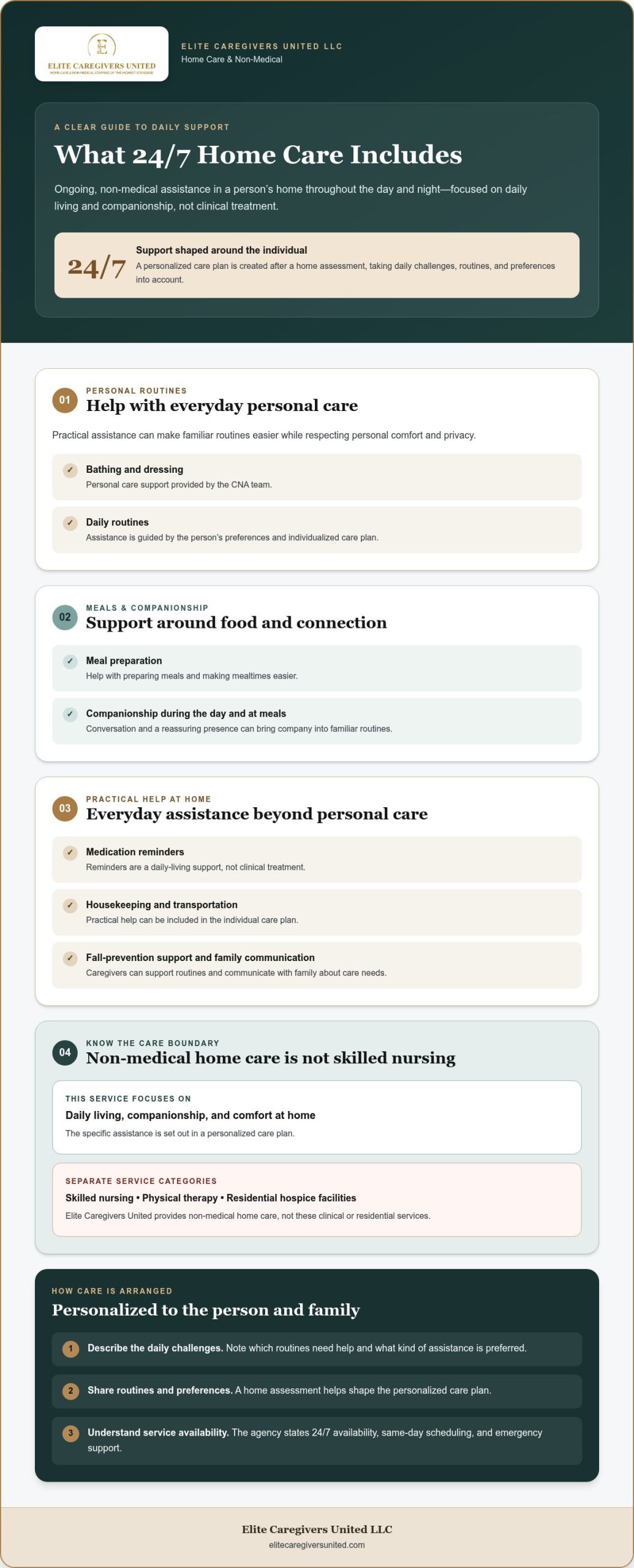
At Elite Caregivers United, 24/7 home care means personalized, non-medical assistance at home, with 24/7 availability, same-day scheduling, and emergency support. A professional CNA team provides personal care and support shaped around the individual. For broader industry context on home care agencies and their role, the Home Care Association of America offers information and resources for the home care sector.
What kinds of daily assistance can home care provide?
Support can address practical routines while respecting a person’s preferences and privacy. Based on the personalized care plan, assistance may include:
- Personal care with bathing and dressing, provided by the CNA team.
- Meal preparation and companionship during the day.
- Medication reminders, housekeeping, and transportation.
- Fall-prevention support and communication with family about care needs.
These examples describe help with daily living, not clinical treatment. A caregiver can assist with a routine or provide companionship, while the care plan sets out the support arranged for that individual. Elite Caregivers United creates personalized care plans after a home assessment, giving families a chance to explain daily challenges, routines, and preferences.
What should families understand about non-medical care?
Non-medical support focuses on everyday activities and comfort at home. Skilled nursing and clinical procedures are separate from this type of care. Elite Caregivers United provides non-medical home care, not skilled nursing, physical therapy, or residential hospice facilities. Describing the person’s needs during the assessment helps clarify the daily assistance the care plan can address.
For example, a family might explain that getting dressed takes longer, meals are difficult to prepare, or a loved one feels more comfortable with company during familiar routines. Those details help distinguish practical assistance from a need for clinical services. If the person needs skilled treatment, keep that distinction in mind when planning support. Clear, specific examples make the conversation more useful than a general request for “more help.”
Before an assessment, note which tasks are challenging, what help feels welcome, and which routines the person wants to preserve. These details give the conversation a calm starting point and help shape support around the individual rather than assumptions. To explore personalized non-medical home care, start by outlining the daily assistance your loved one needs.
How to Decide Whether 24/7 Home Care Fits Your Family’s Situation
Choosing a level of support is less about applying a fixed formula and more about noticing how your loved one’s needs fit into everyday life. Consider which activities are difficult, when companionship is welcome, whether family caregivers can reliably help, and whether routines have changed. A home assessment can turn those observations into a personalized care plan. You do not need to decide every detail in advance.
Occasional help
Daily activities: Most routines remain manageable, though help with particular tasks may be useful.
Companionship: The person may enjoy company at certain times.
Family availability: Relatives can usually provide support, with occasional gaps.
Routine changes: Needs are limited or arise around specific activities.
Respite or personal care
Daily activities: Assistance with personal care or other everyday tasks would be helpful.
Companionship: Regular interaction may add comfort to familiar routines.
Family availability: Caregivers need relief or time for other responsibilities.
Routine changes: Some tasks have become harder, or family support needs a sustainable pause.
24-Hour Home Care
Daily activities: Assistance may be needed across multiple parts of the day.
Companionship: Ongoing company or support is important to the person’s routine.
Family availability: Family members are concerned about meeting needs consistently.
Routine changes: Needs or concerns recur rather than being limited to one task.
Use the comparison as a starting point, not a strict decision rule. Someone may need help with bathing but remain comfortable with meals and other routines. Another person may need companionship and assistance across several activities. The appropriate support depends on the individual’s preferences and assessed needs.
When might respite or personal care be a more suitable starting point?
Respite care can give family caregivers time to attend to responsibilities or rest while a loved one receives support. Personal care may be a helpful starting point when assistance with everyday activities is the primary need. During an assessment, describe which tasks are challenging and what help the person welcomes. That gives the care plan a practical foundation based on assessed needs rather than an assumed schedule.
When might families explore 24-Hour Home Care?
Families may explore more continuous support when help is needed across frequent daily activities or ongoing concerns are becoming difficult to manage together. A home assessment can clarify which routines, personal care needs, and companionship preferences should guide the plan. To learn more, read the guide to 24-hour home care in Orlando.
Before an assessment, jot down recent examples: which tasks required help, when routines felt disrupted, and what the older adult said would make support more comfortable. Include your family’s concerns, too. This shared picture can make it easier to discuss whether occasional assistance, respite, personal care, or 24-Hour Home Care best fits the household’s current situation.
How Orlando Families Can Prepare for a 24/7 Home Care Assessment
An assessment is a chance to turn general worries into a clearer picture of what support could look like at home. You do not need to have every answer ready. A few thoughtful notes about daily life, personal preferences, and family communication can make the conversation more useful for everyone, especially the older adult receiving care.
What information can families gather before the home assessment?
Before the visit, write down specific examples of where help may be welcome. Include what the person finds comfortable, what they prefer to do independently, and how the family hopes to stay informed. A short list can help keep important details from getting lost during a sensitive conversation.
- Note daily-living tasks. Record activities where assistance may help, such as bathing, dressing, walking around the home, or preparing meals. Add when the difficulty tends to occur and what kind of help your loved one welcomes.
- Describe routines and preferences. Consider usual wake-up and meal patterns, favorite activities, privacy preferences, and household habits. These details show what a familiar day looks like and which parts the person hopes to maintain.
- Include companionship needs. Note when your loved one enjoys conversation or company, and whether there are times they feel isolated or uneasy alone. Share interests that could make interaction feel natural and personal.
- Agree on family communication priorities. Discuss who should receive updates and what information matters to the family. Bring questions about how care needs are considered and how preferences can be reflected in a personalized plan.
Whenever possible, include the older adult in preparing these notes. Ask open questions, such as “Which part of the day feels hardest?” or “What would you like help with first?” Their answers can reveal what matters most and help the family approach care planning with respect rather than making assumptions on their behalf.
How can families understand service arrangements and pricing?
Elite Caregivers United creates personalized care plans after a home assessment, using the person’s needs and preferences to guide the discussion. The company offers 24/7 availability, same-day scheduling, and emergency support. Pricing is customized, so contact Elite Caregivers United for an estimate based on the assessed care needs and proposed arrangement.
During the conversation, describe both immediate concerns and the routines that matter over time. For example, mention whether support is mainly needed with personal care, companionship, or several parts of daily life, and explain any family communication preferences. Specific details keep the assessment focused on the individual rather than a generic schedule. Preparing these points can also help family members align on questions before discussing 24/7 home care.
When you’re ready to discuss your notes and your loved one’s needs, request a personalized home care assessment with Elite Caregivers United.
How Elite Caregivers United Provides 24/7 Home Care in Orlando
For families in Orlando, arranging home care begins with understanding the person behind the daily support needs. Elite Caregivers United LLC provides personalized, non-medical home care, with care plans shaped after a home assessment. Its CNA team provides personal care and support for daily living, helping families plan assistance around familiar routines and individual preferences.
Elite Caregivers United offers 24/7 availability, same-day scheduling, and emergency support. Families can discuss the older adult’s routines, preferences, and areas where support would help during the assessment.
Which services may support a loved one at home?
Families can explore services based on the assistance their loved one needs and the responsibilities caregivers are managing. Relevant options include:
- Personal Care Services / CNA Team for personal care and assistance with everyday activities.
- Respite Care to support families who need relief from caregiving responsibilities.
- 24-Hour Home Care for personalized, non-medical support at home.
Specialized support is also available for Alzheimer’s and dementia, Parkinson’s disease, stroke, cancer, and recovery. Explain what daily routines look like, where assistance is needed, and which preferences should guide care. The home assessment helps inform a personalized plan instead of assuming every person needs the same approach.
How can Orlando families take the next step?
To prepare, gather a few notes about daily-living challenges, routines, and the kind of help your loved one would welcome. During a home assessment, share those observations and discuss priorities with Elite Caregivers United. The company’s service areas are Altamonte Springs, Apopka, Celebration, Dr. Phillips, Hunters Creek, Lake Buena Vista, Lake Mary, Maitland, Ocoee, Orlando, Oviedo, Wekiva Springs, Windermere, Winter Garden, Winter Park, Winter Springs, Clermont, Kissimmee.
Families can also read more about non-medical home care in Orlando as they consider what support may fit their situation. Testimonials offer individual family perspectives on care experiences, and each person’s needs and experience are unique. Visit the Elite Caregivers United website to schedule a home assessment and begin discussing a personalized plan for your loved one.
Take the First Step Toward Support That Fits
Deciding whether 24/7 home care feels right does not require your family to have every detail settled. Start with a calm conversation about what matters most to your loved one, what feels difficult right now, and what kind of support would feel comfortable. Beginning with one concern can make a big decision feel more manageable.
A home assessment gives families a place to share those priorities and begin shaping a personalized plan. Elite Caregivers United’s CNA team provides personal care, and family testimonials offer individual perspectives that highlight compassion and reliability. Every family’s experience is unique, but hearing those perspectives may help you feel more prepared to discuss care.
Before you reach out, consider who should take part in the discussion and what your loved one hopes to maintain in daily life. Their voice belongs at the center of the next step. Schedule a home assessment with Elite Caregivers United to start exploring support together.
Frequently Asked Questions
How can I tell if my loved one needs in-home care?
Notice whether everyday tasks are becoming harder to complete consistently or whether your loved one is withdrawing from activities they enjoy. Keep a brief record of specific changes, such as an unopened meal, difficulty choosing clothes, or repeated requests for company. Share those observations gently and ask what kind of help would feel welcome. A conversation with family can help clarify concerns and next steps.
How does Elite Caregivers United care for a senior at home?
Elite Caregivers United provides personalized, non-medical support through a professional CNA team. Care can include personal care and assistance with daily routines, respite support for family caregivers, and specialized support related to Alzheimer’s and dementia, Parkinson’s disease, stroke, cancer, or recovery. The care plan follows a home assessment, where families can describe priorities and preferences. This gives the planning conversation a practical starting point centered on the individual.
Is nursing care available at home in Orlando through Elite Caregivers United?
Elite Caregivers United provides non-medical home care, not skilled nursing or clinical procedures. Its CNA team supports personal care and daily living, which is different from clinical treatment. If your family is sorting through both kinds of needs, write down the everyday assistance that would help and any clinical services the person receives. Sharing this distinction during care planning can make the conversation about home support clearer.
Which areas does Elite Caregivers United serve?
Elite Caregivers United serves Altamonte Springs, Apopka, Celebration, Dr. Phillips, Hunters Creek, Lake Buena Vista, Lake Mary, Maitland, Ocoee, Orlando, Oviedo, Wekiva Springs, Windermere, Winter Garden, Winter Park, Winter Springs, Clermont, Kissimmee. If family members live in different communities, identify the older adult’s home location and the relatives who may take part in planning. This can help everyone coordinate the assessment conversation and share relevant observations.
How much does senior home care cost?
The cost of senior home care is customized to the person’s needs and support plan, so there is no universal price for every family. Contact Elite Caregivers United for an estimate based on your situation. It may help to note the routines involved and the priorities you want addressed, so the estimate can be discussed in the context of the person’s assessed needs.
How quickly can 24/7 home care be arranged?
Elite Caregivers United offers 24/7 availability, same-day scheduling, and emergency support. To begin the conversation, prepare a concise description of the support needed and the older adult’s routines. Families can discuss the assessment and next steps directly with Elite Caregivers United.