
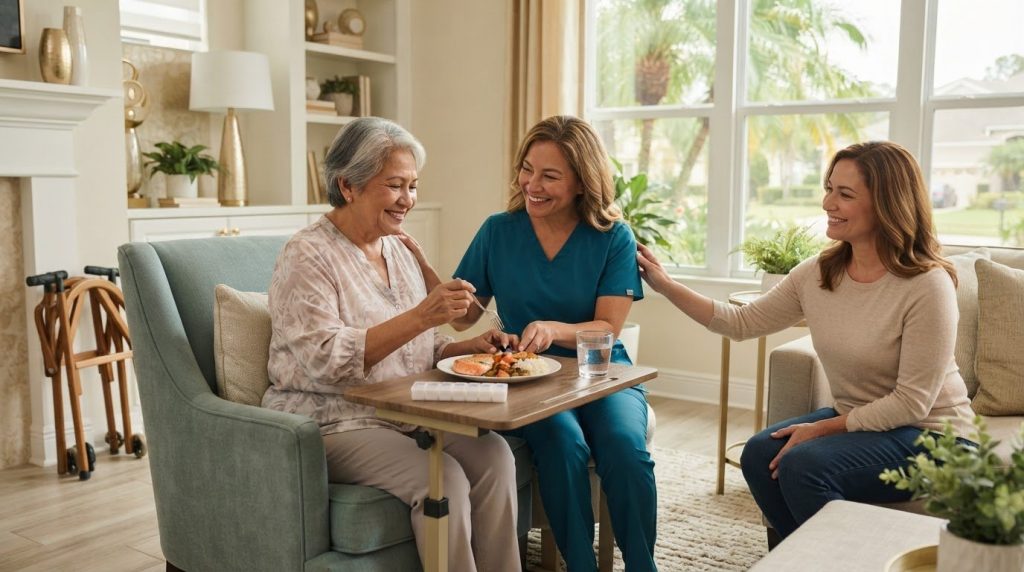
What if the most helpful support after a stroke is often found in the small moments of the day? Returning home can bring relief, along with new questions about bathing, meals, moving around safely, and keeping up with appointments. Thoughtful stroke recovery support at home can make these routines more manageable while complementing, not replacing, the recovery plan led by clinicians.
It’s understandable to feel unsure about what kind of help is appropriate or how a caregiver fits alongside therapists and other professionals. This guide explains how non-medical home care can support daily life while clinicians direct rehabilitation and medical care. You’ll learn how assistance with personal care, meal preparation, medication reminders, fall prevention, transportation, and family communication can help create a steadier routine. In Orlando, Elite Caregivers United LLC provides personalized, CNA-led personal care and stroke recovery support shaped around each person’s needs and preferences. Understanding the roles involved can help your family plan for a safer, more manageable home routine.
Key Takeaways
- Understand what non-medical help can look like after returning home, from daily routines to companionship.
- See how personal care can complement clinician-directed rehabilitation without taking the place of prescribed therapy.
- Use a practical planning process to identify support needs, share relevant guidance, and shape a more manageable routine.
- Learn how stroke recovery support at home from Elite Caregivers United’s CNA team can be tailored to include personal care, meals, fall prevention, reminders, and family communication.
What Does Stroke Recovery Support at Home Involve?
Coming home after a stroke can be a welcome change, but it may also bring unfamiliar routines and practical questions. A survivor might need more time or assistance with dressing, meals, or moving through the home, while family members learn how to help without taking over every task. Looking at specific daily needs can make it easier to decide what support would be useful.
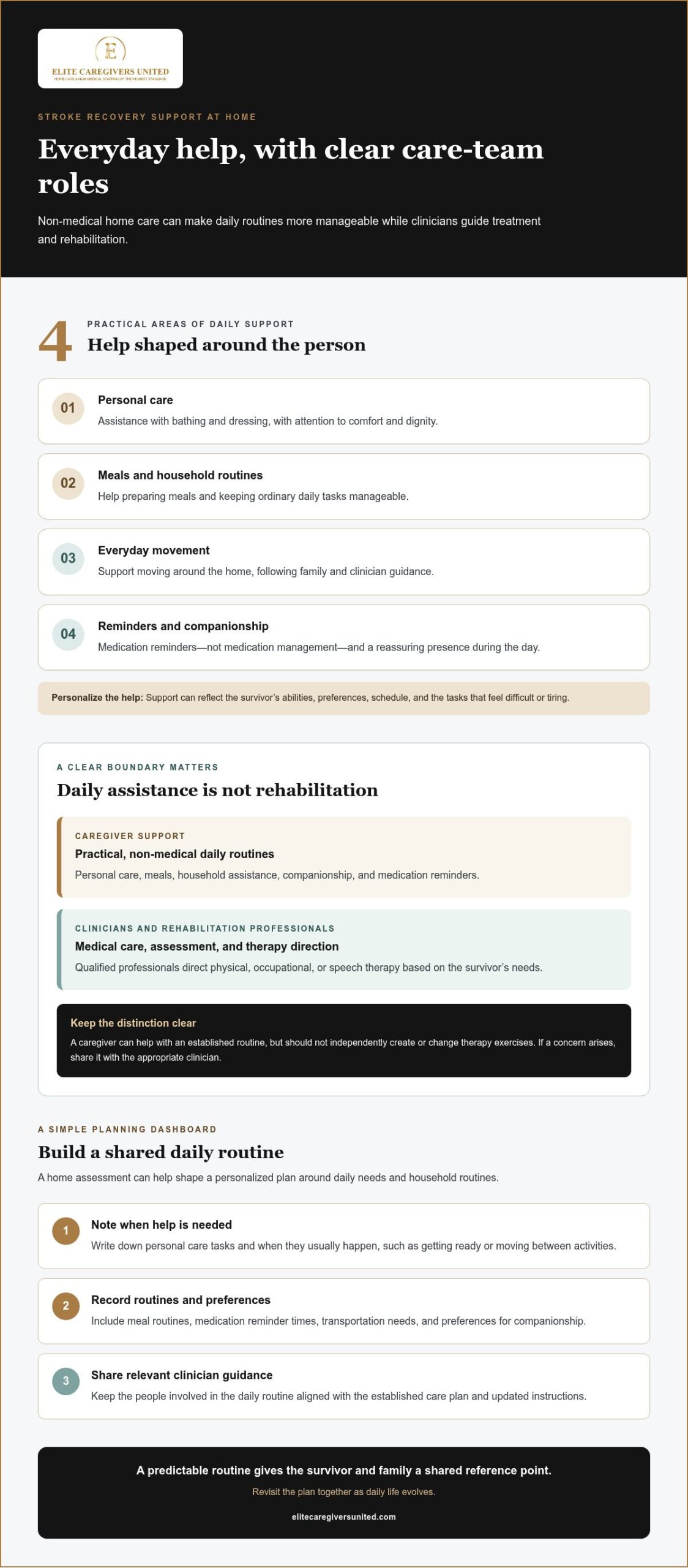
Stroke recovery support at home is non-medical assistance with daily living, comfort, companionship, and household routines that works alongside the survivor’s clinician-directed care. Doctors and rehabilitation professionals guide treatment and therapy; a caregiver can help with practical tasks and established routines. For background on recovery and rehabilitation, see Understanding Stroke Recovery.
Which everyday needs can a caregiver help with?
Support can be shaped around the individual’s abilities, preferences, and schedule. Rather than assuming every survivor needs the same help, consider which tasks feel difficult, tiring, or hard to manage consistently.
- Personal care: Assistance with bathing and dressing, provided with attention to comfort and dignity.
- Meals and household routines: Help preparing meals and keeping ordinary daily tasks manageable.
- Mobility-related routines: Support with everyday movement around the home, following the family’s and clinicians’ guidance.
- Reminders and companionship: Medication reminders, not medication management, along with a reassuring presence during the day.
A home assessment helps shape a personalized care plan around the survivor’s daily needs and household routine. Families can describe when assistance is useful, such as getting ready, mealtimes, or moving between everyday activities. Sharing relevant clinician guidance helps align practical support with the established care plan.
How can home support help families feel more prepared?
It can be hard for relatives to balance caregiving with work, household responsibilities, and their own need for rest. Practical assistance can share some of the day-to-day work, leaving family members more space to spend time together. The aim is not to promise a particular recovery result, but to make daily responsibilities clearer and more manageable.
Start by noting when help is needed most. A brief written outline can help organize support without requiring the family to plan every detail at once:
- Note which personal care tasks require assistance and when they usually happen.
- Record meal routines, medication reminder times, transportation needs, and preferences for companionship.
- Share relevant clinician guidance with the people involved in the daily routine.
A predictable routine gives everyone a shared reference point: the survivor knows what to expect, and relatives can coordinate tasks more calmly. Needs may change, so revisit the plan together as daily life evolves. An individualized approach can make home feel more organized while keeping clinical decisions with the survivor’s care team.
How Daily Care Can Complement Clinician-Led Stroke Recovery
A stroke recovery plan may involve several professionals, each with a distinct role. Doctors guide medical care, while rehabilitation professionals direct therapy based on the survivor’s needs. At home, a caregiver can make everyday routines easier to manage, giving families practical support without taking clinical decisions out of the care team’s hands.
Caregivers support the daily routine; rehabilitation professionals assess needs and direct therapy. This distinction helps families understand how non-medical care fits into a broader recovery plan. A caregiver may help with personal care, prepare meals, offer medication reminders, or provide companionship, while qualified professionals determine and deliver physical, occupational, or speech therapy.
What belongs to caregivers and what belongs to rehabilitation professionals?
Clear role boundaries support continuity and reduce uncertainty. Caregivers focus on practical, non-medical assistance. Therapists provide therapy and related clinical guidance. For example, a caregiver can help a survivor get ready for an appointment or follow an established daily routine, but should not independently create or change therapy exercises.
- Caregiver support: Personal care, household assistance, meals, companionship, medication reminders, and other agreed daily routines.
- Professional rehabilitation: Assessment and direction of physical, occupational, or speech therapy by qualified professionals.
Medication reminders are prompts, not medication management. Similarly, helping with an everyday task does not mean the caregiver is providing therapy. If a new difficulty or concern arises, the family can share it with the appropriate clinician rather than asking the caregiver to interpret it or alter the care plan.
How can families keep daily support consistent?
A simple, shared routine can help the survivor, family, caregiver, and rehabilitation team stay aligned. Communicate the day’s usual rhythm, the type of assistance that feels comfortable, and relevant guidance already provided by clinicians. If instructions change, pass along the updated information so everyday support reflects the current plan.
Coordination can be practical and straightforward. A family member might share appointment times, note a therapist’s guidance about an established routine, or communicate a change in the survivor’s preferences. Communication with therapists or specialists can help everyone understand what support is being provided at home and which questions belong with the clinical team.
For stroke recovery support at home to feel cohesive, keep clinical decisions with the professionals responsible for care. Caregivers can provide dependable assistance within the agreed routine, while families share updates and raise questions with clinicians. This partnership can clarify responsibilities without promising a particular recovery result.
Families looking for personalized, non-medical assistance can explore stroke recovery support from Elite Caregivers United, where daily care is designed to complement clinician-directed recovery.
Can Non-Medical Home Care Support Stroke Recovery Without Replacing Therapy?
Yes. Personal care can make daily life more manageable while prescribed rehabilitation continues under the direction of qualified professionals. The roles are different and complementary: a caregiver may help with a meal before a therapy appointment or provide personal care afterward, while the therapist directs the rehabilitation itself. Non-medical caregiving supports everyday living; rehabilitation professionals assess and direct therapy.
This distinction can help families plan support without expecting a caregiver to perform clinical tasks. Home care isn’t a substitute for physical therapy, skilled nursing, or advice from the healthcare team. Instead, it can help with practical needs around appointments and daily routines, while families leave treatment decisions with the appropriate clinicians.
What non-medical caregiving can support
Support can be tailored to a person’s daily routine and needs, with respect for their preferences and dignity. For example, a caregiver may help with bathing or dressing, prepare meals, offer companionship, and provide medication reminders. Reminders are prompts, not medication management.
Other practical support may include fall-prevention assistance, help maintaining a comfortable home environment, and transportation to appointments. Family communication and coordination with therapists or specialists can help keep everyday routines organized around the survivor’s established schedule. These tasks can ease household logistics, but they don’t involve assessing or treating stroke-related symptoms.
What caregiving does not replace
Caregiving does not replace physical therapy or skilled nursing. Physical, occupational, and speech therapy are directed by qualified rehabilitation professionals, who determine appropriate therapeutic activities and guidance. Doctors and other healthcare professionals remain responsible for diagnosis, treatment decisions, and clinical questions.
If a family is unsure about an instruction, notices a change, or is considering an adjustment to the care plan, raise the question with the appropriate clinician. A caregiver can share practical observations with the family and support established routines, but shouldn’t independently interpret symptoms, prescribe exercises, or change treatment.
Everyday caregiving support and clinician-directed rehabilitation have different responsibilities:
| Everyday caregiving support | Clinician-directed rehabilitation |
|---|---|
| Personal care, meal preparation, companionship, and medication reminders | Assessment and direction of physical, occupational, or speech therapy |
| Fall-prevention assistance, transportation, and help with home routines | Clinical guidance, treatment decisions, and rehabilitation instructions |
| Practical coordination and family communication around the daily schedule | Answers to clinical questions and changes to the care plan |
Families can use this distinction to make stroke recovery support at home fit alongside professional care: arrange practical help around appointments and established routines, and leave therapy and clinical decisions to the care team. This creates a clearer division of responsibilities, not a promise of a particular recovery outcome.
How to Organize a Safer, More Manageable Home Routine
A useful home routine starts with the survivor’s real day, not a generic checklist. Rather than trying to plan everything at once, identify where help is needed, share relevant clinician guidance, agree on a predictable rhythm, and revisit the plan as needs change. This turns the broad idea of stroke recovery support at home into practical tasks the household can organize.
Use this sequence to get started:
- Identify daily needs. Note when assistance may help with personal care, meals, reminders, transportation, household tasks, or companionship.
- Share relevant guidance. Communicate the clinician’s instructions that relate to established daily routines, keeping treatment questions with the care team.
- Plan a routine. Discuss the timing and type of support that fit the survivor’s preferences and household schedule.
- Review the arrangement. Revisit the plan when routines, preferences, or assistance needs change.
Which daily tasks should families plan around?
Think about each task separately. A person may want help dressing in the morning, meal preparation later in the day, medication reminders at agreed times, or companionship during a quiet part of the afternoon. Transportation and household assistance may also matter if they shape the day’s schedule. Noting these needs helps families describe the support they’re seeking without making assumptions about what the survivor can or wants to do.
Needs can shift as routines settle or circumstances change. A plan that once fit well may need review if the survivor’s preferences or daily assistance needs change. Keep the conversation practical: What help is useful? When is it needed? What should remain part of the survivor’s own routine?
How should families prepare for a home assessment?
Before an assessment, gather a clear picture of a typical day. Share routine preferences, tasks that feel challenging, and relevant guidance from clinicians. Include the household’s schedule and practical needs, such as meal timing or transportation. This information helps shape a personalized plan around the individual and their home life, rather than applying a one-size-fits-all routine.
A home assessment informs the care plan; it isn’t a substitute for clinical advice or a professional evaluation of fall risk or home modifications. Direct those concerns to the appropriate clinician. Families can learn more about non-medical home care in Orlando and how practical support can fit into a household’s routine.
With needs and preferences clearly discussed, families have a steadier starting point for organizing everyday help. Explore personalized stroke recovery support from Elite Caregivers United to plan non-medical assistance around your family’s daily routine.
Stroke Recovery Support at Home in Orlando with Elite Caregivers United
After returning home, families may find that practical help with daily routines makes the day easier to organize. Elite Caregivers United provides personalized, CNA-led, non-medical stroke recovery support in Orlando and surrounding communities. Care can be shaped around the survivor’s needs and may include personal care, meal preparation, fall-prevention support, medication reminders, and family communication.
This support works alongside the survivor’s clinician-directed recovery plan. Caregivers assist with everyday tasks and routines, while clinical treatment and rehabilitation remain with the appropriate healthcare professionals. A home assessment helps the team understand the household’s needs and develop a personalized care plan that respects the survivor’s preferences and dignity.
What happens when a family arranges care?
Families can schedule a home assessment through the website’s contact or assessment option. During the process, they can discuss daily routines, helpful types of assistance, and relevant guidance from the survivor’s care team. The assessment informs a personalized plan, so support reflects the person’s circumstances rather than following a one-size-fits-all routine.
Care may be arranged hourly or 24/7, depending on the family’s support needs. Elite Caregivers United offers 24/7 availability, same-day scheduling, and emergency support. For households considering continuous assistance, the guide to 24-hour home care in Orlando provides relevant information about that type of support.
Pricing is customized to the family’s needs. Contact Elite Caregivers United for an estimate and discuss the support you’re looking for.
How can Orlando families take the next step?
Start with a short list of tasks that feel hardest to manage, such as getting ready, preparing meals, arranging transportation, or ensuring companionship during particular parts of the day. Families can also share what the survivor prefers to do independently and which clinician guidance should inform the routine. These details help make the home assessment focused and useful.
Personalized support can give families a clearer way to share daily responsibilities, while family communication helps keep everyone informed about the agreed routine. Elite Caregivers United serves Altamonte Springs, Apopka, Celebration, Dr. Phillips, Hunters Creek, Lake Buena Vista, Lake Mary, Maitland, Ocoee, Orlando, Oviedo, Wekiva Springs, Windermere, Winter Garden, Winter Park, Winter Springs, Clermont, Kissimmee.
To discuss daily support needs and request a customized estimate, schedule a home assessment with Elite Caregivers United. It’s a practical first step toward understanding what help could look like for your family.
Take the Next Step Toward a More Supported Routine
Planning support doesn’t require your family to have every answer today. Begin with a conversation about what feels manageable, what feels challenging, and what the survivor would like help with. Those priorities offer a practical starting point for considering how stroke recovery support at home could fit into everyday life.
It’s also okay to adjust the plan as routines change. Keep the survivor’s preferences at the center, and continue directing medical and rehabilitation questions to the clinicians involved in their care. Thoughtful communication and compassionate assistance can help families take each decision one step at a time.
Schedule a home assessment with Elite Caregivers United to discuss your family’s needs and explore a personalized approach to daily support.
Frequently Asked Questions
How can I tell if my loved one needs in-home care?
Consider in-home care if everyday activities such as bathing, dressing, eating, or walking have become difficult, or if memory changes or limited companionship are affecting daily life. After a stroke, a useful clue may be that ordinary routines require more help than family members can comfortably provide. A home assessment can help identify personal-care tasks that need support and shape an individualized plan around your loved one’s preferences.
How does Elite Caregivers United support a senior at home?
Elite Caregivers United provides personalized, CNA-led support for a senior’s physical, emotional, and social needs. A caregiver may assist with bathing and dressing, prepare a meal, offer companionship, or provide medication reminders. Support can also include housekeeping, transportation, fall-prevention assistance, and communication with family. After a home assessment, the care plan is shaped around the person’s needs, helping relatives understand what assistance is part of the routine.
Is nursing care available at home in Orlando?
Elite Caregivers United provides non-medical personal care and recovery support through its CNA team, not skilled nursing or physical therapy. Care may help with daily activities, meal preparation, medication reminders, fall-prevention assistance, and coordination with therapists or specialists. Clinical treatment and therapy remain the responsibility of the appropriate healthcare professionals. If you’re unsure whether a need is medical, discuss it with your loved one’s care team so the appropriate professional can guide next steps.
Which locations does Elite Caregivers United serve?
The listed service area includes Altamonte Springs, Apopka, Celebration, Dr. Phillips, Hunters Creek, Lake Buena Vista, Lake Mary, Maitland, Ocoee, Orlando, Oviedo, Wekiva Springs, Windermere, Winter Garden, Winter Park, Winter Springs, Clermont, Kissimmee. Elite Caregivers United offers 24/7 availability, same-day scheduling, and emergency support. Families in these communities can discuss their loved one’s needs and arrange a home assessment to plan personalized assistance.
How much does in-home care cost?
Pricing is customized to the individual’s support plan, so there is no universal fee. The estimate depends on the assistance the family is arranging and the person’s daily needs. Contact Elite Caregivers United for an estimate. Sharing the tasks and routines where help is needed can make the conversation more useful and clarify what the personalized plan may include.
How quickly can in-home support be arranged?
Families can discuss their situation and arrange a home assessment to shape a personalized care plan. If your loved one has an urgent medical concern, contact the appropriate emergency or healthcare service, since non-medical caregiving isn’t a substitute for emergency medical care. For non-urgent needs, describing the daily routine can help guide the assessment.