

What if a memorable Orlando theme park day wasn’t measured by how many attractions you visit, but by how comfortably your loved one enjoys the time together? It’s understandable to worry that walking, fatigue, meals, or mobility needs could make an outing difficult. Thoughtful elderly care for theme park visits helps families plan around an older adult’s pace, preferences, and support needs while keeping comfort and dignity at the center of the day.
Preparation can make the visit more manageable. Agree on a few priorities, plan for pauses and meals, and check the park’s current accessibility information before you go. A flexible plan also makes it easier to change course if your loved one needs a break or would rather spend time with family than move on to another attraction. Attentive caregiver support can provide companionship and practical assistance, giving relatives more opportunity to share the experience.
This guide covers practical ways to plan a comfortable park day, from setting a realistic pace to preparing for rest and mobility needs. You’ll also learn how personalized, non-medical Amusement Park Assistance and Travel Companion Services from Elite Caregivers United LLC can support older adults and families in Orlando.
Key Takeaways
- Shape elderly care for theme park visits around your loved one’s comfort, preferences, and energy rather than a packed attraction schedule.
- Prepare by discussing support needs, reviewing current park information, gathering essentials, and leaving room to adjust plans.
- Caregiver support can provide companionship and practical help while relatives enjoy meaningful time together.
- Build a flexible day with a gentle start, planned pauses, and the freedom to leave when your loved one is ready.
- Learn how personalized, non-medical Amusement Park Assistance and Travel Companion Services can support an Orlando visit.
Elderly Care for Theme Park Visits Starts with the Senior’s Needs
A theme park visit can bring generations together and create memories families will cherish. Planning around an older loved one’s comfort makes room for those moments without expecting them to keep up with a schedule that doesn’t suit them. The right pace depends on the person, not the number of attractions on the map.
For a park outing, Elderly care can include individualized companionship and non-medical assistance shaped around the older adult’s preferences and routines. Caregiver-supported theme park visits pair attentive companionship with practical, non-medical help, so the day can reflect an older adult’s needs and choices. Support should be personal, not one-size-fits-all.
Stamina, mobility, memory, and comfort can all influence how the day unfolds. Someone who enjoys walking may still prefer a slower pace. A person who has difficulty remembering plans may appreciate calm reminders and reassurance in a busy setting. Thinking through these needs ahead of time helps families set expectations and choose activities that feel considerate rather than demanding.
What support might an older adult need during a park day?
Consider the practical moments between attractions, not only the attractions themselves. An older adult may appreciate a companion while walking or getting around, help keeping track of belongings, or company while choosing and enjoying a meal. If personal-care routines are part of the person’s day, include them in the plan and discuss what assistance feels comfortable.
Emotional support matters, too. A familiar, reassuring presence can make a busy day feel less overwhelming. Patient companionship also gives the senior room to say when they’d like to pause or change plans. Needs differ from person to person, so let the older adult’s preferences guide the kind of support you arrange.
How can families set a comfortable pace?
Choose a short itinerary or keep the schedule flexible. Start with one or two preferred experiences rather than a checklist to complete. Think about how your loved one usually responds to a full day out, then leave space for meals, rest, and unhurried transitions. A pause is part of the plan, not a disruption.
Agree in advance that plans can change if energy or comfort shifts. If the senior is enjoying a quiet break or a conversation with family, there’s no need to hurry toward the next attraction. The most meaningful part of the outing may be sharing a meal, watching a show, or simply being together. Centering those moments makes elderly care for theme park visits more responsive to the person enjoying the day.
Plan Elderly Care for an Orlando Theme Park Visit Before You Go
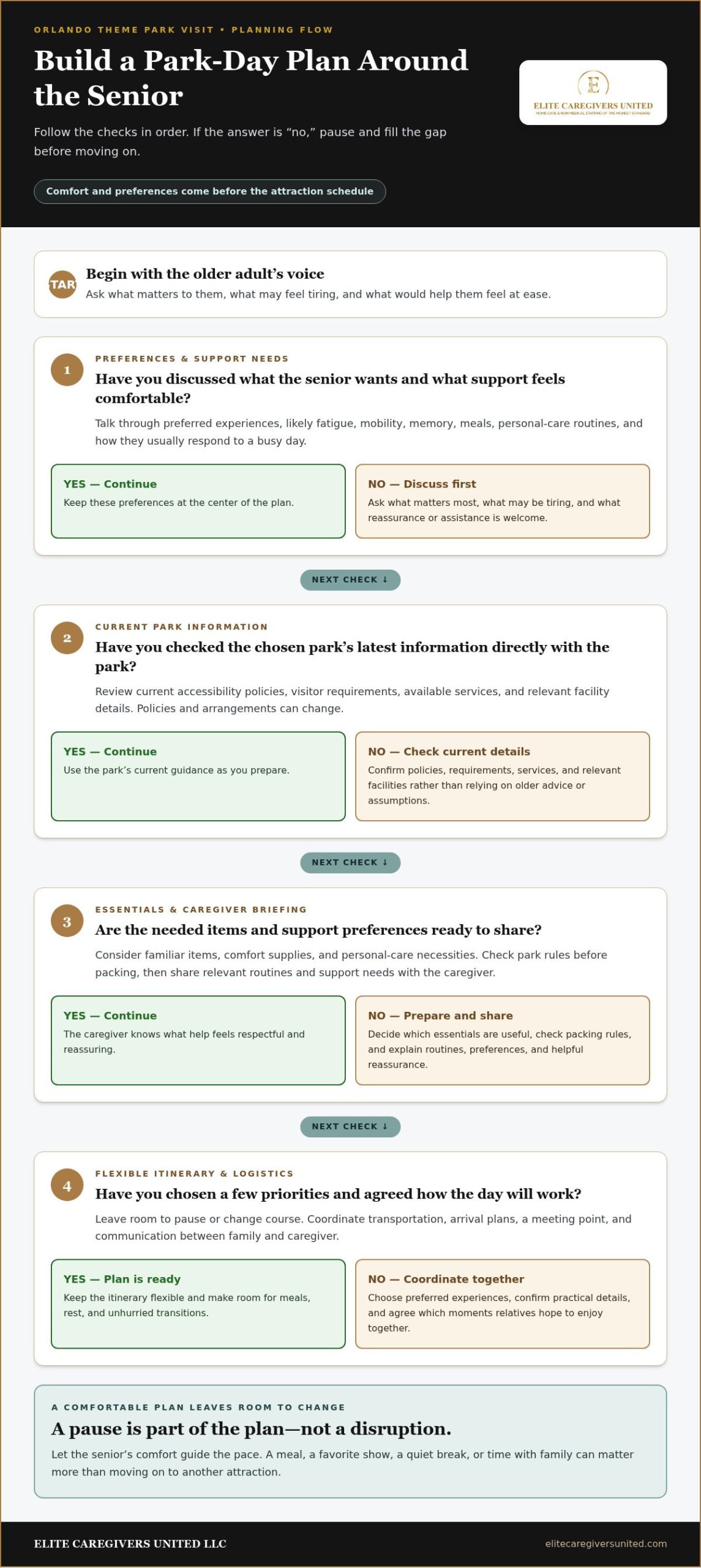
Preparation turns general hopes for a fun day into a plan that respects the older adult’s routines, preferences, and comfort. For elderly care for theme park visits, involve your loved one in decisions and share practical details with the caregiver before arriving. Use this sequence to prepare together, then adjust as needed.
- Talk through the senior’s preferences and concerns. Ask which experiences matter most, what may feel tiring, and what would help them feel at ease. Discuss mobility, memory, meals, personal-care routines, and how they typically respond to a busy day. Listen to what they want instead of planning only around what relatives hope to fit in.
- Review the chosen park’s current information. Check its latest accessibility policies, visitor requirements, available services, and relevant facility details directly with the park. Policies and arrangements can change, so use current park guidance rather than assumptions or older advice. If you’re planning an outing with younger relatives too, Orlando amusement park nanny guidance offers related planning considerations while this visit remains centered on the older adult.
- Prepare essentials around the person’s needs. Decide which familiar items, comfort supplies, or personal-care necessities would make the outing easier, and review the park’s current rules before packing. Share relevant routines, preferences, and support needs with the caregiver ahead of time. Explain what reassurance is helpful and how the senior likes to receive assistance.
- Create a flexible itinerary and confirm the practical details. Choose a few preferred experiences, leaving room to pause or change course. Coordinate transportation, arrival plans, a meeting point, and how family members and the caregiver will communicate. Agree on moments relatives especially hope to enjoy together, while keeping the older adult’s comfort central.
What should families discuss before the visit?
Make space for the older adult’s voice. A conversation might reveal that they’d rather enjoy a favorite show than spend energy moving between attractions, or that crowds make clear directions and reassurance especially welcome. Discuss the likely demands of the day, mobility and memory considerations, and personal-care routines. Then agree on a plan that lets the senior take part at their own pace.
What should the family and caregiver plan together?
Share the day’s outline, the senior’s preferences, and the kind of support that feels respectful. Clarify the arrival plan, transportation arrangements, meeting location, and how to communicate if plans shift. Decide which moments relatives hope to enjoy together, such as a meal or chosen activity, without making the schedule rigid. A shared understanding helps everyone support the older adult consistently.
Elite Caregivers United LLC creates personalized care plans following a home assessment. For individualized, non-medical assistance, explore caregiver support for an Orlando park outing as you consider what would make the day feel manageable for your loved one.
Family Support and Caregiver Assistance: Choosing the Right Balance
Families know their loved one’s habits and history, while a caregiver can provide dedicated attention during a busy outing. Combining those kinds of support may let relatives focus more on sharing the experience, but there’s no single arrangement that suits every family. Let the senior’s preferences, comfort, and support needs guide the decision.
Consider how each approach might feel for your group:
| Approach | What it may offer | What to consider |
|---|---|---|
| Family-only assistance | Familiar support from relatives who understand the older adult’s routines and preferences. | Family members may need to divide their attention between caregiving, logistics, and time with other relatives. |
| Shared support with a caregiver | A dedicated companion can focus on agreed assistance while relatives enjoy planned moments together. | Discuss roles in advance so the senior knows who is supporting them and family members remain involved. |
Neither option is inherently better. Some older adults feel most at ease with family support alone; others may welcome an additional companion, especially if relatives are balancing different needs across the group. For a broader explanation of the approach, explore non-medical home care in Orlando, which provides context for personalized, non-medical support.
When might a caregiver make the outing easier?
Additional support may be useful if walking, getting around, personal-care routines, memory, or the need for steady companionship makes it difficult for one relative to stay present with everyone. A caregiver can focus on agreed support and offer calm company while family members share a meal or activity. This can help distribute attention, but it cannot guarantee access to attractions or prevent every change of plan.
How can families and caregivers coordinate roles?
Before the visit, discuss the senior’s preferences, familiar routines, and what kind of help feels respectful. Agree on which tasks the caregiver will focus on, when relatives hope to spend time together, and how everyone will communicate if the plan changes. During the outing, check in with the older adult and each other. Comfort and energy may shift as the day unfolds.
Elite Caregivers United LLC provides non-medical Amusement Park Assistance and Travel Companion Services, with personalized care plans created after a home assessment. If a shared-support approach feels right, learn about caregiver support for Orlando outings and consider how family time and attentive companionship can work together.
A Practical Theme Park Day Plan for an Older Loved One
A day plan is most helpful when it provides gentle structure without making every moment feel scheduled. For elderly care for theme park visits, use the itinerary as a guide, then let your loved one’s comfort and energy shape what happens next. A useful principle is simple: build the itinerary around the older adult’s pace, not the number of attractions.
Before leaving, review the chosen park’s current accessibility options, available services, and visitor requirements. Policies and details can change, so consult the park directly rather than relying on assumptions about facilities or mobility arrangements. Then use a simple framework for the day:
- Arrive with time to settle in. Allow room for a calm transition from transportation to the park day. Check in with the senior about how they’re feeling before deciding whether to begin the planned activity or take a moment to get oriented.
- Start with one preferred experience. Choose an activity the older adult is looking forward to, rather than trying to reach several attractions in quick succession. Afterward, ask how they feel before deciding what comes next.
- Make pauses part of the rhythm. Leave space for eating, resting, and unhurried transitions. A pause can be a welcome part of the visit, not lost time. If comfort changes, adjust the next activity rather than pressing ahead to keep the schedule intact.
- Keep departure flexible. Discuss a general plan for leaving, but remain open to heading out earlier or staying a little longer if the senior feels comfortable. Allow time to gather belongings and coordinate transportation without rushing.
How should families handle changes during the visit?
Fatigue, discomfort, or a change of interest is a cue to pause and reassess, not something the older adult has to push through. Agree on a straightforward way for family members and the caregiver to share updates, such as checking in before changing activities. If the senior would rather rest or end the outing, let that preference guide the next step.
Flexibility matters more than completing every planned activity. A shared plan helps everyone stay informed while leaving room to respond with patience as the day unfolds.
What should the end of the day look like?
Make the transition out of the park part of the plan. Give the senior time to collect personal items, move at a comfortable pace, and settle into the transportation arrangements. Before heading out, check how they’re feeling and whether anything would make the departure more comfortable. Begin wrapping up before everyone is tired.
Afterward, talk together about what felt enjoyable, what was tiring, and what you might change next time. Those reflections can help shape future outings around what the older adult values most. For personalized, non-medical support during an Orlando park visit, explore Amusement Park Assistance from Elite Caregivers United LLC.
Arrange Orlando Amusement Park Assistance with Elite Caregivers United
Families planning elderly care for theme park visits may value support that gives an older adult attentive companionship while relatives share more of the outing. Elite Caregivers United LLC offers Orlando Amusement Park Assistance and Travel Companion Services as personalized, non-medical support. Assistance can include companionship and personal-care support shaped around the individual, without assuming particular park accommodations or access to attractions.
Planning begins with the person, not a standard itinerary. A conversation about the older adult’s preferences, routines, comfort, and goals for the visit helps establish what kind of support may be helpful. A home assessment informs a personalized care plan, giving the family and caregiver a shared foundation for preparing for the outing.
What can families expect when arranging assistance?
Be ready to share what the older adult enjoys, what may feel challenging, and how they prefer to receive help. For example, the family might explain that a familiar routine or calm reassurance is helpful in busy settings. These details help shape a personal, non-medical plan focused on companionship and appropriate personal-care support.
The conversation is also a chance to describe the outing’s purpose. Perhaps the senior hopes to spend time with grandchildren, enjoy a particular experience, or simply be part of a family day without feeling rushed. The home assessment informs care planning around the older adult’s needs, while the family’s priorities help clarify how a caregiver can support the visit. Do not assume park-specific accessibility, entry, transportation, or mobility arrangements. Review current information directly with the chosen park.
How can families take the next step?
Contact Elite Caregivers United LLC to discuss the planned visit, share relevant care preferences, and request an estimate. Pricing is customized to the support needed. Elite Caregivers United LLC offers 24/7 availability, same-day scheduling, and emergency support.
You don’t need to have every detail of the park day settled before starting the conversation. Sharing what matters most to your loved one can help shape a thoughtful plan with dignity and comfort at its center. If personalized support feels right for your family, schedule a home assessment and take the next step at a pace that feels comfortable.
Make Space for a More Meaningful Day Together
The most valuable part of an outing may be a moment that wasn’t on the schedule: a shared laugh, a favorite view, or simply feeling included. Let that possibility guide your next decision. Rather than measuring the day by how much you fit in, consider what would help your loved one feel respected, involved, and comfortable taking part. That intention gives elderly care for theme park visits a deeply personal purpose.
Keep your loved one’s wishes at the center and choose support that fits your family’s needs. A conversation about a personalized care plan can be a thoughtful starting point, without committing to a packed itinerary or expecting the day to unfold perfectly. Explore a home assessment with Elite Caregivers United and consider what would make this outing feel right for your family. With a caring plan and room to adapt, you can look ahead to sharing the day at a comfortable pace.
Frequently Asked Questions
How can I tell if my loved one may benefit from in-home care?
Consider whether everyday activities such as bathing, dressing, eating, walking, remembering routines, or enjoying companionship are becoming harder to manage safely and comfortably. A change, such as needing more help getting ready or feeling unsure about familiar routines, can be a reason to talk with your loved one about support. For elderly care for theme park visits, also consider needs during travel, personal-care routines, and time away from home.
How does Elite Caregivers United support a senior?
Elite Caregivers United provides personalized, non-medical support that can include help with activities of daily living, companionship, and engagement. A senior may appreciate a companion while following a familiar routine or taking part in activities they enjoy. Care plans are shaped around the person’s needs after a home assessment. Families can discuss the older adult’s preferences and outing goals when planning Amusement Park Assistance.
Does Elite Caregivers United provide nursing care at home in Orlando?
Elite Caregivers United provides non-medical home and personal care, including support from its CNA team, rather than skilled nursing or clinical procedures. The agency also does not provide physical therapy. Families planning a park visit can discuss non-medical companionship and personal-care support through Amusement Park Assistance. Sharing the senior’s everyday routines and the kind of assistance they value can help guide a care plan that respects their preferences.
Which areas does Elite Caregivers United serve?
Elite Caregivers United serves Altamonte Springs, Apopka, Celebration, Dr. Phillips, Hunters Creek, Lake Buena Vista, Lake Mary, Maitland, Ocoee, Orlando, Oviedo, Wekiva Springs, Windermere, Winter Garden, Winter Park, Winter Springs, Clermont, Kissimmee. Families in these areas can discuss a personalized care plan based on the older adult’s needs and the planned outing. Sharing the visit’s location and goals can help make the conversation specific to your family.
How much does senior care cost?
Pricing is customized to the person and the support they need. Optional services such as Amusement Park Assistance are priced individually. Contact Elite Caregivers United for an estimate, and be ready to describe the planned visit, the older adult’s support needs, and the kind of assistance your family has in mind. Those details help make the pricing conversation more relevant.
How quickly can care be arranged?
Elite Caregivers United offers 24/7 availability, same-day scheduling, and emergency support. Families can reach out to discuss the older adult’s needs and intended visit, including routines or preferences that may shape the support. A home assessment informs a personalized care plan, and the team can explain next steps during the conversation. Sharing your timing and outing details will help keep that discussion practical and focused.