

The right level of care meets a senior’s daily needs while supporting as much independence as possible. For families considering a non-medical home health aide in Kissimmee, FL, one important distinction is that Medicare doesn’t cover custodial or personal care for daily living when that is the only care needed, according to the Centers for Medicare & Medicaid Services. Needs may also change during recovery after surgery or a hospital stay, so assess what support is needed now and what may be needed as recovery progresses.
It’s understandable to want reassurance that a loved one will be safe, respected, and cared for in familiar surroundings. This guide explains how to assess the right level of help, compare non-medical aide support, and recognize red flags when evaluating an agency in Kissimmee. You’ll also learn how recovery-related needs may differ from ongoing help with daily routines, giving you a clearer starting point for making a thoughtful care decision.
Key Takeaways
- Match support to the older adult’s daily routines, abilities, safety needs, and preferences, then revisit the plan as circumstances change.
- Look for clear information about caregiver qualifications, background and reference checks, emergency procedures, and client feedback when assessing an agency.
- Identify which personal-care tasks require help, such as bathing, dressing, transfers, meals, or toileting, so support can preserve dignity and comfort.
- Consider how age-related limitations, disability, or memory changes affect everyday safety and the kind of consistent assistance that may help.
- For recovery after surgery or hospitalization, distinguish non-medical home support from clinical care and define the practical help needed at home.
What are some red flags to watch out for when choosing a home care agency near me in Kissimmee, FL?
Assess an agency by its service details, caregiver screening, emergency procedures, and fit for the older adult. In Kissimmee, also distinguish non-medical help from skilled nursing and clarify coverage for the exact home address.
Service Availability by Location and Staffing
Service availability depends on both the residence and staffing for the requested schedule. Ask whether the agency serves the specific address, whether it can staff the needed days, and how it handles a caregiver’s absence. A service area that includes Osceola County may not automatically include every nearby Orange County address, so describe the home’s location precisely.
Review the actual task list, not just a broad phrase such as “home care.” Non-medical assistance may include support with household routines, conversation, and everyday errands. Personal care can include help with activities such as bathing and dressing, depending on the care plan. Ask how tasks and changes are communicated to the client or family.
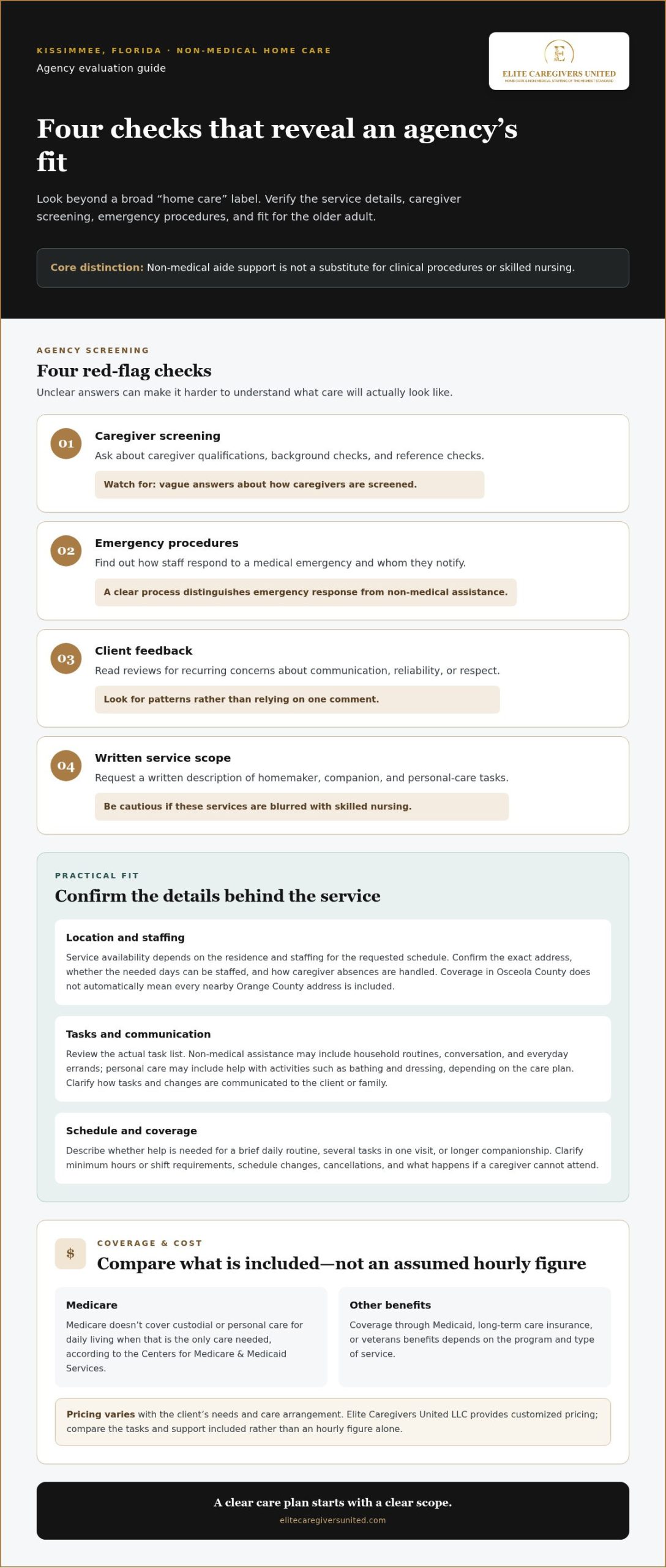
Before choosing, use these red-flag checks:
- Ask about caregiver qualifications, background checks, and reference checks. Vague answers make it harder to understand how caregivers are screened.
- Ask how staff respond to a medical emergency and whom they notify. A clear process should distinguish emergency response from non-medical assistance.
- Read client reviews for recurring concerns about communication, reliability, or respect. Consider patterns rather than relying on one comment.
- Request a written description of homemaker, companion, and personal-care tasks. Be cautious if an agency blurs these services with skilled nursing.
A home health aide in Kissimmee, FL, providing non-medical support should have duties that match the client’s needs and the services arranged. If care requires clinical procedures or skilled nursing, non-medical aide support alone is not a substitute for that care.
Minimum Hours and Shift Requirements
Do Kissimmee home care agencies require minimum hours or shifts? Scheduling depends on the care needed and the arrangement. Explain whether help is needed for a brief daily routine, several tasks in one visit, or longer periods of companionship. Then compare the proposed schedule with the senior’s actual needs, including bathing assistance or household support.
Clarify how schedule changes, cancellations, and caregiver absences are handled before service begins. For example, a family needing help during a morning routine should explain the tasks and timing. Ask who will communicate changes and what support is available if a caregiver cannot attend.
Coverage and Cost Considerations
Does Medicaid, Medicare, long-term care insurance, or veterans benefits cover non-medical home care in Florida? The Centers for Medicare & Medicaid Services says Medicare doesn’t cover custodial or personal care for daily living when that is the only care needed. Coverage through other benefits depends on the program and the type of service; Osceola Council on Aging accepts referrals from the Veterans Administration and Medicaid Long Term Care organizations, including Humana, Sunshine, and Staywell.
What is the average hourly cost of a non-medical home health aide in Kissimmee, FL? Pricing varies with the client’s needs and care arrangement. Elite Caregivers United LLC provides customized pricing, so contact the team for an estimate. When comparing options, focus on the tasks and support included rather than an hourly figure alone.
End-of-life companionship and household help
During end-of-life care, companionship can offer a calm presence and practical help at home. Families can share the patient’s preferences, household routines, and boundaries before arranging non-medical care.
Companionship and Cognitive Activities
Choose familiar activities that invite connection without creating pressure. A caregiver might listen to a favorite playlist, look through family photographs, read aloud, or share a quiet conversation. Let the patient set the pace and rest when they prefer. These activities offer companionship, not therapy or clinical treatment, and should reflect the person’s comfort and wishes.
For example, a family could write down the patient’s preferred name, topics they enjoy, and signs they need a break. Share those notes with the agency and caregiver so visits feel personal rather than scripted. If conversation becomes tiring, a companion can sit quietly instead. This simple plan helps relatives communicate preferences while keeping each visit centered on the patient.
Companionship and Light Housekeeping
Light housekeeping can complement companionship when it supports the patient’s everyday comfort. Examples include washing dishes after a meal, tidying the living area, or placing commonly used items within reach. Discuss household priorities in advance so the visit stays focused on agreed tasks. Household help doesn’t replace nursing, skilled care, or physical therapy.
Make a short task list that separates essential daily routines from optional chores. For instance, identify whether clearing a path to the sitting area matters more than folding laundry. This helps the caregiver prioritize the patient’s comfort and time together. Families should also explain household preferences, such as where clean linens belong or which rooms are private.
Respite and Household Help
Companionship can give a family caregiver time to rest, attend an appointment, or handle an errand. Before a visit, share the patient’s routine, preferred activities, and practical instructions, such as where to find a snack. Agree on how the caregiver should reach the family if needs change. Clear handoffs make respite more useful and help keep familiar routines steady.
Finding quality care begins with matching the visit to the family’s real priorities. Write down which hours require a companion, what household help matters most, and which activities the patient enjoys. Then discuss those details with the agency, including what the caregiver will handle during each visit. Families considering planning non-medical support at home can use this list to guide a focused conversation.
Bathing, dressing, transferring, feeding, and toileting assistance
Daily assistance can help people manage personal routines at home while preserving choice and dignity. Families should describe each task clearly, including when help is needed.
Non-medical home care supports everyday activities, while home health care involves health-related services such as skilled nursing. Assisted living provides housing with support in a residential setting. The Centers for Medicare & Medicaid Services says Medicare doesn’t cover custodial or personal care for daily living activities when that is the only care needed.
Assistance with Daily Activities
Start with a practical list of tasks that make a typical day difficult. For example, a client may need help choosing clothes, preparing breakfast, and getting settled in a chair. Note which activities the person can complete independently and where assistance is helpful. This gives families and caregivers a shared understanding of the support needed at home.
Non-medical in-home assistance focuses on agreed daily routines. It doesn’t replace skilled nursing or clinical care. Describe the home setup, preferred routines, and any tools the person already uses. A clear plan helps the caregiver provide respectful assistance without taking over tasks the individual can still manage.
Bathing, Dressing, and Toileting Assistance
Personal care may include help preparing to bathe, choosing clothing, and following a toileting routine. Explain preferences in advance, such as a preferred bathing time or clothing that’s easier to put on. Privacy matters: agree on how the caregiver should offer help, and let the person do each step they can comfortably manage.
For smoother routines, identify practical details before care begins. Point out where towels, clean clothes, and bathroom supplies are kept. Describe any difficulty standing, reaching, or moving between rooms. The caregiver can then follow the agreed routine and allow time for each task, rather than rushing through personal care.
Transfers and Mealtime Assistance
Transfers and meals call for clear instructions tailored to the individual. Explain how the person moves between a bed, chair, or table, and identify any support they already use. If a transfer requires clinical judgment or skilled care, non-medical assistance isn’t a substitute.
Meal support can include preparing a simple meal, setting the table, and offering help during eating. Families can share food preferences, familiar recipes, and where kitchen items are stored. Shopping assistance can be planned around a written grocery list, such as ingredients for soup and breakfast foods. These details help the caregiver support mealtimes without guessing.
Before visits begin, write down the daily sequence: morning dressing, lunch preparation, and evening toileting, for example. Add the person’s preferences beside each task. This practical guide helps families explain priorities and makes assistance more consistent across everyday routines.
Support for adults with age-related limitations, disabilities, dementia, or memory impairment
Care needs can change as mobility, memory, or a chronic condition affects daily living. Describe specific routines, such as moving from a bedroom to the kitchen, to plan practical support.
Mobility Support and Fall Prevention
Walk through the home and note where mobility becomes difficult, such as a doorway, bathroom entrance, or step. Tell the caregiver which mobility aids the person uses and where they’re stored. Clear pathways, reachable items, and an uncluttered route between the bed and bathroom can support safer movement. The caregiver should follow the person’s established routine rather than attempt unfamiliar clinical techniques.
For Alzheimer’s disease or another form of dementia, familiar routines can make daily care easier to follow. Use the same simple cues for dressing, meals, and moving between rooms. For example, lay out one outfit rather than offering several choices at once. Share preferred names, calming activities, and signs of fatigue with the caregiver. These thoughtful approaches can support comfort while respecting the person’s choices.
Support for Chronic Conditions
Age-related limitations and chronic conditions can affect ordinary tasks differently from day to day. Make a written list of activities that need support, such as preparing breakfast, choosing clothes, or walking to a favorite chair. Include what the person manages independently. This helps the caregiver tailor daily assistance while keeping familiar abilities and preferences central.
After a hospital stay, practical home support may help with ordinary routines while someone regains strength. Families can identify tasks such as preparing a meal, keeping commonly used items nearby, or assisting with personal care. Keep clinical instructions and daily care tasks distinct. A non-medical caregiver doesn’t replace skilled nursing, therapy, or medical follow-up and shouldn’t be asked to perform clinical procedures.
For ongoing support, write down how the person’s condition affects a typical day. Note changes in mobility, memory, or the ability to complete a routine, then share those observations with the family and caregiver. A brief example helps: “Needs a reminder to take the usual route to the dining area.” This gives caregivers useful context without assuming the person needs help with every task.
Families can also identify the person’s comfort cues and preferred pace. For example, note whether a quiet room helps during a difficult moment or whether a familiar song makes a transition easier. Keep instructions specific and respectful. When needs change, update the routine so daily support reflects current abilities rather than an outdated assessment.
Home health for recovery after surgery or hospitalization
Returning home after surgery or a hospital stay can leave seniors needing practical help as routines resume. Non-medical home care supports daily tasks and comfort; it doesn’t replace skilled nursing, medical treatment, or instructions from the care team.
Begin planning before discharge, using the hospital’s written instructions to identify ordinary tasks that may be difficult. For example, a person recovering from surgery may need help preparing meals, getting dressed, or keeping frequently used items nearby. Separate household and personal-care needs from clinical care, such as wound treatment or medication decisions, which require appropriate healthcare professionals.
A useful home plan names the task, who will handle it, and when assistance is needed. Families might list meal preparation, light household help, bathing assistance, or transportation for errands. Include the senior’s usual routine and preferences, too. A familiar breakfast or a clear path to the living room can support comfort and independence without asking a caregiver to perform clinical duties.
Before the first visit, organize a handoff with practical details from the hospital discharge plan. Keep the instructions accessible to the senior and family, and identify whom to contact with medical questions. Describe the home layout, where everyday supplies are kept, and which tasks need assistance. For instance, note that a favorite chair is in the living room and meals are usually eaten at the kitchen table.
As recovery progresses, review the daily task list with the family. A senior who first needs help dressing may later manage that routine independently but still need meal preparation or help with errands. Adjusting non-medical support to actual abilities can preserve choice. Don’t assume improvement in one task means every other task is manageable.
Recovery at home differs from ongoing care for a chronic condition. After surgery or hospitalization, a person returns to familiar surroundings while following care instructions and rebuilding daily routines. A written plan helps keep responsibilities distinct. For example, a family member can manage clinical questions while a home caregiver assists with household routines and agreed personal-care tasks.
Home health care and non-medical home care describe different kinds of support. The Centers for Medicare & Medicaid Services says Medicare doesn’t cover custodial or personal care for daily living when that is the only care needed. Identify whether the immediate need is clinical care, daily assistance, or both, then coordinate those needs clearly.
If a return home is approaching, plan non-medical recovery support at home around the senior’s daily tasks, preferences, and discharge routine.
Elite Caregivers United LLC: Respite Care
Elite Caregivers United LLC offers Respite Care for families who need support while taking time to rest or manage personal responsibilities. Its Personal Care Services/CNA Team can assist with agreed daily routines, while Surgery Recovery & Post-Hospitalization Care and Cosmetic Surgery Recovery can support practical needs during recovery at home.
Consider respite when caregiving responsibilities make it difficult to attend appointments, handle errands, or take a needed pause. Before care begins, outline the person’s routine, preferences, and daily tasks so support can be shaped around their needs. These non-medical services don’t replace skilled nursing, clinical procedures, or physical therapy.
For a compassionate conversation about support at home, contact Elite Caregivers United LLC.
Take the Next Step Toward Support at Home
Choosing a non-medical home health aide in Kissimmee, FL, can begin with one practical step: write down what would make the coming days easier for your loved one. Include the routines they want to manage independently, the tasks where help would feel welcome, and how family members prefer to stay informed. This creates a thoughtful starting point for a care conversation.
Elite Caregivers United LLC offers Respite Care, Personal Care Services/CNA Team support, and Surgery Recovery & Post-Hospitalization Care. These services can help families arrange non-medical assistance around caregiving breaks, daily routines, or recovery at home. Share your priorities and the support you’re seeking, then explore whether a conversation is the right next step for your family.
Contact Elite Caregivers United LLC to discuss support for your loved one. Taking the time to plan can help your family move forward with greater clarity and care.
Frequently Asked Questions
How Can I Determine the Right Level of Care for a Senior?
Match the level of help to tasks the senior struggles to complete consistently, rather than relying on age or diagnosis alone. Keep a brief daily record of missed meals, unfinished routines, or repeated requests for assistance. Note when each difficulty occurs and what support helps. This pattern can clarify whether the main need is personal care, companionship, recovery support, or clinical care.
What non-medical home health aide services are available in Kissimmee, FL?
Non-medical aides can assist with personal routines, companionship, and practical household tasks, depending on the care arrangement. Examples include help getting dressed, preparing a meal, or having company during a quiet afternoon. Services may also support respite for family caregivers or daily routines during recovery at home. They don’t replace skilled nursing or clinical procedures. Clearly define the tasks for a non-medical home health aide in Kissimmee, FL, in advance.
How can I verify a Florida home care agency’s license and caregiver credentials?
Ask for the agency’s legal name and license details, then compare them with Florida’s official licensing records. Confirm that the record matches the business you’re considering, not a similarly named organization. For an individual caregiver, ask about the credential type, issuing body, and current status when applicable. Keep written responses and note who provided them, so the information is easy to review.
What qualifications, background checks, and training do Florida home health aides need?
First identify the caregiver’s role, since an aide and a Certified Nursing Assistant (CNA) are not interchangeable labels. Ask what training applies to assigned tasks, how the agency checks identity and references, and whether required credentials are current. Request a clear explanation of the caregiver’s boundaries, especially around medication, transfers, or clinical procedures. This helps families distinguish personal assistance from skilled healthcare without assuming every worker has identical training.
What questions should I ask before hiring a non-medical caregiver in Kissimmee?
Ask who coordinates care, how the family receives updates, and what happens if the assigned caregiver can’t attend. Clarify how schedule changes are communicated and how tasks are documented after each visit. Request a written description of the agreed support and the process for updating it as needs change. For example, agree on who receives a message if a senior declines a planned activity.
What safety risks and signs of caregiver fraud should families watch for when arranging in-home care?
Watch for requests to borrow money, use bank cards, share account passwords, or sign unclear financial documents. Keep valuables and sensitive records secured, and make payment arrangements through documented procedures. Families can also agree on regular check-ins and a private way for the senior to share concerns. If a charge or request seems unusual, pause and contact the agency using independently verified contact details.