

Comparing affordable senior care options in Florida means looking beyond the monthly rate. Location, room type, and included services all affect the total, and private rooms typically cost more than semi-private accommodations.
It’s understandable to focus on affordability while also wanting a setting that feels safe, comfortable, and suited to your loved one’s needs. A low starting rate may not reflect the full monthly expense if personal care, meals, medication assistance, transportation, or supervision are charged separately.
This guide explains how Florida senior living costs can vary, what to compare when reviewing monthly expenses, and how care needs shape the choices available to families. It also covers planning for financial assistance and possible waiting lists, with a focus on options to consider in Central Florida.
Key Takeaways
- Separate housing, meals, personal care, medication assistance, transportation, and supervision when estimating the full monthly expense.
- For Section 202 supportive housing, the head of household must be at least 62 years old, according to the U.S. Department of Housing and Urban Development.
- Apply early for affordable senior housing and community support programs, since waiting lists can affect when help becomes available.
- Match the care setting to daily needs and safety, then consider how those needs may change over time.
1. What Does Senior Living Typically Cost in Florida?
The Genworth 2024 Cost of Care Survey provides a basis for comparing Florida costs. Location, room type, and included services shape the final monthly expense. Private rooms typically cost more than semi-private accommodations, so compare the room arrangement alongside the care plan.
A monthly rate may combine housing with meals, personal care, medication management, housekeeping, transportation, or supervision. Assisted living generally supports daily activities and medication assistance for residents who don’t require skilled nursing. Medicaid can help pay for some services, but it doesn’t cover every cost. Florida Medicaid doesn’t pay room and board in assisted living facilities.
Florida’s Statewide Medicaid Managed Care Long-Term Care program arranges approved long-term care services for eligible people through managed care plans. Eligibility depends on Medicaid status and long-term care needs. The program may cover approved home- and community-based services in assisted living, but not room and board. Florida’s Medicaid Long-Term Care Waiver supports eligible people with services such as personal care, medication assistance, and supervision.
Medicaid may cover nursing home care for people with health care needs, very low incomes, and few assets. Florida’s Institutional Care Program helps people in nursing facilities pay for care and provides general medical coverage. For assisted living or memory care, Medicaid eligibility may make services more accessible, but families still need to budget for housing. Florida’s Optional State Supplementation program offers limited financial assistance to low-income seniors who can’t live independently and need residential care.
Florida’s Community Care for the Elderly (CCE) program offers another potential source of assistance. Residents must be at least 60 years old, and the program has no income limit. However, people eligible for Medicaid can’t receive CCE services. Applicants are assessed for functional impairment, and participants are reassessed annually. CCE isn’t an entitlement program, so a waiting list may affect access.
To apply for Florida Medicaid, use the Department of Children and Families ACCESS Florida or call 1 (866) 762-2237. For CCE support, Florida’s Elder Helpline is 1-800-963-5337. The head of a household must be at least 62 years old to qualify for Section 202 supportive housing, according to the U.S. Department of Housing and Urban Development. Comparing these programs can help families assess affordable senior care options in Florida against both care needs and housing costs.
2. Planning and waiting lists
Plan early because Florida’s Community Care for the Elderly (CCE) program isn’t an entitlement program and may have a waiting list. CCE applicants are assessed for functional impairment, and participants are reassessed annually. Prepare by recording your older relative’s daily support needs, such as help with bathing, dressing, meals, or moving safely around the home. Specific examples clarify where assistance is most needed.
Affordable senior housing also involves an application process. Communities typically set age and income requirements, and some may request credit or reference checks. Waiting lists are common, so seniors should apply as early as possible rather than waiting until a move becomes urgent. Public housing and Section 202 supportive housing have their own eligibility criteria; a household’s income and the older adult’s housing needs can influence which applications fit.
Keep a simple record for each community or program. Note the application date, required documents, contact person, and instructions for keeping the application current. An application can stall if a family misses a request for information or doesn’t report a change in contact details. Store copies of identification, income records, and care assessments together to use when applying to multiple communities.
Also plan for the period before a place becomes available. Write down who can help with meals, transportation, household tasks, and daily activities. If a family caregiver is balancing work and care, identify which tasks need coverage first. A clear weekly schedule can reveal gaps, such as evenings or appointment days, before they become difficult to manage.
- Apply to suitable housing communities early, and keep a separate record for each application.
- Describe daily activities where assistance is needed, using concrete examples rather than general statements.
- Track changes in care needs and household circumstances so application information stays accurate.
- Arrange practical interim help for tasks that cannot wait for a housing decision.
While applications are pending, short-term support can help families maintain a workable routine at home. For example, personal care support at home may help with daily needs while a family continues planning. Keep the housing search and care plan connected: the right next step depends on the senior’s safety, daily assistance needs, and the type of community being considered.
Choosing a care level based on current needs
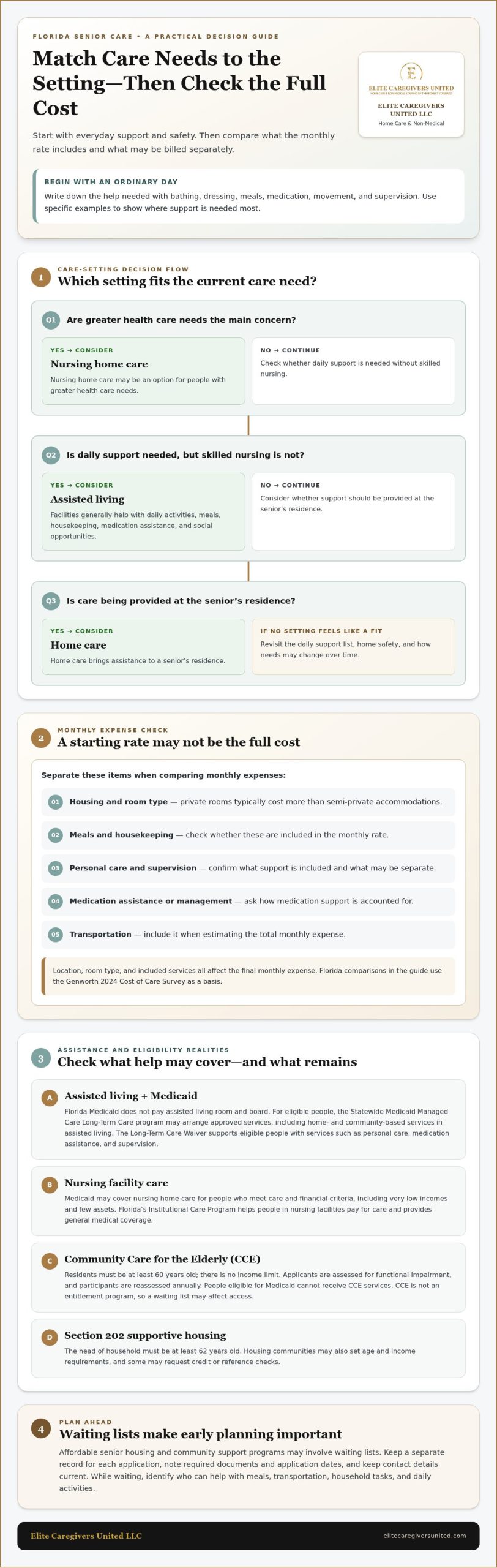
Start by listing the support your relative needs on an ordinary day. Track help with bathing, dressing, meals, medication, movement, and supervision. A written list helps distinguish occasional assistance from support needed throughout the day. Include examples, such as needing help getting dressed each morning or remembering medication at lunchtime. Then consider whether the home can safely meet those needs.
Florida assisted living facilities generally help with daily activities, meals, housekeeping, medication assistance, and social opportunities. They suit residents who need daily support but don’t require skilled nursing. Nursing home care may be an option for people with greater health care needs, and Medicaid may cover it for those who meet care and financial criteria. Home care brings assistance to a senior’s residence instead.
Home care may suit someone who wants to remain at home and needs part-time support, provided the home is safe. It can work well when a family member can coordinate much of the daily oversight. For example, relatives might arrange help with bathing and meal preparation while managing appointments and household decisions. Check whether the layout allows safe movement between the bedroom, bathroom, and kitchen.
Adult day programs offer supervision and activities during the day, and some provide meals. They work best when a senior can safely remain at home for part of the day. Families still need to arrange transportation, evening care, and weekend support. Map a typical week to see whether program hours fit work schedules, appointments, and the senior’s routine.
Safety can change the decision. A senior who is no longer safe at home may face falls, emergency room visits, medication errors, or caregiver burnout if a move is delayed. Look for specific warning signs, such as repeated falls, missed medication, or difficulty being alone. These examples can help families decide whether the current living arrangement is still workable.
Use this simple comparison to connect needs with a setting:
- Assisted living: Consider it when daily personal support, meals, housekeeping, medication assistance, or social opportunities would help.
- Home care: Consider it when the senior wants to stay home, needs part-time assistance, and family can coordinate oversight.
- Adult day programs: Consider them when daytime supervision and activities are useful, and evenings, weekends, and transportation are covered.
- Nursing home care: Explore it when health care needs exceed what a home or assisted living setting can manage.
Revisit the comparison whenever needs change. New difficulty with dressing, an unsafe bathroom, or a change in a family caregiver’s schedule can affect which arrangement fits best. Matching support to current needs helps families weigh comfort, safety, and housing choices together.
4. Comparing all-inclusive monthly costs
Compare the full monthly picture, not just the advertised base rate. Florida senior care expenses may include housing, meals, medication management, personal care, housekeeping, transportation, and supervision. List each expense separately so a lower starting rate doesn’t obscure services charged extra. Use the same categories for every option.
Ask what the base rate includes, how care levels are priced, and whether Medicaid or veterans benefits are accepted. These questions clarify whether daily living assistance is included or added as needs change. Ask how the monthly amount changes if a resident needs more help with dressing, bathing, or medication routines. Compare the answers side by side, rather than relying on one quoted total.
For home care, estimate the hours of support needed in a typical week, including overnight help if required. In-home care can cost more than residential care when support is needed throughout the day and overnight. Someone needing part-time assistance may have a different cost pattern from someone requiring continuous supervision. Include household expenses that continue at home, such as utilities, meals, and transportation.
Medicaid affects the comparison, but coverage depends on the setting and eligible services. Florida Medicaid doesn’t pay room and board in assisted living facilities, although Statewide Medicaid Managed Care Long-Term Care plans may cover approved home- and community-based services. List covered services separately from housing costs. This helps families avoid assuming that care assistance pays the entire monthly bill.
Income also shapes affordability. Compare expected monthly expenses with reliable income, then identify which costs remain the household’s responsibility. For affordable housing, note whether rent is separate from personal care or other support. Florida’s Department of Children and Families administers ACCESS Florida, where residents can apply for Medicaid. Keeping housing, care, and potential benefits separate makes the budget easier to understand.
Before choosing senior care in Florida, ask what the base rate includes, how additional care levels affect charges, and whether Medicaid or veterans benefits are accepted. Review the written fee schedule for exclusions, changes tied to increased assistance, and separately billed services. Avoid underestimating ongoing household expenses or assuming Medicaid pays room and board when it doesn’t.
- Residential care: Compare room type, meals, housekeeping, transportation, supervision, and personal care.
- Home care: Account for support hours, overnight needs, and household costs that continue at home.
- Benefits: Separate eligible services from housing expenses when estimating what the family pays.
A simple worksheet keeps comparisons consistent: list each setting, record included services, mark separate expenses, and total the monthly obligations. Revisit it when care needs change, since added assistance can affect the total. This helps Florida families compare options based on current needs and costs outside the monthly rate.
5. Senior care options in Central Florida
Affordable choices in Central Florida include in-home support, adult day programs, assisted living, and nursing home care. The right fit depends on daily assistance needs, safety, social preferences, and available family support. Housing assistance and care funding address different parts of the budget, so compare them separately rather than treating a voucher as payment for care.
Adult day programs can provide supervision, activities, and sometimes meals during working hours. They may suit a resident who can safely stay at home for part of the day and benefits from social contact. Families still need to arrange transportation and cover evenings and weekends. A weekly schedule can show whether program hours fit work, appointments, and the senior’s usual routine.
For someone who needs a more structured residential setting, assisted living typically combines daily support with meals, housekeeping, medication assistance, and social opportunities. Memory care adds a secure environment, staff trained to support cognitive decline, and structured routines. A shared room may reduce housing expenses without sacrificing comfort. Compare options according to the resident’s support needs, privacy preferences, and services included in the monthly rate.
In-home care can support a senior who wants to remain at home, particularly when needs are part-time and a family member can coordinate oversight. However, home care may not provide built-in social engagement, so isolation can become a concern. Consider whether the resident has regular companionship, safe transportation to activities, and help with household tasks. Adult day programs or planned social activities can meet some daytime needs, while families arrange evening and weekend support.
For affordable housing, distinguish rent assistance from care services. Housing Choice Vouchers help eligible households pay rent, while senior care expenses may include personal assistance, meals, supervision, and transportation. Families can also explore Florida programs that may help with home repairs, environmental modifications, adaptive alterations, or security devices. These changes can make a home safer, but don’t replace daily support.
To find licensed, affordable providers, first identify the setting and care tasks needed, then compare options serving the family’s Central Florida community. Ask for each residential community’s license information and use it to verify the provider through the appropriate Florida licensing records. For help understanding Community Care for the Elderly, call Florida’s Elder Helpline at 1-800-963-5337. Families comparing home-based support can explore in-home respite care as one way to support a senior while caregivers manage other responsibilities.
The clearest takeaway is to match the setting to the resident’s safety and daily support needs, then compare housing, care, transportation, and social connection separately. This helps Central Florida families see what each option addresses and where additional support may be needed.
Elite Caregivers United LLC: Respite Care
Elite Caregivers United LLC offers Respite Care for families who need support while a family caregiver rests or manages other responsibilities. The Personal Care Services/CNA Team can assist with day-to-day personal care at home. For someone returning home after a procedure or hospital stay, Surgery Recovery & Post-Hospitalization Care and Cosmetic Surgery Recovery provide support during recovery.
These services can complement a family’s care plan when an older adult can remain at home and needs non-medical assistance. They aren’t a substitute for a residential setting when someone’s needs require one. Families can identify which daily tasks need support and whether respite or recovery care fits their situation.
For a thoughtful conversation about support, contact Elite Caregivers United LLC.
Take the Next Step With a Care Plan That Fits
Turn your family’s priorities into a practical plan: identify which daily tasks need support, who can coordinate them, and what help would make life at home more manageable. As you compare affordable senior care options in Florida, remember that home care can be part of the plan alongside a separate housing decision.
For families who need personal care, a caregiver break, or recovery support at home, Elite Caregivers United LLC offers Personal Care Services/CNA Team, Respite Care, and Surgery Recovery & Post-Hospitalization Care. These services can support daily needs or recovery while family members organize next steps.
Share what kind of support your family is considering, and contact Elite Caregivers United LLC to discuss care options. A thoughtful conversation can help you move forward with greater clarity and a plan centered on your loved one’s dignity and comfort.
Frequently Asked Questions
What Does Senior Living Typically Cost in Florida?
To make the comparison useful for your family, weigh the expected monthly total against the services your loved one needs. Someone who needs personal assistance and supervision may have different expenses from someone who needs less support. Room choice and location also affect community costs.
Who is eligible?
Eligibility depends on the program, housing, and care setting. For Florida’s Community Care for the Elderly program, residents must be at least 60 years old and assessed for functional impairment; there’s no income limit, but people eligible for Medicaid can’t receive CCE services. Section 202 supportive housing requires the head of household to be at least 62. Medicaid eligibility rules vary, so one program’s criteria don’t determine eligibility for another.
How much do Florida home care and adult day care services cost?
Monthly costs depend on the support needed and what each service includes. For home care, the amount of assistance, schedule, and daily tasks affect the overall expense. Adult day program costs depend on the program and its services, such as supervision, activities, or meals. Compare the full schedule, including transportation and care outside program hours, to understand total household spending.
Does Florida Medicaid cover assisted living or in-home senior care?
Florida Medicaid may cover approved home- and community-based services in assisted living, but it doesn’t pay room and board there. Statewide Medicaid Managed Care Long-Term Care plans arrange covered services for eligible people, and the Long-Term Care Waiver may support personal care, medication assistance, and supervision. Coverage depends on eligibility and approved services, so distinguish care assistance from housing expenses.
What financial and health eligibility rules apply to Florida long-term care assistance?
Florida long-term care eligibility considers financial circumstances and care needs, with rules varying by program. Medicaid may cover nursing home care for people with health care needs, very low incomes, and few assets. The Community Care for the Elderly program assesses functional impairment, has no income limit, and excludes people eligible for Medicaid. These different criteria mean income alone doesn’t establish eligibility across programs.