

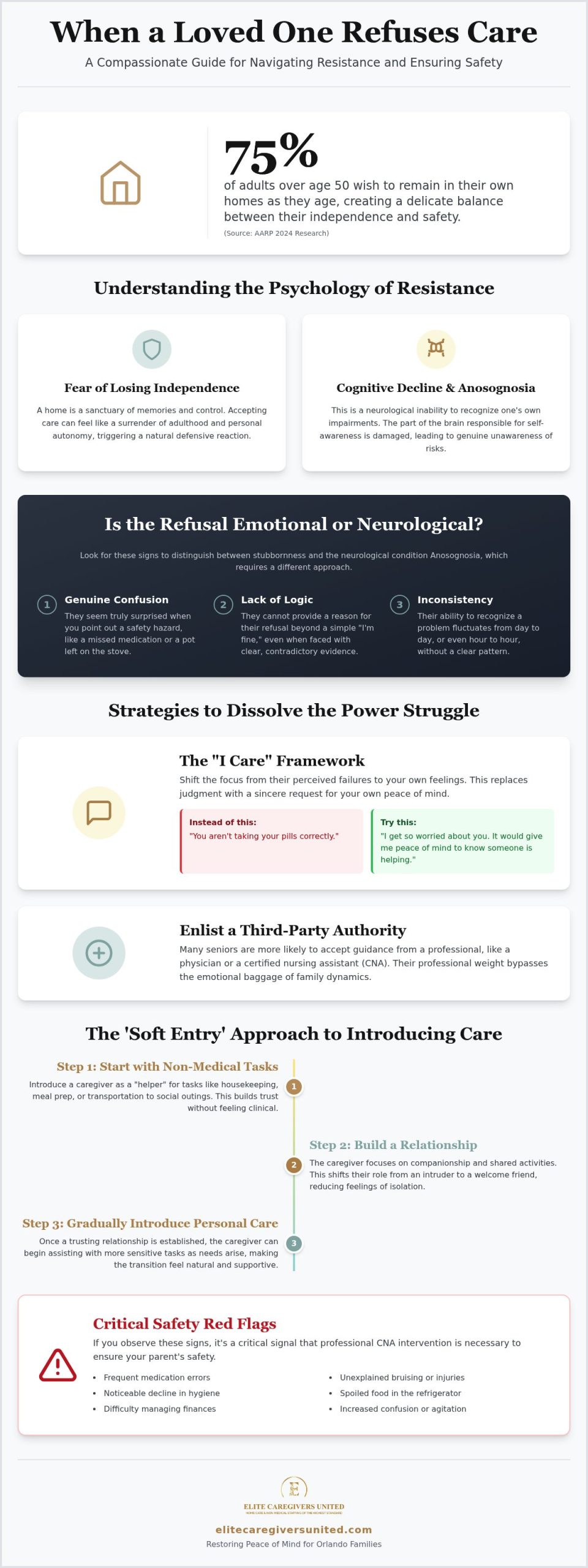
According to 2024 AARP research, 75% of adults over the age of 50 wish to remain in their current homes as they age, a goal that often creates a delicate tension between safety and personal independence. You likely find yourself caught in a cycle of worry, wondering what to do when elderly parent refuses care while you manage the exhaustion of being a sole caregiver. It’s painful to see a loved one resist support, especially when you’re motivated by a deep desire to protect their health and well-being.
This guide offers a compassionate path forward, providing you with empathetic strategies and professional insights to help your loved one accept the assistance they need without sacrificing their dignity. We’ll show you how to shift the conversation from a clinical necessity to a nurturing support system that your parent can actually enjoy. By the end of this article, you’ll have a clear plan to foster a peaceful home environment, ensuring your parent remains safe and well-cared for while restoring the vital bond you share as a family.
Key Takeaways
- Uncover the psychological roots of resistance, including why some seniors may be cognitively unable to recognize their own physical or safety limitations.
- Master the “I Care” communication framework to understand exactly what to do when elderly parent refuses care without damaging your family’s precious emotional bond.
- Implement a “soft entry” strategy by introducing support through non-medical tasks like housekeeping or social outings to local Orlando events and theme parks.
- Learn to identify specific safety red flags, such as medication errors or unexplained bruising, that signal a critical need for professional CNA intervention.
- Transition from the exhaustion of sole caregiving to a sustainable model of support that honors your parent’s independence and restores your own peace of mind.
Why Elderly Parents Refuse Care: Understanding the Psychology of Resistance
Understanding why a parent pushes back against support is the essential first step in determining what to do when elderly parent refuses care. This resistance rarely stems from a desire to be difficult; instead, it’s often a survival mechanism for their identity. Many seniors experience a profound sense of grief as they navigate the loss of physical abilities they once took for granted. When a child attempts to step into a caregiving role, it often triggers a “parent-child role reversal” trap. This dynamic causes seniors to feel patronized or diminished, leading to a defensive stance that can strain even the most loving family bonds. By recognizing that their refusal is a shield against the stigma of “being old,” you can begin to approach the situation with the professional warmth and empathy it requires.
The Fear of Losing Independence
For many seniors, their home is much more than just a place to live; it’s a curated sanctuary of a lifetime’s memories and a final bastion of personal control. Accepting help from an outside source can feel like the “beginning of the end,” a public surrender of their adulthood. This fear is often rooted in the belief that once they allow a caregiver through the door, their right to make their own choices will vanish. You might notice them clinging to small routines with surprising intensity because these habits represent their remaining power. Maintaining personal autonomy is the primary driver of psychological health and emotional vitality for the elderly, and any perceived threat to that independence is met with natural resistance.
Cognitive Decline and Anosognosia
It’s vital to distinguish between emotional stubbornness and a neurological condition known as anosognosia. This condition, which is frequently seen in those requiring specialized Alzheimer’s and dementia care, is a physiological inability to recognize one’s own impairments. It isn’t that the parent is “in denial”; rather, the part of the brain responsible for self-awareness has been damaged by the disease. This lack of insight can lead to dangerous situations involving Understanding Elder Abuse and Self-Neglect, where the individual unintentionally puts themselves at risk because they genuinely believe they are fully capable of managing their own safety.
When dementia affects the brain’s ability to process risk, a parent might try to drive a car or cook on a stove despite clear evidence that it’s no longer safe. To identify if a refusal is neurological or emotional, look for these signs:
- Genuine Confusion: They seem truly surprised when you point out a safety hazard or a missed medication.
- Lack of Logic: They cannot provide a reason for their refusal beyond a basic “I’m fine,” even when faced with contradictory facts.
- Inconsistency: Their ability to recognize a problem fluctuates wildly from day to day.
If the resistance is neurological, traditional logic and arguments won’t work. Instead, a shift toward a “wise protector” model of care—one that subtly ensures safety while preserving the parent’s dignity—becomes the most effective path forward.
Communication Strategies to Dissolve the Power Struggle
When you’re navigating the delicate question of what to do when elderly parent refuses care, the conversation often feels like a battlefield where love and frustration collide. To move past this impasse, it’s helpful to adopt the “I Care” framework, which shifts the focus from their perceived failures to your own emotional well-being. Instead of saying, “You aren’t taking your pills,” try saying, “I find myself constantly worried about your health, and it would give me such peace of mind to know someone is helping you stay on track.” This approach removes the sting of judgment, replacing it with a sincere request for help from a child to a parent, which honors the existing family bond while addressing critical safety needs.
Sometimes, the most loving thing you can do is step back and let a neutral voice take the lead. This “Third-Party Authority” tactic is highly effective because many seniors are more likely to follow the guidance of a physician or a professional CNA than a family member. These experts carry a level of professional weight that bypasses the emotional baggage of family history, offering a calm reliability that parents often find easier to accept without feeling patronized. Additionally, implementing respite care in Orlando serves as an excellent trial run, allowing your loved one to experience the benefits of support without feeling they’ve made a permanent, life-altering commitment. Setting healthy boundaries as a family caregiver is equally vital, as it prevents the burnout and resentment that can further fracture these sensitive discussions.
Listen First, Speak Second
Active listening is a profound tool for reassurance, as it allows your parent to voice their fears and frustrations without immediate interruption or correction. When you ask open-ended questions such as, “How would you like your ideal day to look?”, you invite them to be the architect of their own care plan. Avoiding “lecture mode” is critical; when a parent feels they’re being managed rather than supported, they often shut down defensively. By listening deeply, you act as a wise protector of their dignity, acknowledging that their desire to age in place is a valid and shared goal that you want to help them achieve safely and comfortably.
Framing Help as a Luxury, Not a Necessity
The language we use to describe support can completely change its reception. By positioning a professional caregiver as a “personal assistant” or a “lifestyle companion,” you transform the service from a clinical necessity into a curated luxury. Focus on how this assistance provides more energy for their favorite hobbies, a cleaner home, or better meals, ensuring they can safely enjoy local outings. This shift emphasizes vitality and growth rather than decline. If you find the burden of worry becoming too heavy, reaching out to Elite Caregivers United LLC can provide the steady, guiding presence your family needs to restore a sense of calm and security at home.
Introducing Care Gradually: The ‘Soft Entry’ Approach
Navigating the complex question of what to do when elderly parent refuses care often requires a strategic shift from clinical intervention to lifestyle enhancement. A “soft entry” approach focuses on introducing support through low-impact tasks that feel helpful rather than intrusive. By starting with housekeeping, meal preparation, or transportation to local Orlando events, you provide your loved one with tangible benefits that preserve their sense of dignity. This method allows the parent to experience the relief of shared responsibility without the immediate pressure of personal care, fostering a foundation of trust that can be built upon over time.
Another effective strategy involves the “Expert Recovery” angle, where care is framed as a temporary necessity following a hospital visit or minor procedure. Positioning support as a short-term measure for “optimal healing” makes it much easier for a proud senior to accept, as it frames the caregiver as a professional tool for regaining independence. Once the parent realizes that having a skilled presence in the home actually expands their freedom by preventing setbacks, the transition to long-term support becomes a natural progression rather than a forced change.
The Value of Respite Care as a Bridge
Short-term respite care serves as an invaluable bridge, allowing your parent to “test” the experience of having professional support in their home environment. By introducing a caregiver as a “guest” who’s primarily there to assist the family, you reduce the senior’s feeling of being monitored or managed. Our professional CNA team excels at these warm introductions, arriving with a spirit of heartfelt dedication that quickly dissolves the “intruder” feeling. This temporary arrangement gives the senior a chance to build a genuine rapport with the caregiver, often leading to a realization that professional help is a source of comfort rather than a loss of control.
Lifestyle-Based Support
One of the most non-threatening ways to introduce assistance is through the role of a “lifestyle companion” who facilitates the activities your parent still loves. In a vibrant city like Orlando, utilizing a travel companion for the elderly can make multi-generational visits to theme parks or local day trips possible again. These specialized caregivers act as a “wise protector,” managing the physical logistics and safety needs while the senior focuses on enjoying time with their grandchildren. Linking support to social health and mental vitality shifts the narrative from what they can’t do to what they can do with a little extra help, significantly improving their overall quality of life.
When to Enlist Professional CNA Intervention in Orlando
While the communication strategies and gradual introductions discussed earlier build a foundation of trust, there comes a specific moment when tangible safety risks demand a more structured intervention. Knowing what to do when elderly parent refuses care becomes a matter of urgency when you notice physical changes like sudden weight loss, unexplained bruising, or recurring medication errors. These aren’t just minor lapses; they’re signals that the risks of living alone have surpassed the individual’s current ability to manage them safely. Navigating non-medical home care in Orlando allows you to maintain a secure environment while respecting their desire for independence. In this stage, a professional team steps into the “Wise Protector” role, providing a safety net that balances daily comfort with essential health monitoring.
Safety Triggers That Require Immediate Action
Recognizing the difference between the natural slowing of age and immediate danger is vital for maintaining a parent’s well-being. While a slightly cluttered home is one thing, unpaid bills piling up or a kitchen left with a burner on are clear indicators that safety is being compromised. It’s helpful to document these specific incidents as they occur, providing a factual case to present to your parent rather than relying on emotional pleas that might trigger defensiveness. A professional home safety assessment can also identify hidden hazards, such as poor lighting or loose rugs, that frequently lead to life-altering falls. By focusing on these concrete triggers, you move the conversation away from “taking away control” and toward “preserving health and vitality.”
The Advantage of a Professional CNA Team
A professional CNA team brings a level of expertise and specialized training that goes far beyond basic companionship or unskilled help. For families managing the complexities of Alzheimer’s, Parkinson’s, or other neurodegenerative conditions, these caregivers understand the unique behavioral and physical challenges involved. Their presence often reduces family conflict because they act as a neutral party; a parent who resists a child’s help often more readily accepts support from a trained professional. At Elite Caregivers United LLC, our team focuses exclusively on high-touch personal care and lifestyle support, intentionally excluding skilled nursing or clinical procedures to ensure our heart and energy remain centered on your parent’s daily comfort and dignity. This dedicated focus allows us to provide a stable, nurturing experience that feels like a natural extension of your family’s love.
If you’re noticing these safety red flags, don’t wait for a crisis to occur before seeking support. Connect with Elite Caregivers United LLC today to learn how our professional CNA team can restore peace of mind to your family.
Elite Caregivers United LLC: Restoring Peace of Mind for Orlando Families
The philosophy at Elite Caregivers United LLC is built upon the belief that professional warmth and CNA expertise should work in harmony to support a family’s existing bond. We understand that determining what to do when elderly parent refuses care is a deeply personal journey, often marked by a desire to protect a loved one’s history while ensuring their future safety. Our 24/7 care models provide a vital safety net for those who are determined to remain in their own homes, offering a level of calm reliability that alleviates the emotional weight felt by adult children. By positioning our team as a steady, guiding presence, we help families move from a state of constant worry to one of quiet confidence, knowing a “wise protector” is always watching over their parent’s well-being.
For those navigating the specific needs of home care after surgery or managing the progression of neurodegenerative conditions, we offer a clear and supportive path forward. Our approach isn’t about clinical checklists; it’s about providing high-touch personal care that adapts to the individual’s changing needs while fostering vitality and growth. We focus on creating a customized “Independence Plan” during our initial consultation, ensuring that every action we take is designed to preserve the parent’s dignity and autonomy within their cherished home environment.
Specialized Alzheimer’s and Parkinson’s Care
Our team at Elite Caregivers United LLC is specifically prepared to handle the unique challenges of memory loss and the physical resistance that sometimes accompanies cognitive decline. We recognize that a calm, consistent caregiver presence is essential for reducing the anxiety that often triggers defensiveness in seniors. By maintaining the same familiar faces, we build a foundation of trust that allows for smoother daily routines and a more peaceful home atmosphere. These specialized companion services are delivered with the humility and patience of a dedicated caregiver, ensuring that every interaction focuses on the senior’s comfort and emotional security.
Your Partner in Orlando Home Care
With our local Orlando expertise and 24/7 availability, Elite Caregivers United LLC acts as a reliable extension of your family’s support system. We take the stress out of the initial transition by carefully matching caregivers to your parent’s unique personality and lifestyle preferences, ensuring the relationship feels natural rather than forced. This proactive and attentive matching process is what allows us to dissolve the power struggle and restore a sense of harmony to the household. We invite you to take the first step toward a more secure future by reaching out for a professional consultation. Contact Elite Caregivers United LLC today to discuss a gentle transition for your loved one.
Restoring Harmony and Safety to Your Home
Finding the right path forward when a loved one resists support requires a delicate balance of patience and professional insight. By understanding that resistance is often a defense of their identity, you can shift your approach from a clinical necessity to a nurturing request for peace of mind. Learning what to do when elderly parent refuses care involves embracing communication frameworks that honor their dignity while slowly introducing lifestyle-based assistance. This journey doesn’t have to be one you walk alone, as a structured support system can transform a household of tension into a sanctuary of safety and respect.
Our professional CNA-led team is dedicated to providing the calm reliability your family deserves, offering 24/7 support availability and specialized expertise in Alzheimer’s and Parkinson’s care. We act as a wise protector, ensuring your parent remains safe while you reclaim your role as a loving child rather than a stressed caregiver. We invite you to Schedule a Compassionate Consultation with Elite Caregivers United to begin a gentle transition that prioritizes your parent’s vitality and your family’s tranquility. You’ve carried this weight for long enough; let us help you find a sustainable way to keep your loved one safe and well-cared for at home.
Frequently Asked Questions
Can I legally force my elderly parent to accept care?
Legally, an adult with mental capacity has the right to refuse care, even if that decision seems unwise to others. Unless a court has granted guardianship or they’ve been formally declared incompetent, you cannot force them. Instead of focusing on legal force, many families find success by identifying what to do when elderly parent refuses care through empathetic negotiation and professional mediation to ensure safety and dignity at home.
What should I do if my parent with dementia refuses to bathe or eat?
Resistance to bathing or eating in dementia patients is often triggered by sensory overload or fear rather than stubbornness. Try simplifying the environment by warming the bathroom or offering finger foods that require less coordination. Our specialized Alzheimer’s and dementia care team uses gentle redirection techniques, focusing on creating a calm, predictable routine that preserves the senior’s dignity while ensuring their physical needs are met with professional warmth and heartfelt dedication.
How do I deal with the guilt of hiring a caregiver?
Guilt often stems from a feeling that you’ve failed as a child, but hiring a professional is actually an act of deep love and protection. By enlisting a “wise protector” from a CNA team, you aren’t replacing yourself; you’re restoring your role as a daughter or son rather than a stressed caregiver. This shift allows you to focus on quality time and emotional connection while ensuring your parent receives the specialized support and vitality they deserve.
What are the signs that my parent is no longer safe living alone?
Critical safety red flags include recurring medication errors, unexplained bruising from falls, or significant weight loss due to poor nutrition. You might also notice unpaid bills or a decline in home maintenance, which suggests cognitive or physical tasks have become overwhelming. A professional home safety assessment can identify these risks early, helping you determine what to do when elderly parent refuses care before a minor issue escalates into a medical or safety crisis.
How can I introduce a caregiver so it doesn’t feel like an intrusion?
Introducing a caregiver as a lifestyle companion or a personal assistant for specific tasks like housekeeping or meal prep often feels less threatening than medical help. You might start with low-impact visits centered around social engagement or local Orlando outings. This soft entry approach allows your parent to build a genuine rapport with the CNA, ensuring the presence feels like a curated luxury that enhances their independence rather than an intrusion into their private sanctuary.
What is the difference between a CNA and a general home helper?
A Certified Nursing Assistant (CNA) has undergone formal training and state testing to provide hands-on personal care, including assistance with mobility and hygiene. In contrast, general home helpers or companions are often legally prohibited from providing hands-on care in Florida. Our CNA team provides a sophisticated level of expertise, especially for those managing Alzheimer’s or Parkinson’s, ensuring a higher standard of safety and professional warmth than unskilled companionship alone can offer to families.
How do I talk to my parent about their messy house without offending them?
Approach the conversation by focusing on their safety and vitality rather than criticizing their housekeeping. Use “I” statements, such as “I’m worried that these loose rugs might cause a fall because I love you and want you to stay in this home.” Framing a caregiver as someone who handles the heavy lifting so they have more energy for hobbies helps dissolve the power struggle, turning the support into a tool for maintaining their cherished autonomy.
Will insurance cover non-medical home care in Florida?
Traditional Medicare typically does not cover non-medical personal care or 24-hour home care services. However, many Long-Term Care (LTC) insurance policies and certain Medicare Advantage plans in Florida may provide coverage for these essential support systems. We recommend reviewing your specific policy or contacting your provider to discuss how these benefits can be applied toward a professional CNA team, ensuring your loved one receives high-quality, individualized care while preserving your family’s financial peace of mind.