

As the golden afternoon light begins to fade and the shadows stretch across the room, you might feel a familiar sense of apprehension settling in your chest. For many families, this daily transition marks the start of the “witching hour,” a period where a loved one’s calm demeanor can suddenly shift into pacing, confusion, or distressing agitation. You’re likely familiar with the heavy weight of chronic sleep deprivation and the constant, underlying fear that a loved one might wander into danger or become uncharacteristically aggressive as night falls. It’s a deeply taxing experience that often leaves caregivers feeling drained and carrying a silent burden of guilt for their own exhaustion.
Managing dementia sundowning at home is not about simply reacting to these difficult moments; it’s about intentionally creating a sanctuary of predictable safety. This guide provides compassionate, expert-backed strategies to soothe evening restlessness and restore a much-needed sense of peace to your household. We’ll walk through how to gently adjust your environment, implement routines that foster a feeling of security, and prioritize the personal rest you need to remain a steady, wise protector for your family throughout every stage of this journey.
Key Takeaways
- Understand the biological roots of the “witching hour” while learning to identify environmental triggers like shifting shadows and evening household noise.
- Implement a proactive Sunset Ritual to foster a sense of security, providing a compassionate framework for managing dementia sundowning at home.
- Create a peaceful sanctuary through lighting therapy and intentional environmental changes that soothe the senses before the sun begins to set.
- Recognize when to lean on a professional CNA team to navigate evening transitions, ensuring both safety for your loved one and rest for yourself.
- View respite care as a vital necessity for your own well-being, allowing you to return to your caregiving role with renewed patience and heartfelt dedication.
Understanding Sundowning: Why Late-Day Confusion Occurs
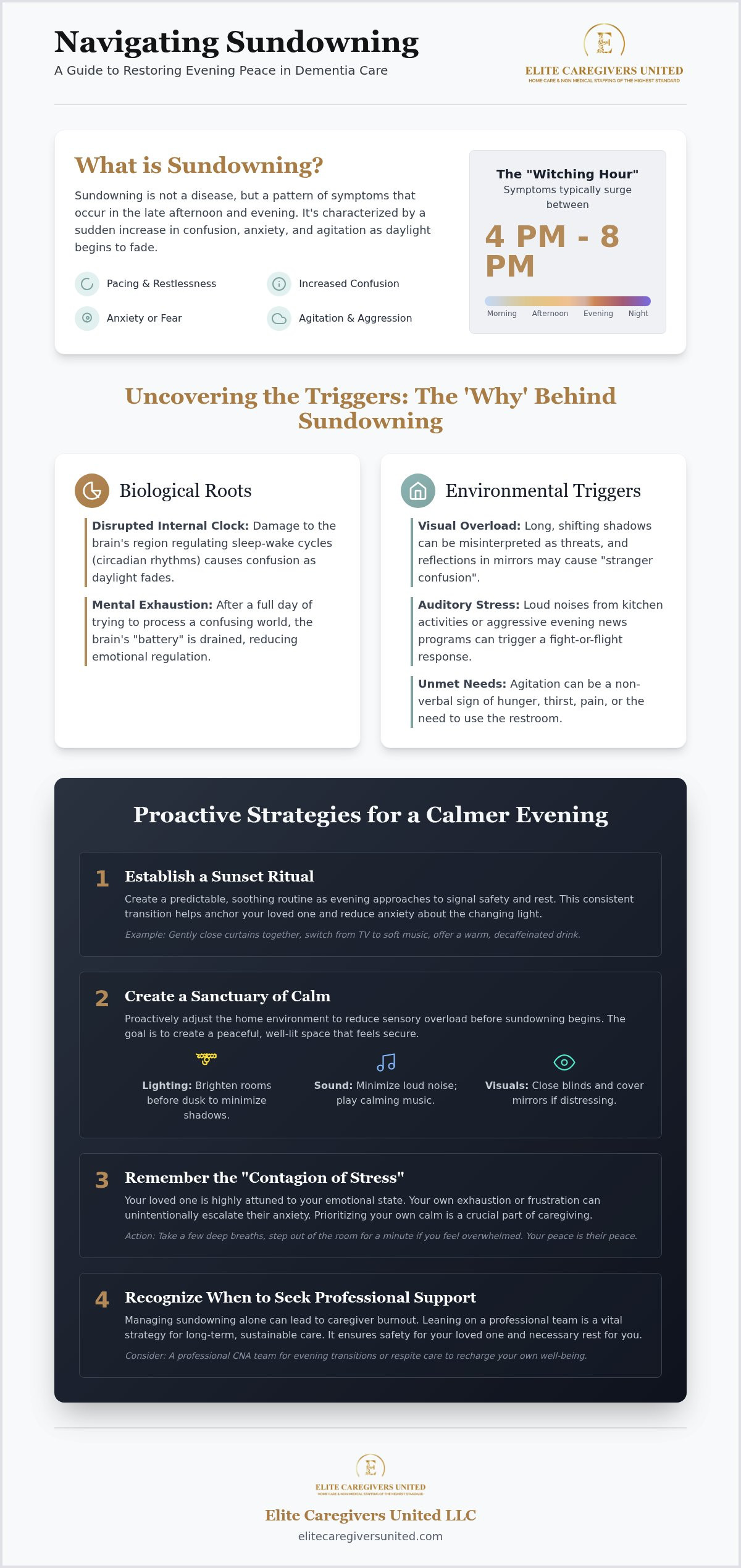
When you’re managing dementia sundowning at home, the transition from day to night often feels like a shift in reality. Sundowning isn’t a distinct medical diagnosis or a specific disease in itself; rather, it’s a descriptive term for a cluster of symptoms that emerge as the natural light begins to fade. Unlike the general cognitive challenges of dementia that remain constant throughout the day, these behaviors are uniquely tied to the clock. Between 4:00 PM and 8:00 PM, often called the “witching hour,” your loved one might experience a sudden surge in anxiety, pacing, or verbal agitation that wasn’t present during breakfast.
Witnessing these personality shifts is profoundly taxing for family caregivers. It’s painful to see a spouse or parent who was calm and conversational at noon become fearful or aggressive by dinner. This emotional weight often leads to a sense of helplessness, yet understanding that Sundowning is a biological response rather than a choice can help you maintain your role as a steady, compassionate presence in their lives. By recognizing the patterns, you can begin to anticipate their needs before the agitation takes hold.
The Biological Roots of Evening Agitation
The primary driver behind this late-day restlessness is a profound disruption of the body’s internal clock, or circadian rhythm. In a healthy brain, this rhythm signals when it’s time to be alert and when to rest. However, neurodegenerative conditions can damage the part of the brain that regulates these cycles. As the Florida sun dips below the horizon, the reduction in light triggers chemical changes that lead to disorientation. Additionally, after a full day of trying to process a world that no longer makes sense, the individual’s mental battery is simply drained. This state of total exhaustion makes it nearly impossible for them to regulate their emotions or understand their surroundings.
Common Physical Triggers to Watch For
Sometimes, the agitation isn’t just about the time of day but about an unmet physical need that your loved one can no longer articulate. When you’re managing dementia sundowning at home, it’s helpful to look for these common underlying issues:
- Unmet Basic Needs: A sudden increase in pacing might actually be a sign of hunger, thirst, or a full bladder.
- Physical Discomfort: Chronic pain or stiff joints often feel worse in the evening, leading to irritability.
- Medication Cycles: The effects of certain medications may wear off by late afternoon, or side effects might peak during the evening hours, contributing to a clouded mental state.
Identifying Behavioral Triggers in the Home Environment
Successfully managing dementia sundowning at home often begins with a quiet observation of the physical space. As the day ends, the brain’s ability to process visual and auditory information diminishes, causing ordinary household features to become sources of profound distress. For many, the environment itself becomes a landscape of confusion where shadows are misinterpreted and routine sounds feel like threats. By identifying these specific triggers, you can proactively engineer a setting that promotes serenity rather than anxiety.
One of the most overlooked aspects of evening agitation is the “contagion of stress.” Because individuals with dementia are often highly attuned to the emotional register of those around them, your own exhaustion can unintentionally escalate their anxiety. When you feel the weight of a long day, that tension can ripple through the home, making the “witching hour” even more volatile. Recognizing this connection is the first step toward creating a calmer atmosphere for everyone involved.
Visual and Auditory Overstimulation
As natural light wanes, the contrast between light and dark becomes starker, often creating “scary” shadows. A floor lamp might cast a long, jagged shape on the wall that your loved one perceives as a person standing in the corner. Similarly, mirrors can become a source of “mirror confusion,” where the individual no longer recognizes their own reflection and believes a stranger has entered their sanctuary. This visual distortion is frequently compounded by auditory overload. The clatter of pots and pans during the dinner rush or the aggressive tone of evening news programs can trigger a flight-or-fight response. Research from the Alzheimer’s Association provides valuable insights into managing sleep issues and sundowning, emphasizing how reducing these stimuli can prevent late-day agitation.
The Role of Disrupted Routines
Consistency is the cornerstone of comfort for those living with neurodegenerative conditions. An unexpected visitor or a meal served thirty minutes late can disrupt the fragile sense of order they rely on. Maintaining a steady rhythm is essential, yet it can be difficult to manage alone during the most demanding hours of the day. Many families find that dementia home care agencies in Orlando provide the professional support needed to ensure these routines remain unbroken. A dedicated caregiver can step in during these high-stress transitions, allowing you to breathe while your loved one remains in a familiar, structured environment. If you find the evening hours becoming increasingly difficult to navigate, exploring professional personal care services can offer the stability your family deserves.
5 Proactive Strategies for Managing Sundowning at Home
Creating a “Sunset Ritual” serves as a gentle bridge between the active hours of the day and the quietude of the evening. When you’re managing dementia sundowning at home, this ritual signals to the brain that it’s time to slow down, helping to mitigate the confusion that often arrives with the dusk. In Florida, we have the unique advantage of abundant morning light; utilizing this natural resource is essential. Opening the curtains wide or taking a brief stroll in the morning sun helps regulate the circadian rhythm, which can significantly reduce restlessness when the sun begins to set later in the day.
Beyond environmental cues, your daily schedule plays a pivotal role in maintaining emotional stability. It’s often helpful to consult the National Institute on Aging guide to sundowning for evidence-based approaches to managing these behavioral shifts. Strategic scheduling ensures that high-energy tasks don’t collide with the “witching hour,” while dietary mindfulness prevents unnecessary spikes in agitation. Reducing caffeine and sugar intake after lunch can prevent the physiological “crash” or hyperactivity that often exacerbates evening confusion.
The “Early Bird” Activity Schedule
Front-loading the day with demanding activities protects your loved one’s limited mental energy. Plan baths, doctor appointments, and physical exercise for the morning hours when cognitive clarity is typically at its peak. This proactive approach prevents the accumulation of “coping fatigue” that often triggers late-day outbursts. Monitoring rest during the day is equally important to ensure a successful night. To preserve nighttime rest, daytime naps should be kept under 30 minutes to avoid disrupting the sleep-wake cycle.
Soothing Transitions and Redirection
When agitation does occur, the focus should shift from correction to comfort. Utilizing “comfort items” like weighted blankets or familiar photo albums can provide a tactile sense of security. If your loved one becomes distressed or makes confusing statements, practice the art of validation. Instead of explaining why they’re “wrong,” acknowledge the emotion behind their words. Engaging them in repetitive, low-stress tasks, such as folding warm towels or sorting socks, provides a grounding sense of purpose. These simple actions are vital tools for managing dementia sundowning at home, helping to redirect anxious energy into a calm, familiar rhythm while restoring a sense of order to the environment.
Environmental Adjustments: Creating a Sanctuary of Calm
Successfully managing dementia sundowning at home requires a thoughtful transformation of your physical environment. While we often focus on behavioral responses, the home itself can act as a silent partner in providing peace. By creating a sanctuary that minimizes sensory confusion, you can shield your loved one from the disorientation that typically arrives with the evening shadows. One of the most effective first steps is closing all curtains and blinds before the sun starts to set. This simple action prevents the “black window” effect, which can cause frightening reflections or make outdoor movements appear more threatening than they are.
If mirrors in the home have become a source of distress, consider covering them with soft, decorative fabric or removing them from high-traffic areas entirely. Lighting therapy also plays a vital role in maintaining a sense of order. Using full-spectrum lights during the daylight hours helps signal alertness, while transitioning to warm, amber tones in the evening encourages the body to prepare for rest. These subtle shifts in the atmosphere help ground the individual, providing a steady narrative of safety throughout the day.
Light and Shadow Management
Shadows are often misinterpreted as frightening objects by a brain struggling with cognitive decline. To eliminate these dark corners, ensure your home features even, consistent lighting that leaves no room for visual distortion. Installing motion-sensor night lights in hallways and bathrooms creates a safe, illuminated path for those who might wander after dark. For some, utilizing light boxes as a form of “circadian therapy” can help reset the body’s internal clock, though you should always consult a doctor before starting this specific treatment.
Auditory and Sensory Comfort
The sounds within your home are just as impactful as the sights. Playing soft, familiar music from your loved one’s youth can evoke positive emotions and provide a comforting sense of nostalgia. If outdoor noises or household bustle become overwhelming, white noise machines are excellent tools for masking disruptive sounds. Designating a specific “quiet zone” in the house, free from electronics and heavy traffic, offers a peaceful retreat for moments of high anxiety. Aromatherapy using calming scents like lavender can further enhance this sensory sanctuary. If you find that these environmental changes aren’t enough to manage the evening hours alone, our professional dementia care team can provide the professional support needed to maintain a serene home environment.
When to Consider Professional Dementia Care in Orlando
Managing dementia sundowning at home is an act of profound love, yet it’s also a journey that can lead to overwhelming exhaustion. As a family caregiver, you may eventually face “compassion fatigue,” a state where the relentless emotional and physical demands of providing constant support begin to erode your own well-being. Recognizing the signs of burnout isn’t an admission of failure; it is an essential step in ensuring both you and your loved one remain safe. When the evening hours become a source of mounting dread rather than a time for connection, it’s often the right moment to invite a professional partner into your home to share the weight of these transitions.
The Role of Professional CNA Support
A specialized CNA team brings a level of expertise that can fundamentally transform the evening experience for everyone involved. These trained caregivers are skilled at recognizing the subtle, early behavioral cues that often precede a sundowning episode, allowing them to intervene with gentle redirection before agitation escalates. Because they don’t carry the complex emotional history that family members often do, they can implement these techniques with a calm, steady patience that is difficult for a sleep-deprived spouse or child to maintain. Whether it is ensuring safety during periods of nighttime wakefulness or providing a guiding hand during a bout of wandering, their presence acts as a “wise protector” for the entire household, maintaining a sense of dignity and calm reliability throughout the night.
Restoring the Family Dynamic
The most transformative benefit of professional assistance is the ability to reclaim your role as a spouse, child, or partner. Utilizing respite care for dementia patients in Orlando allows you to step away from the exhausting logistical demands of caregiving, providing the personal rest needed to return to your loved one with renewed patience and heartfelt dedication. For families requiring more intensive, round-the-clock vigilance, transitioning to 24 hour home care in Orlando ensures a continuous, steady presence of safety throughout the most difficult hours of the night. By collaborating with Elite Caregivers United LLC on a personalized dementia home care plan, you are securing a nurturing environment where your loved one can maintain their vitality. This support acts as a reliable extension of your own care, allowing your home to remain a sanctuary of calm while ensuring you are never alone in this journey.
Embracing a New Rhythm for Peaceful Evenings
As the shadows stretch and the day draws to a close, remember that the “witching hour” doesn’t have to define your family’s evening experience. By intentionally engineering your environment to eliminate frightening shadows and implementing a predictable Sunset Ritual, you’re building a vital foundation of security for your loved one. Successfully managing dementia sundowning at home is a continuous journey of observation and adjustment; it’s a process where small changes in lighting and routine lead to significant improvements in collective peace.
You don’t have to navigate these challenging transitions without a steady partner by your side. Our CNA-led professional team provides specialized Alzheimer’s and dementia support, acting as a wise protector for your household when you need it most. Whether you require 24/7 respite care in Orlando or targeted assistance during the high-stress evening hours, we’re here to ensure your loved one receives heartfelt dedication while you find the rest you deserve. Restore peace to your evenings with professional dementia care from Elite Caregivers United LLC. You’ve shown incredible strength in this journey, and with the right support, a more peaceful and predictable home life is well within reach.
Frequently Asked Questions
What exactly is sundowning in dementia patients?
Sundowning represents a cluster of neuropsychiatric behaviors that intensify as natural light fades, resulting in increased confusion and restlessness. This phenomenon is deeply linked to the disruption of the circadian rhythm, which makes it difficult for the individual to distinguish between day and night. While managing dementia sundowning at home requires careful observation, understanding these biological shifts helps caregivers maintain a steady, reassuring presence that fosters a sense of calm reliability during difficult transitions.
Is sundowning a sign that dementia is getting worse?
While not a definitive indicator of a specific medical decline, these behaviors typically emerge during the middle-to-late stages of dementia. They suggest that the brain’s ability to process sensory information and regulate internal cycles is becoming more limited. However, the intensity of these episodes often fluctuates based on environmental factors or physical exhaustion, meaning that proactive adjustments to the home sanctuary can still lead to significant improvements in vitality and comfort.
How long does a typical sundowning episode last?
A typical episode begins in the late afternoon and can persist for several hours, often coinciding with the “witching hour” between 4:00 PM and 8:00 PM. While each person’s experience is unique, the agitation generally subsides once the individual enters a restful sleep cycle. Implementing a structured Sunset Ritual can help signal the end of these periods, gently guiding the mind toward a more predictable and peaceful night of restorative rest.
Can certain foods or drinks make sundowning worse in the evening?
Diets heavy in refined sugars or caffeine, particularly when consumed in the late afternoon, are known to exacerbate evening agitation. These stimulants cause physiological spikes that lead to a difficult “crash,” increasing irritability and confusion as the sun sets. Providing a balanced, light dinner and maintaining consistent hydration throughout the day helps stabilize energy levels, preventing the physical discomfort that often triggers restlessness while managing dementia sundowning at home.
What should I do if my loved one becomes aggressive during a sundowning episode?
If aggression occurs, your primary focus should be on maintaining a safe environment and projecting an atmosphere of calm reliability. Avoid correcting their reality or using a confrontational tone, as this often heightens anxiety and escalates the behavior. Instead, try validating the underlying emotion and gently redirecting them toward a familiar, soothing activity. If these moments become frequent or unsafe, it may be time to seek a dedicated extension of your family’s support system.
Are there medications that can help manage sundowning at home?
While physicians may occasionally discuss clinical options to help regulate sleep-wake cycles, non-medical strategies are generally considered the first line of defense. The focus remains on engineering a supportive environment through lighting therapy and rhythmic routines to soothe the senses naturally. You should always consult with a healthcare professional to ensure any approach is tailored to your loved one’s specific medical needs and does not interfere with their current care plan.
How can I prevent my loved one from wandering at night?
Preventing nighttime wandering involves a combination of environmental safety measures and attentive monitoring. Installing motion-sensor night lights in hallways and using gentle door alarms can provide early warnings, while removing clutter ensures a safe path if they do wake up. Professional overnight care provides the peace of mind that comes from having a “wise protector” present, ensuring your loved one remains secure in their sanctuary while you receive the rest you deserve.
When should I call for professional help with sundowning?
Professional support is recommended when caregiving demands lead to chronic exhaustion or if the safety of your loved one is at risk during the evening hours. Recognizing the need for help is a sign of heartfelt dedication to your family’s well-being. Elite Caregivers United LLC provides specialized CNA-led support in Orlando, offering the professional expertise and empathy required to manage complex behaviors while restoring a sense of stability and peace to your home life.