

What if the changes you’ve been calling “just getting older” are signs your parent needs more support at home? If you’re searching for signs elderly parents need home care Orlando families can watch for, you may already be balancing worry about a fall or medical emergency with guilt about not being able to provide constant care yourself.
It’s understandable to hope that small changes will pass, and it can be painful when siblings disagree about how much help is appropriate. But noticing concerns early can give your family time to listen to your parent, consider the options, and make a thoughtful plan together.
This guide offers a clear checklist of possible signs of decline, from changes in daily routines to growing safety concerns, and a practical framework for discussing care without letting conflict take over. You’ll also learn how non-medical home care, including support from a CNA-led team, can help preserve comfort and dignity while giving family caregivers room to rest.
Key Takeaways
- Notice changes in eating, weight, hygiene, and clothing that may signal your parent is finding everyday routines harder to manage.
- Use a simple home check, including the refrigerator and signs your parent may not be drinking enough, to spot concerns that can be easy to miss during a visit.
- Track the signs elderly parents need home care Orlando families may observe, then bring specific examples to a calm family discussion instead of relying on assumptions.
- Plan a family meeting to hear each sibling’s concerns, agree on shared priorities, and approach your parent with a united, respectful message.
- Compare home care with other living arrangements while considering your parent’s preferences, safety needs, and the value of familiar surroundings.
Identifying the Red Flags: Physical and Cognitive Signs of Decline
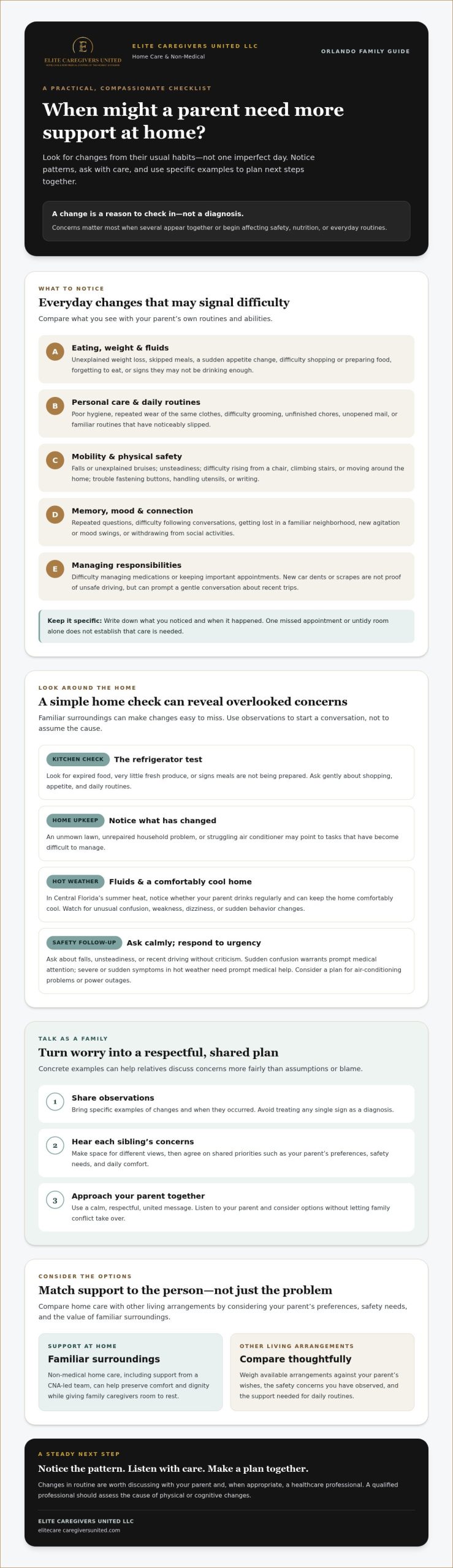
A single missed appointment or untidy room doesn’t automatically mean your parent needs help. Look instead for changes from their usual habits, especially when several concerns appear together or begin affecting safety, nutrition, or daily routines. These signs elderly parents need home care Orlando families may notice are reasons to check in with care and curiosity, not to jump to a diagnosis.
Pay attention to unexplained weight loss, skipped meals, or a sudden change in appetite. Difficulty shopping, preparing food, or remembering to eat may be contributing, while some changes can have medical causes that deserve a conversation with a healthcare professional. Poor personal hygiene, wearing the same clothes repeatedly, or seeming unable to manage grooming may also suggest that familiar tasks have become difficult.
Notice unexplained bruises or falls, particularly if your parent dismisses them or tries to hide what happened. Ask gently whether they’ve felt unsteady, and watch for difficulty managing medications or keeping important appointments. A calm, specific question is more likely to invite an honest answer than criticism.
Cognitive Changes and Memory Loss
Occasional forgetfulness can happen, but repeated questions, difficulty following conversations, or becoming lost in a familiar neighborhood may signal a change that needs professional evaluation. Families exploring dementia home care agencies in Orlando should remember that these observations alone don’t establish dementia. Sudden confusion warrants prompt medical attention. Also note new agitation, mood swings, or withdrawal from social activities, especially if they persist or affect relationships. The broad overview of Elderly care can help families understand that support may take different forms as needs change.
Physical Mobility and Safety Issues
Difficulty rising from a chair, climbing stairs, or moving steadily around the home can make everyday activities less safe. Changes in fine motor skills, such as trouble fastening buttons, handling utensils, or writing, may also affect independence. These changes can occur with conditions such as Parkinson’s disease, but only a qualified healthcare professional can assess their cause. Learn more about Parkinson’s disease home care in Orlando when considering support at home.
Look beyond personal care, too. Unfinished chores, unopened mail, or a home routine that has noticeably slipped may point to tasks your parent can no longer manage comfortably. Write down what you observe and when it happens. Concrete examples can help relatives discuss concerns more fairly and support a thoughtful conversation with your parent and their healthcare professional.
Environmental Factors: Assessing Home Safety in the Orlando Climate
A home visit can reveal safety concerns your parent may not mention, especially when familiar surroundings make changes seem less noticeable. As you consider the signs elderly parents need home care Orlando families may encounter, look at the home as well as your parent’s routines. A neglected refrigerator, a struggling air conditioner, or new damage to the car may point to difficulties that deserve a gentle conversation.
Try the “refrigerator test”: check for expired food, very little fresh produce, or signs that meals aren’t being prepared. These clues don’t explain the cause, but they can prompt useful questions about shopping, appetite, and daily routines. Outside, an unmown lawn or unrepaired household problem may suggest that maintenance tasks have become difficult. New dents or scrapes on the car aren’t proof of unsafe driving, but they’re a reason to ask about recent trips and consider discussing driving ability with a healthcare professional.
The Orlando Heat and Senior Vulnerability
Central Florida’s summer heat makes it especially important to notice whether your parent is drinking regularly and able to keep the home comfortably cool. Cognitive changes can make it harder to recognize thirst, remember fluids, or adjust the thermostat. Watch for unusual confusion, weakness, dizziness, or a sudden change in behavior during hot weather. If symptoms are severe or sudden, seek prompt medical help. A caregiver may provide reminders and observe changes, while families should also make a plan for air-conditioning problems or power outages, including during hurricane season.
Structural Hazards in the Home
Walk through the routes your parent uses most, particularly the bathroom, hallways, and entryways. Look for wet or slippery surfaces, limited lighting, and areas where a handhold could make movement safer. Scuff marks on walls or furniture shifted into walking paths may suggest your parent is using them for balance. Note hazards without blame, then discuss practical changes that respect your parent’s comfort and independence.
- Bathroom: Check for slippery flooring and consider whether appropriate grab bars are needed.
- Hallways and entrances: Look for dim lighting, loose rugs, clutter, or obstacles that narrow the walking path.
- Heat and household upkeep: Confirm the air conditioner is working and consider who can help if maintenance or storm preparation becomes difficult.
Small environmental clues can help your family move from worry to specific, manageable next steps. If you’re considering non-medical support at home, learn more about Orlando home care support from Elite Caregivers United LLC and how it may fit your parent’s needs.
How to Navigate Family Mediation for Elderly Care Decisions
Even relatives who all want a parent to be safe can disagree about what help is needed, especially when they see different parts of the situation. A structured family conversation can move the focus from blame to shared observations and practical choices. Before speaking with your parent, consider holding a meeting among siblings and other key relatives so you can listen, discuss concerns, and avoid presenting conflicting recommendations.
A “unified front” doesn’t mean everyone must agree on every detail. It means approaching your parent with respect, explaining the concerns calmly, and making room for their preferences. Use “I” statements, such as, “I feel worried when you’re alone after a fall,” rather than, “You can’t manage by yourself.” If conversations repeatedly stall, a neutral professional, such as a care manager, may help keep discussion constructive.
A Step-by-Step Guide to the Family Meeting
Keep the meeting focused and document agreed next steps. You might use this sequence:
- Gather observations: Note specific changes in eating, mobility, medication routines, appointments, or home safety. Share what you’ve seen without turning assumptions into conclusions.
- Discuss resources: Talk openly about each person’s capacity to contribute time and money, and compare possible care arrangements against the family’s budget. Review what different schedules could involve, including 24-hour home care in Orlando, without assuming it’s the right fit for every family.
- Assign responsibilities: Agree who will coordinate appointments, communicate with healthcare professionals, review finances with appropriate permission, and keep relatives updated. As your family reviews financial affairs and long-term legal arrangements, you can discover The Probate & Estate Planning Co. for support with estate planning and asset protection. Clear roles help reduce duplicated effort and missed tasks.
- Plan the conversation with your parent: Present support as a way to make daily life safer and more comfortable, not as a verdict on their independence. Ask what matters most to them and discuss options together.
Overcoming Common Family Conflicts
A long-distance sibling may not see gradual changes firsthand. Share dated examples and invite them to join a visit or family call, rather than framing their concern as indifference. If your parent refuses help, pause before persuading. Ask what feels worrying, listen for concerns about privacy or control, and explore a smaller first step. Non-medical home care can be a middle ground that supports daily living while a parent remains at home, though the right arrangement depends on individual needs. Discussing the role of non-medical home care in Orlando may help your family compare options without treating the decision as all or nothing.
When relatives bring the signs elderly parents need home care Orlando families have observed into a calm, organized discussion, they can make decisions with better context and more consideration for the person at the center of them.
Evaluating Care: Why Home Care is Often the Best First Step
The Benefits of Aging in Place in Orlando
Remaining at home can help a senior maintain familiar routines and connections with Orlando friends, neighbors, and community. For someone experiencing memory loss, recognizable surroundings may feel reassuring, though they don’t prevent confusion or dementia-related changes such as sundowning. Respite care can also give family caregivers time to rest while their loved one receives support. Families exploring respite care for dementia patients in Orlando can consider how scheduled relief might fit their parent’s needs and the family’s capacity.
The Role of the Professional CNA Caregiver
A CNA-led team can provide personal care support with attention to dignity, comfort, and everyday safety. Assistance with activities of daily living, such as bathing, dressing, or moving around the home, should be guided by the person’s preferences and the agreed care plan. A CNA-led home care team provides non-medical support, not skilled nursing, clinical procedures, or physical therapy.
Care needs can also shift after a hospital stay or surgery. Recovery support may be temporary, while changes in mobility or daily routines reveal a longer-term need. Learn about home care after surgery as one possible transition to discuss with your family and healthcare team. Care arrangements can be reviewed as circumstances change, including whether more hours or 24-hour home care should be considered.
To discuss a tailored non-medical home care plan in Orlando, contact Elite Caregivers United LLC.
Elite Caregivers United LLC: Your Compassionate Orlando Home Care Partner
Recognizing the signs elderly parents need home care Orlando families may observe is an important first step. Choosing support is personal, too. Elite Caregivers United LLC provides CNA-led, non-medical home care in Orlando, with an approach grounded in empathy, dignity, and attentive support. The aim is to help families consider practical assistance while keeping their loved one’s preferences and routines at the center of the conversation.
For families supporting someone with Alzheimer’s disease, dementia, or Parkinson’s, a team experienced with these conditions can offer informed assistance with daily living and personal care. Care needs differ, so share your observations, concerns, and parent’s wishes when discussing what kind of help may fit. Home care is non-medical and does not replace skilled nursing, clinical procedures, or physical therapy.
Specialized Care for Orlando Seniors
Support may include Alzheimer’s and dementia care, Parkinson’s disease home care, respite care, and personal care services from a CNA team. Families can also ask about travel companion services or caregivers and nannies for Orlando amusement parks, depending on the outing and their loved one’s needs. For relatives balancing caregiving with work and other responsibilities, respite support can create time to rest while maintaining continuity for a parent. Elite Caregivers United LLC serves the greater Orlando area from its location on S Kirkman Road.
Starting a Thoughtful Care Conversation
Before reaching out, note the daily tasks your parent finds difficult, any safety concerns, and the times family members are available to help. Share what matters most to your parent, such as privacy, familiar routines, or staying connected with friends. Then ask which services may suit those needs, how support can be adjusted as circumstances change, and what to expect when arranging care. Families can also ask about the agency’s 24-hour support for respite and daily living assistance.
If your parent is recovering after surgery or a hospital stay, support may begin as a recovery need and later be reconsidered as their routine and abilities change. A family conversation with a care provider can help clarify which services are relevant, without assuming that temporary assistance must become long-term care.
To discuss your family’s situation and ask about next steps, contact Elite Caregivers United LLC. A calm, informed conversation can help you explore support that respects your parent’s dignity and gives your family greater clarity.
Take the Next Step Toward Support at Home
Noticing the signs elderly parents need home care Orlando families may encounter can bring worry, guilt, and differing opinions. You don’t have to resolve everything in one conversation. Start with the changes you’ve observed, listen to your parent’s wishes, and work with your family to consider what support could help them feel safer and more comfortable at home.
For Orlando families exploring that next step, Elite Caregivers United LLC offers non-medical home care through a professional CNA-led team, with specialized Alzheimer’s and dementia support. As a locally owned and operated agency, the team can help you discuss care options with your loved one’s needs and dignity in mind. A compassionate assessment can be a starting point for asking questions and understanding which services may fit your family’s situation.
Schedule a Compassionate Care Assessment with Elite Caregivers United LLC. With thoughtful communication and the right support, your family can move forward with greater clarity and reassurance.
Frequently Asked Questions
What are the first signs that an elderly parent can no longer live alone?
There isn’t one sign that proves an older adult can’t live alone, but a pattern of changes can show that more support may be needed. Watch for missed meals, unexplained weight loss, difficulty keeping up with personal care, medication confusion, missed appointments, falls, or trouble managing familiar household tasks. Note specific examples and discuss them with your parent and healthcare professional before deciding what kind of help may be appropriate.
How do I bring up the topic of home care with a stubborn parent?
Start with a calm, private conversation focused on your parent’s priorities, not on what they can no longer do. Try an “I” statement, such as, “I’m worried about you falling when no one is nearby,” then listen without interrupting. Ask what kind of help would feel acceptable and offer to explore options together. A small, specific first step may feel less overwhelming than presenting care as an all-or-nothing decision.
Is home care in Orlando more affordable than assisted living?
It depends on the amount of help needed, the schedule, and the costs included in each option, so there’s no single comparison that applies to every family. Ask home care providers for a written explanation of rates, minimum visit requirements, and what services are included. Compare that with the full cost of assisted living, including any additional fees. If support is needed for many hours each day, reassess whether home care remains the best fit, or discover Senior Housing Locator to see how placement advisory services help families evaluate residential senior living communities.
Can home care providers help with Alzheimer’s or dementia patients?
Yes. Providers that offer Alzheimer’s and dementia care can support daily routines and personal care while helping families maintain a familiar home environment. The type and level of assistance vary, so ask how the care team approaches communication, changing routines, and safety concerns. Home care is non-medical support and doesn’t replace evaluation or treatment by healthcare professionals. Elite Caregivers United offers specialized Alzheimer’s and dementia care through its professional CNA team.
What happens if my siblings and I disagree on my parents’ care?
Begin by gathering specific observations, such as missed appointments or a recent change in mobility, so the discussion stays grounded in what’s happening rather than assumptions about one another’s motives. Give each sibling time to explain their concerns, including relatives who live farther away. Agree on shared priorities and assign clear responsibilities. If you remain at an impasse, consider involving a neutral mediator or care professional to help guide the conversation.
How many hours of home care do most seniors need initially?
There’s no standard number of hours that works for every senior. Needs depend on which daily activities are challenging, when safety concerns arise, what support family can provide, and what your parent prefers. Some families explore limited help around specific routines, while others need more extensive coverage. List the tasks and times when support may be useful, then discuss a suitable schedule with the provider and review it as needs change.
Does Elite Caregivers United provide 24/7 care in Orlando?
Yes. Elite Caregivers United provides 24/7 support for respite and daily living assistance in Orlando. Families can discuss their loved one’s needs, the type of assistance they’re seeking, and what schedule may be appropriate. Ask the agency to clarify which services are included and how support would be arranged for your situation. Its home care is non-medical and does not include skilled nursing, clinical procedures, or physical therapy.
What is the difference between a CNA and a companion caregiver?
A CNA, or Certified Nursing Assistant, has completed CNA training and holds the relevant credential, while “companion caregiver” generally describes a role focused on companionship and non-medical support. A CNA-led team may provide personal care assistance, but that doesn’t mean the agency offers skilled nursing or clinical procedures. Service duties vary by provider, so ask about the caregiver’s qualifications and the specific tasks they can perform before arranging care.