

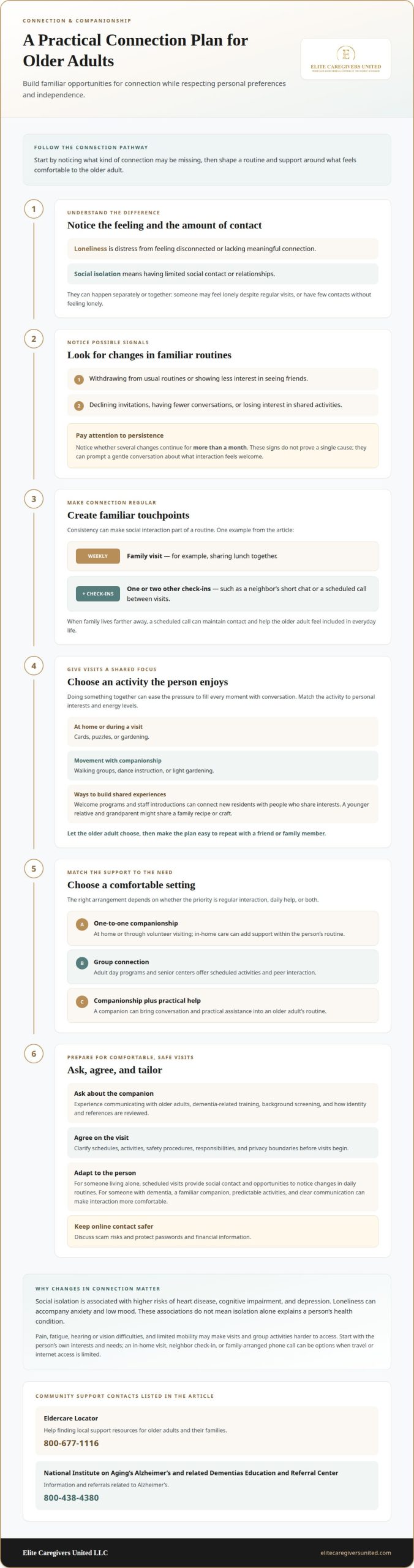
Loneliness is the distress of feeling disconnected, while social isolation means having limited social contact or relationships. Social companionship for isolated seniors can create regular opportunities to talk, share activities, and feel connected, even when family and friends can’t visit often. The two experiences can occur separately or together, so it’s important to notice both.
It’s understandable to worry when an older loved one spends more time alone or seems less interested in familiar routines. Warm, consistent connection can make everyday life more engaging while respecting the person’s preferences and independence.
This article explains how loneliness differs from social isolation, how family members and neighbors can help older adults stay connected, and how companion caregivers can contribute at home. You’ll also learn how companionship can fit alongside practical daily living support, helping you consider what kind of connection would feel comfortable and meaningful for your loved one.
Key Takeaways
- Distinguish the emotional experience of loneliness from limited social contact, since an older adult may face one or both.
- Build a steady pattern of connection through visits, calls, shared interests, and small, regular social touchpoints.
- Consider how companion caregivers can combine conversation and activities with practical support for daily living.
- Explore how companionship at home or during outings can help an older adult feel more connected while preserving their preferences and independence.
Visiting and staying connected with family, friends, and neighbors
Regular visits and brief check-ins create familiar opportunities for conversation and shared time. A weekly family visit, along with one or two other check-ins, can make social interaction part of an older adult’s routine.
Family, Friend, and Neighbor Visits
Visits offer in-person connection with loved ones, friends, or neighbors. Consistency matters: a familiar face and conversation can ease feelings of loneliness. A relative might share lunch each week, while a neighbor stops by for a short chat. If family members live farther away, a scheduled call can maintain contact between visits and help an older adult feel included in everyday life.
Recognizing a Need for Connection
A need for more social connection may show up as withdrawal from usual routines or less interest in seeing friends. Notice whether several changes persist for more than a month, such as declining invitations, fewer conversations, or losing interest in shared activities. These signs don’t prove a single cause, but they can prompt a gentle conversation about what kind of interaction feels welcome. Social isolation is also associated with higher risks of heart disease, making changes in connection worth taking seriously.
Activities and Hobbies for Social Connection
Shared activities give people something enjoyable to do together, easing the pressure to fill every moment with conversation. Cards, puzzles, and gardening can suit different interests and energy levels. Walking groups, dance instruction, or light gardening can combine movement with companionship. Let the older adult choose the activity, then make the plan easy to repeat with a friend or family member.
New residents may find connection through welcome programs and staff introductions that bring people with shared interests together. Intergenerational activities, such as a grandparent teaching a younger relative a family recipe or craft, can create meaningful exchanges across ages. Shared experiences help relationships grow naturally and give visits a welcoming focus.
Companion caregivers and daily living support
A companion can bring conversation and practical assistance into an older adult’s routine. The right arrangement depends on whether the priority is regular interaction, daily help, or both.
Companion Services and Care Options
Social companionship may be one-to-one at home, through volunteer visiting, or in group settings. Adult day programs and senior centers offer scheduled activities and peer interaction; in-home care adds support within the person’s routine. The best fit depends on whether connection, daily assistance, or both matter most. For practical help with personal routines, explore personal care services.
Companion Qualifications and Training
Companion qualifications, background screening, and relevant training can help families assess whether support suits an older adult’s needs. Ask about experience communicating with older adults, dementia-related training, and how identity and references are reviewed. These details matter when someone will enter the home or support a person living alone. Agree on responsibilities and privacy boundaries before visits begin.
Finding and Vetting Companions
Families can look to established community programs, volunteer visitor services, or local support agencies, then clarify schedules, activities, and safety procedures. In the United States, the Eldercare Locator can be reached by phone at 800-677-1116 for help finding local support resources for older adults and their families. For Alzheimer’s information and referrals, the National Institute on Aging’s Alzheimer’s and related Dementias Education and Referral Center can be reached at 800-438-4380.
Support for Isolated Adults and People With Dementia
For an adult living alone, scheduled visits provide social contact and regular opportunities to notice changes in daily routines. For someone with dementia, a familiar companion, predictable activities, and clear communication can make interaction more comfortable. Families can coordinate visit times and share relevant routine details. Online connections may help, but discuss scam risks and protect passwords and financial information. If depression, withdrawal, or signs of cognitive decline arise, include appropriate family support in the care plan.
What is the difference between loneliness and social isolation?
Loneliness is the distressing feeling of lacking meaningful connection; social isolation describes limited social contact or relationships. An older adult can feel lonely despite regular visits, or have few contacts without feeling lonely. Recognizing which experience is present helps family members choose support that fits.
Both experiences can affect mental health and well-being. Social isolation is associated with increased risks of heart disease, cognitive impairment, and depression, while loneliness can accompany anxiety and low mood. The CDC identifies social disconnection as a health risk for people aged 50 and older. These connections matter, but they don’t mean that isolation alone explains a person’s health condition.
Health changes can make it harder to stay connected. Pain, fatigue, hearing or vision difficulties, and limited mobility may make visits and group activities less accessible. Ageism can also limit opportunities when others assume an older person is unable or uninterested. Ask about the person’s own interests and needs rather than making plans based on age alone.
For seniors with limited mobility, transportation, or internet access, connection can begin with an in-home visit, a neighbor’s check-in, or a phone call arranged by family. If travel feels comfortable, a companion can accompany an older adult on an outing, with the destination and pace shaped around personal preferences and health needs.
Companionship can offer emotional support through conversation, shared interests, and regular contact. A familiar visitor might discuss family memories, play cards, or help someone maintain a valued routine. These interactions can encourage a sense of belonging and mental engagement, while meaningful social contact may contribute to cognitive well-being. Social companionship for isolated seniors should reflect what each person enjoys, not a fixed schedule of activities.
Notice whether someone stops responding to friends, declines familiar invitations, or seems persistently withdrawn. A gentle conversation can help distinguish a preference for quiet time from unwanted disconnection. Family members can then adapt visits, phone calls, or accessible outings to help the older adult maintain relationships and feel included.
Companion caregiving at home
At home, companionship can bring conversation and practical help into an older adult’s familiar surroundings. Rather than making connection a separate event, caregivers can share parts of the day, such as preparing lunch or looking through family photos together.
Daily routines offer natural opportunities for social interaction. A caregiver might share a meal, help with grocery shopping, or join a favorite hobby, allowing conversation to develop without pressure. For older adults living alone, scheduled visits also provide regular contact. That steady presence can add structure to the day and offer emotional support during difficult transitions.
Care should reflect the person’s preferences, energy, and abilities. One person may enjoy a short neighborhood walk; another may prefer cards, music, or a phone call with relatives. The National Institute on Aging advises adults to aim for at least 150 minutes of moderate-intensity physical activity each week. A companion can encourage suitable activity, while keeping the person’s comfort and routine in view.
For someone living with dementia, familiar surroundings and predictable routines can make conversations more comfortable. A caregiver can suggest a simple shared activity, such as sorting photographs, and allow time for responses. Family members can share useful details about the person’s preferences and daily habits, helping visits feel personal and consistent.
Home companionship can also give family caregivers room to manage other responsibilities while an older loved one has company. Families can agree on visit priorities, such as conversation, meal preparation, or an outing, and adjust them as needs change. For families considering support connected to dementia, explore dementia care support as one possible next step.
Elite Caregivers United LLC: Travel Companion Services
Elite Caregivers United LLC offers Travel Companion Services for older adults who would benefit from companionship while traveling. A familiar companion can make a journey feel more socially supported, particularly when family members can’t accompany their loved one.
This service may suit an older adult who wants to visit family, attend an event, or take a trip with companionship. For families also balancing caregiving responsibilities, Respite Care or Personal Care Services / CNA Team can address different needs at home. The right service depends on whether the priority is companionship during travel, daily personal care, or a break for family caregivers.
If travel companionship feels like a helpful next step for your family, contact Elite Caregivers United LLC to discuss your needs.
Make connection part of the care plan
Connection can be an essential part of an older adult’s day, shaped around what feels comfortable, familiar, and worthwhile to them. As needs change, families can revisit the support that helps their loved one participate in daily life with dignity. Social companionship for isolated seniors is most meaningful when it reflects the person, not just the schedule.
Elite Caregivers United LLC also offers Surgery Recovery & Post-Hospitalization Care for families considering support during recovery. A conversation can help clarify whether travel companionship or another form of care best fits the situation and the older adult’s preferences.
Contact Elite Caregivers United LLC to discuss support for your family. A thoughtful next step can make connection feel more accessible and help your loved one remain engaged in the life they value.
Frequently Asked Questions
Can companion care reduce loneliness in seniors?
Companion care can ease loneliness by giving an older adult regular, meaningful interaction. A caregiver might share a meal, talk about a favorite book, or help the person reconnect with a relative by phone. The most helpful visits reflect the senior’s interests and preferred pace. Companionship can support social connection as one part of a wider circle of family, friends, and community relationships.
How Can I Tell if a Loved One Is Isolated?
Look for a change from your loved one’s usual pattern, such as fewer conversations, skipped gatherings, or less contact with friends. One quiet afternoon alone doesn’t establish isolation; a lasting change across routines may be a reason to check in. Ask open questions, such as whether they’d like more company or help joining an activity. Their response can guide a respectful next step.
How can feeling lonely or being isolated affect older adults’ health?
Loneliness and social isolation are associated with health concerns, including depression, heart disease, and cognitive impairment. These associations don’t establish the cause of an individual’s symptoms, but they make social disconnection worth discussing alongside other changes. If an older adult seems persistently withdrawn or distressed, ask how they’re feeling and include a healthcare professional in conversations about health concerns.
How do I know if my parent is lonely or just introverted?
Introversion describes a preference for quieter settings or less social activity; loneliness is distress about missing meaningful connection. Compare your parent’s current behavior with their own preferences over time. Someone who enjoys solitude may feel content, while a person who wants company may express sadness or seem unsettled after losing contact. Ask what kind of connection, if any, they would welcome.
How does companionship help senior mental health?
Companionship can support mental well-being by creating space for conversation, shared enjoyment, and belonging. For example, discussing a familiar hobby gives an older adult a comfortable way to express opinions and share memories. A trusted visitor may also help the person feel heard during a difficult transition. Meaningful contact complements, but doesn’t replace, support for ongoing mental health concerns.
Is a weekly visit enough for an older adult who lives alone?
It depends on the older adult’s preferences, relationships, and how supported they feel between visits. Consider whether they welcome more contact, can reach someone when needed, and remain engaged in their usual routines. A weekly visit may feel sufficient to one person and too infrequent to another. Ask directly, then adjust the rhythm of calls, visits, or shared activities to match their wishes.