

Recurring meal delivery can simplify everyday planning, and scheduled meal plans may be available through Elite Caregivers United LLC serving the greater Orlando area, including Winter Park. Meal preparation services for seniors in Winter Park can involve different meal and delivery arrangements, with menus, coverage, ordering, and pricing set by each provider.
It’s understandable to want a dependable routine that suits an older adult’s tastes and needs. This guide explains meal delivery options to consider, factors that can affect pricing, and how a trial, when offered, can help you decide whether a service is a good fit.
You’ll also learn how scheduled deliveries work and what shapes the experience, from meal selection to delivery arrangements. Understanding the options can help families make a considered choice and build a routine that supports comfort and day-to-day independence.
Key Takeaways
- Explore scheduled delivery and prepared-meal options to find a routine that fits an older adult’s preferences and daily needs.
- Understand how menus, delivery distance, and provider fees can affect meal costs before choosing a plan.
- Use a meal trial, when available, to see whether the food and delivery arrangement suit the person receiving meals.
- For medically prescribed diets or complex nutrition needs, consider professional guidance and clarify food-handling practices.
Meal delivery options for older adults
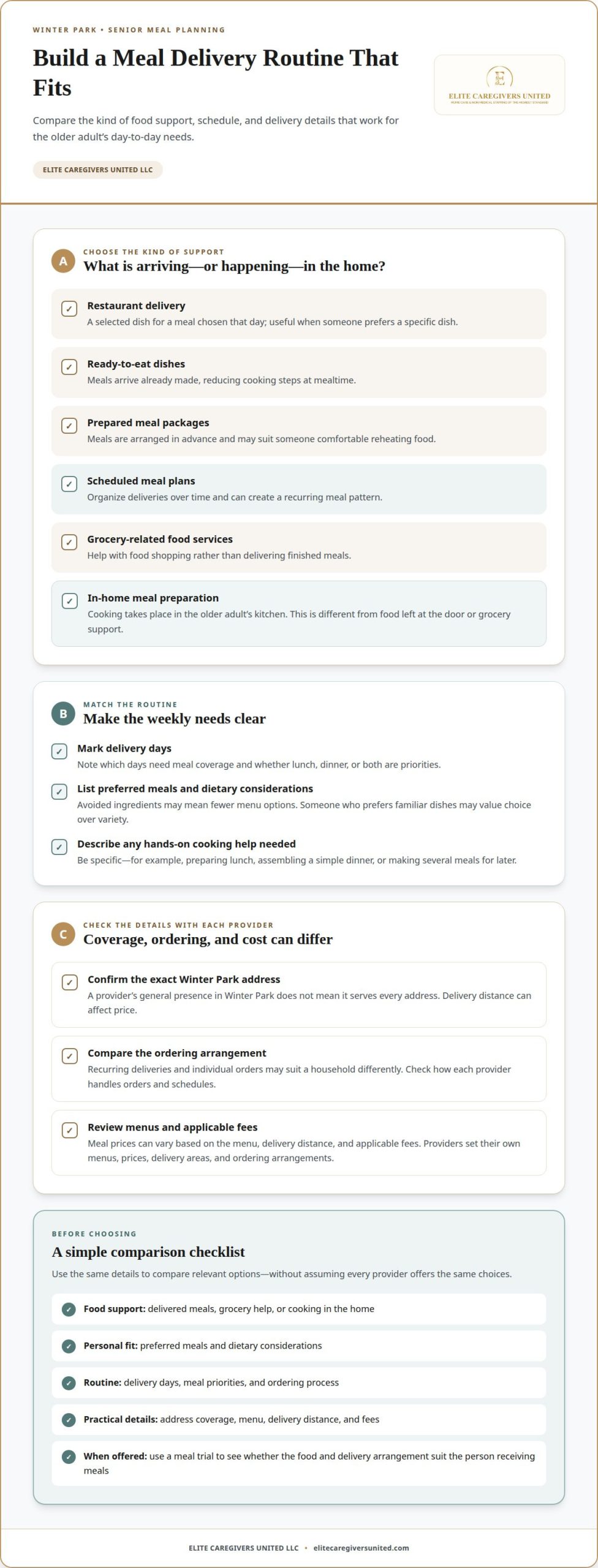
Older adults in Winter Park may choose restaurant delivery, ready-to-eat dishes, prepared meal packages, scheduled meal plans, or grocery-related food services. Each suits a different routine: restaurant delivery works for a meal chosen that day, while a scheduled plan can create a recurring pattern. Menus and ordering arrangements vary by provider.
Start by matching the delivery format to the older adult’s routine. Ready-to-eat dishes reduce cooking steps at mealtime, while prepared meal packages arrange meals in advance. Grocery-related services help with food shopping rather than delivering finished meals. Restaurant delivery is another option when someone prefers a specific dish. A simple weekly schedule can show which days need coverage and whether lunch, dinner, or both are priorities.
Next, consider dietary needs alongside food preferences. Someone who avoids certain ingredients may have fewer menu options, while a person who prefers familiar dishes may value choice over variety. Providers set their own menus, prices, delivery areas, and ordering arrangements. Meal prices can also vary based on the menu, delivery distance, and applicable fees. These factors help explain why plans can differ in cost.
Before ordering, confirm directly with the meal provider whether delivery covers the exact Winter Park address. A provider’s general presence in Winter Park does not mean it serves every address, and delivery distance can affect price. Consider the ordering method and schedule together, since recurring deliveries and individual orders may suit a household differently.
Public nutrition programs use local structures. The California Department of Aging partners with 33 local Area Agencies on Aging to coordinate meal services; this example does not describe Winter Park programs. For a local decision, distinguish a private meal plan from a community nutrition program before comparing menus or schedules.
To narrow your options, list preferred meals, dietary considerations, delivery days, and the address where meals will be received. Then compare each service’s menus, ordering process, delivery coverage, and fees. This checklist helps you identify a practical routine without assuming all providers offer the same choices.
Which Winter Park services provide in-home meal preparation for seniors?
In Winter Park, food support may mean meals delivered to a home or cooking in the home. These are different arrangements. Restaurant delivery brings a selected dish, while ready-to-eat meals and prepared meal packages arrive already made. A scheduled meal plan organizes deliveries over time. Grocery-related services help with shopping rather than delivering cooked meals.
For in-home preparation, look for a service focused on cooking in the older adult’s kitchen. First, write down the specific help needed, such as preparing lunch, assembling a simple dinner, or making several meals for later. This distinguishes hands-on meal preparation from delivery that leaves food at the door and gives the household a clear way to describe its routine and preferences.
Food-related services can handle different tasks. One may deliver prepared meals, while another focuses on grocery support. Neither necessarily includes cooking in the home. Before choosing, compare the task, where preparation happens, and how meals fit the person’s daily schedule. A list of preferred dishes and dietary considerations can help clarify the support needed.
Winter Park offerings vary by provider, including menus, ordering arrangements, and delivery coverage. Prepared meal packages may suit someone comfortable reheating food, while scheduled delivery can make recurring meals easier to plan. Someone who needs help cooking in the kitchen is looking for a different kind of service. Separating these needs prevents delivery from being mistaken for in-home preparation.
To make the choice practical, prepare a short brief with the older adult’s preferred meals, dietary needs, and challenging tasks. Specify whether meals need to be cooked at home or simply delivered ready to eat. Use these details to compare relevant Winter Park options. A focused approach helps families identify the right kind of food support without assuming every service works the same way.
Are there income-based or subsidized meal services for seniors in Winter Park?
Subsidized meals and private meal plans are different forms of support. A scheduled delivery service is not automatically income-based. For a Winter Park household, start by identifying whether a program bases eligibility on income, age, nutrition needs, or another measure. These conditions determine who may participate and whether meal costs are reduced.
Community nutrition programs and private providers can differ in how meals are arranged. A community program may provide meals to eligible older adults, while a private plan may price meals based on its menu, delivery distance, and applicable fees. The service matters: meal delivery, grocery support, and in-home cooking are distinct and not interchangeable.
Before including a meal subsidy in the household budget, map the meals needed in a typical week. Note which meals need support, whether the older adult can collect food at a community site, and whether home delivery is necessary. These details help determine whether a program fits the person’s routine. Home delivery may address access differently from a community meal arrangement.
Eligibility can involve more than household income. A program may consider age, ability to leave home, or difficulty shopping for and preparing meals. Requirements vary by program, so income alone does not establish eligibility. A reduced-cost meal is also different from a private provider’s introductory offer or meal trial, which does not establish an ongoing subsidy.
For a clear comparison, organize the details into three parts: eligibility criteria, meal format, and the participant’s contribution. Then list subsidized meals separately from privately purchased meals in the household plan. This helps families see which meals may qualify for assistance and which need another arrangement. It also clarifies the priority: affordability, home delivery, meal choice, or hands-on preparation.
Community nutrition programs may provide meals to eligible older adults. Eligibility can depend on age, nutrition needs, ability to leave home, or difficulty shopping and preparing meals, not just income.
What safety, licensing, and food-handling standards should seniors check when hiring a meal preparation service?
Start by identifying whether the service prepares meals in a kitchen, delivers packaged food, or cooks in the home. Each arrangement involves different handling steps. Packaged meals, for example, should arrive sealed and labeled, while in-home cooking depends on safe preparation practices in the household kitchen. A clear description of the service helps families focus on relevant safeguards.
For meals provided through the Senior Nutrition Program, the Administration for Community Living states that meals must comply with state and local food-safety requirements. This standard applies to that program, not necessarily to every private meal service or in-home cook.
Licensing questions depend on the work being performed. Separate meal production, delivery, and in-home preparation when reviewing a service’s business credentials or local approvals. Ask which role the service performs and what credentials or approvals apply. A delivery-only service and someone cooking in a client’s kitchen should not be assumed to operate under identical conditions.
Check practical food-handling details, too. Meal labels can identify contents, preparation date, storage directions, and potential allergens. Make sure packaging is intact at delivery, and follow the stated storage and reheating instructions. For in-home meals, agree on ingredient storage, clean preparation surfaces, and how leftovers will be labeled and stored.
Dietary needs deserve particular attention. People with medically prescribed diets or complex nutritional needs should seek guidance from an appropriate healthcare professional and explain the requirements to the food provider. For example, share ingredient restrictions before choosing meals. Clear instructions can reduce the chance of mismatched dishes, but meal services do not replace clinical nutrition advice.
Use these points to organize a practical safety discussion: service type, applicable credentials, packaging and labels, kitchen practices, and dietary instructions. For support with broader daily routines, explore options for everyday care.
Elite Caregivers United: Personal Care Services/CNA Team
Elite Caregivers United LLC offers Personal Care Services / CNA Team for older adults whose needs go beyond choosing meals. If your family is coordinating meal deliveries alongside broader day-to-day care, this support can be part of the overall plan. The team also provides support during surgery recovery, after hospitalization, and through stroke and cancer recovery, when care needs may change.
Meal schedules and personal care address different parts of a household’s routine. A meal provider handles food arrangements, while personal care can help with other daily needs. If an older adult needs support during recovery or ongoing personal care, consider how that service could fit alongside the existing meal plan.
Contact Elite Caregivers United LLC to discuss personal care support for your family’s situation.
Choose support that fits the next stage of care
A meal plan can meet food needs, while a suitable care arrangement supports the person’s broader daily routine. As you consider meal preparation services for seniors in Winter Park, consider whether recovery support, personal care, or family respite is also needed. Coordinating these needs can help shape a plan around the older adult’s preferences and circumstances.
Elite Caregivers United LLC offers Respite Care, Personal Care Services / CNA Team, and Surgery Recovery & Post-Hospitalization Care. Families may consider these services when caregiving demands change, personal support is needed, or someone is recovering after surgery or a hospital stay. They address care needs rather than meal delivery, so they can complement, not replace, a food arrangement.
For a thoughtful conversation about support for your family, contact Elite Caregivers United LLC. A considered next step can help you move forward with greater confidence and care.
Frequently Asked Questions
Can I arrange recurring or scheduled meal delivery?
Yes, scheduled meal plans may be available in Winter Park. A recurring arrangement can create a predictable routine, while individual orders offer flexibility when preferences change. Before setting a schedule, decide which meals and delivery days would be useful. The provider’s ordering arrangements determine how recurring deliveries work, and meal options may differ between scheduled plans and one-time orders.
How can I find meal delivery providers near me?
Start with the exact Winter Park delivery address, and distinguish meal delivery from in-home cooking. Providers set their own delivery areas, so location can determine which services are relevant. Search separately for prepared meals, scheduled meal plans, restaurant delivery, and grocery-related food services. This helps narrow results to the support needed rather than treating every food-related service as meal delivery.
What if I have food allergies or dietary restrictions?
List each allergy, restricted ingredient, and dietary preference before selecting meals. Menus and accommodations vary by provider, so a dish’s name alone may not reveal every ingredient or preparation detail. For medically prescribed diets or complex nutritional needs, seek guidance from an appropriate healthcare professional and share the requirements with the food provider. This helps clarify whether the menu suits the person’s needs.
What meal delivery programs for seniors serve Winter Park, Florida?
Winter Park meal options can include scheduled plans, prepared meal packages, restaurant delivery, and grocery-related food services. These are different arrangements, and not all are senior nutrition programs or subsidies. First consider whether the need is recurring home delivery, prepared food, or grocery assistance. Eligibility and arrangements depend on the particular program.
Do Winter Park senior meal services accommodate diabetes, low-sodium diets, allergies, or other dietary needs?
Accommodations depend on each provider’s menu and food-preparation practices. A household managing diabetes, a low-sodium diet, or an allergy can list specific requirements before choosing meals. For medically prescribed diets or complex nutritional needs, a healthcare professional can advise on dietary requirements. Share those requirements with the food provider so they can consider the menu and preparation details.
How can a senior or caregiver arrange meal preparation services in Winter Park?
First decide whether the older adult needs meals delivered, prepared food for later, grocery support, or cooking in the home. List preferred meals, dietary requirements, and the desired routine. Then identify services that match those needs and the Winter Park address. Clarifying the task helps distinguish meal delivery from hands-on cooking, which are separate forms of food support.