

If you could look behind the curtain of a home care agency’s vetting process, would you feel a sense of profound relief or a rising tide of concern? Entrusting the safety and dignity of a vulnerable loved one to a stranger is a decision layered with emotional weight, often leaving families feeling overwhelmed by the high stakes involved. You want more than just a presence in the home; you seek a steadfast partner who understands the delicate nuances of post-surgical recovery or the specialized needs of a memory care journey. Understanding the specific questions to ask a home care agency acts as a vital bridge, moving your family from a place of uncertainty toward a foundation of calm reliability.
We believe that every family deserves the peace of mind that comes from a professional framework of care. This article provides a comprehensive vetting process designed to verify high standards of service, helping you distinguish between basic companionship and the skilled expertise of a dedicated CNA team. We’ll preview 25 essential questions that address everything from emergency protocols to specialized disease management, empowering you to act as a wise protector for those you love most. By the end of this guide, you’ll have a clear roadmap to ensure your loved one remains in expert hands, surrounded by the warmth and respect they deserve.
Key Takeaways
- Learn why choosing an employee-based agency with a valid Florida license provides a higher level of security and accountability than independent contractor registries.
- Discover how to distinguish between general companionship and specialized CNA-led care, ensuring your loved one receives the appropriate level of professional support.
- Master the specific questions to ask a home care agency to verify their expertise in managing delicate recoveries from cosmetic surgery, stroke, or dementia.
- Understand the essential protocols for emergency preparedness and 24/7 reliability that protect your family from the stress of unexpected caregiver absences.
- Identify the subtle red flags during an initial consultation that signal a lack of professional standards, allowing you to hire with absolute confidence and clarity.
Foundational Questions: Verifying Licensing, Insurance, and Accreditation
Choosing a partner for home care is a profound act of love, yet it requires the steady hand of a “wise protector” to ensure every legal safeguard is firmly in place. Before inviting a professional into your sanctuary, you must look beyond the surface level of care to the structural integrity of the organization itself. These initial questions to ask a home care agency serve as your first line of defense, providing the clarity needed to protect your loved one’s dignity and your family’s financial security.
The Legal Essentials of Florida Home Care
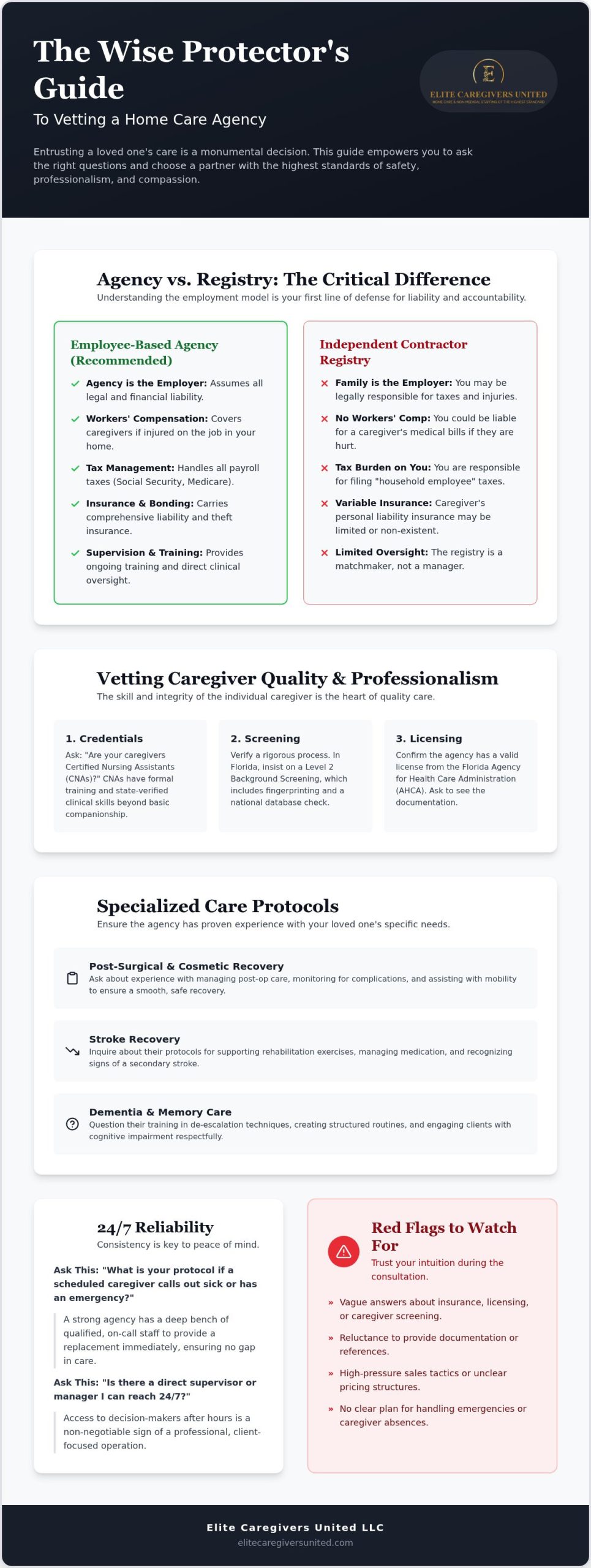
Florida’s regulatory environment is unique, and verifying an agency’s credentials is the only way to guarantee they meet the state’s rigorous safety standards. You should begin by confirming that the provider holds a valid license from the Florida Agency for Health Care Administration (AHCA). This ensures they’re subject to regular inspections and background screening requirements. Don’t hesitate to ask for specific documentation during your consultation. You should explicitly ask: “Is your agency licensed as a Home Health Agency or a Nurse Registry in Florida?” This distinction is vital because a licensed agency provides a higher level of supervision and clinical oversight.
Beyond the license, a reputable agency will carry comprehensive insurance to shield your family from unforeseen events. You should verify the specific insurance limits for professional liability and theft, ensuring the coverage is robust enough to provide true peace of mind. Requesting documentation of bonding for all employees entering the home is another essential step. This simple verification process transforms a potentially stressful search into a methodical journey toward a safe and nurturing environment. Mastering these foundational questions to ask a home care agency allows you to move forward with quiet confidence.
Agency vs. Independent Contractor: Why Liability Matters
Understanding the difference between an employee-based agency and a registry model is one of the most important aspects of your vetting process. When an agency employs its own staff, such as a dedicated CNA team, they assume the role of the primary employer. This means they handle the complex administrative burdens that would otherwise fall on your shoulders. You should inquire about who pays payroll taxes and manages workers’ compensation. A direct question to ask: “What happens if a caregiver is injured while on duty in my home?”
Caregiver Quality: Screening, Training, and Professional Standards
The heart of any care plan lies in the hands of the individual entering your home. It’s not just about presence; it’s about the caliber of professional skill and the warmth of the human connection they bring. When considering your options, the depth of the questions to ask a home care agency regarding their staff will reveal the true standard of their service. A rigorous screening process is the non-negotiable foundation of trust, ensuring that every person who crosses your threshold has been vetted with the highest level of scrutiny.
Vetting the Professional CNA Team
Consistency and Compatibility Protocols
The most skilled clinical care can still feel hollow if there isn’t a genuine bond between the caregiver and your family. One of the most revealing questions to ask a home care agency is how they handle a “personality mismatch.” A compassionate partner will have a proactive matching process, considering temperament and interests alongside medical needs. It’s equally vital to understand their policy on caregiver turnover. You want to know that the same familiar face will return, providing a stable and nurturing experience over time. This focus on the human element is what defines high-quality non-medical home care Orlando, where dignity and vitality are prioritized alongside physical safety.
Building a relationship of trust begins with transparency. If you’re ready to see how a professional team can support your family’s unique journey, you can learn more about our specialized care standards. Our approach is designed to move at a pace that suggests patience and careful consideration, ensuring your loved one is always in expert hands.
Specialized Care Protocols: Recovery, Dementia, and Chronic Conditions
While foundational credentials and caregiver quality ensure basic safety, specialized recovery requires a deeper level of clinical intuition and focused expertise. When a loved one faces a complex health journey, generic care plans often fall short of providing the necessary security and specialized attention required for true healing. This makes it essential to refine your list of questions to ask a home care agency to target their specific experience with both acute recovery and long-term chronic conditions. A partner who understands the delicate nuances of medical transitions acts as a steadfast guide, ensuring that every action supports a return to holistic well-being.
Vetting for Post-Surgical Recovery Excellence
Recovery from surgery, particularly specialized cosmetic procedures or major hospitalizations, is a delicate window where professional vigilance makes all the difference. You should ask: “What specific training do caregivers have for home care after surgery?” It’s important to inquire about their established protocols for monitoring post-operative vitals and their ability to identify early signs of infection or complications before they escalate. Providing specialized recovery support is a vital component in preventing unnecessary hospital readmissions, offering your family a sense of quiet confidence during the healing process.
Memory Care and Neurodegenerative Expertise
For families navigating the complexities of neurodegenerative diseases, the care environment must be both structured and deeply empathetic, balancing safety with the preservation of dignity. When vetting dementia home care agencies Orlando, you need to understand their specific behavioral training. You might ask: “How do your caregivers manage Sundowning or wandering in dementia patients?” A specialized provider will also offer Parkinson’s disease home care that focuses on meticulous medication reminders and tailored mobility assistance, helping to maintain a sense of vitality and independence even as needs change.
Beyond memory care, survivors of stroke or cancer require a customized approach that evolves alongside their physical progress. A professional agency should be able to detail how they create and update condition-specific care plans, ensuring that the support remains perfectly aligned with the client’s changing needs. This proactive management reflects the role of a “wise protector,” offering a steady, guiding presence during life’s most challenging transitions. Understanding these specific questions to ask a home care agency ensures that your loved one isn’t just supervised, but is actively supported by experts who truly understand their unique medical journey.
Logistics and Emergency Preparedness: 24/7 Reliability
Reliability in home care is measured in the quiet hours of the night and the unexpected moments of crisis. While many providers promise availability, the true test of their commitment lies in their logistical infrastructure and emergency preparedness. As you refine your list of questions to ask a home care agency, it’s vital to look beyond the scheduled hours and investigate how they maintain a steady, guiding presence when the unexpected occurs. This level of scrutiny ensures that your loved one is never left without the expert support they require, protecting their safety and your family’s peace of mind.
The 24/7 Support Framework
When a family member requires high-acuity support, the concept of “business hours” becomes irrelevant. You should ask: “If a caregiver is sick at 2 AM, how quickly is a replacement dispatched?” A professional agency should have a clear, documented protocol for immediate coverage, ensuring that care remains consistent and uninterrupted. It’s also helpful to inquire about the supervisor-to-caregiver ratio, as this data point reflects the agency’s ability to provide meaningful quality assurance and clinical oversight. For families managing complex medical needs or post-surgical transitions, choosing 24 hour home care Orlando provides a layer of safety that shields the entire family from the stress of a coverage gap.
Orlando-Specific Lifestyle and Travel Vetting
Living in or visiting the City Beautiful presents unique opportunities and challenges that generic home care guides often overlook. If your family enjoys local attractions or travels frequently, you need a partner who understands these specific logistics. You should ask: “Are your caregivers trained to assist families at major amusement parks?” A specialized Orlando amusement park nanny or travel companion can manage mobility, hydration, and medical reminders amidst the crowds, allowing your family to focus on creating joyful memories together. Whether you need assistance navigating MCO or a dedicated presence at a theme park resort, these specialized questions to ask a home care agency ensure your lifestyle remains vibrant and inclusive.
Clear communication is the thread that holds a care plan together. You should clarify how the agency facilitates the flow of information between the caregiver, your family, and primary healthcare providers. A proactive partner acts as a reliable extension of your support system, ensuring that changes in a loved one’s status are communicated with both urgency and empathy. This collaborative approach reflects the “wise protector” mindset, where every logistical detail is handled with professional warmth and meticulous care. If you’re ready to secure a partner who offers both clinical expertise and lifestyle-specific support, contact our Orlando team to discuss your care logistics today.
Financial Clarity and Red Flags: Making the Final Decision
The final stage of choosing a partner for home care is often the most emotionally charged, as it marks the transition from research to a committed relationship. While you’ve already vetted for clinical skill and regulatory compliance, the financial and contractual details provide the final layer of security your family needs. Approaching these final questions to ask a home care agency with a methodical mind allows you to build a foundation of trust, ensuring that every administrative detail is handled with the same level of care as the bedside support itself.
Billing Transparency and Service Agreements
Financial clarity is essential for maintaining a sense of calm reliability throughout the care journey. You shouldn’t have to guess about the costs associated with your loved one’s well-being. It’s vital to ask: “Are there higher rates for weekends, holidays, or specialized recovery care?” Because specialized services like cosmetic surgery recovery or dementia care often require higher levels of expertise, understanding these nuances upfront prevents unexpected stress. You should also inquire about the notice period required for changing or terminating the care schedule. A professional agency will offer a clear, logical process for evolving the service agreement as your loved one’s needs change, reflecting a commitment to their long-term vitality and comfort. Don’t forget to verify how often invoices are sent and which payment methods are accepted, as this transparency ensures a smooth, professional experience for everyone involved.
Warning Signs of a Low-Quality Agency
Acting as a wise protector means being attuned to subtle cues that an agency might not meet your high standards. During your initial consultation, pay close attention to how they present their professional framework. A significant red flag is the absence of a detailed, written care plan tailored to your loved one’s specific medical and emotional needs. If an agency hesitates to provide proof of insurance or cannot explain their caregiver screening process with absolute clarity, it suggests a lack of the professional standards you deserve. You should also be cautious of any provider that applies high-pressure tactics to sign a contract before they’ve performed a comprehensive home assessment. A truly empathetic partner moves at a pace that suggests patience and careful consideration, prioritizing the human connection over a transaction. By keeping these red flags in mind while finalizing your questions to ask a home care agency, you ensure that your family remains in the safest, most capable hands.
Ultimately, the final decision should feel like a natural resolution to your search. It’s a balance of rigorous clinical expertise and that unmistakable sense of professional warmth. When you find an agency that treats your family’s safety and dignity as their own, you can finally experience the peace of mind that comes from knowing your loved one is surrounded by heartfelt dedication and expert care.
Securing a Future of Dignity and Expert Care
Empowering your family with the right questions to ask a home care agency transforms a moment of vulnerability into a proactive step toward safety and peace of mind. By prioritizing AHCA licensing and the clinical expertise of a CNA-led professional recovery team, you ensure your loved one receives more than just supervision; they receive a dedicated partner in their recovery and well-being. Whether you’re navigating a complex post-surgical journey or seeking specialized Orlando theme park and travel support to keep your family connected, your commitment to high standards acts as a wise protector for those you love most.
As a licensed Florida Home Health Agency, we’re dedicated to providing the calm reliability and professional warmth your family deserves during life’s most delicate transitions. You don’t have to navigate these choices alone. Download our Comprehensive Vetting Checklist and speak with an Orlando Care Expert today. We’re here to help you build a foundation of trust, ensuring your loved one is always in expert hands, surrounded by the respect and vitality they deserve.
Frequently Asked Questions
How do I know if a home care agency is legitimate in Florida?
Legitimacy in Florida is confirmed through the AHCA’s Health Care Facility Search tool. Every licensed agency must display their license number on all marketing materials. Verification through this official portal ensures the agency adheres to strict state regulations, providing a layer of protection that independent registries may not offer. This verification process is the first step in ensuring your loved one is in safe, professional hands.
What is the difference between a CNA and a home health aide?
A Certified Nursing Assistant (CNA) undergoes rigorous state-mandated training and clinical testing, whereas a home health aide (HHA) may have more limited clinical experience. CNAs are equipped to handle more complex personal care tasks with greater medical intuition. This distinction is vital when your loved one requires specialized recovery or chronic disease management, as it ensures a higher standard of clinical oversight and care.
Can I interview the caregiver before they start working in my home?
Most professional agencies facilitate an initial meeting or “meet and greet” to ensure the caregiver’s personality aligns with your family’s needs. This is a perfect time to utilize your list of questions to ask a home care agency to gauge the staff’s empathy and skill. Ensuring this human connection early on helps build a stable and nurturing environment, providing you with a sense of quiet confidence from the very first day.
What happens if I need to change my care plan on short notice?
Reputable agencies employ a clinical supervisor who can modify care plans quickly as a client’s health status changes. You should inquire about the agency’s responsiveness and the specific notice period required for schedule adjustments. A reliable partner understands that medical needs don’t always follow a set schedule and will act with patience and agility to support your family through any unexpected transitions or recovery shifts.
Do home care agencies in Orlando provide specialized surgery recovery?
Many Orlando agencies specialize in acute recovery, including cosmetic surgery, stroke, and Parkinson’s disease care. These services go beyond basic companionship by focusing on vital sign monitoring and infection prevention. Having expert support in the home during these transitions significantly reduces the risk of complications and hospital readmissions, allowing your loved one to heal with dignity while you maintain peace of mind.
Is 24/7 care more expensive than hourly caregiving?
While the total cost of 24/7 care is higher than part-time help, many agencies provide discounted daily rates for around-the-clock support. This model is often more predictable and ensures a consistent, steady presence in the home. It eliminates the stress of coverage gaps, providing a continuous safety net for those with high-acuity needs or advanced memory care requirements who deserve constant, dedicated attention.
What should I look for in a home care service agreement?
Your service agreement should clearly outline the billing cycle, deposit policies, and the specific notice period for termination. Utilizing these questions to ask a home care agency during the contract review helps ensure total financial clarity. It’s also essential to verify that the agency assumes all responsibility for caregiver payroll taxes and workers’ compensation, acting as a legal safeguard that protects your family from unforeseen liabilities.
How do agencies handle complaints about a specific caregiver?
A high-quality agency will have a designated clinical manager who handles all concerns with empathy and promptness. If a caregiver isn’t a good fit, the agency should provide a replacement who better matches your loved one’s personality and needs. This proactive approach to feedback ensures that the care environment remains supportive and focused on providing a stable, nurturing experience that prioritizes your family’s comfort and well-being.