
What if the challenging behaviors that make you consider a memory care facility are actually manageable signals that, when understood, allow your loved one to remain safely in the comfort of their own living room? You aren’t alone in feeling that managing dementia behaviors at home Orlando has become a source of constant emotional exhaustion. With over 877,000 Floridians currently providing unpaid care, the weight of this responsibility is a shared reality for many families seeking a sense of balance and security.
It’s natural to feel a sense of fear when faced with physical aggression or the risk of wandering during a humid afternoon, and we recognize the quiet guilt that often accompanies the thought of seeking outside support. You want to provide the best possible life for your family member, yet the strain of being a sole protector can dim the joy of your time together. We believe that professional support isn’t a sign of giving up; instead, it’s a dedicated commitment to preserving the dignity of your loved one’s daily experience through specialized, attentive assistance.
This guide offers a path toward a calmer home environment by sharing professional de-escalation techniques that address the root causes of distress. You’ll learn how to navigate these interactions with grace and discover how to choose a qualified CNA who meets the latest 2026 Florida training standards, ensuring your family receives the heartfelt care required to foster lasting peace of mind.
Key Takeaways
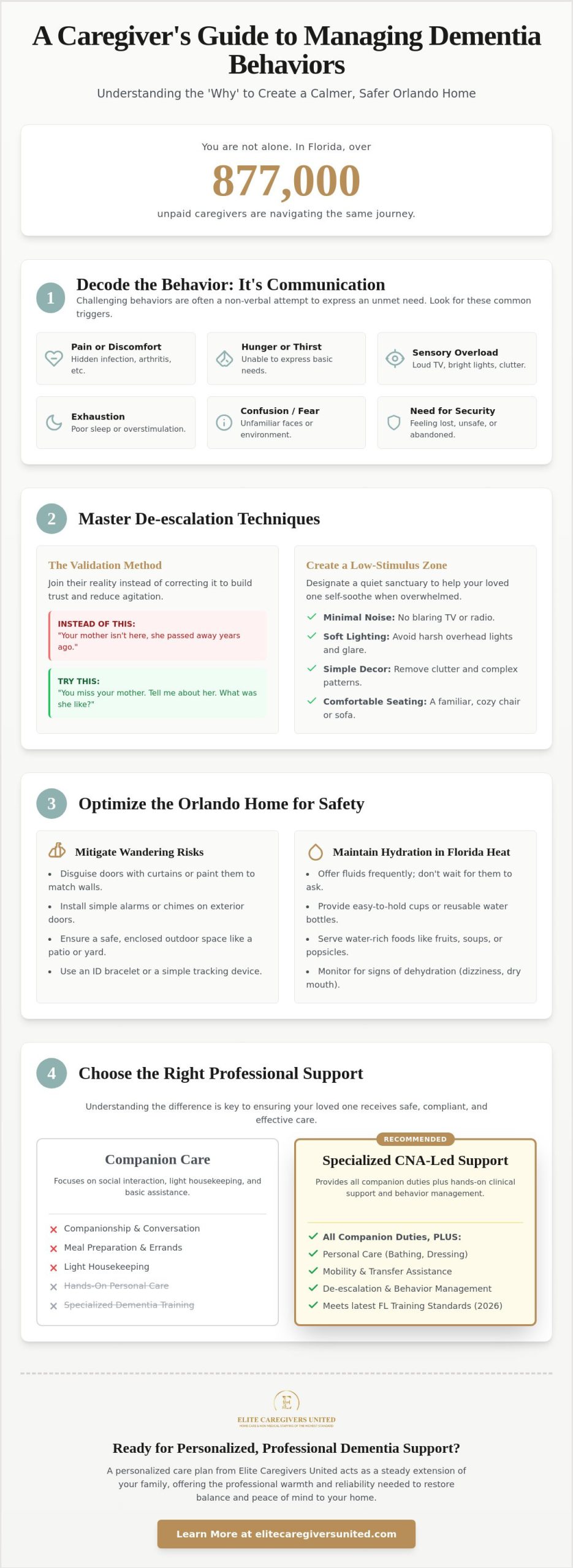
- Learn to interpret challenging behaviors as essential non-verbal communication by identifying specific physical triggers such as pain, hunger, or sensory overload.
- Master the “Validation Method” and the creation of low-stimulus zones to provide a gentle, reassuring response during periods of high anxiety or sundowning.
- Discover localized strategies for managing dementia behaviors at home Orlando, focusing on mitigating wandering risks and maintaining critical hydration levels in the Florida heat.
- Gain clarity on the professional differences between companion care and specialized CNA-led support, ensuring your family remains compliant with the latest Florida home care regulations.
- Explore how a personalized, evolving care plan can act as a steady extension of your family, offering the professional warmth and reliability needed for a balanced home life.
Decoding Dementia Behaviors: Understanding the ‘Why’ Behind the Action
When a loved one living with dementia begins to pace, shout, or resist daily routines, it’s easy to feel overwhelmed by the intensity of the moment. We encourage families to view these actions not as “bad” behavior, but as a form of non-verbal communication where the individual is attempting to express an unmet need they can no longer put into words. Effectively managing dementia behaviors at home Orlando requires a shift in perspective, moving from a mindset of control to one of deep, compassionate investigation. By observing the subtle cues that precede an outburst, you can often uncover a physical trigger like a hidden infection, a sense of hunger, or the sheer exhaustion that comes from navigating a world that no longer feels familiar.
Cognitive decline fundamentally alters how the brain processes information, often stripping away the ability to regulate emotions or filter environmental stimuli. This neurological shift means that frustration can escalate rapidly without the intervention of a calm, steady presence. Developing a foundational Understanding Agitation in Dementia is a vital step for any family caregiver, as it helps you recognize that these outbursts are symptoms of a disease rather than a personal attack. Empathy serves as your most powerful tool in these moments, allowing you to validate their feelings and de-escalate tension before it transforms into physical aggression.
Common Behavioral Triggers in the Home Setting
The home environment often plays a significant role in triggering distress through sensory overload. Loud televisions, bright overhead lighting, or even complex patterns on a rug can cause a senior to feel trapped or confused. As cognitive decline progresses, the brain may misinterpret shadows cast across a hallway or reflections in a window as frightening intruders. These moments of disorientation are particularly common when daily circadian rhythms break down, leading to increased restlessness and fatigue as the natural light fades in the evening.
The Emotional Toll on Family Caregivers
Caring for a family member is a profound act of love, yet the constant vigilance required can lead to significant emotional depletion. It’s a difficult truth that our own stress can mirror back to the person we are caring for, as seniors with dementia are often highly attuned to the emotional energy of those around them. Attempting to use logic or “reasoning” with a person experiencing cognitive decline usually leads to increased frustration for both parties because the neurological pathways required for rational thought have changed. Recognizing when you need a moment to breathe is essential for maintaining a nurturing home environment. Utilizing respite care for dementia patients Orlando allows you to step away and recharge, ensuring that you return with the patience and heart needed to provide the highest standard of care over the long term.
Tactical Strategies for Managing Aggression and Sundowning
Logic is rarely a friend to a mind affected by memory loss. Instead of correcting a loved one who believes they’re waiting for a long-deceased parent, the “Validation Method” encourages you to join their reality. By acknowledging the underlying emotion rather than the factual error, you prevent the defensive spiral that often leads to outbursts. Successfully managing dementia behaviors at home Orlando requires this gentle pivot, replacing “Reality Orientation” with a heartfelt connection that prioritizes their peace over historical accuracy. When you meet them where they are, the need for aggression often dissolves into a sense of being understood.
Establishing a “Low-Stimulus Zone” serves as a sanctuary when the world becomes too loud or confusing. This designated space, free from the hum of appliances or the flicker of bright screens, allows for sensory decompression during high-anxiety periods. When paired with a rigid daily routine, these environmental adjustments create a predictable rhythm that acts as a psychological anchor. Distraction and redirection remain your primary de-escalation tools; a simple change of scenery or the introduction of a familiar, comforting activity can effectively shift the brain’s focus away from a perceived threat.
Managing the ‘Sundowning’ Effect in Central Florida
In Central Florida, the extended daylight hours of our long summers can inadvertently disrupt a senior’s internal clock, intensifying the “sundowning” effect. Agitation often peaks as the light shifts, making the late afternoon a vulnerable time for both the senior and the caregiver. Blackout curtains are essential tools here, helping to signal the transition to rest even when the Orlando sun is still high. We recommend scheduling high-energy tasks like bathing or medical appointments for the morning hours, ensuring these activities occur when cognitive reserves are at their highest. If the evening hours remain a struggle, our specialized dementia care team can provide the steady, patient presence needed to navigate these transitions with grace.
De-escalation Techniques for Physical Aggression
If a situation escalates toward physical aggression, your physical presence must remain non-threatening and calm. Stand at a slight angle rather than directly face-to-face, as a head-on stance can feel confrontational to someone in a state of confusion. Use a soft, rhythmic tone of voice to project a sense of calm reliability, even if you feel internal tension. Sometimes, the most effective action is to simply step back and provide physical space, allowing the individual to regain a sense of autonomy within their environment. This combination of redirection and quiet confidence is a cornerstone of managing dementia behaviors at home Orlando with dignity and safety.
Optimizing the Orlando Home Environment for Dementia Safety
The physical layout of a residence plays a profound role in managing dementia behaviors at home Orlando, especially within the open-plan ranch homes common across Central Florida. While these spacious designs offer ease of movement, they can also contribute to sensory overload or lead to repetitive pacing when a loved one feels disoriented. By mindfully adjusting the environment, you create a supportive backdrop that minimizes confusion and fosters a sense of calm reliability. This proactive approach transforms the home into a sanctuary where safety and comfort coexist, allowing your family member to move through their day with greater dignity and less anxiety.
In our unique climate, heat safety is an essential component of behavioral management that often goes overlooked. Orlando’s intense humidity and high temperatures can quickly lead to dehydration, a physical trigger that frequently manifests as increased confusion or sudden agitation. Because many seniors living with dementia lose the ability to recognize or express thirst, it’s vital to maintain consistent indoor air conditioning levels and implement a structured hydration schedule. Ensuring the home remains a cool, temperate retreat helps stabilize their mood and prevents the physiological distress that often escalates into challenging behaviors.
Outdoor safety is equally critical, particularly for homes featuring the classic Florida pool and patio area. Securing these spaces with dementia-friendly locks and high-contrast boundary markers is a necessary step in preventing accidental falls or unsupervised wandering. Integrating smart home technology, such as door sensors that provide real-time alerts to your smartphone, offers an extra layer of protection. These tools act as a “wise protector,” providing you with peace of mind while your loved one enjoys the familiar comforts of their living space.
Creating a Nurturing Indoor Space
Simple visual adjustments can significantly reduce the risk of distress within the home. For instance, removing rugs with “busy” or high-contrast patterns is helpful, as these designs can be misinterpreted as holes or obstacles by a person with shifting depth perception. Improving the color contrast in bathrooms, such as using a dark toilet seat against a light floor, helps prevent confusion and reduces the risk of falls. For more detailed, room-by-room recommendations, we invite you to explore our comprehensive guide on Alzheimer’s care at home Orlando, which details how to tailor every corner of your house for maximum security.
Outdoor Safety and Wandering Prevention
Wandering, or “elopement,” is a significant concern that requires a multi-layered strategy. Utilizing GPS-enabled wearable devices allows for discreet, real-time monitoring without infringing on an individual’s sense of independence. You can also use visual cues, such as placing a large “STOP” sign on the exit to the garage or painting the front door the same color as the surrounding walls, to discourage exit-seeking behaviors. Finally, it’s a compassionate and practical step to register your loved one with local Orlando authorities for “Silver Alert” preparedness, ensuring a swift and coordinated response should they ever wander beyond the safety of your yard.
Evaluating In-Home Dementia Care Orlando FL: A Buying Guide
Choosing a partner for managing dementia behaviors at home Orlando is a decision that carries immense emotional weight, requiring a balance between heart-led compassion and professional expertise. It’s essential to understand that not all home care is created equal, particularly when addressing the complex behavioral shifts associated with cognitive decline. While non-medical companion care provides valuable socialization and basic assistance, it often lacks the clinical depth needed to navigate the more intense stages of memory loss. Families must look for a support system that offers specialized skills, ensuring that every interaction is guided by a profound understanding of the disease’s progression.
Vetting a potential agency involves more than just a cursory glance at their website. In the state of Florida, reputable providers must adhere to strict licensing standards, which include mandatory Level 2 background checks for all employees. When you begin your search, don’t hesitate to ask for proof of their current home care license and inquire about their specific training protocols for dementia. Understanding the cost-benefit of different care models is also vital; while daily respite might offer temporary relief, 24/7 support provides a continuous blanket of security that can prevent the crisis situations that often lead to facility placement.
Why Professional CNA Support Matters for Behavior
A Certified Nursing Assistant (CNA) brings a level of clinical training that is indispensable for families dealing with unpredictable behaviors. These professionals are skilled at recognizing medical triggers that a layperson might miss, such as the sudden onset of a urinary tract infection (UTI), which frequently causes a rapid spike in confusion and agitation. Their professional detachment allows them to manage emotional outbursts without becoming reactive, maintaining a calm atmosphere even during difficult moments. This expertise is particularly valuable during Activities of Daily Living (ADLs) like bathing or dressing, where resistance is common and requires a patient, rhythmic approach to ensure safety and dignity. Families who are ready to take this step can find detailed guidance on hiring a CNA for Alzheimer’s care Orlando, including what qualifications to look for and how to evaluate candidates in 2026.
Comparing Care Models for Memory Support
Every family’s journey is unique, and the level of support required often evolves over time. Some may find that hourly respite shifts provide the necessary breathing room to maintain their own well-being, while others require the comprehensive oversight of 24 hour home care Orlando to manage wandering or nocturnal agitation. Unlike local memory care facilities that require a total change in environment, in-home care allows your loved one to remain in a familiar setting. Many families find success with a hybrid model, where they provide primary care during the day and rely on professional CNA shifts during the most challenging hours, such as the sundowning period discussed previously.
During your initial consultation, we recommend asking specific questions to gauge the agency’s depth of expertise:
- How does your team handle resistance to personal care or medication?
- What specific dementia training do your CNAs receive before being placed in a home?
- Can you provide a customized care plan that adjusts as my loved one’s needs change?
Finding the right partner is about building a foundation of trust that supports the holistic well-being of your entire family. If you’re ready to discuss a tailored approach for managing dementia behaviors at home Orlando, we invite you to contact our specialized care team to explore how we can provide the steady, nurturing presence your loved one deserves.
Elite Caregivers United LLC: Specialized Dementia Support in Orlando
At Elite Caregivers United LLC, we recognize that the journey of memory loss is a path that no family should have to walk alone. Our mission is to act as a wise protector, offering a level of dedication that goes far beyond basic assistance to provide a holistic, supportive environment for your loved one. By focusing on a CNA-led model, we ensure that managing dementia behaviors at home Orlando is handled with the clinical precision and emotional intelligence required to maintain a sense of peace. Our team members aren’t just caregivers; they’re highly trained professionals who understand the intricate nuances of cognitive decline and the subtle signals of unmet needs.
We believe that effective care must be as unique as the individual receiving it. This is why we develop customized care plans that are designed to evolve alongside the stages of the disease, ensuring that as challenges shift, our strategies adapt. While navigating the complexities of managing dementia behaviors at home Orlando, we also prioritize the well-being of the entire family, offering the education and respite necessary to prevent caregiver burnout and preserve the precious bond you share with your family member. Whether it’s implementing the tactical de-escalation techniques discussed earlier or refining the home environment for greater safety, our approach remains proactive and attentive.
Our Commitment to Dignity and Vitality
Our philosophy is rooted in a person-centered care model, an approach that prioritizes the individual’s history, preferences, and remaining strengths to reduce anxiety and foster a sense of purpose. This specialized focus extends to our Parkinson’s disease home care Orlando, where we address the unique intersections of motor symptoms and cognitive shifts with grace and expertise. To maintain the highest standards of service, the team at Elite Caregivers United LLC undergoes continuous training on the latest memory care protocols, ensuring that we’re always prepared to meet the needs of Orlando families with quiet confidence and professional warmth.
Your Partner in the Journey
Serving families throughout the greater Orlando area, Elite Caregivers United LLC prides itself on being a steady, guiding presence that you can rely on 24/7. We understand that the most difficult transitions often happen in the quiet hours of the night or during the sudden intensity of a sundowning episode; we’re committed to being there when it matters most. Our professional home assessments are the first step in creating a stable, nurturing experience that honors your loved one’s dignity while providing you with the security you’ve been seeking. If you’re ready to bring a new level of expert support into your home, we invite you to contact Elite Caregivers United LLC for a personalized dementia care consultation today.
Restoring Peace and Security to Your Family Sanctuary
Embracing a new perspective on memory loss transforms challenging moments into opportunities for profound connection. By viewing behaviors as essential communication and optimizing your Orlando residence for safety, you’ve already taken vital steps toward a more harmonious household. Successfully managing dementia behaviors at home Orlando is a journey that requires both heart and specialized expertise, especially when the emotional weight of caregiving begins to feel heavy. The professional CNA-led team at Elite Caregivers United LLC acts as a steady, reliable extension of your family, bringing specialized Alzheimer’s and dementia training to every interaction.
As a licensed and bonded provider in the State of Florida, Elite Caregivers United LLC remains dedicated to upholding the highest standards of dignity and vitality for your loved one. You deserve to feel supported, and your family member deserves a life filled with professional warmth and expert care. We invite you to take the next step toward a calmer home environment today, ensuring your household remains a place of comfort and security for years to come.
Schedule Your Compassionate Dementia Care Assessment Today
Frequently Asked Questions
What are the most common dementia behaviors managed at home?
Common behaviors managed at home include agitation, wandering, and repetitive questioning, which often arise from a sense of deep restlessness or confusion. Families also frequently navigate sundowning, where confusion intensifies in the late afternoon, alongside resistance to daily activities like bathing or dressing. These actions are typically non-verbal signals of unmet needs, such as physical pain, hunger, or a reaction to an environment that feels overwhelming or unfamiliar.
Is in-home dementia care in Orlando FL covered by insurance or Medicare?
Medicare typically does not cover long-term, non-medical in-home care, though it may provide limited support for short-term recovery needs following a hospital stay. Many families rely on long-term care insurance policies, which often include provisions for specialized memory support within the home. It is also beneficial to explore Florida-specific Medicaid waivers or Veterans Affairs benefits, as these programs frequently offer financial assistance for those who meet specific eligibility requirements.
How do I handle a loved one who refuses to bathe or take medication?
Handling resistance to personal care requires a gentle shift from logic to emotional connection, utilizing the “Validation Method” to acknowledge their feelings of vulnerability. If a loved one refuses a task, it’s often best to step away and try again later when they are in a calmer state of mind. Using a soft, rhythmic tone and offering simple choices can help them feel a sense of autonomy, reducing the anxiety that triggers resistance.
When is it no longer safe to manage dementia behaviors at home?
Safety becomes a primary concern when the environment is no longer sufficient for managing dementia behaviors at home Orlando, especially if physical aggression or frequent wandering occurs. If a caregiver experiences severe emotional exhaustion or physical illness, it may signal that the current level of support is unsustainable. However, introducing professional CNA shifts can often mitigate these risks, providing the specialized oversight needed to maintain a secure and nurturing home environment.
What is ‘sundowning’ and why is it worse in the Florida summer?
Sundowning refers to increased agitation and confusion that typically emerges as evening light fades, a transition that is particularly challenging during Florida’s long, humid summers. The intense heat can lead to dehydration, which significantly worsens cognitive symptoms and irritability in seniors who cannot express thirst. Extended daylight hours can also disrupt internal circadian rhythms, making it harder for the brain to recognize when it is time to rest and settle for the night.
How can a professional CNA help with aggressive dementia outbursts?
A professional CNA utilizes specialized de-escalation techniques to provide a calm, steady influence when managing dementia behaviors at home Orlando during aggressive outbursts. Their clinical training allows them to identify underlying medical triggers, such as infections or pain, that often manifest as sudden anger. By maintaining a non-threatening physical stance and professional detachment, they can gently redirect a loved one’s focus, ensuring the safety of everyone in the home while preserving the senior’s dignity.
How do I find a dementia home care agency Orlando that I can trust?
Finding a trusted partner involves verifying that the agency is licensed and bonded in the State of Florida, ensuring all staff have passed Level 2 background checks. You should look for a provider that emphasizes specialized memory care training and offers a person-centered approach rather than a generic checklist of services. Asking for a detailed home assessment and a customized care plan will help you determine if the agency provides the professional warmth and reliability your family deserves. Our comprehensive resource on hiring a CNA for Alzheimer’s care Orlando can further guide you through the vetting process with confidence.