

Imagine the moment the hospital doors slide shut behind you, leaving the sterile safety of the medical ward for the familiar but suddenly daunting halls of your own home. You’re holding a stack of discharge papers that feel like a foreign language; you’re wondering how you will manage the complexities of post hospital discharge care without missing a vital red flag. It’s a heavy burden to carry, especially when you’re already exhausted from long nights in a waiting room and the pressure of new medication schedules. You want your loved one to heal with dignity, yet the fear of a sudden setback feels constant.
Finding the right support is about more than just checking off a list of daily tasks. It’s about securing a steady, guiding presence that acts as a professional extension of your family. In this guide, we’ll show you how specialized assistance prevents avoidable readmissions and provides a clear recovery roadmap for 2026. You’ll discover how having a trained eye in the home can transform a stressful transition into a period of genuine restoration. We’ll explore the essential steps to ensure safety, monitor for complications, and bring lasting peace of mind back to your household.
Key Takeaways
- The initial 72 hours following a hospital stay are the most vital for long term success, as this window requires careful monitoring to ensure a steady healing process.
- You’ll understand how professional post hospital discharge care serves as a protective bridge, reducing the risk of readmission by managing complex medication schedules and mobility.
- Utilizing a professional CNA team provides the expertise needed to identify subtle health changes, offering families a sense of security and emotional relief.
- Effective preparation involves transforming the home into a sanctuary of recovery through strategic modifications and clear communication with hospital staff before the journey home begins.
- Specialized support programs for stroke, cancer, or surgery recovery provide the targeted attention needed to foster a dignified and comfortable return to daily life.
What is Post Hospital Discharge Care and Why is it Critical?
Professional post hospital discharge care is the essential bridge that spans the gap between the intensive clinical environment of a hospital and the comforting, yet often daunting, reality of independent living at home. It represents a dedicated period of transition where the focus shifts from acute medical intervention to the steady preservation of dignity, safety, and physical comfort. While the hospital provides the initial cure, this specialized support provides the foundation for a sustainable recovery, ensuring that the return home doesn’t lead to an immediate setback or an unexpected return to the emergency room.
The primary goal of this support is to maintain the individual’s sense of self and independence while providing a protective layer of professional observation. It’s a nurturing approach that prioritizes the patient’s well-being, focusing on creating a calm, reliable atmosphere where healing can flourish. Although this care is non-medical in nature, it requires a high level of expertise to be truly effective, as a trained eye is often the first to notice the subtle changes that indicate a need for further medical attention.
The “Critical Window” of Recovery
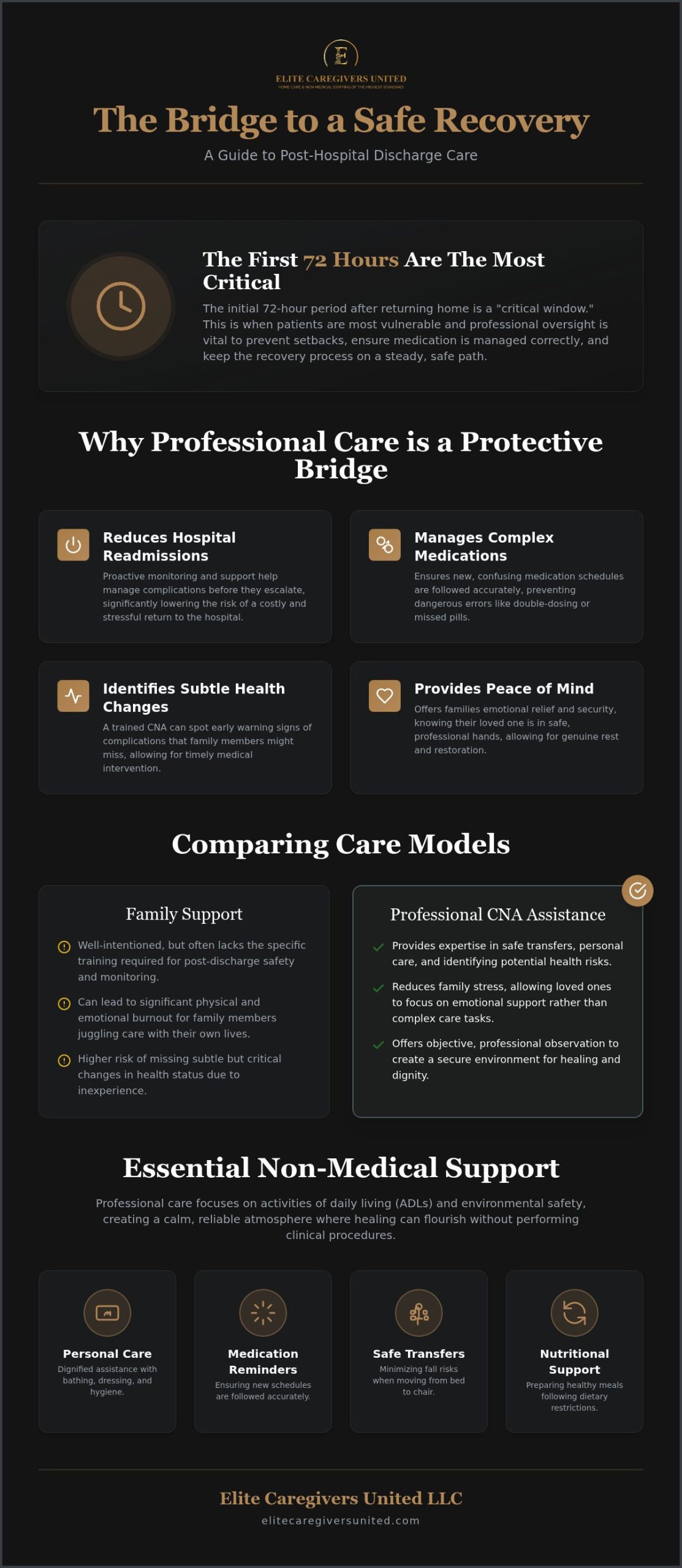
After a surgery or a significant illness, the body enters a state of delicate recalibration as it adjusts to a non-clinical environment where monitors and 24-hour nursing stations are no longer present. Research consistently indicates that a high percentage of hospital readmissions occur within the first week of discharge, frequently due to minor complications or exhaustion that escalate when left unobserved. This transition is both physically and emotionally taxing, making the initial days at home a period of heightened vulnerability for the patient and their family. The 72-hour safety zone is the critical timeframe immediately following a return home where professional oversight is most vital to ensure a patient’s recovery remains on a safe and steady path.
Non-Medical vs. Skilled Nursing: Knowing the Difference
It’s essential for families to recognize that professional post hospital discharge care focuses on activities of daily living (ADLs) and environmental safety rather than clinical procedures. This level of support is designed to nurture the individual’s independence while providing the physical help they need to move safely through their day. This care typically includes:
- Personal Care: Assistance with bathing, dressing, and maintaining hygiene with dignity.
- Medication Reminders: Ensuring new schedules are followed accurately to prevent confusion.
- Safe Transfers: Helping the individual move from beds to chairs to minimize the risk of falls.
- Nutritional Support: Preparing healthy meals that follow any dietary restrictions set by the hospital.
This service does not include clinical procedures such as IV therapy, wound debridement, or physical therapy. Instead, a CNA-led team acts as a wise protector, using their professional expertise to monitor well-being without performing medical tasks. By focusing on these essential daily needs, caregivers allow the patient to heal in a space defined by peace of mind and heartfelt dedication.
The Hidden Risks of a Poor Transition: Why Families Need Support
Returning home is often a moment of quiet relief, yet it also marks the beginning of a complex journey where the safety of a clinical setting is replaced by the variables of daily life. Families frequently find themselves thrust into a role they aren’t prepared for, managing intricate care needs while still processing the emotional weight of their loved one’s illness. Without professional post hospital discharge care, the transition can quickly become overwhelming, as small oversights in medication or physical support lead to significant setbacks.
Medication Reconciliation and Safety
The most significant hurdle in the first few days is often the management of new prescriptions, which can be confusing and fraught with risk. Many patients experience what’s known as medication fog following anesthesia or high-dose treatments, making it difficult for them to track their own dosages accurately. Professional caregivers act as a steady, guiding presence, providing timely reminders and meticulous organization to prevent the danger of double-dosing. By maintaining a detailed recovery log that tracks side effects and timing, these professionals ensure that every dose contributes to healing rather than harm.
Beyond the medicine cabinet, the physical demands of recovery present hidden dangers that many families underestimate. Tasks like assisting with a bath or helping someone stand from a low chair require specific techniques to prevent falls and protect the caregiver’s own physical health. We often see dedicated family members reaching a point of total exhaustion, juggling their own careers and household duties while providing round-the-clock care. This fatigue isn’t just a burden; it’s a risk factor, as an overtired caregiver may miss the subtle red flags, like a slight change in breathing or unusual lethargy, that professional eyes during post hospital discharge care would catch immediately.
Preventing the Cycle of Hospital Readmission
A successful recovery is built on the pillars of proper nutrition and consistent hydration, yet these are often the first things to slip when a household is in crisis. Dehydration and poor calorie intake are leading causes of secondary hospital visits, often manifesting as dizziness or weakened immunity. Professional meal preparation ensures that dietary restrictions are respected while promoting the vitality needed for tissue repair. Choosing home care after surgery is a proven way to break this readmission cycle, offering a structured environment where health is monitored and wellness is nurtured. This proactive approach allows families to step back from the stress of clinical management and return to their most important role: being a loving, supportive presence. If you’re feeling the weight of these responsibilities, exploring professional personal care services can provide the breathing room your family deserves.
Comparing Care Models: Family Support vs. Professional CNA Assistance
While family members often want to provide every ounce of support themselves, the reality of post hospital discharge care often requires more than just love and good intentions. Family-only care, though well-meaning, often leads to significant physical strain and emotional burnout as relatives attempt to juggle their own careers and personal lives with the rigorous demands of a recovery schedule. Professional assistance introduces a level of structured reliability that a fragmented family schedule simply cannot match, providing a steady presence that remains focused solely on the patient’s well-being.
This care model creates what we call the “Respite Factor,” which is the essential ability for a family to return to their most natural roles. Instead of acting as “nurses” focused on complex schedules and safety protocols, children and spouses can focus on providing the emotional warmth and companionship that only a family can give. It’s about preserving the dignity of the loved one while ensuring the family’s own health and vitality remain intact during a challenging time.
The Role of Professional CNA Expertise
A Certified Nursing Assistant (CNA) brings specialized training that transforms the home recovery environment into a sanctuary of safety. They’re experts in proper body mechanics, ensuring that every movement, from a bed transfer to a short walk, is safe for both the patient and the caregiver. This technical expertise is why non-medical home care in Orlando offers a much higher safety margin than untrained assistance. By meticulously observing subtle changes in well-being and maintaining professional documentation, a CNA provides the clear data your doctor needs during follow-up visits, ensuring that the recovery journey is well-documented and transparent.
When is 24/7 Support Necessary?
Certain situations demand a higher level of vigilance than a single family member or a part-time caregiver can provide alone. If your loved one faces a high risk of falling, struggles with cognitive impairment like Alzheimer’s, or requires constant help with high-dependency recovery, around-the-clock care becomes a necessity. Choosing 24 hour home care in Orlando ensures that a dedicated professional is always awake, alert, and ready to assist at any hour of the day or night. This “wise protector” presence overnight provides a profound sense of security, knowing that a skilled pair of eyes is always watching for red flags and providing comfort when it’s needed most.
A Step-by-Step Guide to a Safe Hospital-to-Home Transition
Transitioning from a hospital bed to your own home is a significant milestone, but it’s also a process that demands careful, proactive planning. A successful return relies on a structured approach that begins well before you leave the medical facility. By following a methodical roadmap, you can ensure that the initial days of post hospital discharge care are defined by safety, comfort, and professional reliability rather than stress or confusion.
Questions for the Hospital Social Worker
Before the final discharge papers are signed, it’s vital to have a thorough conversation with the hospital social worker or discharge planner. You’re acting as the “wise protector” for your loved one, so you’ll need to gather every piece of information required for a smooth transition. Ask specifically: “What are the early signs of infection we should watch for with this procedure?” and “What are the precise lifting or movement restrictions for the next two weeks?” It’s also essential to request a written discharge summary that you can hand directly to your home caregiver. Don’t wait until you’re home to realize a prescription is missing; ensure all new medications are filled and in your hand before you leave the hospital grounds.
Preparing the Physical Environment
A safe recovery environment is one that anticipates needs and eliminates risks before they lead to an accident. Start by clearing away any potential trip hazards like area rugs or loose cords that could catch on a walker or a tired foot. Adding nightlights in hallways and bathrooms is a simple yet profound way to prevent nighttime falls when a patient might be disoriented. If possible, organize a ground-floor living space to avoid the physical strain of stairs during the initial healing phase.
Creating a dedicated “Recovery Zone” is essential for a peaceful and organized transition. This area should keep fresh water, a charged phone, and all medications within easy reach so the patient doesn’t feel the need to overexert themselves while alone. Using a hospital to home transition care Orlando checklist can help you verify that every safety measure is in place, providing a higher standard of post hospital discharge care before the car even pulls into the driveway.
The journey doesn’t end at the front door. Once you arrive, focus on a safe transfer from the vehicle to the bed, ensuring you don’t rush the process or compromise body mechanics. The first 24 hours are critical for establishing a rock-solid medication and hydration routine, as consistency here prevents the confusion that often leads to readmission. Stay ahead of the curve by coordinating all follow-up appointments and keeping a meticulous log of any physical changes to report to the medical team. If you’re feeling uncertain about managing these steps alone, our professional CNA team is ready to step in as your dedicated partner in recovery.
Specialized Recovery in Orlando: The Elite Caregivers United Approach
Elite Caregivers United LLC stands as Orlando’s dedicated partner in navigating the complexities of post hospital discharge care, offering a sanctuary of professional warmth and skilled observation. We understand that every recovery journey is unique, which is why our approach moves beyond a generic checklist to provide a personalized experience that honors the individual’s dignity. As a “wise protector” in the home, our team acts as a seamless extension of your family, taking on the technical and physical burdens of care so you can focus on the emotional connection that fosters true healing.
Our philosophy is rooted in the belief that recovery should be a period of growth and restoration rather than one of fear or confusion. By providing a steady, guiding presence, we alleviate the weight of responsibility from family members who may be feeling the exhaustion of juggling work and caregiving. This proactive and attentive support ensures that the home remains a place of peace, where the focus stays on the patient’s holistic well-being and the family’s collective comfort.
Recovery Support for Specialized Conditions
Recovery needs vary significantly depending on the nature of the hospitalization, and our specialized tracks are designed to meet those distinct challenges with precision. For those seeking cosmetic surgery recovery care in Orlando, we prioritize absolute discretion and comfort, managing the delicate post-operative requirements that ensure the best results while minimizing physical strain. Our caregivers are trained to provide the gentle assistance needed during those first critical days when rest is the highest priority for optimal healing.
For families navigating the long-term journey of stroke or cancer recovery, our focus shifts toward patience and specialized support for activities of daily living (ADLs). These conditions often require a more methodical pace, where our CNAs provide the steady hand needed for mobility and personal care while constantly monitoring for any changes in vitality or health. In every specialized care plan, the commitment of Elite Caregivers United LLC is to preserve the patient’s sense of self, ensuring they feel supported, respected, and empowered throughout their restoration.
The Elite Difference: CNA-Led Professionalism
The cornerstone of our service is our decision to utilize a CNA-led team for all post-hospitalization cases. While standard companions offer valuable social interaction, a Certified Nursing Assistant brings a higher level of clinical intuition to the home, catching subtle red flags that might otherwise lead to a return to the hospital. This professional expertise, delivered with heartfelt dedication, creates an atmosphere of calm reliability that alleviates the stress often felt by families during post hospital discharge care.
Our 24/7 availability means that whether it’s the middle of the afternoon or the quiet hours of the night, your loved one is never alone in their recovery. We invite you to experience the peace of mind that comes from having a dedicated professional watching over your home. Contact Elite Caregivers United LLC today to schedule a transition assessment and discover how we can help your family move forward with confidence and grace.
Embracing a Path of Dignity and Healing at Home
A successful return home is built on a foundation of professional observation and heartfelt dedication, ensuring that the critical early days of recovery lead to lasting vitality. You’ve learned that managing the first 72 hours requires more than just a list of tasks; it demands a steady, guiding presence capable of identifying subtle red flags before they become complications. By choosing professional post hospital discharge care, you’re not just preventing readmission. You’re giving your family the freedom to focus on love and emotional support while experts handle the complexities of safety and medication schedules.
As a licensed and insured provider in Florida, Elite Caregivers United LLC offers a CNA-led professional recovery team specifically trained for specialized stroke and surgery recovery programs. We act as a wise protector in your home, providing the calm reliability you need to move forward with confidence. It’s time to replace the fear of the unknown with a structured, nurturing environment where your loved one can truly flourish. Ensure a Safe Transition with Elite Caregivers United LLC and take the first step toward a stress-free recovery today. You don’t have to walk this path alone; we’re here to guide you every step of the way.
Frequently Asked Questions
What does post-hospital discharge care typically include?
Post-hospital discharge care typically includes personalized assistance with activities of daily living such as bathing, dressing, and mobility to ensure a dignified recovery. Our CNA-led team focuses on creating a safe environment by providing medication reminders, preparing nutritious meals, and performing light housekeeping tasks. This non-medical support acts as a protective bridge, allowing your loved one to focus on healing while we manage the physical demands and safety protocols of the home environment.
How soon can home care services start after a hospital discharge?
Home care services can begin the very moment your loved one arrives home from the hospital, providing immediate support during the most vulnerable transition period. We recommend scheduling an assessment before discharge to ensure a seamless handoff between the clinical team and our caregivers. Starting support within the first 24 hours is essential for maintaining safety and preventing the exhaustion that often leads to avoidable complications or early hospital readmissions during the initial recovery phase.
Is post-hospitalization care covered by insurance or Medicare?
Coverage for post-hospitalization support often depends on your specific insurance provider and policy details. While traditional Medicare typically prioritizes skilled nursing or clinical procedures, many long-term care insurance policies and private health plans do provide coverage for non-medical personal care services. We encourage families to verify their benefits directly with their insurance carrier to understand how these essential support services can be integrated into their recovery plan without unexpected financial stress.
Can a professional caregiver help with my loved one’s follow-up doctor appointments?
Our professional caregivers are fully equipped to assist with follow-up doctor appointments through our dedicated travel companion services. We ensure your loved one is safely transported to their medical provider in the Orlando area, offering physical support during the transition from the vehicle to the office. Having a professional present also provides a calm, reliable presence during what can be an exhausting outing, ensuring that the return home is as comfortable and stress-free as possible.
What is the difference between a CNA and a regular companion for recovery?
The primary difference lies in the level of professional training and clinical intuition brought to the recovery process. While a regular companion offers social interaction and basic help, a Certified Nursing Assistant (CNA) is trained in body mechanics, vital sign observation, and specialized transfer techniques. This expertise allows a CNA to act as a wise protector, catching subtle red flags or health changes that an untrained companion might miss, thereby offering a much higher safety margin.
Does Elite Caregivers United LLC offer 24/7 care for post-surgery patients in Orlando?
Elite Caregivers United LLC provides comprehensive 24/7 care for post-surgery patients throughout Orlando, ensuring a dedicated professional is always awake and alert. This around-the-clock support is particularly vital for those recovering from cosmetic surgery, stroke, or major orthopedic procedures where fall risks are high. Our 24-hour home care model alleviates family burnout by providing continuous, empathetic assistance, ensuring that your loved one’s needs are met with professional warmth at any hour of the night.
What should I do if my loved one shows signs of a complication after getting home?
If your loved one shows signs of a complication, such as a fever, unusual lethargy, or increased pain, you should contact their primary physician or emergency services immediately. Our professional caregivers are trained to monitor for these specific red flags and will alert the family the moment a concern arises. Having a professional on-site during post hospital discharge care ensures that these subtle changes are documented and reported quickly, facilitating a faster medical response to prevent a full readmission.
How do you handle medication reminders for patients with multiple prescriptions?
We manage complex medication schedules by providing consistent reminders and maintaining detailed logs of when each dose is taken. This structured approach helps alleviate the medication fog often experienced after surgery and prevents dangerous errors like double-dosing or missed prescriptions. By organizing the routine and tracking potential side effects, our team ensures that the recovery process remains steady and safe, allowing the family to step back from the stress of medical management.