

Fair caregiving doesn’t mean dividing every hour equally. Managing a care schedule for multiple siblings works best when responsibilities reflect each person’s availability and strengths, while keeping the loved one’s needs at the center. A nearby sibling might handle in-person visits, while others coordinate appointments, paperwork, or updates.
Coordinating care can feel complicated, especially when siblings have different schedules, travel distances, or views about what should happen next. Clear responsibilities and open conversations help make each person’s contribution visible and prevent tasks from falling through the cracks.
This guide explains how to divide duties fairly, match tasks to each sibling’s capacity, and use shared schedules and regular check-ins to keep everyone informed. You’ll also learn how to revisit the plan as needs change, so it supports your loved one without leaving one person carrying too much.
Key Takeaways
- Make each sibling’s responsibilities visible so shared care feels clearer and more balanced.
- Separate essential tasks from those that can be delegated, simplified, or scheduled in advance.
- Use one shared calendar and regular updates to keep appointments and care needs from being overlooked.
- Match duties to each person’s strengths and availability, then revisit the plan as circumstances change.
1. How Do You Divide Care Duties Between Siblings?
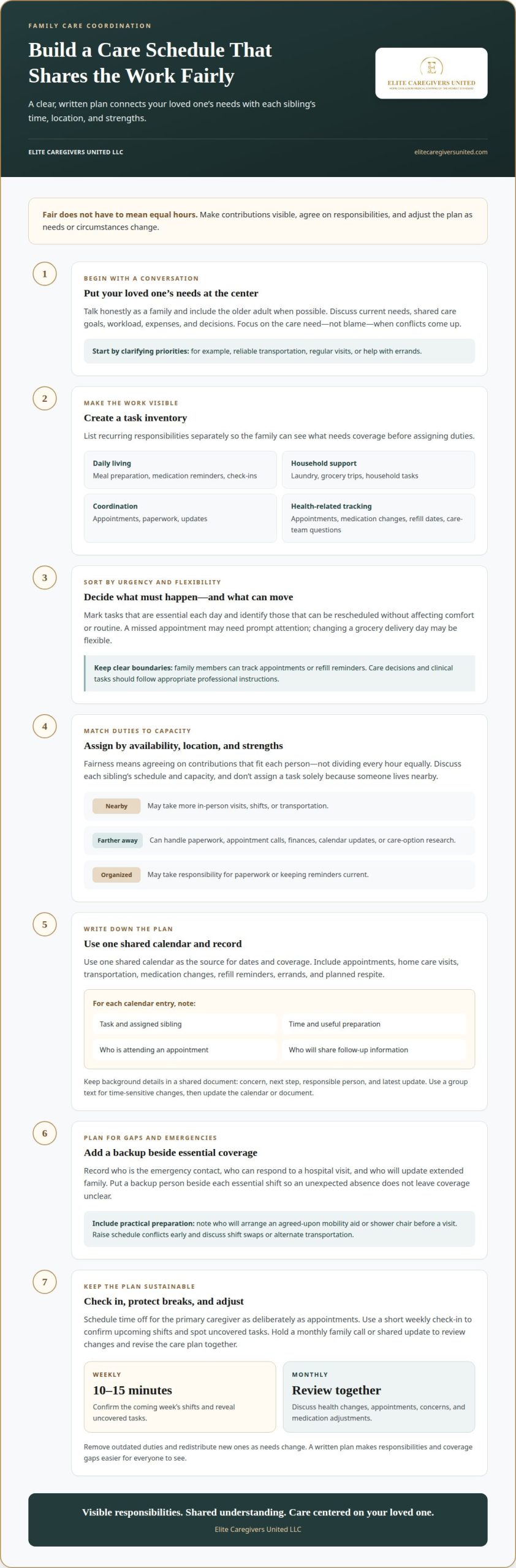
Start with an honest family conversation, including the older adult when possible. List recurring needs, such as appointments, medication reminders, grocery trips, household tasks, and check-ins. Assign a person to each task and record when it needs to happen. A monthly care plan makes responsibilities visible and helps siblings prepare for upcoming needs. Fairness doesn’t require equal hours; it means agreeing on contributions that fit each person’s time, location, and capacity. Effective management of a care schedule for multiple siblings starts with what the loved one needs most.
Raise schedule conflicts early and focus on the care need, not blame. If two siblings can’t cover an appointment, discuss who can switch shifts or arrange transportation another way. A nearby sibling may take more in-person shifts, while one who lives farther away handles paperwork or appointment calls. To reduce conflict, discuss workload, expenses, and care decisions openly, then adjust assignments as circumstances change.
Build a backup plan for sick days and emergencies. Record who is the emergency contact, who can respond to a hospital visit, and who will update extended family. Add a backup person beside each essential shift, so an unexpected absence doesn’t leave the schedule unclear. Include equipment-related tasks too, such as who will arrange an agreed-upon mobility aid or shower chair before a visit.
Protect the primary caregiver’s time off by scheduling breaks as deliberately as appointments. A short weekly check-in of 10-15 minutes can confirm the coming week’s shifts and reveal uncovered tasks. Schedules often break down when duties stay informal, siblings assume someone else handled a task, or disagreements go unspoken. Managing a care schedule for multiple siblings becomes clearer when the written plan makes coverage gaps and responsibilities visible.
2. Prioritizing, automating, delegating, or reducing tasks
Start with a task inventory that separates daily living, household support, coordination, and health-related responsibilities. List meal preparation, laundry, grocery pickup, appointment scheduling, and medication reminders separately. Mark which tasks are essential each day and which can be moved without affecting the senior’s comfort or routine. This helps siblings see where assistance is needed before assigning duties according to availability and strengths.
For health-related tasks, record appointments, medication changes, refill dates, and questions for the care team. Keep reminders and written instructions together, so siblings can coordinate updates without relying on memory. Separate organizing information from clinical care: a family member can track an appointment or refill reminder, while care decisions and clinical tasks should follow appropriate professional instructions. This inventory can also reveal responsibilities that need clearer boundaries.
Prioritize tasks by urgency and impact. A missed appointment may need prompt attention, while changing the grocery delivery day could be flexible. Set reminders for recurring tasks in a shared calendar, and delegate paperwork to the sibling who stays organized. A sibling with limited time might handle one recurring call, while someone with flexible hours covers transportation. Discuss each person’s situation openly; unspoken workload concerns can lead to resentment.
Reduce unnecessary work by combining errands, choosing recurring grocery lists, or simplifying household routines around the senior’s preferences. Keep daily living tasks distinct from tasks requiring specialized skills, and don’t assign a duty solely because one sibling lives nearby. If the home needs attention while family members focus on caregiving, house sitting support can help cover household oversight. Review the task inventory as needs change, removing outdated duties and redistributing new ones before the schedule becomes difficult to sustain.
A sibling who lives farther away can manage finances, schedule appointments, handle paperwork, or coordinate long-term care options. Professional in-home caregivers can help with daily tasks, medication reminders, companionship, and respite for family caregivers.
3. Using shared calendars and care coordination tools
Choose tools after discussing your parent’s current needs and shared care goals. A family meeting can cover daily routines, upcoming appointments, medication management, finances, and longer-term plans. Include your parent when possible, so their preferences shape the care plan. For example, agree whether the immediate priority is reliable transportation, regular visits, or help with errands. Clear priorities help siblings decide which updates belong in the shared schedule.
Use one shared calendar as the source for dates and coverage. Add medical appointments, home care visits, transportation, medication changes, refill reminders, errands, and planned respite. Each entry should include the task, assigned sibling, time, and any useful preparation. For a doctor’s visit, record who is attending and who will share follow-up information. This makes the schedule easier to scan and helps siblings spot conflicts before they disrupt care.
Keep background information in a shared document instead of scattering details across messages. A simple table can track the concern, next step, person responsible, and date of the latest update. For example, one sibling can note a new appointment while another records a question about the parent’s routine. Use a group text for time-sensitive changes, then update the calendar or document so the ongoing record stays organized.
A monthly family call, video chat, or shared update can bring everyone onto the same page. Review health changes, new concerns, appointments, and medication adjustments, then revise the care plan together. Siblings who live farther away can contribute by maintaining the calendar, coordinating appointments, or researching care options. A shared record also gives family members a clearer picture of finances and practical responsibilities, reducing the stress of relying on separate conversations or memory.
4. Matching responsibilities to strengths and availability
List each responsibility alongside the skills, time, and location it requires. An aging parent may need transportation to appointments, bill payment, paperwork, meal support, or regular visits. Assign account management to the sibling comfortable with finances and appointment coordination to someone organized. Match duties to practical ability, not birth order or assumptions about who should help.
Availability matters as much as skill. A sibling with a flexible workday might attend appointments, while someone who lives farther away can manage calls or records. Avoid assigning transportation to someone who often runs late; missed appointments can add pressure. Define each task clearly, including what completion means, who receives an update, and when another sibling takes over.
Partners can help sustain the arrangement, but discuss caregiving responsibilities with them directly. A brief daily conversation can identify schedule changes, household demands, and the time needed for family. For example, a partner might help protect an evening for rest while a sibling handles the aging parent’s grocery pickup. Keep the sibling responsible for confirming their assigned care task.
Review the arrangement when work hours, health needs, or family circumstances change. Ask whether each person’s responsibilities remain manageable and whether the parent’s preferences are being respected. If one sibling feels that an assignment is difficult or unequal, discuss the concern before resentment builds. Signs such as ongoing fatigue, irritability, or withdrawal from personal activities can signal strain and a need to adjust duties or plan a break. For additional support with family caregiving, explore care options.
Discuss plans, task distribution, and appointments with a partner each day. If a sibling is often late, assign appointment transportation to another sibling instead.
Elite Caregivers United LLC
Elite Caregivers United LLC can support families when a loved one’s daily needs exceed what siblings can comfortably manage alone. Respite Care gives family caregivers time away from hands-on duties, while Personal Care Services / CNA Team can assist with personal care. For someone returning home after surgery, Surgery Recovery & Post-Hospitalization Care can provide additional support during recovery.
This support can complement your family’s schedule when a primary caregiver needs a break, daily assistance becomes difficult to coordinate, or recovery adds demands at home. Contact Elite Caregivers United LLC to discuss your family’s care needs.
Let the Care Plan Grow With Your Family
Your family doesn’t need a perfect care arrangement before getting started. Treat it as a working agreement that can evolve with your loved one’s needs, your capacity, and changing family circumstances. When managing a care schedule for multiple siblings, start with a calm conversation about what feels sustainable now, rather than trying to solve every future possibility at once.
Choose one change to put into practice, then see whether it makes daily life clearer for your loved one and the people supporting them. If care needs have grown beyond what relatives can comfortably manage, additional help can become part of the family’s plan, not a sign that anyone has failed. Elite Caregivers United LLC provides care support that can complement your family’s arrangements.
Contact Elite Caregivers United LLC to discuss your family’s care needs. With thoughtful adjustments and shared support, your family can move forward with greater confidence.
Frequently Asked Questions
How Do You Divide Care Duties Between Siblings?
Divide responsibilities into clear tasks, then match them to each sibling’s capacity. For example, one person can arrange transportation to an appointment, while another records questions beforehand and shares the family update afterward. This avoids assigning a complex responsibility to one sibling by default. Revisit assignments when someone’s work or family commitments change.
How do you create a care schedule for multiple siblings?
List recurring commitments and one-time needs, then add each task to a shared schedule with an owner and due time. Record appointments, errands, visits, and household responsibilities separately so the family can see what needs coverage. Before relying on the plan, have each sibling confirm their tasks and identify who can step in if plans change.
What information should parents share to coordinate sibling care?
Parents can share their preferences, daily routines, important appointments, and changes that affect the family’s plans. For example, note the best time for visits, preferred ways to receive updates, and household routines siblings should respect. Agree on which details belong in a shared record and who should receive sensitive updates, keeping communication relevant to the care being coordinated.
What apps or tools help manage a family care schedule?
A shared digital calendar can show appointments and visits, while a shared document can hold task assignments and family updates. Group messaging helps siblings communicate last-minute changes, but update the main calendar afterward so it remains the reliable schedule. Choose tools everyone can access and use consistently; a shared spreadsheet can work if multiple apps create confusion.
How should parents divide caregiving duties between siblings’ caregivers?
Clarify which tasks family members handle and which are assigned to a caregiver, then communicate that division before each shift. For example, siblings may coordinate family updates while a caregiver follows the agreed daily routine. Share relevant preferences and schedule changes, and keep requests within the caregiver’s assigned role. This helps prevent duplicated effort and confusion about responsibilities.