

Imagine the quiet tension of a morning where a simple routine like bathing feels like an insurmountable obstacle, leaving both you and your aging parent exhausted before the day has even truly begun. It’s a heavy burden to carry, balancing the deep love you have for your family with the physical and emotional toll of providing constant, high-level support. You want them to feel safe and dignified, yet the constant fear of a sudden fall or a hygiene-related infection often keeps you in a state of perpetual worry.
Professional CNA assistance with activities of daily living can bridge this gap, turning these stressful routines into graceful moments of expert care. By welcoming a skilled partner into your home, you’ll discover how specialized support transforms daily challenges into opportunities for safety, recovery, and genuine connection. This guide explores the essential role of the Certified Nursing Assistant, detailing how their meticulous attention ensures a clean, vibrant environment while granting you the profound peace of mind you deserve. We will look at the specific ways these wise protectors uphold your loved one’s independence, allowing you to return to your role as a daughter, son, or spouse rather than just a full-time caregiver.
Key Takeaways
- Understand the vital distinction between basic self-care tasks and instrumental activities to accurately assess the level of support your loved one requires for a safe home life.
- Discover how professional CNA assistance with activities of daily living provides a foundation of clinical-grade safety and expert physical support that unlicensed companions cannot offer.
- Learn how specialized care protocols for stroke survivors and post-surgery patients accelerate the healing process by focusing on both physical protection and gradual independence.
- Explore the “wise protector” approach that preserves a patient’s dignity and vitality, shifting the focus from simply performing tasks to empowering your loved one with compassion.
- Follow a structured five-step selection process to find a reliable Orlando care partner, ensuring your family finds the steady, 24/7 support needed for true peace of mind.
Understanding Activities of Daily Living (ADLs) and the Role of Professional Support
Every person cherishes the ability to navigate their day with independence, yet there often comes a time when the fundamental tasks of self-care require a helping hand. These essential functions, known as Activities of Daily Living (ADLs), represent the basic building blocks of an autonomous life. While we often take for granted the ability to wake up, bathe, and dress without thought, these actions are the very foundation of our physical health and personal dignity. When these routines become difficult, the quality of life for a loved one can begin to diminish, creating a silent struggle within the home.
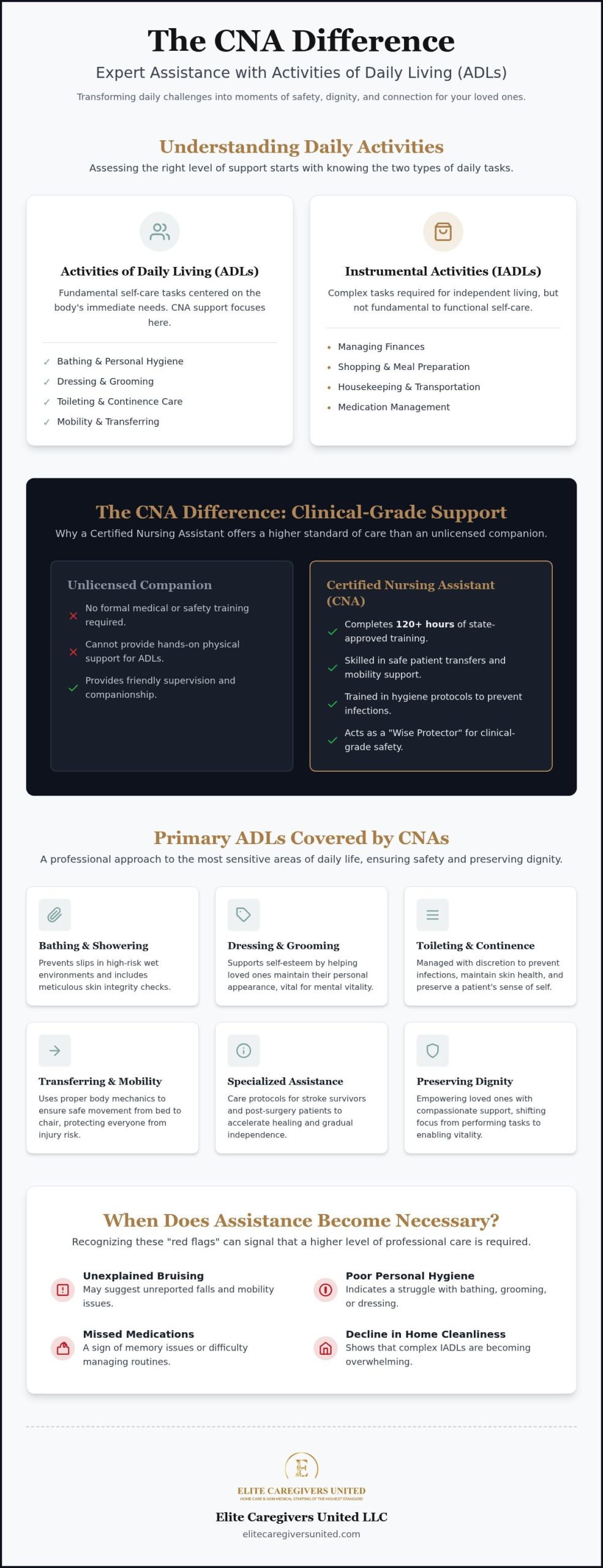
It’s helpful to distinguish between basic ADLs and Instrumental Activities of Daily Living (IADLs). While IADLs involve complex tasks like managing finances, shopping, or preparing meals, basic ADLs are centered entirely on the body’s immediate needs. Professional CNA assistance with activities of daily living focuses on these intimate, physical requirements, ensuring that the most vulnerable aspects of a person’s routine are handled with clinical precision and heartfelt compassion. This specialized support allows the home to remain a sanctuary of comfort rather than a place of mounting frustration.
Many families encounter what we call the “Caregiver Gap,” a point where the physical demands of lifting a parent or the emotional weight of managing hygiene reach a natural limit. It’s a deeply personal realization when a daughter or son finds that their love, while infinite, cannot replace the specialized training needed to prevent a fall in the shower or manage skin integrity. At this juncture, the CNA serves as a professional bridge, providing the steady, expert presence required to maintain a high quality of life while allowing family members to return to their cherished roles as supportive companions.
The Core Six: Primary ADLs Covered by CNAs
A professional CNA brings a “wise protector” approach to the most sensitive areas of daily life. Their presence ensures that every movement is deliberate and every need is met with respect. Key areas of focus include:
- Bathing and showering: Beyond simple cleansing, this involves meticulous skin checks and the use of specialized techniques to prevent slips in high-risk, wet environments.
- Dressing and grooming: CNAs support self-esteem by helping loved ones maintain their preferred personal appearance, which is vital for mental vitality.
- Toileting and continence care: This sensitive area is managed with the utmost discretion, focusing on hygiene to prevent infections and preserve the patient’s sense of self.
- Transferring and mobility: Using proper body mechanics, a CNA ensures safe movement from beds to chairs, protecting both the patient and themselves from the risk of injury.
When Does Assistance Become Necessary?
Recognizing the need for help isn’t always easy, but certain “red flags” often signal that a higher level of care is required. You might notice missed medications, a decline in household cleanliness, or unexplained bruising that suggests a recent, unreported fall. Poor personal hygiene or a sudden disinterest in grooming can also point toward a struggle with daily routines. Cognitive decline further complicates these issues, as a loved one might simply forget how to perform a task safely or lose the physical coordination needed to complete it. The Activities of Daily Living framework serves as the industry standard for measuring an individual’s functional status and determining the appropriate level of support.
The CNA Difference: Why Professional Certification Matters for Your Family
Selecting a caregiver for a loved one is one of the most significant decisions a family can make. While many people offer companion services, there’s a profound distinction between friendly supervision and the skilled, clinical-grade support provided by a Certified Nursing Assistant. In Florida, the path to becoming a CNA is rigorous, requiring candidates to complete 120 hours of state-approved training. This curriculum is split between 80 hours of classroom instruction and 40 hours of hands-on clinical practice, ensuring every professional understands the delicate nuances of patient safety and physical support.
When you choose professional CNA assistance with activities of daily living, you aren’t just hiring a helper; you’re securing a licensed professional regulated by the Florida Board of Nursing. Unlicensed companions are often legally restricted from providing physical assistance, such as helping a patient out of bed or managing sensitive hygiene needs. By contrast, a CNA is trained to recognize subtle changes in a patient’s condition that an untrained eye might miss. This high standard of care is why many families find that non-medical home care in Orlando provides a much safer, more reliable alternative to the unvetted “grey market” of private hires.
Clinical Skills in a Non-Medical Setting
A CNA brings the watchful presence of a “wise protector” into the home, acting as a vital early warning system for the family. They’re trained in monitoring vital signs, allowing them to spot potential health issues before they become emergencies. Their expertise extends to hospital-grade infection control, where they implement strict sanitation protocols to prevent hygiene-related illnesses. They also ensure proper nutrition and hydration by assisting with feeding and managing specialized diets, which is especially critical during recovery from surgery or illness. If your family requires constant vigilance, our professional CNA team provides the steady 24/7 availability that transforms overwhelming worry into lasting peace of mind.
Florida Licensing and Standards in 2026
In 2026, the standards for home care in Florida remain some of the most stringent in the country. To maintain their license, CNAs must undergo thorough background checks and complete 24 hours of continuing education every two years. This ongoing commitment ensures that your caregiver is always up to date with the latest safety protocols and care techniques. This level of oversight provides a foundation of trust, knowing that the person in your home has been vetted and trained to the highest professional standards. It’s this blend of formal expertise and genuine human kindness that defines the true CNA difference, offering a level of security that unlicensed services simply cannot match.
Specialized ADL Assistance for Recovery and Chronic Conditions
While basic support is helpful, the true value of a Certified Nursing Assistant shines when navigating the complex physical restrictions of medical recovery or chronic illness. These situations demand more than just a helping hand; they require a deep understanding of how specific conditions impact the body’s ability to move and heal. Professional CNA assistance with activities of daily living ensures that every movement is therapeutic rather than harmful, especially when a patient is at their most vulnerable. By utilizing their clinical training, these professionals act as a steady hand, guiding patients through the disorientation of post-operative fatigue while maintaining a vigilant eye on skin integrity and surgical sites.
Post-Surgical Recovery: The First 72 Hours
The transition from hospital to home is a critical window where the risk of complications is at its highest. For those recovering from cosmetic procedures like BBLs or tummy tucks, the physical limitations are often extreme, as patients are frequently restricted from sitting, lifting, or even standing upright for long periods. A CNA provides the essential support needed to manage these unique constraints, assisting with delicate hygiene needs and ensuring that the patient remains comfortable without compromising their surgical results. This dedicated personal care support is vital for managing post-operative fatigue, allowing the body to focus entirely on the healing process while the caregiver handles the physical demands of the day.
Memory Care and Neurodegenerative Support
For families caring for Alzheimer’s and dementia patients, the daily routine often requires a delicate balance of structure and patience. When a patient is confused or resistant to care, a CNA uses specialized communication techniques to create a calm environment, turning potentially stressful ADL tasks into moments of quiet reassurance. This expertise is equally critical for Parkinson’s-specific mobility assistance, where the “wise protector” helps manage tremors and prevent “freezing” episodes during hygiene routines. By anticipating these challenges, the caregiver prevents falls and ensures that the patient’s dignity remains intact despite the progression of their condition.
Beyond immediate physical help, CNAs play a proactive role in preventing post-hospitalization complications like bedsores or respiratory issues. They understand that for a stroke survivor, rebuilding independence starts with small, safe steps in daily self-care. Every interaction is designed to empower the patient, focusing on gradual progress while providing the clinical oversight necessary to spot early signs of distress. This level of specialized CNA assistance with activities of daily living transforms the home into a space of active recovery, where safety and progress go hand in hand.
Preserving Dignity and Vitality: The Emotional Side of CNA Assistance
Care is more than a checklist of physical requirements. It’s a deeply human interaction that, when handled correctly, nourishes the spirit as much as the body. While the clinical aspects of CNA assistance with activities of daily living are vital for safety, the emotional resonance of that care often defines a patient’s daily happiness. By shifting the narrative from simply “doing for” a loved one to actively “empowering” them, a professional caregiver helps maintain the vital spark of independence that makes life meaningful. This professional distance, combined with genuine empathy, often makes it easier for a senior to accept help with personal hygiene from a trained expert than from a family member, preserving the precious bond between parent and child.
For families seeking this level of dedicated support and personalized care solutions, you can learn more about Liv.Care Singapore to discover how professional caregivers prioritize dignity and vitality in every interaction.
Empowerment Through Shared Activity
Orlando Lifestyle: Care Beyond the Home
In a vibrant city like Orlando, quality of life shouldn’t be confined to the four walls of a house. Families visiting our local attractions often face unique challenges when traveling with seniors or members with special needs. We bridge this gap by providing Orlando amusement park nannies who ensure every family member can experience the magic of Disney or Universal safely. These professionals offer more than just supervision; they provide specialized CNA assistance with activities of daily living in a dynamic environment, managing hydration, mobility, and personal care amidst the excitement of a vacation.
Beyond the theme parks, our travel companion services extend this “wise protector” philosophy to flights and hotel stays. Whether it’s a local resident wanting to join a family reunion or a visitor needing consistent support during their stay, a professional caregiver ensures that medical needs and physical limitations don’t stand in the way of making memories. If you’re ready to reclaim your family’s freedom and ensure your loved one thrives in every setting, our dedicated personal care team is here to support you every step of the way.
Selecting Elite CNA Support: Your Orlando Path to Peace of Mind
Finding the right care partner is a journey that requires both a discerning eye and a compassionate heart. It’s not simply about filling hours on a calendar; it’s about securing a “wise protector” who can navigate the delicate balance between clinical safety and emotional dignity. In Orlando, where the options for home care can feel overwhelming, following a structured selection process ensures your family finds the steady, reliable presence it deserves. Professional CNA assistance with activities of daily living provides the foundation for this security, offering a level of expertise that transforms the home environment into a place of true recovery and quiet confidence.
To ensure you’re making the best choice for your loved one, consider this five-step evaluation process:
- Identify the specific level of care: Determine whether your loved one needs basic ADL support or specialized assistance for conditions like Parkinson’s or post-surgical recovery.
- Verify Florida credentials: Confirm the agency is licensed, bonded, and insured, ensuring they adhere to the strict 2026 state standards for caregiver training.
- Assess the matching philosophy: Ask how the agency pairs a CNA’s specific skills and personality with your loved one’s unique temperament and history.
- Review the evolving Care Plan: Ensure the provider offers a personalized plan that adapts as your loved one’s health and goals change over time.
- Confirm 24/7 availability: Establish whether the agency can provide the constant vigilance required for high-needs patients to ensure true peace of mind.
Evaluation Framework for Families
A robust evaluation begins with verification, ensuring the agency is fully licensed and bonded within the state of Florida. This step is essential to protect your family from the legal and safety risks often found in the unvetted “grey market” of private hires. Beyond technical credentials, the matching process is critical. A high-quality agency takes the time to understand a patient’s personality, pairing them with a CNA who can offer both clinical precision and genuine human connection. Finally, clear communication lines must be established, creating a transparent reporting system that keeps the family informed and involved in every aspect of the care journey.
The Elite Caregivers United LLC Promise
Elite Caregivers United LLC stands as a dedicated partner for Orlando families, providing a sanctuary of calm reliability through our professional CNA team. We understand that high-needs patients often require the constant vigilance of 24-hour home care, which is why our 24/7 respite and personal care models are designed to provide an unbreakable safety net. Our commitment goes beyond the physical tasks of CNA assistance with activities of daily living, focusing instead on a sense of “wise protection” that honors the individual’s humanity and vitality. By choosing Elite Caregivers United LLC, you’re ensuring that your loved one’s path to wellness is paved with sincerity, expertise, and a profound respect for their independence.
Embracing a Future of Safety and Dignity for Your Loved One
Choosing the right support is more than a logistical decision; it’s a heartfelt commitment to your family’s long-term vitality and peace of mind. We’ve explored how the rigorous training of a certified professional ensures clinical safety while honoring the deep personal dignity of those in their care. Whether your family is navigating the delicate path of memory care or the focused requirements of post-surgical recovery, the right partner transforms daily hurdles into steady moments of progress. This expert guidance preserves the home as a sanctuary of comfort rather than a place of mounting stress.
Professional CNA assistance with activities of daily living provides the “wise protection” that allows you to step back from the physical demands of caregiving and return to your cherished role as a supportive family member. As a Licensed Florida Home Health Agency, our 24/7 Respite & Recovery Specialists are dedicated to providing expert CNA-led personal care that meets the highest standards of excellence. Secure Your Peace of Mind with Orlando’s Elite CNA Team and discover how a dedicated partner can bring lasting calm and security to your home. You don’t have to walk this path alone; let us help you create a safer, brighter future for those you love most.
Frequently Asked Questions
What is the difference between a CNA and a home health aide (HHA)?
A Certified Nursing Assistant (CNA) is licensed by the Florida Board of Nursing and requires 120 hours of state-approved training, whereas a Home Health Aide (HHA) typically undergoes 75 hours of training and doesn’t require state certification. While both provide personal care, a CNA’s clinical training allows for higher-level observation and safety monitoring. This makes them the preferred choice for families seeking professional CNA assistance with activities of daily living for complex medical needs.
Can a CNA assist with medication management at home in Florida?
In Florida, a CNA can assist with the self-administration of medications, which includes opening bottles and reminding patients of their schedule, but they cannot perform clinical medication management or administration. This distinction ensures your loved one receives help with their routine while staying within the legal scope of non-medical care. If your family requires clinical medication administration, we recommend consulting with a registered nurse or a skilled nursing facility.
How many hours of CNA assistance do most families need for post-surgery recovery?
Most families find that the first 72 hours following a procedure are the most critical, often requiring 24/7 support to manage post-operative fatigue and physical limitations. After this initial window, care often transitions to 8 to 12 hours daily as the patient regains strength. Every schedule is tailored to the specific surgery and the individual’s recovery goals, ensuring a steady, guiding presence is always there during the most challenging moments.
Is CNA assistance covered by Medicare or private insurance?
Medicare typically focuses on short-term skilled nursing rather than long-term custodial support like CNA assistance with activities of daily living. While traditional Medicare doesn’t usually cover these services, many private Long-Term Care Insurance policies and certain Medicare Advantage plans do provide coverage for personal care. It’s always best to review your specific policy details or speak with your insurance provider to understand the benefits available for home-based support.
What happens if our assigned CNA is not a good personality match for my loved one?
A successful care relationship depends on a deep sense of trust and a harmonious personality match between the caregiver and your loved one. If the assigned professional doesn’t feel like the right fit, we encourage families to speak with our coordination team immediately to arrange a new match. Our goal is to ensure you feel a profound sense of calm and reliability with the person entering your home every day.
Can a CNA help with ADLs if my loved one is visiting an Orlando theme park?
Yes, we provide specialized caregivers who act as Orlando theme park nannies to support seniors or family members with special needs during their vacation. These professionals assist with mobility, hydration, and personal care amidst the excitement of Disney or Universal, ensuring the entire family can enjoy the magic safely. Having a CNA present allows everyone to participate in family memories without the stress of managing complex physical needs in a busy environment.
How does a CNA handle a patient who is resistant to bathing or dressing?
When a patient is resistant to care, a CNA uses therapeutic communication and a methodical approach to build trust and reduce anxiety. They might break tasks into smaller, less overwhelming steps or use “wise protector” techniques to empower the senior to participate in the decision-making process. By maintaining a calm, patient rhythm, the caregiver can often turn a stressful morning routine into a peaceful and dignified experience for everyone involved.
What safety protocols do CNAs follow to prevent falls during transfers?
CNAs follow strict safety protocols, including the use of gait belts and proper body mechanics, to ensure every transfer is stable and secure. They’re trained to assess the environment for trip hazards and use steady, deliberate movements to prevent falls during transitions from beds to chairs. This clinical-grade vigilance provides an essential safety net, protecting your loved one’s physical health while giving you the profound peace of mind you deserve.