

What if the most loving choice you can make for your aging mother or father isn’t doing everything yourself, but rather inviting a professional to share the weight of care? You might find yourself scanning for subtle signs my parent needs in-home help, feeling a complex mix of guilt and anxiety as you notice a slightly empty refrigerator or a new, unexplained hesitation in their step. It’s completely natural to feel torn between honoring their lifelong independence and ensuring their physical safety, especially when the line between normal aging and more serious cognitive changes feels blurred and uncertain.
We understand that you’re seeking a path forward that preserves your loved one’s dignity while granting your family the profound peace of mind you deserve. By identifying specific physical, emotional, and environmental red flags, you can transform your worry into a proactive plan of support. This article offers a clear, structured framework to evaluate your parent’s unique needs, detailing how professional assistance can actually extend their autonomy within the comfort of their own Orlando home.
Key Takeaways
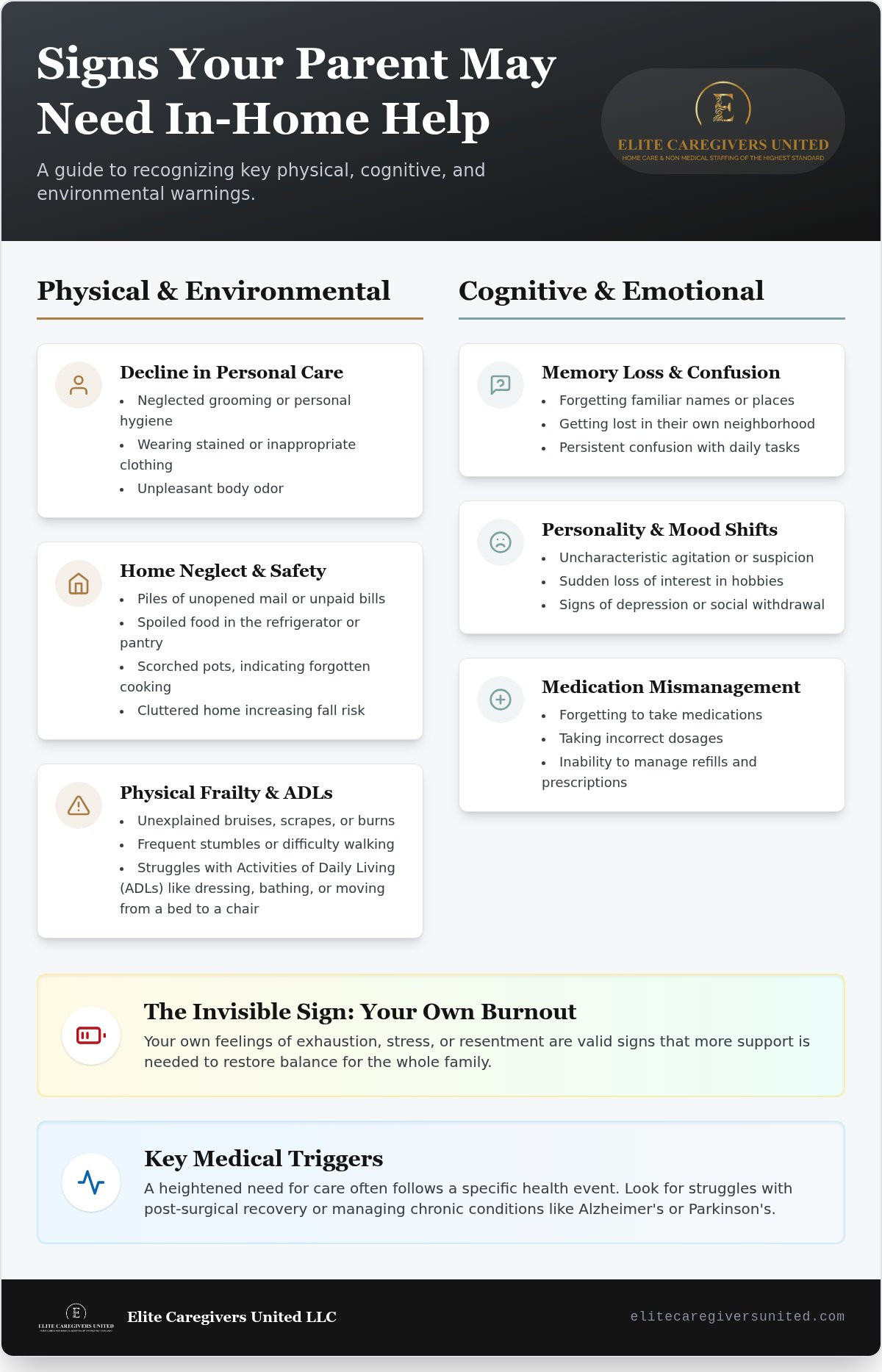
- Identify subtle environmental indicators, such as neglected household chores or changes in personal grooming, that suggest your loved one’s safety may be at risk.
- Distinguish between normal aging and significant cognitive shifts by observing patterns of social withdrawal or persistent confusion during daily tasks.
- Recognize that your own feelings of exhaustion or resentment are valid signs my parent needs in-home help to restore balance and health to your family dynamic.
- Discover how specialized CNA-led support can accelerate recovery following surgery or help manage the complexities of chronic conditions like Alzheimer’s or Parkinson’s.
- Gain the tools to initiate compassionate conversations about professional care, ensuring your parent feels respected and empowered throughout the transition.
Physical and Environmental Red Flags in the Home
Identifying the moment when a parent requires additional support is rarely a sudden realization. It’s often a gradual accumulation of small, quiet observations that eventually form a clear picture. One of the most telling signs my parent needs in-home help is a subtle shift in their physical appearance or the state of their living environment. You might notice that a father who was once meticulously groomed now wears the same stained shirt for several days; perhaps a mother who took pride in her garden now leaves the mail unopened on the counter. You might even encounter the “smell of neglect,” where spoiled food lingers in the refrigerator or unwashed laundry begins to pile up in the corner. These changes aren’t merely about forgetfulness; they often signal that the physical or cognitive energy required for daily upkeep has become overwhelming.
Living in Central Florida adds a unique layer of concern. The intense Orlando heat can quickly lead to dehydration or heat-related lethargy, which seniors may not always recognize themselves. If you notice your loved one appearing unusually tired or confused during the humid summer months, it could be a sign that they’re struggling to manage their hydration or home cooling systems. Within the broader context of Elderly care, maintaining a safe and climate-controlled environment is essential for preserving health and vitality. Unexplained bruising or frequent “minor” stumbles around furniture are also critical indicators that their current living setup is no longer supporting their physical safety.
The ADL Checklist: Activities of Daily Living
Activities of Daily Living, or ADLs, represent the fundamental tasks required for independent living. You should look for difficulty with “transferring,” which is the ability to move safely from a bed to a chair or to stand up from a seated position. Struggles with fine motor skills, such as fumbling with buttons or being unable to tie shoelaces, often indicate that dressing has become a source of frustration. Additionally, neglecting oral hygiene or basic skin care can lead to avoidable infections, suggesting that the routine of personal maintenance has become too taxing to manage without a supportive hand.
Environmental Safety and Home Maintenance
The home itself often whispers the truth about a senior’s well-being. Look for piles of unopened mail or unpaid utility bills, as these suggest a breakdown in executive functioning. In the kitchen, scorched pots or pans are significant red flags that indicate burners are being left on and forgotten, posing a severe fire risk. A sudden decline in the cleanliness of “hidden” areas, particularly the bathroom, often points to a fear of slipping or a lack of physical strength to perform deep cleaning. These environmental cues are vital signs my parent needs in-home help to ensure their home remains a sanctuary rather than a hazard.
Similarly, an overgrown yard can signal that a parent is no longer able to manage outdoor chores. To maintain the home’s exterior safety and appearance, you may want to explore Recurring Lawn Maintenance Fees with Level Up Lawn Service & Landscaping, ensuring the property remains a source of pride rather than a burden.
Cognitive Shifts and Emotional Well-being
While the physical changes discussed previously are often visible to the naked eye, cognitive shifts can be far more elusive, frequently masquerading as simple “senior moments” or the natural slowing of age. It’s crucial to distinguish between occasionally misplacing car keys and forgetting what those keys are actually used for. Persistent memory loss that interferes with daily life, such as forgetting familiar names or getting lost in a neighborhood they’ve lived in for decades, are clear signs my parent needs in-home help. These shifts often manifest as a quiet withdrawal from social circles or a sudden loss of interest in hobbies that once brought them joy, such as a weekly bridge game or gardening. When a parent stops engaging with the world around them, it’s often a sign that the cognitive effort required to participate has become too taxing to manage alone.
Changes in personality can be particularly distressing for families to witness, as they often feel like they’re losing the person they know best. You might notice a parent who was once mild-mannered becoming uncharacteristically suspicious of neighbors or increasingly agitated during late afternoon hours. This behavior, coupled with medication mismanagement, such as skipping doses or doubling up due to confusion, presents a significant risk to their long-term health. According to the National Institute on Aging, there are many signs an older adult may need assistance that go beyond physical frailty, encompassing these complex emotional and mental health challenges that require a steady, guiding presence.
Recognizing Early Signs of Dementia and Alzheimer’s
In the early stages of cognitive decline, patterns of repetitive questioning or telling the same stories within a few minutes become more frequent and noticeable. Your loved one may experience growing confusion regarding the time of day, current dates, or the specific purpose of common household objects. A particularly challenging symptom to manage is “sundowning,” which refers to a state of increased confusion, anxiety, and restlessness that occurs as daylight fades, often leading to unsafe wandering or agitation within the home. The professional care team at Elite Caregivers United LLC can help manage these difficult transitions with patience and expertise, ensuring your parent feels safe as the sun sets.
The Danger of Senior Isolation in Orlando
Orlando is a vibrant, active community, yet many seniors find themselves increasingly isolated despite living in the heart of such a busy area. This withdrawal is often driven by a fear of leaving the house due to navigation confusion or the embarrassment of forgetting names in public settings. This isolation can accelerate cognitive decline and lead to profound depression if left unaddressed. Specialized dementia home care agencies in Orlando provide vital social stimulation, engaging seniors in meaningful conversation and activities that preserve their sense of self and vitality. Recognizing these signs my parent needs in-home help allows for early, compassionate intervention, ensuring they remain connected to their community while staying safe in their familiar environment.
The Invisible Sign: Recognizing Your Own Caregiver Burnout
Sometimes, the most telling indicator that a situation has become unsustainable isn’t found in your parent’s home, but in your own reflection. While we often look for physical decline or cognitive shifts, one of the most profound signs my parent needs in-home help is the quiet erosion of your own well-being. If you find your career suffering due to frequent absences or your own health declining under the weight of constant worry, you’re likely experiencing caregiver burnout. It’s a heavy burden, often leading to a sense of “walking on eggshells” or feeling a flicker of resentment that you immediately try to suppress with guilt. Recognizing that you’ve reached your limit isn’t an admission of failure; it’s a courageous act of love that prioritizes your parent’s safety and your own emotional health.
The National Institute on Aging highlights that Signs an older adult needs help often coincide with the caregiver’s inability to manage the increasing complexity of daily needs. When care becomes entirely “reactive,” responding only to the latest fall, missed meal, or medication error, it’s a signal that the current arrangement is no longer providing the proactive, stable environment your loved one requires for true vitality. Shifting from a reactive stance to a supported, professional model of care allows you to stop being a weary crisis manager and start being a present, loving family member again.
Physical and Emotional Symptoms of Burnout
Burnout often manifests as chronic fatigue that sleep cannot fix, accompanied by frequent illnesses or sudden sleep disturbances. When you’re pushed to the brink, you may notice a loss of patience that could lead to unsafe caregiving maneuvers or emotional outbursts you later regret. This is particularly common for those in the “sandwich generation,” who are simultaneously balancing the needs of their own children, their careers, and their aging parents. The psychological toll of this multi-directional pressure can be immense, creating a steady hum of anxiety that never truly fades.
The Role of Professional Respite Care
Utilizing professional respite care for family caregivers is a vital strategy for preserving the long-term family bond. By inviting the team at Elite Caregivers United LLC to step in, you gain the freedom to return to being the “daughter” or “son” rather than the “nurse,” restoring a sense of normalcy and joy to your visits. Whether you need a few hours of peace each week or are planning for 24/7 support during periods of high personal stress, professional help provides a steady, guiding presence. This intervention is one of the clearest signs my parent needs in-home help has been answered with a solution that nurtures the entire family system, ensuring everyone’s dignity and peace of mind are maintained.
Post-Surgical and Chronic Condition Warning Signs
Recovery from a major medical event or even a minor elective procedure requires a level of vigilance that often exceeds what family members can provide without specialized training. If you notice slowed recovery times following a hospital stay or a minor procedure, it may be one of the most critical signs my parent needs in-home help to ensure they don’t fall into the “revolving door” of multiple ER visits for the same underlying issue. Managing specialized post-operative instructions, particularly after procedures like a BBL or other cosmetic surgeries, demands precise adherence to movement restrictions and wound care that can be overwhelming for an untrained caregiver. When a parent struggles to follow these complex protocols, their risk of infection or surgical failure increases significantly, necessitating a higher tier of professional observation.
Chronic conditions such as Parkinson’s disease or the aftermath of a stroke introduce unique mobility challenges that evolve over time. While we previously discussed general stumbles, increased frailty or uncharacteristic changes in gait related to these specific diagnoses represent a significant shift in a senior’s ability to navigate their home safely. Watching a parent lose their physical confidence can be heartbreaking, but recognizing these changes early allows you to implement a supportive framework that preserves their dignity while preventing catastrophic falls. By acknowledging these physical limitations, you are taking a proactive step toward maintaining their holistic well-being and long-term vitality.
The Critical Window After Hospitalization
The first 72 hours following a hospital discharge are widely recognized as the most dangerous period for seniors returning home. During this time, the transition from a clinical environment to a domestic one often leads to confusion regarding new medication regimens and physical activity limits. Ensuring strict compliance with these new instructions is essential for a safe recovery, as even a single missed dose or an improper movement can lead to a significant setback. For those navigating this delicate phase, our home care after surgery protocols provide the structured, descriptive care needed to bridge the gap between the hospital and full independence.
Managing Neurodegenerative Conditions
Neurodegenerative conditions like Parkinson’s require a specialized eye to identify “freezing” episodes or tremors that suddenly impede daily tasks. These symptoms often fluctuate throughout the day, creating a need for 24-hour observation to prevent dangerous wandering or stumbles during periods of decreased mobility. The team at Elite Caregivers United LLC offers a sophisticated level of observation, identifying subtle chronic changes that a family member might overlook in the busyness of daily life. If your loved one is facing these challenges, our caregivers are ready to provide professional recovery support that prioritizes their safety and comfort during every stage of their journey.
Moving Forward with Compassionate In-Home Support
Once you’ve recognized the signs my parent needs in-home help, the transition from observation to action requires a delicate, heartfelt approach. Starting the “care conversation” is often the most challenging step, as it can inadvertently trigger feelings of defensiveness or a fear of lost autonomy in your loved one. To avoid these hurdles, focus the discussion on how professional support actually preserves their independence rather than diminishing it. Frame the introduction of a caregiver as a way to ensure they can remain safely in their beloved Orlando home, enjoying the Florida sunshine without the constant worry of a fall or a missed medication dose.
Conducting a professional home safety assessment is a vital part of this forward momentum. In our Central Florida climate, this involves more than just checking for trip hazards like loose rugs; it includes evaluating the efficiency of air conditioning systems and ensuring that tile floors, common in many local homes, are navigated with proper support. During this evaluation, it’s also important to determine the appropriate level of care. While companion care offers wonderful social engagement, a CNA-led personal care team provides a higher tier of professional observation, identifying subtle changes in health that a standard companion might miss. Choosing a provider that aligns with your family’s values ensures that the care feels like a natural extension of your own support system.
Introducing Care Gradually
For a parent who is resistant to the idea of “help,” starting with a gradual introduction can build a foundation of trust. You might begin with occasional respite care or light companionship, allowing your parent to get to know the caregiver without feeling overwhelmed by a sudden change in routine. By focusing on the benefits, such as having someone to accompany them to a local park or help with a favorite hobby, you shift the narrative from “need” to “enhancement.” Involving your parent in the selection process empowers them, ensuring they feel like an active participant in their own well-being journey.
Why Professional Standards Matter
While hiring a private individual might seem simpler, a licensed agency provides essential protections that safeguard your family’s peace of mind. In Florida, professional agencies must adhere to strict AHCA regulations, including Level 2 background screenings and FBI fingerprint checks for all staff. Understanding the value of non-medical home care in Orlando means recognizing the security that comes with a bonded, insured, and professionally managed team. If you’ve noticed the signs my parent needs in-home help and are ready to explore a supportive path forward, contact Elite Caregivers United for a compassionate consultation today. We are here to act as your steady, guiding partner in providing the dignified care your loved one deserves.
Embracing a Brighter Future for Your Family
Recognizing the signs my parent needs in-home help is a profound act of love that transforms uncertainty into a stable plan for sustained well-being. Whether you’ve noticed subtle environmental red flags, concerning cognitive shifts, or the heavy weight of your own caregiver burnout, acknowledging these changes allows for a proactive approach to safety. By identifying these indicators early, you can ensure your loved one maintains their dignity and independence within the familiar comfort of their Orlando residence.
Our licensed, CNA-led professional team is dedicated to providing the highest standard of specialized support for families navigating Alzheimer’s, Parkinson’s, or post-surgical recovery. We serve the Central Florida community 24/7 with heartfelt dedication, acting as a reliable extension of your family’s care system. You don’t have to carry this responsibility alone. Please Schedule a Compassionate Consultation with Our Orlando CNA Team to discover how we can restore balance and peace of mind to your home. Taking this step ensures that your parent’s golden years are defined by vitality and professional warmth.
Frequently Asked Questions
What is the very first sign that a parent might need help?
The earliest sign is typically a subtle deviation from their long-established daily routines or personal standards. You might notice a parent who was always punctual beginning to miss appointments, or a meticulous housekeeper allowing mail to pile up on the entryway table. These small shifts often indicate that the cognitive or physical energy required for daily maintenance is starting to exceed their current capacity, signaling a need for gentle, proactive support.
How do I deal with a parent who refuses to admit they need in-home help?
Dealing with resistance requires a shift in perspective that prioritizes your parent’s autonomy and dignity over their limitations. Instead of focusing on what they can no longer do, frame the conversation around how professional care acts as a tool to help them stay in their own home longer. Involving them in the selection process of a caregiver can help them feel empowered rather than sidelined during this transition.
Is it better to hire a private caregiver or use a home care agency?
Hiring through a licensed agency is the superior option for families seeking long-term security and professional accountability. Agencies handle rigorous background checks, provide backup staffing when a caregiver is ill, and carry the necessary insurance to protect your family from liability. This structured approach ensures that all care providers meet strict Florida state regulations, offering a level of safety that private hires simply cannot guarantee.
How many hours of in-home care does a senior typically need at first?
A typical starting point for many families is a schedule of nine to fifteen hours per week, often spread across three visits. This gradual introduction allows your loved one to build a trusting relationship with their caregiver while receiving help with specific tasks like meal preparation or light housekeeping. As their comfort level grows and their needs evolve, this schedule can be adjusted to provide more comprehensive personal care.
What is the difference between home health care and non-medical home care?
The primary difference lies in the nature of the services provided, with home health being clinical and non-medical care focusing on daily living support. Home health care involves medical procedures like wound care or physical therapy performed by licensed nurses. In contrast, our CNA-led team provides non-medical personal care, which includes assistance with bathing, dressing, and medication reminders to ensure your parent’s daily safety and comfort.
Can in-home help prevent my parent from having to move to assisted living?
In-home care is a powerful tool that often allows seniors to remain in their own homes indefinitely by mitigating common safety hazards. By identifying the signs my parent needs in-home help and implementing a customized care plan, you can address risks such as falls or social isolation before they necessitate a move. This specialized support preserves their familiar environment while providing the professional observation needed to maintain their health.
Does insurance or Medicare cover the cost of in-home help?
While standard Medicare does not generally cover non-medical assistance, several other financial avenues may be available to Orlando families. Long-term care insurance policies and certain VA benefits, such as the Aid and Attendance pension, often provide significant coverage for personal care services. Additionally, state-funded programs like the Home Care for the Elderly subsidy can help low-income seniors manage the costs associated with staying in their own homes.
How do I know if my parent needs 24-hour care versus just a few hours a day?
Determining the need for around-the-clock care involves assessing whether your parent remains safe during the overnight hours or between scheduled visits. If your loved one experiences frequent nighttime confusion, also known as sundowning, or has a high risk of falling while unobserved, 24-hour care is often necessary. Recognizing these signs my parent needs in-home help on a continuous basis ensures they have a steady, guiding presence at all times.