
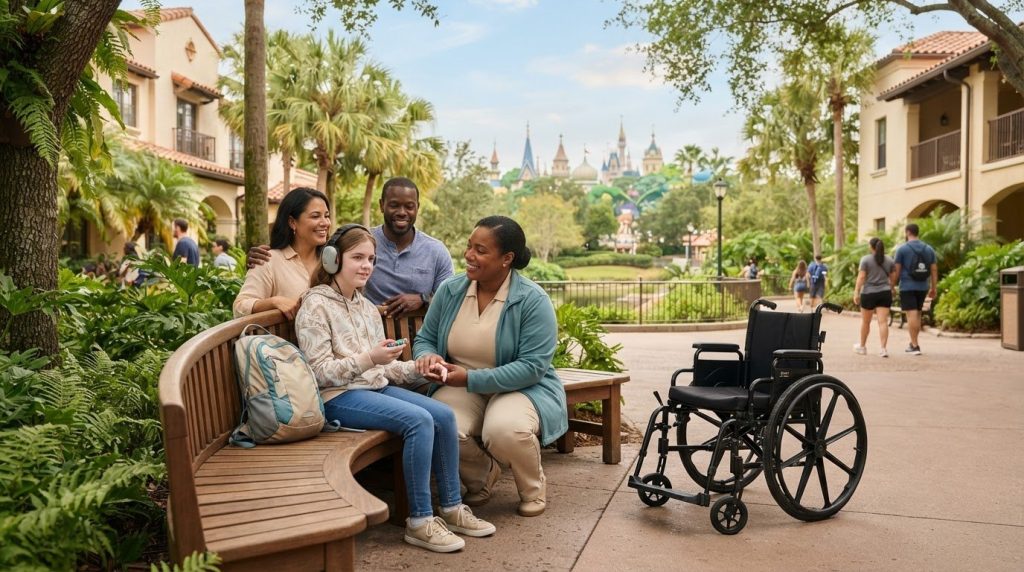
What if a more comfortable Orlando park day depended less on seeing everything and more on having support that fits your family member? A long, busy visit can bring concerns about energy, sensory demands, communication, and changing plans. If you’re searching for a nanny for special needs Orlando parks, it’s natural to wonder what a caregiver can help with and whether the support will suit your loved one as an individual.
Your family knows your loved one’s preferences best, so start with those details rather than a packed itinerary. This guide explains what non-medical caregiver support may involve, how to plan around your family member’s needs and energy, and what to ask before arranging care. You’ll also find guidance on communication preferences, possible responsibilities, and park-specific arrangements, so everyone understands the plan. A caregiver may offer added support during your visit, while a flexible plan leaves room to pause, adjust, or change course.
Key Takeaways
- A nanny for special needs Orlando parks visit may offer individualized, non-medical support, but duties should be discussed and confirmed in advance.
- Share the guest’s communication preferences, routines, comfort needs, and signs of fatigue to shape support around the person, not a fixed itinerary.
- Compare the guest’s needs with the proposed caregiver role, and verify experience, qualifications, and park arrangements rather than making assumptions.
- Build the day around the guest’s priorities and preferred pace, leaving room for rest and changes to the plan.
- Before arranging support through Elite Caregivers United LLC, confirm that the requested duties, scheduling, and individual fit can be accommodated.
When can a special needs nanny help at Orlando parks?
A theme park day can take careful planning before you even leave the hotel. Families may be weighing a loved one’s energy, communication preferences, routines, and comfort in crowded or changing surroundings, while also making room for everyone to enjoy the visit. Another trusted adult alongside the family may help make those decisions feel more manageable.
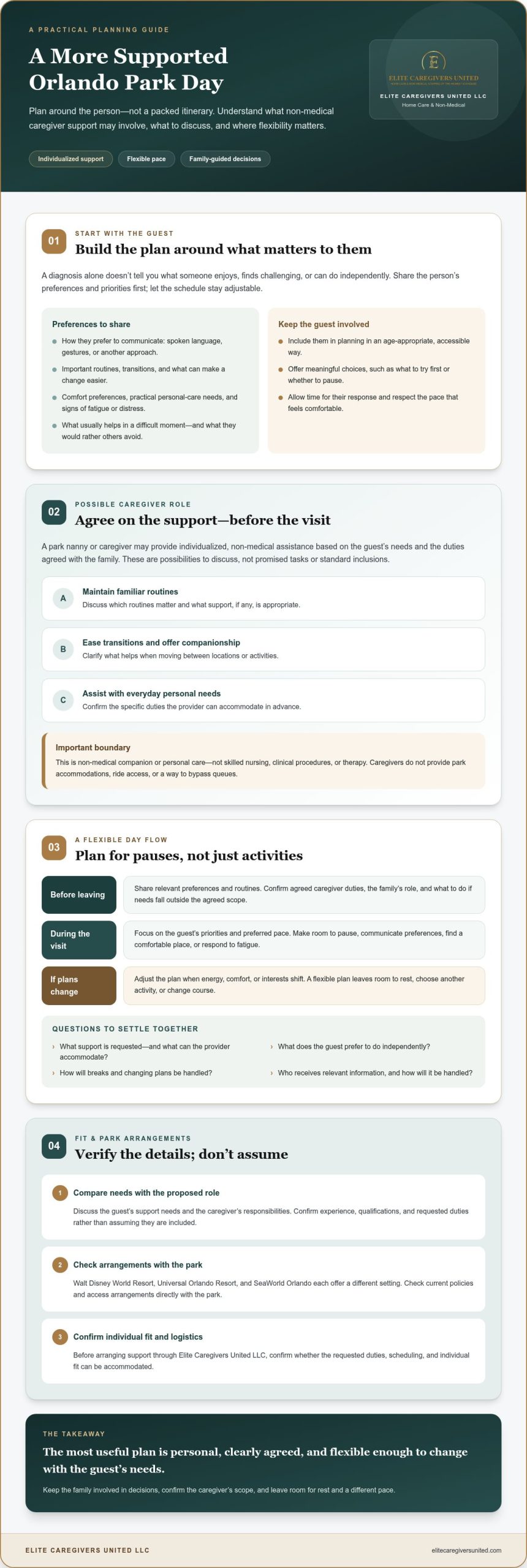
A park nanny or caregiver provides individualized, non-medical assistance during a visit, based on the guest’s needs and the duties agreed with the family. Support might include helping maintain familiar routines, easing transitions between activities, offering companionship, or assisting with everyday personal needs. These are possibilities to discuss, not promised tasks or standard inclusions. Confirm the specific duties the provider can accommodate before arranging care.
Needs and preferences vary from person to person. A diagnosis alone doesn’t tell you what someone enjoys, finds challenging, or can do independently. The caregiver’s role is to offer agreed support while the family remains involved in decisions about the day. This is non-medical companion or personal care, not skilled nursing, clinical procedures, or therapy. It also doesn’t provide park accommodations, ride access, or a way to bypass queues. Families who want another adult to share support during an outing may find it helpful to understand the broader idea of Respite care, while confirming how a particular park-care arrangement is defined.
What support might a family want during a park visit?
Think about moments when support could be useful: getting ready to leave, moving between locations, communicating preferences, finding a comfortable place to pause, or responding when fatigue begins to show. Explain what helps, what the guest prefers to do independently, and how they usually express discomfort or a need for a break. A caregiver may be able to assist with some everyday needs, but confirm the exact scope in advance and remain involved in decisions.
Which Orlando park setting is part of your plan?
Walt Disney World Resort, Universal Orlando Resort, and SeaWorld Orlando each offer a different setting, and every family’s itinerary and support needs will differ. Consider the locations you plan to visit and the pace that feels comfortable for your guest. A nanny for special needs Orlando parks visits may provide additional individualized support, but caregivers don’t grant park access or determine accommodations. Check current policies and access arrangements directly with the park, then discuss the plan and requested duties with the caregiver provider.
How should a caregiver adapt support to the guest’s needs?
A useful support plan starts with the guest, not a ride-by-ride schedule. Park days can shift as energy, comfort, and interests change, so a rigid itinerary may leave little room to pause or choose another activity. Agree on priorities and identify what support could help the guest take part at their own pace.
Individualized caregiver support is non-medical assistance shaped around the guest’s preferences; it isn’t clinical treatment or therapy. Sensory experiences differ from person to person. One guest may prefer a quieter place to pause, while another may want to continue with a familiar activity. Don’t assume a diagnosis predicts what someone needs or that one approach will suit everyone. The University of Central Florida’s work on Universal Design principles for sensory needs can offer context for thinking about environments, while the guest’s own preferences should guide individual decisions.
How can families communicate support needs clearly?
Before the visit, share only information relevant to the agreed caregiving role. A short conversation or written note can explain:
- How the guest prefers to communicate, including whether they use spoken language, gestures, or another approach.
- Important routines or transitions, and what tends to make a change easier.
- Comfort preferences, practical personal-care needs, and signs that the guest may be tired or distressed.
- What usually helps in a difficult moment, and what the guest would rather others avoid.
Ask the provider what information they need, who will receive it, and how it will be handled. Confirm the caregiver’s responsibilities, the family’s role, and what to do if the guest’s needs fall outside the agreed scope. This helps you assess whether a nanny for special needs Orlando parks visit is a suitable match without assuming every request can be accommodated.
How can the plan respect autonomy and dignity?
Include the guest in planning in an age-appropriate, accessible way. Offer meaningful choices, such as which activity to try first or whether to pause, and allow time for a response. If the guest communicates distress or changes their mind, treat that as important information, not a disruption. Families and caregivers can agree in advance on how to offer reassurance while respecting the guest’s boundaries and independence.
Before arranging care, discuss the requested support and confirm the specific duties and fit with the provider. Families considering Orlando amusement park caregiver support can explain the guest’s preferences and clarify what assistance may be available.
How can you tell whether a park nanny is the right fit?
A good fit depends on whether the caregiver’s agreed role matches the guest’s needs for this visit. List the support you’re seeking, then compare each item with what the agency can confirm. A general description of services doesn’t establish a caregiver’s credentials, experience with a specific need, or permission to enter particular park areas. Ask for clear answers rather than making assumptions.
Use questions like these to make the conversation practical:
| Family need | Question to ask | Detail to confirm |
|---|---|---|
| Communication and routines | Can the caregiver follow the guest’s preferred communication approach and familiar routines? | What information to share and what support is within the agreed role. |
| Breaks and comfort | How can the caregiver support pauses or changes in plans? | How breaks will be handled and how the family stays involved. |
| Responsibilities and unexpected changes | What happens if the guest needs support beyond the planned duties? | Who to contact, how the caregiver and family will communicate, and what the caregiver is not expected to do. |
What should you ask the caregiving agency?
Ask which requested duties are included in the non-medical service and which are outside its scope. Clarify how the agency selects a caregiver for the visit, assesses whether the match is suitable, and handles scheduling, supervision, and communication during the arrangement. Confirm the appropriate emergency contact and what the caregiver should do if plans change. Clinical tasks aren’t part of this service. If the guest needs them, discuss care with an appropriately qualified provider.
For a nanny for special needs Orlando parks visit, ask about the specific support you need instead of assuming a title guarantees particular training or experience. Confirm who will be assigned and what information they’ll receive before the visit.
What should you verify with the park?
Contact the park directly to check current entry, accessibility, caregiver, and guest-support policies. Ask whether a planned arrangement requires advance contact or documentation, and confirm details for the exact park and visit. A caregiver can’t promise ride access, shorter queues, or park accommodations. Those decisions belong to the park. Keeping provider responsibilities separate from park policies helps you understand what support is actually being arranged.
If an answer is unclear, ask for clarification before booking. A suitable arrangement should leave your family understanding the caregiver’s role, its limits, and how you’ll communicate if the guest’s needs or plans change.
How do you plan a more manageable Orlando park day?
Start with what matters most to the guest, then shape the day around their preferred pace. A successful visit doesn’t have to include every attraction. Prioritize the guest’s comfort over completing every attraction. This leaves room to pause, change direction, or head out earlier if that’s what the day calls for.
A simple planning sequence can keep logistics clear without making the itinerary rigid:
- Choose a few priorities. Ask the guest which experiences matter most, using a communication approach they’re comfortable with.
- Set a flexible pace. Leave open time between planned activities for rest, meals, transitions, or a change of plan.
- Check details close to the visit. Review current park information, weather, and transportation plans, since conditions and arrangements may change.
- Agree on communication. Decide how the family and caregiver will share schedule updates, identify a meeting point if separated, and reach one another about urgent concerns.
What information should you prepare before the visit?
Share the itinerary as a guide, along with relevant routines, communication preferences, and the caregiver’s agreed responsibilities. Mention practical comfort items or needs, and confirm what support is within the caregiver’s role. Make sure the caregiver and family have the right contact details, know who to reach if plans change, and understand how unexpected situations will be handled.
How can you keep the day flexible?
Plan for a few meaningful priorities, not a full schedule of attractions. Talk beforehand about how you and the caregiver will notice signs that the guest may need a break and which options feel comfortable, such as pausing, switching activities, or leaving. Treat those choices as part of a good day, not as a failed itinerary.
For Disney-specific preparation, the guide Disney World with Special Needs can be a useful next read. Check current park policies and access arrangements directly with the park, and confirm caregiver duties and scheduling with the provider. If you’re considering a nanny for special needs Orlando parks support, share your proposed pace and priorities with Elite Caregivers United’s Orlando park caregiver team to discuss whether the requested support may fit.
How can Elite Caregivers United support an Orlando park visit?
Elite Caregivers United offers caregiver and nanny support for families visiting Orlando amusement parks. This is a potential non-medical support option, not skilled nursing, clinical treatment, or a substitute for park-provided accessibility services. Fit depends on the guest’s needs and preferences, the duties requested, and what the agency can arrange. Confirm each detail directly rather than assuming a particular task, caregiver qualification, schedule, or park arrangement is included.
For an overview of the service, read the Orlando Amusement Park Nanny guide. Families looking to understand the agency’s broader non-medical services can also explore the Non-Medical Home Care in Orlando guide. Discuss your family’s caregiver needs by sharing the guest’s support preferences, the planned visit, and the questions you’d like answered.
What should families discuss before arranging support?
A direct conversation can clarify whether the requested support and service arrangements align. Consider discussing:
- Availability and scheduling: Ask whether a caregiver is available for your planned visit and confirm the schedule and arrangements.
- Requested duties: Describe the assistance you’re seeking, then ask what falls within the non-medical service and what cannot be provided.
- Preferences and caregiver fit: Share relevant routines and communication preferences. Ask how the agency determines whether a caregiver may be a suitable match for the guest’s needs.
- Shared responsibilities: Clarify what the family will continue to manage, how everyone will stay in contact, and what to do if plans or needs change.
These questions help families assess a nanny for special needs Orlando parks visit without relying on assumptions about experience, credentials, or responsibilities. If the guest needs clinical care, discuss that need with an appropriately qualified provider. It falls outside this park service’s stated non-medical scope.
What are the next steps for a thoughtful match?
Before making arrangements, describe the guest’s priorities and ask the agency to confirm the caregiver’s role, scheduling, and any limits. Separately, check current policies and access arrangements with the park, since a caregiver can’t promise ride access, queue changes, or accommodations controlled by the park. Review the plan together as a family so expectations are clear and the guest’s preferences remain central.
Preparation won’t remove every uncertainty, but it can help you make an informed choice about whether this support suits your visit. Clear communication, realistic expectations, and a flexible plan are a practical starting point.
Plan a Park Day Around the Guest
A more comfortable Orlando visit starts with the guest’s priorities, preferred pace, and individual support needs, not a checklist of attractions. A caregiver may offer additional non-medical personal care and companionship, but families should confirm the requested duties, scheduling, and fit directly with the provider. Check park policies separately, and leave room to rest or adjust plans as the day unfolds.
If you’re considering a nanny for special needs Orlando parks, thoughtful preparation helps everyone understand the caregiver’s role and how the family will stay involved. Elite Caregivers United offers caregiver and nanny services for families visiting Orlando amusement parks, alongside non-medical personal care and companion services. Discussing the guest’s preferences and planned visit can help clarify whether the requested support may be suitable.
Discuss your family’s caregiver needs and ask about the duties and arrangements that matter to you. With clear expectations and a flexible plan, your family can make informed choices and focus on sharing the parts of the day that feel right for your loved one.
Frequently Asked Questions
Can a nanny for special needs accompany my family to Orlando parks?
Yes, families may arrange for a caregiver to accompany them, but suitability depends on the guest’s needs, requested duties, caregiver availability, and park policies. Elite Caregivers United offers caregiver and nanny services for families visiting Orlando amusement parks. Discuss the support you’re seeking with the agency and confirm current entry and access requirements directly with the specific park before making plans.
What can a special-needs park caregiver help with?
Depending on the guest and agreed service scope, possible support may include following familiar routines, helping with transitions, respecting communication preferences, offering companionship, or assisting with everyday personal needs. These duties aren’t automatically included, so describe what would help and confirm responsibilities and limits with the agency beforehand. Park caregiver support is non-medical. Don’t assume it includes clinical treatment, therapy, or park-provided accommodations.
Can a caregiver help with autism or sensory needs at theme parks?
A caregiver may be able to offer support shaped around the guest’s preferences, communication, and routines, but ask about relevant experience and confirm service fit rather than assuming specialized credentials. Explain what helps the guest through transitions or when they need a break. Check park procedures separately. A caregiver can’t provide therapy or guarantee accessibility accommodations, ride access, or shorter waits.
How do I choose a nanny for special needs at Orlando parks?
Start with the guest’s support needs, communication preferences, and the activities you’re considering. Ask the agency which duties fall within its non-medical services, how it assesses whether a caregiver is a suitable match, and what scheduling is available. Agree on responsibilities and communication plans before the visit, then verify park policies directly. Choose based on clear answers about the specific arrangement, not assumptions about titles or credentials.
Do Orlando theme parks provide special-needs accommodations?
Orlando parks have their own accessibility policies and guest-support procedures, which may change. Contact the specific park you plan to visit to confirm current arrangements and whether advance contact or documentation is needed. A private caregiver doesn’t replace park-provided accommodations or decide eligibility for them. The caregiving agency also can’t promise ride access, shorter waits, or exceptions to park policies, so verify those details with the park.
What should I tell a park nanny before our visit?
Share relevant routines, communication preferences, comfort needs, and the planned itinerary, along with the responsibilities you’ve agreed on with the agency. Explain what may help during transitions or when the guest wants a break. Confirm how you’ll contact each other and communicate schedule changes or concerns. Share information that’s useful for the agreed support, and ask the agency what details it needs before the visit.
Does a park nanny provide medical or nursing care?
No. Elite Caregivers United describes its amusement park caregiver and nanny services as non-medical. The agency also has a professional CNA team, but that doesn’t mean every park caregiver is a CNA or provides clinical care. Skilled nursing and clinical procedures are outside the stated service scope, as is physical therapy. If the guest needs clinical care, consult an appropriately qualified healthcare provider about suitable arrangements.