
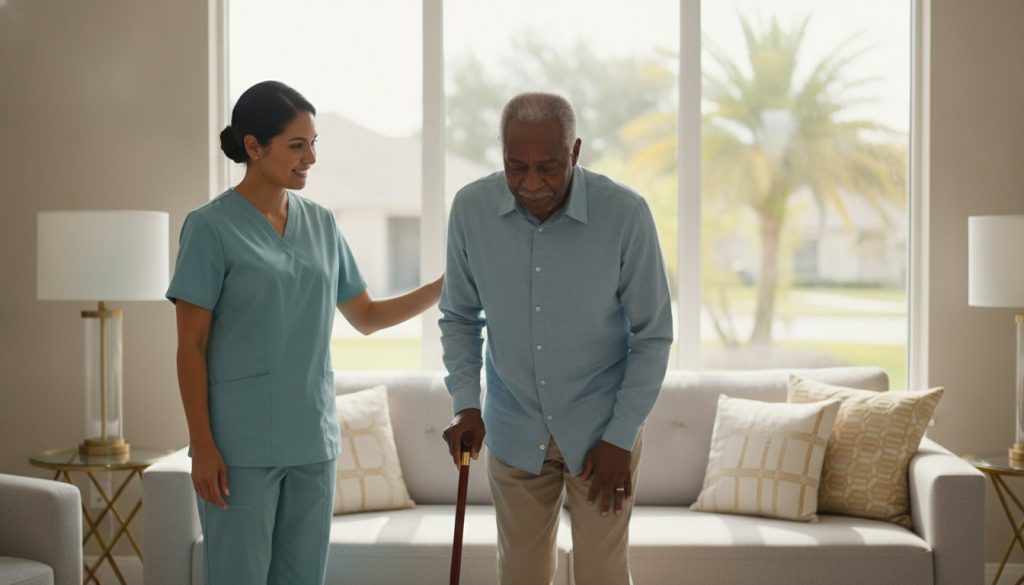
Imagine the quiet anxiety of that first night back in your Orlando home, where every shadow feels like a potential fall and the familiar hallways suddenly seem like an obstacle course for your loved one. It’s a weight that many families carry after a hospital discharge, balancing the joy of returning home with the daunting reality of physical transfers and personal care. You aren’t alone in feeling overwhelmed by the terminology or the sheer physical demand of recovery, as finding reliable stroke recovery home care Orlando families can trust is often the vital link in a successful rehabilitation journey.
While medical professionals handle the clinical side of healing, the hours between therapy sessions are where the most significant challenges to safety and dignity often arise. This guide will show you how specialized non-medical support bridges the gap between clinical discharge and long-term independence, providing the watchful care needed to prevent re-hospitalization. We’ll explore how to navigate the confusion between therapy and daily living assistance, ensuring your loved one receives compassionate help with bathing and transfers while you finally find the restorative respite you deserve as a family caregiver.
Key Takeaways
- Understand the critical “gap” between hospital discharge and long-term independence, ensuring your loved one remains safe during the most vulnerable weeks of their recovery journey.
- Explore how professional CNA-led teams provide vital physical support for transfers and bathing, prioritizing both physical safety and the personal dignity of the survivor.
- Distinguish between medical home health and non-medical personal care so you can build a comprehensive support system that covers both clinical therapy and essential daily needs.
- Implement a proactive 30-day plan for stroke recovery home care Orlando survivors need to create a stable, fall-free environment that fosters consistent neurological healing.
- Discover how specialized respite services offer primary family caregivers much-needed rest while ensuring their loved one continues to receive dedicated, professional attention at home.
Navigating the Transition: Stroke Recovery Home Care in Orlando
The journey from a clinical environment to the familiar comfort of home is often filled with a complex mix of relief and profound apprehension. For many families, the moment they leave the specialized monitoring of an Orlando medical center, a significant “Gap” emerges. This period represents the space between receiving acute medical treatment and achieving the level of strength required for true independence. Non-medical stroke home care acts as a vital bridge during this time, focusing on the essential support of activities of daily living, or ADLs, such as dressing, grooming, and safe mobility. By stepping into the role of a “Wise Protector,” a professional caregiver stabilizes the home, transforming it from a place of potential hazard into a sanctuary for healing.
The first 48 hours following discharge carry a heavy emotional weight. You’ve likely spent days in a state of high alert, and the sudden responsibility of managing a loved one’s physical needs can feel overwhelming. It’s during these initial hours that the stroke recovery process requires the most delicate balance of patience and expert observation. Professional stroke recovery home care Orlando services provide the steady presence needed to navigate this transition with grace and confidence.
The Critical First Week Post-Discharge
Statistics often highlight the first seven days as the period of highest risk for re-hospitalization or accidental falls. This week is a marathon of adjustments, requiring close coordination with local Orlando neurologists and discharge planners to ensure every instruction is followed with precision. Establishing a “new normal” in Central Florida means more than just rearranging furniture; it involves creating a rhythmic, supportive routine that honors the survivor’s dignity while prioritizing their safety and physical stability. For families exploring holistic health options during this time, organizations like Chiropractic Lifestyle Family Practice P.C. emphasize the importance of gentle spinal alignment in supporting the body’s natural healing and neurological function.
Identifying the Need for Professional Support
It’s often difficult for families to recognize when their well-intentioned care is no longer enough. Signs that family-led assistance is becoming unsustainable include caregiver exhaustion, near-miss falls, or a decline in the survivor’s personal hygiene. There’s a profound difference between simply “getting by” and maintaining an environment that is intentionally optimized for neurological growth. Understanding how non-medical home care in Orlando provides a reliable safety net allows families to transition from being overwhelmed providers back to being supportive daughters, sons, or spouses. Dedicated stroke recovery home care Orlando ensures that every transfer and every meal is handled with the expertise required to foster long-term vitality and peace of mind.
The Role of CNA-Led Personal Care in Stroke Rehabilitation
While specialized therapy sessions are vital, they often only occupy a few hours of a survivor’s week, leaving a vast majority of the day where safety and progress depend on consistent, high-quality support. Certified Nursing Assistants (CNAs) serve as the compassionate backbone of stroke recovery home care Orlando families trust, providing a level of expertise that far exceeds basic companion services. These professionals are specifically trained to manage the physical complexities of recovery, such as hemiparesis or muscle spasticity, ensuring that every movement is intentional and secure. By focusing on safe transfers and gait assistance, a dedicated CNA minimizes the risk of secondary injuries, allowing the survivor to move through their home with a renewed sense of confidence and protection.
The journey toward rehabilitation after a stroke also involves a deep commitment to maintaining the survivor’s dignity through attentive personal care. Professional assistance with bathing and grooming does more than just maintain hygiene; it preserves the survivor’s self-esteem during a period where they may feel particularly vulnerable. Furthermore, CNAs provide essential medication reminders and nutritional support, carefully monitoring dietary intake to manage blood pressure and other factors that could increase the risk of a secondary stroke. Families often find that partnering with a professional CNA team alleviates the physical strain of caregiving, allowing them to focus on the emotional healing of their loved one.
Mastering Activities of Daily Living (ADLs)
Activities of Daily Living (ADLs) in stroke recovery are the fundamental self-care tasks, such as bathing, dressing, and eating, that a survivor must relearn to regain their independence at home. When one side of the body is affected by weakness, even the simple act of buttoning a shirt becomes a monumental challenge. A professional caregiver provides the patient guidance needed to navigate these tasks, celebrating the “small wins” that are so crucial for maintaining survivor morale. These daily triumphs in personal hygiene and dressing serve as powerful psychological milestones, proving that neurological healing is an ongoing, tangible process.
Safety and Fall Prevention in the Orlando Home
Creating a secure environment requires a proactive, room-by-room assessment to eliminate hazards that often go unnoticed, such as loose area rugs or inadequate lighting in hallways. The “Transfer Technique” is a methodical approach used by professionals to move survivors from a bed to a chair, utilizing proper body mechanics to eliminate the risk of injury for both the survivor and the caregiver. During the early stages of recovery, 24/7 supervision is frequently necessary to prevent impulsive movements that lead to falls. This constant, watchful presence ensures that stroke recovery home care Orlando remains a steady, reliable foundation for long-term vitality and peace of mind.
Understanding Your Options: Home Care vs. Skilled Home Health
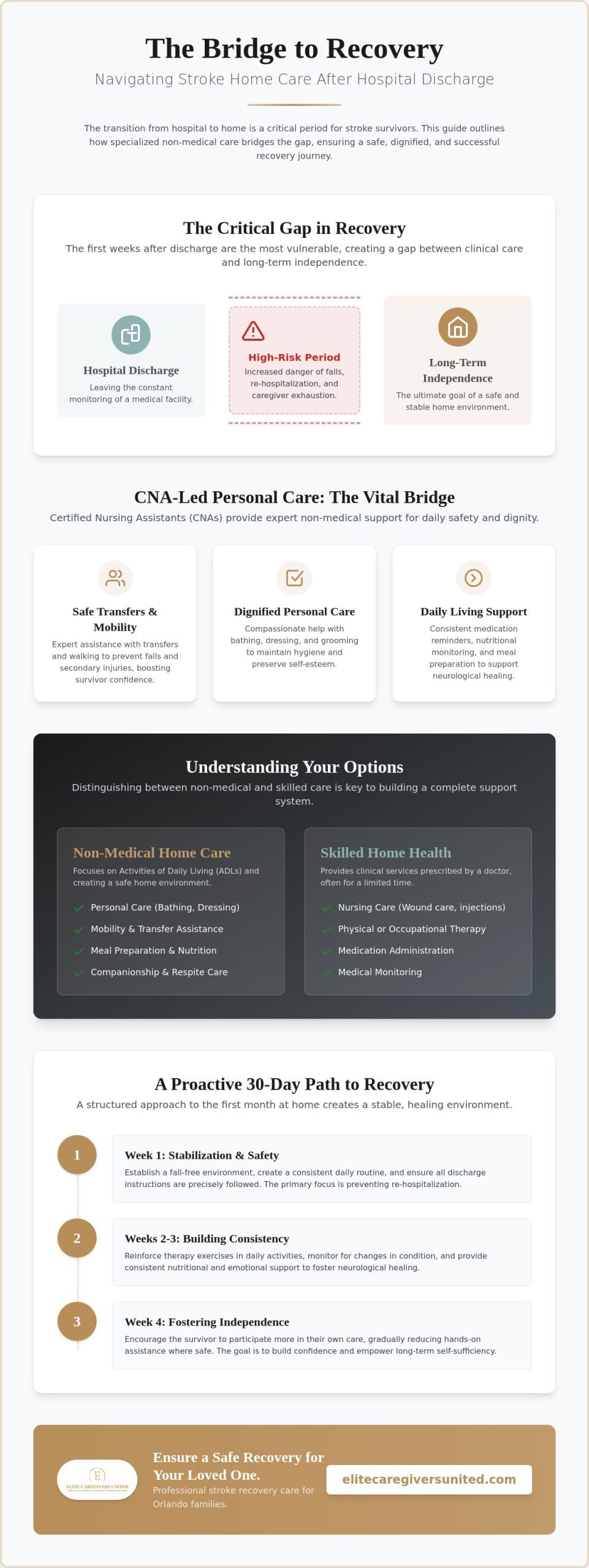
Choosing the right path for a loved one’s journey often leads to a crossroad of confusing terminology, particularly when distinguishing between “home health” and “home care.” While exploring Stroke rehabilitation options, it’s essential to understand that these services aren’t mutually exclusive; rather, they’re two halves of a whole recovery ecosystem. Home Health refers to skilled medical therapy, including physical, occupational, or speech therapy, delivered by clinical professionals to help the brain and body relearn vital functions. In contrast, stroke recovery home care Orlando families rely on focuses on the essential personal support required to navigate daily life safely. While Medicare typically covers the clinical therapist’s visits at 100%, it rarely provides for the long-term, daily personal care needed for bathing, dressing, and meal preparation. Elite Caregivers United LLC steps into this space as a dedicated partner, managing the “other 21 hours” of the day when the therapist isn’t present, ensuring that every moment is a step toward stability.
The distinction is critical for financial planning and safety. Many families mistakenly assume that a discharge with “home health” means someone will be there to help their father into the shower or prepare a heart-healthy lunch. In reality, skilled therapy is often limited to a few brief sessions per week. A professional home care team fills these gaps, providing the continuous supervision that prevents falls and ensures that the survivor isn’t left alone during their most vulnerable moments. By integrating these two services, you create a comprehensive safety net that honors both the medical and personal needs of the survivor.
The Synergy of a Full Care Team
Success in rehabilitation is often found in the consistency of practice between formal therapy sessions. A professional CNA can gently supervise the specific exercises prescribed by a Physical Therapist, encouraging the survivor to move safely while maintaining the correct form. This collaborative approach ensures that progress doesn’t stall when the therapist leaves the home. Elite Caregivers United LLC remains vigilant, reporting subtle changes in condition to the medical team to prevent complications like skin breakdown or infections. For those wanting a deeper look at the transition from hospital to home, our comprehensive guide to home care after surgery offers additional context on maintaining a secure environment during this delicate time.
When to Consider 24-Hour Home Care
Evaluating the need for around-the-clock support often comes down to the survivor’s behavior during the quietest hours of the night. If your loved one attempts to get up alone in the dark or experiences significant confusion, 24-hour supervision becomes a necessity rather than a luxury. This level of stroke recovery home care Orlando provides families with the peace of mind that a “wise protector” is always awake and ready to assist with transfers or personal needs. You can find more detailed shift-planning information in our essential guide to 24-hour home care in Orlando, which explores how continuous care fosters a stable and nurturing atmosphere for long-term neurological healing.
Creating a Safe Recovery Environment: A 30-Day Home Plan
Transitioning from a clinical setting to a residential one requires a structured roadmap to ensure the survivor’s safety and continued progress. A 30-day plan provides the necessary framework, transforming an overwhelming situation into a series of manageable, purposeful steps. By focusing on the environment and the routine, families can create a space where healing is the primary focus, supported by the expertise of stroke recovery home care Orlando professionals. This period isn’t merely about returning home; it’s about establishing a stable foundation for a new, resilient chapter of life, where every detail is designed to foster confidence and physical security.
- Step 1: The Pre-Discharge Home Audit. Before your loved one leaves a local Orlando medical facility, conduct a thorough walkthrough of the home to identify potential hazards. This includes removing loose area rugs, ensuring hallways are brightly lit, and installing grab bars in bathrooms to facilitate safe transfers and bathing.
- Step 2: Establishing a Predictable Routine. Neurological healing thrives on consistency, making it essential to set regular times for meals, rest, and mobility exercises. A rhythmic schedule reduces anxiety and helps the brain focus on relearning vital skills through repetition.
- Step 3: Caregiver Integration. Welcoming a professional CNA into your family dynamic is a significant transition. Use the first week to build a rapport, ensuring the caregiver understands the survivor’s personal preferences, communication style, and specific comfort needs.
- Step 4: Monitoring Daily Progress. Maintaining a detailed log of mobility, mood, and appetite allows the care team to track subtle improvements over time. These records are invaluable during follow-up appointments with Central Florida neurologists and therapists.
- Step 5: Proactive Respite Planning. To prevent burnout and maintain a high standard of care, the primary family caregiver must schedule regular breaks. Planning for professional respite care ensures that the survivor remains safe and supported while the family takes the necessary time to recharge.
Nutrition and Hydration Post-Stroke
Managing the physical effects of a stroke often involves addressing dysphagia, or difficulty swallowing, which requires careful meal preparation to prevent choking or aspiration. Specialized meal preparation services adapt to stroke-specific dietary needs by modifying food textures for swallowing safety and reducing sodium to manage blood pressure. Beyond nutrition, maintaining adequate hydration is a critical defense against urinary tract infections. These infections are a frequent cause of re-hospitalization among seniors, making consistent fluid intake a pillar of a successful, long-term stroke recovery home care Orlando strategy.
Mental Health and Social Engagement
The emotional impact of a stroke can be just as profound as the physical challenges, frequently leading to feelings of isolation or depression. Professional companionship plays a vital role in cognitive stimulation, offering the survivor regular opportunities for verbal practice and social connection in a safe, supportive environment. As confidence grows, encouraging safe outings in the Orlando community, whether a visit to a local park or a quiet lunch, can significantly boost morale. This holistic approach ensures that the survivor feels supported not just physically, but emotionally and socially as well, promoting a sense of vitality and peace of mind.
Why Orlando Families Trust Elite Caregivers United LLC for Stroke Support
Choosing a partner for long-term recovery is a decision rooted in the desire for both safety and emotional security. Elite Caregivers United LLC stands as a beacon of reliability for families navigating the aftermath of a stroke, offering a professional standard that begins where basic companion care ends. By utilizing a dedicated CNA-led team, we ensure that every physical interaction, from a gentle transfer to assistance with personal hygiene, is performed with the clinical precision required for a survivor’s fragile mobility. This commitment to higher standards allows us to provide stroke recovery home care Orlando residents can rely on with absolute confidence, knowing that their loved one is in the hands of a “Wise Protector” who anticipates needs before they escalate into crises.
Our philosophy centers on the belief that true healing requires a proactive and attentive presence. We don’t just react to the challenges of the day; we actively create an environment of calm reliability and heartfelt dedication. Whether providing 24/7 supervision or scheduled respite, our team focuses on the holistic well-being of the survivor, ensuring that their dignity is preserved and their vitality is encouraged at every turn. This steady, guiding presence acts as a reliable extension of your own family, delivering a sense of resolution and peace of mind during a time that often feels unpredictable.
Professional Expertise Meets Heartfelt Dedication
Our Orlando-based team undergoes rigorous screening and specialized training to meet the unique demands of stroke-specific support. We understand that recovery isn’t just about physical tasks; it’s about the balance of formal respect and genuine human kindness. While basic companion services might offer simple presence, our CNAs are trained by Elite Caregivers United LLC to recognize the subtle signs of neurological change or physical distress. This depth of expertise, combined with a nurturing emotional style, ensures that your loved one receives care that is as sophisticated as it is sincere, tailored specifically to the nuances of the Central Florida community.
Your Partner in the Recovery Journey
Starting the journey toward a more stable home life begins with a personalized care assessment, where we listen to your family’s specific concerns and goals. We understand that recovery needs are fluid, which is why we’ve made it simple to adjust schedules or transition from respite to 24/7 care as your loved one’s condition evolves. Our goal is to alleviate the stress and emotional weight you carry, allowing you to return to your role as a supportive family member while we handle the complexities of daily living. Contact Elite Caregivers United LLC for a compassionate stroke care consultation and discover how our dedicated stroke recovery home care Orlando team can bring stability, comfort, and professional warmth to your home today.
Embracing a Future of Strength and Stability at Home
Recovery is a journey of small, steady triumphs that transform a survivor’s life one day at a time. By bridging the gap between clinical discharge and long-term independence, families can create a sanctuary where safety and dignity are the highest priorities. We’ve explored how professional CNA-led support handles the physical complexities of daily living while a structured 30-day plan ensures no detail is overlooked in maintaining a fall-free environment. Understanding these options empowers you to move beyond the stress of constant supervision toward a more balanced, restorative family life.
As a Licensed Florida Home Health Care Agency, Elite Caregivers United LLC provides the 24/7 availability and specialized expertise required for comprehensive stroke recovery home care Orlando families deserve. Our CNA-led professional care team acts as a steady extension of your support system, anticipating needs with quiet confidence and sincere kindness. Schedule a Compassionate Stroke Care Assessment with Elite Caregivers United LLC to begin building a foundation of vitality and peace of mind for your loved one. You don’t have to walk this path alone; we’re here to protect the progress you’ve made and nurture the growth yet to come.
Frequently Asked Questions
What is the difference between home health and home care after a stroke?
Home health provides skilled medical services such as physical or speech therapy delivered by clinical professionals, while home care focuses on non-medical support for activities of daily living. In Orlando, families often use both simultaneously to ensure clinical progress and personal safety. While a therapist helps relearn motor skills, a caregiver ensures the survivor is safe and dignified during the other 21 hours of the day.
Does insurance or Medicare cover non-medical stroke recovery care in Florida?
Medicare typically covers skilled home health services when they’re medically necessary and prescribed by a physician, but it doesn’t cover non-medical custodial care as a standalone service. This includes assistance with bathing, dressing, or meal preparation which are essential for daily stability. Many families in Florida utilize long-term care insurance or private funds to cover these vital personal care services that maintain a survivor’s home safety.
How can a caregiver help with physical therapy exercises at home?
A professional caregiver acts as a vital supportive presence by encouraging the survivor to perform the specific range-of-motion or strengthening exercises prescribed by their physical therapist. By providing gentle supervision and physical stability, the caregiver ensures that exercises are performed safely without the risk of a fall. This consistent practice between formal therapy sessions—drawing inspiration from modern clinical models like Optima Physical Therapy that utilize advanced AI technology—is often a key factor in achieving successful outcomes in stroke recovery home care Orlando programs.
Is 24-hour care necessary for a stroke survivor living alone in Orlando?
Around-the-clock care is frequently necessary during the initial weeks of recovery, especially for survivors living alone who may experience nighttime confusion or impulsivity. Having a “wise protector” present 24/7 prevents dangerous unsupervised movements and provides immediate assistance for bathroom trips or transfers. This continuous support offers the family profound peace of mind and ensures that the survivor is never left vulnerable to a fall or medical emergency.
What specific tasks can a CNA perform during stroke recovery?
Certified Nursing Assistants are trained to perform complex physical tasks such as safe bed-to-chair transfers, gait assistance, and dignified personal care including bathing and dressing. They also provide essential medication reminders and specialized meal preparation for those managing swallowing difficulties. Their expertise ensures that every daily interaction is handled with clinical precision, prioritizing the survivor’s physical stability and overall comfort throughout their healing journey at home.
How do you ensure the safety of a stroke survivor who is at risk for falls?
Safety is maintained through a combination of environmental modifications and active, hands-on supervision by a trained professional. We conduct thorough home audits to remove hazards like loose rugs and improve lighting in high-traffic areas. During the recovery process, caregivers use proper body mechanics and assistive devices to support the survivor’s balance, ensuring that every movement through the home is carefully guided, secure, and free from anxiety.
Can a caregiver help with the emotional and cognitive changes after a stroke?
Caregivers provide more than just physical support; they offer the companionship and cognitive stimulation necessary to combat post-stroke depression and isolation. By engaging in verbal practice, memory games, or simple social outings, a dedicated caregiver helps the survivor navigate the emotional weight of their “new normal.” This steady, nurturing presence fosters a sense of vitality and helps the individual feel connected and valued during their recovery process.
How quickly can stroke recovery home care start in the Orlando area?
Professional support can typically be established within 24 to 48 hours following a comprehensive home care assessment. Our Orlando-based team is designed to be proactive and responsive, recognizing that discharge dates can often change unexpectedly. We work closely with hospital discharge planners to ensure a seamless transition, providing the immediate stroke recovery home care Orlando safety net your family needs to bring your loved one home with confidence.