
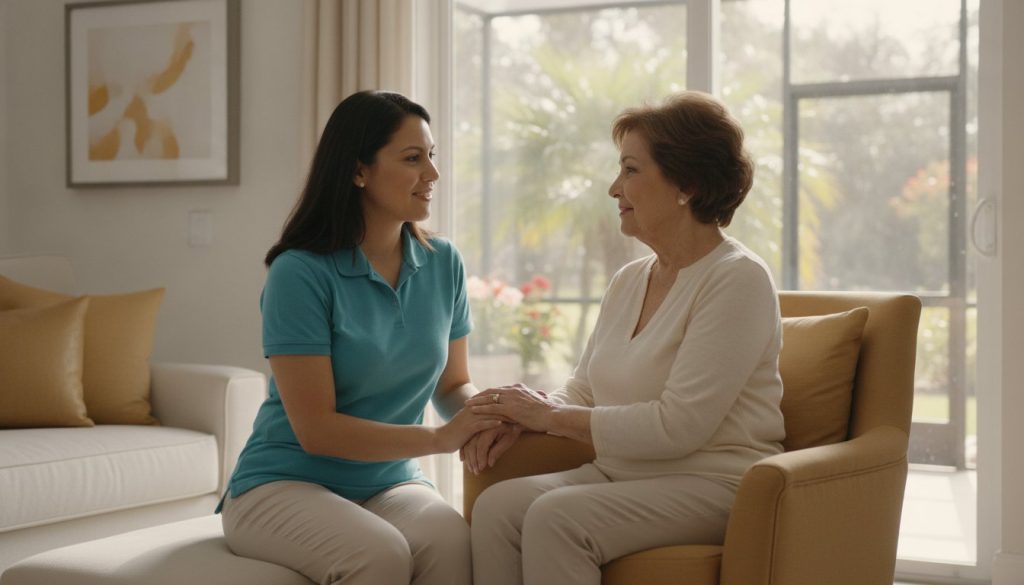
Imagine the quiet stillness of a humid Orlando afternoon suddenly shattered by the realization that your loved one isn’t in their favorite chair, and the sliding glass door leading toward the pool is standing slightly ajar. For many families, this localized fear of wandering near water makes the prospect of Alzheimer’s care at home Orlando feel like an overwhelming responsibility rather than a comforting choice. You deeply desire to honor their dignity within the familiar walls of home, yet the emotional exhaustion of managing personality changes while keeping up with Florida’s shifting elder care regulations can leave you feeling isolated and uncertain.
It’s entirely possible to create a peaceful, professional-grade environment that protects your loved one while preserving your own well-being. This guide provides a clear path to navigating the specific challenges of 2026, from understanding the Department of Elder Affairs’ latest training standards to utilizing local resources like the new statewide Alzheimer’s awareness initiative. We’ll detail how to implement expert safety protocols and integrate specialized CNA-led support, ensuring your home remains a sanctuary of vitality and grace for everyone under its roof.
Key Takeaways
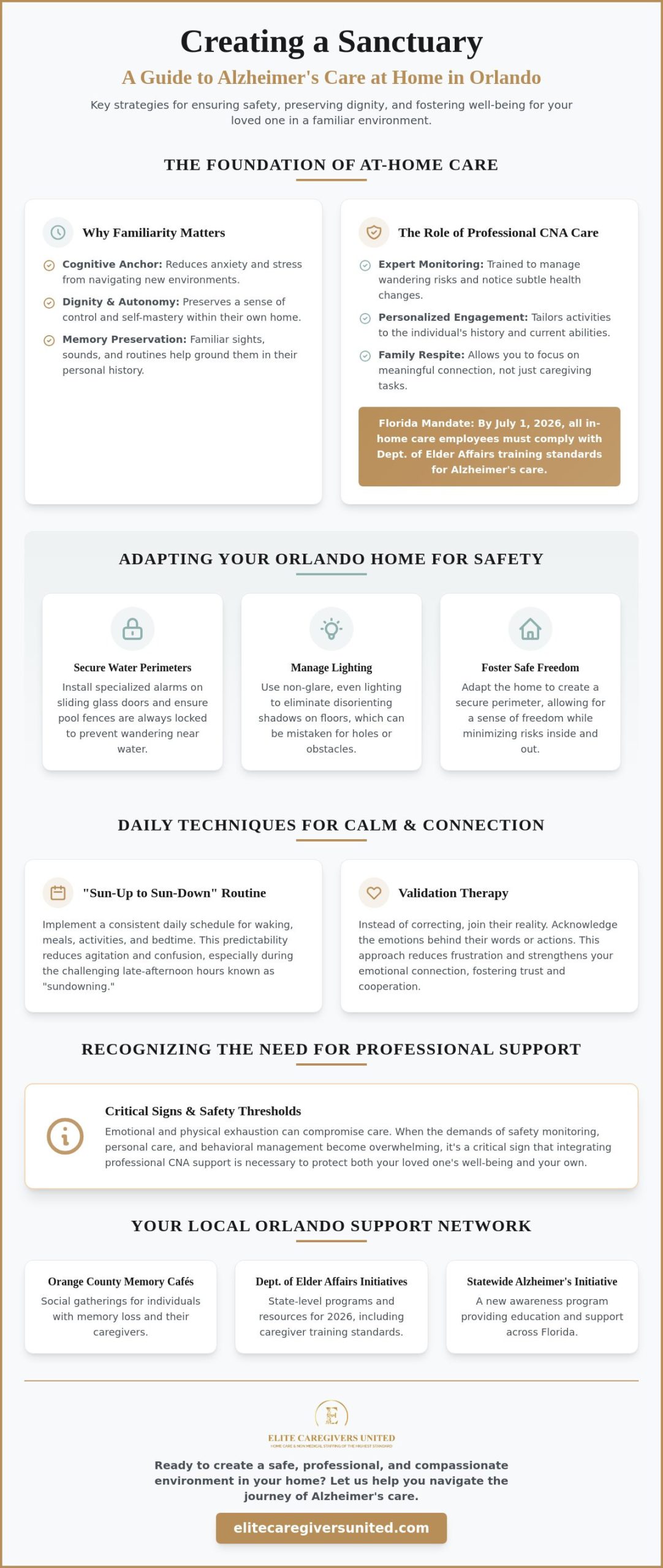
- Understand why maintaining a familiar environment is essential for memory preservation and how it fosters a sense of dignity for your loved one.
- Learn practical strategies for Alzheimer’s care at home Orlando, including securing pool perimeters and adjusting lighting to eliminate disorienting shadows.
- Discover how to implement a “Sun-Up to Sun-Down” routine and use validation therapy to reduce agitation and strengthen your emotional connection.
- Identify the critical signs of caregiver exhaustion and the specific safety thresholds that indicate when it’s time to integrate professional CNA support.
- Access a curated list of local resources, ranging from Orange County memory cafés to the latest Department of Elder Affairs initiatives for 2026.
The Foundation of Alzheimer’s Care at Home in Orlando
For families in Central Florida, the concept of “Aging in Place” is more than just a preference; it’s a commitment to preserving the essence of a loved one’s life within the walls they know best. Choosing Alzheimer’s care at home Orlando allows seniors to remain in the sanctuary they’ve built, surrounded by the sights and sounds that define their personal history. While general senior care focuses on daily living tasks, specialized memory support addresses the complex cognitive and emotional shifts that come with dementia, providing a foundation of stability in a world that can often feel increasingly confusing. This approach positions non-medical home care Orlando as a vital resource for maintaining safety without sacrificing the comforts of home. By focusing on the individual rather than just the diagnosis, this model of care ensures that every interaction is rooted in respect and professional warmth.
Why Familiarity Matters for Memory
A familiar environment acts as a powerful cognitive anchor, helping to reduce the anxiety that often triggers “sundowning” as the Florida sun begins to set. When a senior can navigate their own hallway or sit in their favorite chair, their brain isn’t forced to work overtime to interpret new or strange surroundings. It’s often helpful to integrate local Orlando history or personal family photos into the daily environment, helping to ground them in their own narrative. This continuity of place preserves a profound sense of dignity and autonomy, allowing them to feel like the master of their own domain even as their needs evolve. Consistent environmental cues, such as the specific light through a kitchen window or the sound of neighborhood birds, provide a rhythmic comfort that clinical settings simply can’t replicate.
The Role of Professional CNA Care
Entrusting your loved one to a professional CNA team ensures that their physical safety and emotional well-being are managed with expert precision. By July 1, 2026, all in-home care employees in Florida who have contact with clients with Alzheimer’s must be fully compliant with the Department of Elder Affairs training standards, ensuring that your support team possesses the specialized knowledge required for dementia care. These professionals are trained to recognize subtle changes in behavior or health that might go unnoticed by an exhausted family member. This partnership allows you to step back from the taxing role of a primary caregiver and return to being a supportive son, daughter, or spouse. For those seeking more information on the various approaches to this journey, consulting a comprehensive guide to dementia caregiving can provide additional context on how formal support systems integrate with family dynamics. Integrating professional oversight with compassionate companionship creates a safety net that is both strong and soft, fostering an environment where vitality can still flourish.
- Professional monitoring: Expert eyes to manage wandering risks and environmental triggers.
- Personalized engagement: Activities tailored to the individual’s life history and current abilities.
- Emotional respite: Providing the family with the peace of mind needed to focus on meaningful connection.
Step-by-Step: Adapting Your Orlando Home for Safety
Providing effective Alzheimer’s care at home Orlando requires a thoughtful evaluation of the physical environment, particularly since many Florida floor plans feature open layouts and direct access to outdoor spaces. The primary goal is to foster a sense of freedom while maintaining a secure perimeter. This balance is especially critical in Central Florida, where backyard pools and lanais are standard features. Installing specialized alarms on sliding glass doors and ensuring pool fences are locked at all times are non-negotiable steps for preventing accidental wandering near water. These modifications don’t just protect the individual; they offer the family a profound sense of relief, knowing that the home remains a safe haven.
Florida-Specific Safety Considerations
The intensity of the Florida sun creates unique visual challenges for those experiencing cognitive decline. Harsh shadows falling across tile floors can often look like deep holes or obstacles, leading to hesitation or dangerous falls. Using non-reflective window treatments helps minimize glare and prevents the confusion that arises when a senior sees their own reflection in a dark window. Managing the transition between indoor air conditioning and the outdoor humidity is also vital. Sudden temperature shifts can be disorienting, making it essential to maintain a stable climate with smart thermostats and establish hydration stations throughout the home to combat the heat. While these adjustments prolong the ability to stay home, some families may eventually find themselves transitioning to memory care if wandering behaviors escalate beyond what environmental changes can manage.
Room-by-Room Modification Checklist
A methodical approach to each room ensures no detail is overlooked. Small changes often yield the most significant improvements in daily vitality and safety.
- Kitchen: Install hidden shut-off valves for stoves and simplify appliance layouts to prevent accidental fires or confusion during meal preparation.
- Bathroom: Utilize high-contrast grab bars that stand out against the tile and consider walk-in shower conversions to remove tripping hazards.
- Bedroom: Place motion-sensor lighting along the path to the bathroom and optimize bed height to ensure feet touch the floor firmly when sitting up.
Creating a “continuous path” throughout the living areas is another essential strategy for maintaining mobility. This involves removing area rugs that slide on hardwood or tile and ensuring furniture is arranged to provide steady handholds. If you find the process of auditing your home for safety overwhelming, our dedicated care team can offer a professional perspective to help you create a more nurturing environment. By proactively addressing these physical barriers, you create a space where your loved one can move with confidence and dignity.
Structuring the Day: Techniques for Calm and Connection
A steady, predictable rhythm acts as a soothing balm for a mind navigating the complexities of memory loss. Establishing a “Sun-Up to Sun-Down” routine ensures that each day follows a familiar pattern, significantly reducing the anxiety that often accompanies the transition from morning light to evening shadows. For those coordinating Alzheimer’s care at home Orlando, this structure isn’t just about scheduling; it’s about creating a sequence of events that anchors the individual in a sense of safety and belonging. From the first cup of coffee to the final tuck-in, every moment serves as a gentle cue that they are exactly where they need to be.
Nutrition and hydration play a surprisingly pivotal role in maintaining cognitive clarity, particularly under the persistent Central Florida sun. Dehydration is a frequent, yet preventable, trigger for increased confusion and agitation. Integrating water-rich foods like chilled watermelon or cucumber slices into daily snacks provides a refreshing way to combat the heat while ensuring essential fluid intake. These small, deliberate choices in dietary care help stabilize energy levels and support holistic well-being, reflecting a proactive approach to health that honors the body’s needs within the local climate.
Effective Communication Strategies
Mastering the art of communication requires a shift from factual correction to emotional connection, prioritizing the person’s feelings over the accuracy of their statements. Using short, clear sentences helps prevent the sensory overload that often leads to frustration. One of the most effective tools in your caregiving repertoire is the “Agree, Don’t Argue” rule, which focuses on de-escalating agitation by validating the individual’s current reality. By practicing validation therapy, you acknowledge their feelings as genuine, which fosters a deeper bond of trust and reduces the need for defensive behaviors. Sometimes, this involves the gentle art of therapeutic fibbing; meeting them in their own timeline rather than forcing a painful reality orientation that only causes distress. Reassurance often flows best through non-verbal cues, such as a soft smile or a gentle touch on the hand, signaling a presence of quiet confidence and sincere care. Families who want a deeper understanding of how to interpret and respond to difficult episodes will find that managing dementia behaviors at home Orlando requires both practical strategies and compassionate insight into what these behaviors are truly communicating.
Meaningful Daily Engagement
Engagement should be tailored to the individual’s unique life story, honoring their past career and hobbies while supporting their current abilities. Low-impact physical activity, such as a slow stroll through shaded Orlando parks during the cooler morning hours, promotes physical vitality and helps regulate sleep patterns. Music therapy remains another profound way to reach past the fog of dementia, as familiar tunes from one’s youth can spark moments of unexpected joy and lucidity. Cognitive “workouts” should feel like a natural extension of daily life rather than a clinical test. For instance, a former teacher might enjoy organizing books by color, while a retired engineer might find peace in handling simple, tactile puzzles. These activities aren’t merely distractions; they are vital opportunities for connection that reinforce the dignity of your loved one, ensuring their days are filled with purpose and peace.
When Family Care Isn’t Enough: Recognizing the Need for Help
Caring for a loved one with memory loss is a profound labor of love, yet there often comes a point where the physical and emotional demands exceed what one person can safely provide. In the intense Florida heat, the physical exhaustion of caregiving can escalate quickly, manifesting as chronic fatigue, irritability, or a sense of deep isolation. Recognizing these signs of burnout isn’t an admission of failure, but rather a vital step in ensuring both you and your loved one remain healthy. When the “safety threshold” is crossed, perhaps through frequent wandering toward the pool or a decline in personal hygiene that you can no longer manage alone, it’s time to consider the specialized support of Alzheimer’s care at home Orlando. Understanding the root causes of these escalating episodes is equally important, and a focused resource on managing dementia behaviors at home Orlando can help families distinguish between behaviors that signal unmet needs and those that require immediate professional intervention.
Many families feel a binary choice exists between struggling alone and moving a loved one into a residential facility. However, 24 hour home care Orlando offers a nurturing middle ground that preserves the familiar comforts of home while providing professional-grade security. This level of support ensures that a trained professional is always present to manage sun-downing behaviors or nighttime restlessness, allowing the family to rest with a quiet confidence that their loved one is protected. While some may eventually consider transitioning to memory care facilities, integrating respite care for dementia patients Orlando is an essential first step for family health, providing the necessary space to recharge while knowing that professional standards of dignity and vitality are being maintained.
The Caregiver Support System
Accepting professional assistance is often accompanied by an unearned sense of guilt, yet shifting your role from primary caregiver to a supportive family member often improves the quality of your relationship. Professional CNAs act as a “wise protector,” using their clinical expertise to identify subtle health changes, such as urinary tract infections or skin integrity issues, long before they become emergencies. This expertise allows you to focus on meaningful connection rather than the constant stress of safety monitoring. By July 1, 2026, all Florida in-home caregivers must meet strict new training standards, ensuring that the person in your home is not just a companion, but a highly skilled partner in memory preservation.
Evaluating Professional Agencies
When selecting an agency, it’s imperative to verify that they hold current Florida licensing and that their team consists of certified CNAs who understand the nuances of cognitive decline. You should look for providers who offer specialized training in related conditions, such as Parkinson’s disease home care Orlando, as these comorbidities often require a more sophisticated approach to mobility and medication management. During an initial consultation, ask about their specific protocols for wandering and how they document daily vitality and engagement. Families who are ready to take this step will find that hiring a CNA for Alzheimer’s care Orlando involves far more than a simple job posting; it requires a careful vetting process to ensure the right clinical skills and personal temperament are matched to your loved one’s unique needs. If you’re feeling overwhelmed by the complexities of these decisions, our compassionate care team at Elite Caregivers United LLC is here to guide you through every step of the process with sincerity and professional warmth.
Navigating Local Orlando Resources with Elite Caregivers United LLC
The journey of memory care is not one you should travel in isolation, as the strength of your support system directly influences the quality of life for your loved one. In Orlando, a robust network of community support exists to provide families with the tools and emotional grounding necessary for long-term success. Central to this network is the Florida Department of Elder Affairs, which, as of July 1, 2026, has launched a statewide Alzheimer’s awareness initiative designed to centralize reliable information for families. By aligning your personal care strategy with these state-level resources, you ensure that your approach to Alzheimer’s care at home Orlando remains modern, compliant, and deeply rooted in the latest standards of excellence. This collaborative effort transforms the daunting task of caregiving into a shared mission of dignity and safety.
Orlando-Based Support Networks
Orange County offers a variety of localized spaces where both caregivers and their loved ones can find connection and understanding. The Alzheimer’s Association Central Florida Chapter remains a cornerstone of support, providing access to groups that allow you to share experiences with others who truly understand the emotional weight of this path. Memory cafés across the region provide safe, welcoming environments for social engagement, helping to maintain a sense of community vitality without the fear of judgment. These community events are vital for preventing the isolation that often accompanies dementia, offering a rhythmic sense of belonging that enriches the soul while providing much-needed social stimulation for your loved one.
The Elite Caregivers Difference
Choosing between various dementia home care agencies Orlando requires finding a partner who views themselves as an extension of your family’s own heart. At Elite Caregivers United LLC, we embody the “Wise Protector” approach, delivering a level of care that is both highly skilled and profoundly empathetic. Our CNA-led teams don’t just provide supervision; they integrate seamlessly with your existing medical team to ensure a holistic approach to well-being. We understand that every home has its own unique rhythm, which is why we customize our care plans to reflect the specific history and current abilities of your loved one. This proactive and attentive presence allows us to act as a steady, guiding force within your support system.
Our commitment to Orlando families is built on a foundation of trust and professional warmth, ensuring that your home remains a sanctuary of peace. We invite you to reach out to us for a compassionate home safety assessment, where we can help you identify opportunities to enhance the security and comfort of your environment. By combining professional expertise with genuine human kindness, we help you navigate the complexities of Alzheimer’s care at home Orlando with quiet confidence. Together, we can ensure that your loved one continues to live a life characterized by vitality, respect, and the enduring comfort of home.
Embracing a Future of Peace and Dignity at Home
Choosing to provide Alzheimer’s care at home Orlando is a profound testament to your dedication to your loved one’s comfort and personal history. By proactively adapting your physical environment to mitigate Florida specific risks and mastering the art of validation therapy, you create a space where your loved one can flourish with dignity. You’ve learned that recognizing the need for professional support isn’t a sign of weakness; it’s a strategic step toward preserving the health and vitality of your entire family. Every modification and routine you implement serves as a building block for a more secure and nurturing future.
As a Licensed Florida Home Health Agency, we are here to serve as your steady, guiding presence. Our CNA-Led Specialized Memory Care Team is available 24/7 for respite and daily support, ensuring that your home remains a stable sanctuary of peace. We invite you to Schedule a Compassionate Home Care Consultation with Our Orlando Experts today. Taking this step allows you to return to your cherished role as a family member while we provide the authoritative, heart-centered care your loved one deserves. You don’t have to navigate this path alone; we are honored to walk beside you with quiet confidence and sincere care.
Frequently Asked Questions
Is Alzheimer’s care at home cheaper than a memory care facility in Orlando?
The cost varies significantly based on the number of hours your loved one requires. For families needing part-time assistance, Alzheimer’s care at home Orlando is often a more budget-friendly alternative to the monthly fees of a facility. However, 24/7 one-on-one care is a premium investment that prioritizes individualized attention and dignity. It’s helpful to compare these options against the emotional value of your loved one remaining in their cherished, familiar surroundings.
How do I stop my loved one from wandering out of our Florida home?
Securing the perimeter involves a combination of technology and environmental cues. Beyond sliding glass door alarms and pool fences, consider installing GPS-enabled wearables or painting exit doors the same color as the surrounding walls to make them less obvious. These subtle modifications, paired with the watchful eye of a professional caregiver, create a multi-layered safety net that protects your loved one from the specific risks of the Florida landscape.
Does Medicare cover in-home Alzheimer’s care in Florida?
Standard Medicare typically does not provide coverage for non-medical, long-term Alzheimer’s care at home. While it may cover short-term skilled nursing after a hospitalization, personal care services are generally an out-of-pocket expense. Families should explore the Florida Statewide Medicaid Managed Care Long-Term Care program, which has specific 2026 income and asset limits, or consider long-term care insurance policies to help manage these essential costs for your family.
What is the difference between a companion and a CNA for memory care?
The primary distinction lies in the level of clinical training and the scope of personal care provided. While a companion offers social engagement and light household help, a Certified Nursing Assistant (CNA) is trained to manage physical hygiene, mobility assistance, and complex behavioral changes. Choosing a CNA-led team ensures a higher standard of safety and professional oversight, providing the specialized memory support that general companionship simply cannot match.
Can I get 24/7 Alzheimer’s care at home in Orlando?
Yes, comprehensive 24-hour care is available through agencies that provide rotating teams of dedicated professionals. This continuous support ensures that a “wise protector” is always present to manage nighttime restlessness or prevent wandering during the early morning hours. This model of care provides the highest level of security for families, allowing them to rest with the peace of mind that their loved one is never alone in their home.
How do I handle “sundowning” behavior effectively at home?
Managing evening agitation requires a proactive approach to environmental triggers and sensory input. In addition to maintaining a structured daily routine, you can minimize “sundowning” by closing curtains before dusk to prevent confusing reflections and using calming activities like soft music or gentle hand massages. These soothing techniques help transition your loved one into a peaceful evening, reducing the stress often caused by the fading Florida light.
Are there local Orlando grants for Alzheimer’s home care?
Several local programs offer financial assistance or respite grants for families navigating memory loss. The Alzheimer’s Disease Initiative (ADI), managed through the Florida Department of Elder Affairs, provides various support services, including much-needed respite care. Additionally, the Alzheimer’s Association Central Florida Chapter can guide you toward local scholarships or community-funded programs designed to alleviate the financial weight of providing high-quality care within your own home environment.
What should I do if my loved one refuses help from a caregiver?
Resistance is often a manifestation of fear or a loss of control, which can be managed through patience and strategic introductions. It’s often helpful to introduce a professional caregiver as a “household assistant” or a “friend of the family” rather than a medical provider. Starting with short, low-pressure visits allows a bond of trust to form naturally, ensuring that help is accepted as a supportive extension of the family.