

A care plan works best when it matches your parent’s real needs and the support people can reliably provide. Creating a care plan for aging parents starts with gathering health information, noting where help is needed in daily life, and agreeing on who will handle each responsibility. Keep the plan flexible so it can change as your parent’s health, preferences, or circumstances shift.
It’s natural to feel that responsibility rests on your shoulders, especially when family members have different schedules or live far apart. A clear plan makes next steps easier to discuss and helps everyone understand where support is needed. Creating a care plan for aging parents means organizing health records and medication details, assessing everyday activities and safety, building a care team to fill practical gaps, and making room for your own well-being as a caregiver. The goal is a thoughtful, shared approach that respects your parent’s wishes and makes support more manageable for the whole family.
Key Takeaways
- Gather essential medical, legal, and financial records in one accessible place so family members can coordinate support more easily.
- Track your parent’s daily abilities and preferences to identify where practical help may preserve independence.
- Write down who is part of the care team, what each person can manage, and where additional support is needed.
- According to the Administration for Community Living, the Eldercare Locator helpline is 800-677-1116 for finding programs and services for older adults and family caregivers at the state and local levels.
- Keep the plan flexible, include your own well-being in it, and revisit it as your parent’s needs change.
What Is a Senior Care Plan?
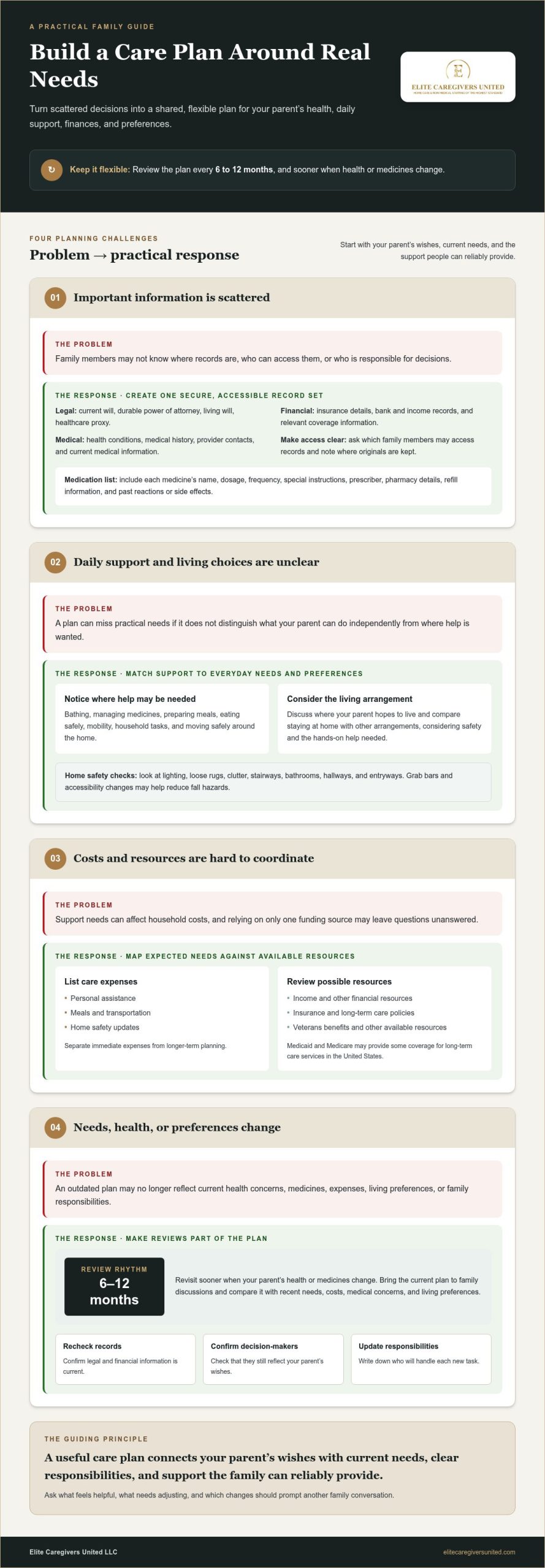
A senior care plan is a personalized guide to an older adult’s health, daily support, finances, legal documents, and living arrangements. Review it every six to 12 months, and sooner when health or medicines change.
Use these steps to organize decisions around your parent’s wishes, current needs, and available resources.
-
Gather Important Legal and Financial Documents
Gather legal, financial, medical, and household documents in one secure, accessible place. Include an up-to-date will, durable power of attorney, living will, healthcare proxy, insurance details, bank and income records, and current medical information. Ask your parent which family members may access the records, and note where the originals are kept.
As you plan care, discuss whether the named decision-makers still reflect your parent’s wishes. A healthcare proxy designates someone to make medical decisions if your parent becomes incapacitated. A durable power of attorney can designate someone to make decisions on their behalf. Keep copies together, and don’t assume relatives understand their responsibilities without discussing them.
-
Plan for Housing and Medical Care
Ask your parent where they hope to live and what support would help them remain there. Compare staying at home with other living arrangements, considering mobility, household tasks, safety, and the amount of hands-on help needed. For example, difficulty preparing meals or eating safely may affect both daily support and housing plans.
Discuss current medical concerns, ongoing conditions, and preferences for future care while your parent can participate. Note which changes might prompt a family conversation, such as reduced mobility or difficulty managing daily routines. Treat housing decisions as flexible: needs and preferences can change, so record alternatives the family can revisit.
-
Review Care Costs and Financial Resources
Build a practical budget around your parent’s income, other financial resources, and current expenses. List expected needs, such as personal assistance, meals, transportation, and home safety updates. Consider how changing support needs could affect the household budget, and distinguish immediate expenses from longer-term planning.
Review insurance coverage, long-term care policies, veterans benefits, and other available resources. Medicaid and Medicare may provide some coverage for long-term care services in the United States. Record what each resource may contribute, and note eligibility or coverage questions to discuss with a financial advisor. Don’t base the plan on just one funding source.
-
Schedule Care Plan Reviews
Set a recurring review every six to 12 months, then update the plan sooner if your parent’s health or medicines change. Bring the current document to each family discussion and compare it with recent needs, expenses, medical concerns, and living preferences. Note changes clearly, including who will take responsibility for each new task.
During each review, check that legal and financial records are current and that decision-makers still match your parent’s wishes. Ask what feels helpful and what needs adjusting. A flexible plan lets family members respond to changing circumstances while keeping established goals, responsibilities, and preferences in view.
Compiling health records, medication lists, provider contacts, and insurance information
Start with one current record that helps family members coordinate medical information, daily support, and appointments. Keep a paper copy accessible and electronic copies available to the people involved in your parent’s care.
To make movement at home safer, remove loose rugs and clutter, improve lighting, and check stairways, bathrooms, hallways, and entryways. Grab bars and accessibility changes can also help reduce fall hazards.
- Gather health records and insurance details. Record your parent’s health conditions, medical history, insurance information, emergency contacts, and healthcare providers. Add relevant discharge instructions or care goals, then update the document when information changes. According to the Centers for Medicare & Medicaid Services, a care plan can list health problems and goals, other providers, medications, community services the family has or needs, and other health information.
- Create a medication list that’s useful at appointments and in emergencies. For each medicine, note its name, dosage, how often it’s taken, special instructions, and prescriber. Include pharmacy details, refill information, and past reactions or side effects. Keep the list with the health records, and compare it with current instructions whenever prescriptions change.
- Assess your parent’s health needs and care preferences. Note concerns such as difficulty bathing, managing medicines, preparing meals, or moving safely around the home. Record what your parent can do independently and where they prefer help. Share specific observations with healthcare providers, such as a recent change in mobility or difficulty following medication instructions.
- Organize provider contacts and decision-making information. List each provider’s name, role, phone number, and reason for seeing your parent. Discuss health concerns with providers and ask how family members can support care coordination. Keep a copy of the healthcare proxy information, which identifies the person designated to make medical decisions if your parent becomes incapacitated. A durable power of attorney can designate someone to make decisions on their behalf.
- Make the record usable for in-home support. Note the help your parent wants with personal activities, such as bathing, dressing, or eating, alongside relevant health instructions and preferences. Share only the information needed by each person involved, and keep the latest copy easy to find. If hands-on daily assistance would help, personal care support with bathing and dressing can be part of the plan.
Activities of daily living and instrumental activities
Assess what your parent can manage independently, what takes extra effort, and where assistance would make daily life safer. Record preferences alongside a practical baseline so family members can notice meaningful changes.
- Observe basic activities of daily living: bathing, dressing, eating, toileting, and moving between a bed and chair. Note whether your parent completes each independently, needs reminders, or benefits from hands-on help. For example, difficulty stepping into a tub may call for a safer bathing routine. Ask what kind of help feels comfortable, and record preferred timing and approach.
- Assess the tasks that support independent living, such as preparing meals, shopping, managing medicines, using the phone, handling bills, doing laundry, and arranging transportation. A parent may manage personal care but struggle to remember appointments or keep groceries stocked. Track specific tasks and patterns instead of relying on a general impression. Changes in unpaid bills, meal preparation, or usual outings can signal a need for added support.
- Match support to the amount and setting of help needed. Home-based care may assist with personal care, household chores, meals, transportation, and safety. It can be short-term during recovery from an operation or ongoing for chronic needs. Respite care can provide short-term support when a regular caregiver is unavailable. Adult day care may offer daytime social activities, meals, exercise, or personal care.
- Compare living arrangements using your parent’s abilities, wishes, and need for regular hands-on assistance. Staying at home may suit someone who can manage the space with appropriate help. Assisted living generally provides meals, transportation, social activities, and personal care. Nursing homes provide 24-hour skilled nursing care for people with complex medical needs or constant supervision. These settings serve different needs, so document what support your parent requires.
- Turn observations into a clear daily support schedule. According to the Centers for Medicare & Medicaid Services, long-term care can include personal-care help, home-delivered meals, adult day health care, and transportation. For example, note who can help with lunch, accompany your parent to an appointment, or support a preferred social activity. Include your parent in decisions, then revise tasks as abilities, preferences, or chronic conditions change.
Building a care team and filling support gaps
A workable care team turns good intentions into dependable, specific support. Discuss your parent’s priorities and match each task with someone able to take it on.
- List everyone already helping, then write down each person’s responsibilities. Include family members, friends, neighbors, and healthcare providers. For example, one relative might handle appointment rides, while a neighbor checks whether groceries arrived. Ask each person what time and support they can realistically offer. Don’t assign ongoing tasks based only on what someone managed during a single illness or busy week.
- Match tasks to each person’s abilities and schedule. Record the task, the person responsible, and when they can help. A family member might organize bills but be unable to provide daily hands-on assistance. Someone nearby may help with a meal, while a relative farther away coordinates calls. Clear roles reduce confusion and reveal unfilled tasks before they become urgent.
- Identify gaps the family cannot reliably cover. Compare your parent’s needs with the support actually available, including personal care, transportation, meals, and companionship. If your parent needs help bathing while family members are working, record that need instead of leaving it as an informal expectation. Consider formal caregivers or community services to supplement help from relatives, friends, and neighbors.
- Find local aging resources when the support map has gaps. According to the Administration for Community Living, the Eldercare Locator helpline is available at 800-677-1116 to help people find programs and services for older adults and family caregivers at the state and local levels. Area Agencies on Aging and local aging or social services offices may also help families identify community services. Add useful contacts to the care plan.
- Set a simple communication routine to keep the team aligned. Choose a shared place for updates, such as a family notebook or group message, and record changes in tasks, appointments, or your parent’s condition. For example, if a caregiver notices a new difficulty with meals, tell the person coordinating family support. Agree on who will share updates with providers and arrange backup help if a scheduled caregiver is unavailable.
What should be included in an aging parent care plan?
Create one written plan that connects your parent’s priorities with clear actions, assigned responsibilities, and practical backup arrangements. Include the details below, then share the plan with your parent and the family members involved in care.
- Write down your parent’s goals and preferences. Examples might include staying at home, maintaining a favorite hobby, or sharing meals with family. Make each goal realistic and specific, then note what support could help, such as arranging transportation to a regular social activity. Involve your parent in choosing goals and approaches instead of treating the plan as decisions made for them.
- Summarize health and personal care needs, including ongoing conditions, mobility concerns, cognitive changes, medication routines, and help with bathing, dressing, or eating. Note dietary needs and restrictions, along with preferred meals or routines. For example, record whether your parent needs a reminder to eat lunch or help preparing food. Keep observations practical and distinguish current needs from possible future concerns.
- Describe emotional well-being and social connection. Record activities your parent enjoys, people they like to see, and signs that isolation may be affecting their mood. A plan might include a regular visit with a friend or time for a familiar hobby. Include mental health support where relevant, and note your parent’s preferences for companionship, quiet time, and meaningful daily activities.
- Record home safety actions and emergency procedures. Walk through stairways, bathrooms, hallways, and entryways, noting hazards such as loose rugs, clutter, or poor lighting. List changes to address, such as improving lighting or installing grab bars. Add emergency contacts, relevant medical information, and the steps family members should follow if your parent falls or needs urgent assistance.
- Clarify who handles each task and what happens if plans change. Name the person coordinating appointments, the person supporting meals, and the backup for a missed visit. Include living arrangements, financial considerations, and relevant legal decision-making documents. Set a review date six to 12 months ahead, and revisit the plan sooner if health or medicines change.
For help putting daily personal support into practice, explore personal care services as part of your family’s care plan.
Elite Caregivers United: Respite Care
Elite Caregivers United LLC offers Respite Care when family caregivers need support with a parent’s care responsibilities. It can help fill a planned gap while keeping support aligned with the family’s care plan. The Personal Care Services/CNA Team can assist with everyday personal care, while Surgery Recovery & Post-Hospitalization Care supports families arranging help after a hospital stay or operation.
Consider these services when your plan identifies a need for hands-on daily assistance, caregiver relief, or recovery support. Sharing your parent’s needs and routine preferences helps align practical support with the plan your family has developed.
Contact Elite Caregivers United LLC to discuss support for your family’s care plan.
Take the Next Step With a Plan That Can Grow
A care plan doesn’t need to be perfect to be useful. Choose one manageable next step, such as inviting your parent to share what matters most or asking a family member to take responsibility for a specific task. Creating a care plan for aging parents is an ongoing process of listening and adapting. Keep your parent’s preferences at the center of each decision as the plan develops.
When family caregivers need support, Elite Caregivers United LLC offers Respite Care and Personal Care Services/CNA Team assistance. Surgery Recovery & Post-Hospitalization Care can also support families planning for a parent’s return home after a hospital stay or operation. These services can help address practical care needs while relatives coordinate the wider plan.
For a supportive conversation about your family’s needs, contact Elite Caregivers United LLC. Each thoughtful step can help your family shape a care plan that remains responsive as needs change.
Frequently Asked Questions
How can I create a caregiving plan?
Start with one immediate concern, then turn it into a task, an owner, and a backup. For example, if your parent misses appointments, assign someone to coordinate rides and another person to step in if needed. Ask your parent which outcomes matter most, then record decisions in a shared document. A plan is more useful when each task has a clear owner and family members know how to communicate changes.
How much will it cost to age in place?
There’s no universal cost: it depends on the support needed, how often it’s provided, and the location. Consider home upkeep, safety changes, meals, transportation, and paid help. Compare those needs with your parent’s income, insurance, long-term care policies, veterans benefits, and other resources. Home-based services may cost less than moving into assisted living or a nursing home, but the balance depends on the support required. Elite Caregivers United LLC customizes pricing to each client; contact the team for an estimate.
How do you assess an aging parent’s care needs and independence?
Observe familiar routines instead of relying on one conversation. Notice whether your parent can prepare breakfast, manage a phone call, walk through the home, or remember an appointment. Compare these observations with their usual abilities and ask what feels difficult or unwanted. Changes in hygiene, social outings, or unpaid bills can prompt a supportive discussion. Record examples and patterns to make later conversations more specific.
How can families discuss care planning with aging parents?
Choose a calm moment and begin with your parent’s goals, not a list of limitations. Ask what they want to keep doing and what feels harder, such as driving to a weekly activity. Listen without rushing toward a decision. If relatives disagree, return to your parent’s stated priorities and discuss one practical issue at a time. A trusted family member can help keep the conversation focused and respectful.
How do you choose between in-home care, assisted living, and nursing homes?
Compare the setting with your parent’s preferences and the kind of help they need. In-home support may suit someone who wants to remain at home and needs help with daily tasks. Assisted living generally includes meals, transportation, activities, and personal care. Nursing homes provide 24-hour skilled nursing for complex medical needs or constant supervision. Consider whether needs are short-term, such as recovery, or ongoing.
How do Medicare, Medicaid, and long-term care insurance cover elder care?
Coverage depends on the service and the person’s situation. Medicare and Medicaid may cover some long-term care services in the United States, but don’t assume every home-care task qualifies. Medicare covers appointments for managing chronic conditions and discussing advance care plans. Long-term care insurance depends on the policy’s terms. Review benefit documents and identify which services each resource may help fund before building a budget.
What legal documents should aging parents prepare, such as a power of attorney and advance directive?
Families commonly discuss an up-to-date will, durable power of attorney, living will, and healthcare proxy with an aging parent. These documents address different wishes and decision-making arrangements. A healthcare proxy names someone to make medical decisions if the person becomes incapacitated; a living will outlines end-of-life care preferences. Parents should choose trusted decision-makers and tell the people who may need the documents where they’re stored.
How do you create a medication, appointment, and emergency plan for an older adult?
Keep a current medication record with each medicine’s dosage, schedule, instructions, prescriber, pharmacy, and past reactions. Add upcoming appointments, provider contact details, and the person arranging transportation. For emergencies, keep medical history, insurance information, emergency contacts, and procedures together in an accessible place. Give involved family members access to the current version, and update it after a prescription change or new appointment instructions.