

Six in 10 people living with dementia will wander at least once, and nighttime wandering can increase the risk of falls and accidents. Dementia wandering prevention at night starts with looking for patterns, supporting a calming sleep routine, and making the home easier to navigate safely. Wandering often begins in the middle stage of dementia, though it can also occur earlier or continue into later stages, so the right approach may change over time.
Repeated nighttime waking can leave families tired and worried, especially when it’s unclear what is driving the behavior. Understanding possible causes can help you respond patiently rather than confront the person. This article explains why wandering may happen, how daytime activity and consistent sleep schedules may help, and how dementia stages can inform nighttime support, with practical steps to make the home safer.
Key Takeaways
- Track when wandering happens and what preceded it to spot patterns you can address with daytime activity and a steady routine.
- Make nighttime movement safer with clear paths, gentle lighting, and a plan for responding calmly if your loved one wakes.
- Use consistent sleep cues and a familiar evening environment, then observe how routine changes affect rest over time.
- Adapt supervision and support as dementia progresses, and consider respite care when nighttime caregiving is becoming difficult to sustain.
1. How can I reduce nighttime wandering?
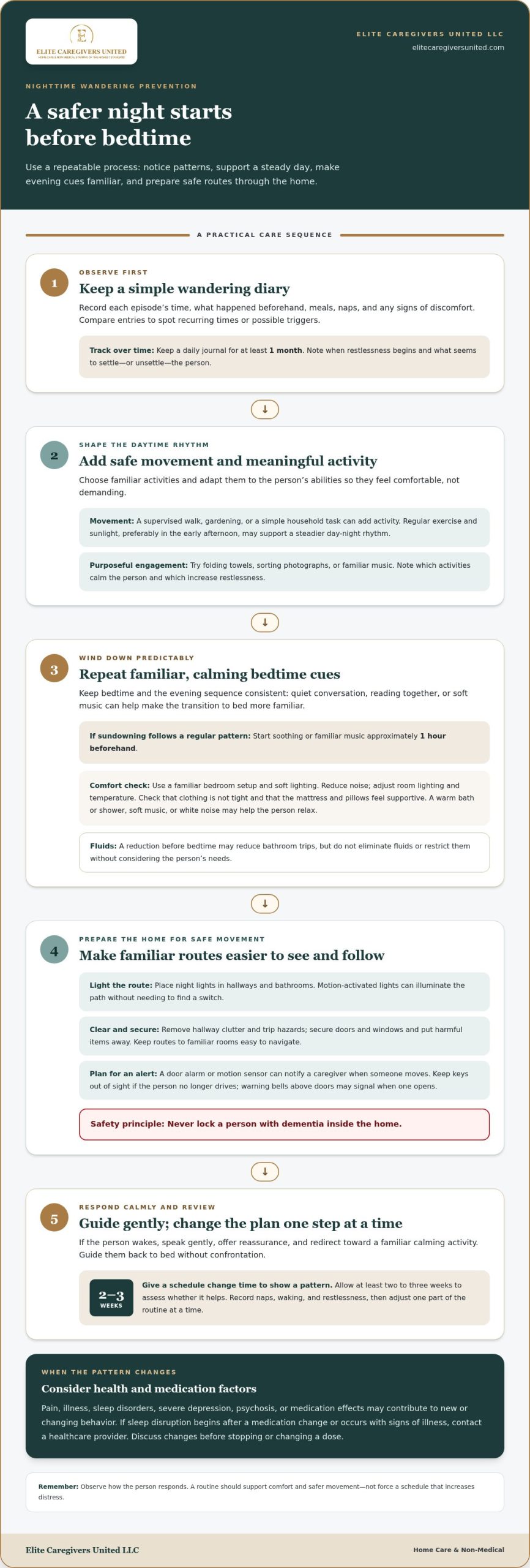
Start by recording each wandering episode in a simple diary. Note the time, activities beforehand, meals, naps, and any signs of discomfort. Compare entries to identify patterns and possible triggers. Someone who wanders after a quiet day may benefit from more movement or engagement earlier. The Alzheimer’s Association recommends identifying when wandering is most likely, then planning activities and exercise for that period.
Build safe movement into the daytime routine. A supervised walk, gardening, or a simple household task can provide activity without overwhelming the person. Regular exercise and sunlight, preferably in the early afternoon, may also support a steadier day-night rhythm. Choose familiar activities and adapt them to the person’s abilities so participation feels comfortable, not demanding.
Stimulation matters, too. If boredom seems to precede pacing, offer a meaningful activity such as folding towels, sorting photographs, or listening to familiar music. A companion can join a supervised walk or sit nearby during a preferred pastime. Record which activities seem to settle the person and which increase restlessness, then use those observations to plan the next day.
Make nighttime paths easier to navigate. The Alzheimer’s Association recommends night lights throughout the home as a safety measure for someone at risk of wandering. Place them in hallways and bathrooms to help a disoriented person see familiar routes. Motion sensors can alert a caregiver when someone gets out of bed, while motion-activated lights can illuminate the path without requiring the person to find a switch.
Keep the evening predictable with a familiar bedroom setup, soft lighting, and quiet activities such as reading together. If sundowning tends to begin at a regular time, soothing or familiar music can start approximately 1 hour beforehand. Reduce noise and adjust room lighting and temperature to support comfort. If anxiety rises, speak gently, offer reassurance, and redirect attention toward a familiar, calming activity rather than arguing about what the person sees or believes.
2. Why Do People With Dementia Wander?
Wandering can begin when changes in memory and judgment make familiar places feel confusing. At night, a person may wake disoriented and mistake darkness or shadows for daytime cues. Wandering risk is highest among people with dementia whose Mini-Mental State Exam scores are 13 or less, though a score alone can’t predict what someone will do. Pain, illness, sleep disorders, severe depression, psychosis, or medication effects may also contribute to new or changing behaviors.
Medication may help if a health problem or medication effect contributes to nighttime restlessness, but it won’t address every cause of wandering. Medicines can also have side effects. Discuss sleep or behavior changes with a healthcare provider before changing or stopping a dose.
Plan for safe movement instead of relying on a locked exit. The Alzheimer’s Association advises never locking a person with dementia inside the home. Secure harmful items, remove trip hazards, and consider a door alarm or motion sensor to alert a caregiver when someone moves. Keep keys out of sight if the person no longer drives, and place warning bells above doors to signal when one opens.
Make routes through the home easier to understand. Clear hallway clutter, secure windows and doors, and use night lights to mark the way to familiar rooms. A black threshold in front of a door may serve as a visual stop barrier for some people. Keep coats, handbags, and mail that needs posting out of view if those items seem to prompt an attempt to leave.
If the person goes missing, call 911 immediately in the United States; there’s no waiting period to report a missing vulnerable adult. Share that the person has dementia and describe their clothing and likely destinations. For families who need help supporting a loved one’s daily care, Alzheimer’s and dementia care can provide additional caregiver support.
3. Daily routines and sleep schedules
A steady nighttime routine uses the same bedtime and familiar calming steps each evening. Try quiet conversation, reading together, or soft music, then guide your family member toward bed. A predictable sequence can make transitions easier for people living with Alzheimer’s, especially when disrupted routines or limited sunlight contribute to restlessness. Keep a daily journal for at least 1 month, recording behavior, onset times, and possible circumstances.
Give a new routine time to show a pattern. Caregivers should allow at least two to three weeks to assess whether schedule changes are helping. Note when the person naps, wakes, or becomes restless, and adjust one part of the routine at a time. This makes it easier to see which changes support sleep and which may leave the person more unsettled.
Prepare the bedroom for comfort before bedtime. Check for tight clothing or pressure sores, and make sure the mattress and pillows feel supportive. A warm bath or shower may help the person relax; soft music or white noise may ease nighttime anxiety. If a familiar scent such as lavender is calming, include it in the evening routine. When the person wakes, gently guide them back to bed without confrontation.
The Alzheimer’s Association advises considering a reduction in liquid intake before bedtime, without eliminating fluids, which may reduce nighttime bathroom trips. Don’t restrict fluids without considering the person’s needs. If sleep disruption begins after a medication change or occurs with signs of illness, contact a healthcare provider to review possible causes. Medication effects and health problems can contribute to new behavior, so note when symptoms began and what changed.
Effective dementia wandering prevention at night depends on observing how the person responds, not forcing a schedule that increases distress. If a routine makes nighttime behavior more dangerous or leaves the person persistently restless, record the changes and discuss them with a healthcare provider. A calm, familiar sequence can support sleep while preserving dignity and comfort.
4. Dementia stages and nighttime wandering
Wandering often begins in the middle stage of dementia, but it can appear earlier or continue into later stages. A stage is a broad guide, not a timetable for an individual’s behavior. Two people living with dementia may have different sleep patterns, mobility, and awareness, even at similar stages. Use changes in daily abilities, rather than a stage label alone, to adjust nighttime support.
In earlier stages, a person may still walk confidently but become confused in unfamiliar surroundings or after waking. Keep a record of when wandering happens, where the person goes, and what they seem to be seeking. Repeated trips toward the front door, for example, may suggest they’re looking for a familiar destination. Share new patterns with their healthcare provider, especially if behavior changes suddenly.
As dementia progresses, changes in memory, orientation, and judgment can make familiar rooms harder to recognize at night. Review the home setup whenever the person’s abilities change. Keep essential paths clear, place familiar objects where they can be seen, and make the route between bed and bathroom easier to follow. If walking becomes less steady, reduce obstacles and provide closer supervision during nighttime movement.
Later-stage changes may affect how clearly a person communicates discomfort or needs. Look for signs such as repeatedly getting out of bed, calling out, or pacing, and consider possible causes such as pain, thirst, or needing the bathroom. Note what happens before and after each episode. A record of patterns helps families describe changes clearly and plan support around the person’s current abilities.
Review the plan after a new wandering pattern, a fall, a move, or a change in mobility. Keep familiar routines where possible, while adjusting supervision as risks change. Explore Alzheimer’s and dementia care support for help with personal care and day-to-day needs as a loved one’s circumstances evolve.
Elite Caregivers United: Respite Care
Elite Caregivers United LLC provides Respite Care for families supporting a loved one with dementia. Nighttime wandering can make rest difficult for the entire household, and caregivers may need time for personal responsibilities or to recover from interrupted sleep. Respite support can help families share caregiving responsibilities while maintaining a familiar home routine.
For practical day-to-day assistance, the Personal Care Services/CNA Team can support personal care needs. Families may consider respite when nighttime supervision becomes difficult to sustain or a caregiver needs relief. These services complement household safety measures and don’t replace medical evaluation for a new or concerning change in behavior.
Contact Elite Caregivers United LLC to discuss care support for your family.
Build a Support Plan That Can Adapt
A useful next step is to write a simple care plan that can adapt as needs change. Note what helps your loved one feel settled, what signs call for extra support, and how family members will share responsibilities. Keeping these details in one place can make handoffs clearer and help everyone respond consistently. A thoughtful approach to dementia wandering prevention at night includes caring for the caregiver, too, since ongoing sleep disruption can make daily responsibilities harder to manage.
Elite Caregivers United LLC offers Respite Care and Personal Care Services through its CNA Team, supporting families who need additional help with caregiving. It also provides Surgery Recovery & Post-Hospitalization Care for people who need support during recovery. If added assistance would help your family sustain a thoughtful care plan, contact Elite Caregivers United LLC today. Each calm, considered step can help you move forward with greater confidence and care.
Frequently Asked Questions
Why Do People With Dementia Wander?
Changes in memory, orientation, or sleep can make familiar tasks feel unfinished or confusing. Someone who wakes in darkness, for example, might think it’s time to leave for work or search for a bathroom. Pain, illness, and medication effects can also change behavior, especially when restlessness is new. Notice what the person appears to need, then respond calmly rather than arguing about a mistaken belief.
How can I reduce nighttime wandering?
A practical approach to dementia wandering prevention at night includes matching support to what the person is trying to do. If they’re searching for a familiar place, use a calm voice and offer a simple alternative, such as sitting together in a familiar room. Keep identification attached to clothing or in a sewn-in label, and keep a recent photo available in case you need to describe the person.
Is locking the bedroom door ever a safe option?
No. The Alzheimer’s Association advises never locking a person with dementia inside the home, and a locked bedroom can also prevent someone from leaving during an emergency. Instead, use alerts that notify a caregiver when the person gets up or opens a door. Keep exit routes clear and arrange supervision so the person can move without being confined behind a locked door.
What should I do if my loved one wanders out?
Call 911 immediately in the United States and tell authorities the missing person has dementia. Give a clear description, including clothing, and share places they know well or have visited before. While help is being contacted, check nearby areas such as the yard, garage, or shed, and ask neighbors to watch for the person. Once found, offer comfort and notify police.
What to Do If Wandering Continues?
If wandering continues, document what has changed and arrange a health review, especially if the behavior started suddenly. A clinician can assess possible illness, pain, or medication effects. Make a realistic plan for caregiver rest, too: family members or trusted friends can share overnight responsibilities one or two nights a week. A sustainable support plan helps caregivers respond calmly and consistently.
Who’s at risk?
Wandering can occur at different stages, but risk is highest among people with dementia whose Mini-Mental State Exam scores are 13 or less. A score doesn’t determine an individual’s actions, so caregivers should also consider changes in orientation, judgment, sleep, and ability to find familiar rooms. A person who has never wandered can still develop the behavior as dementia changes.