
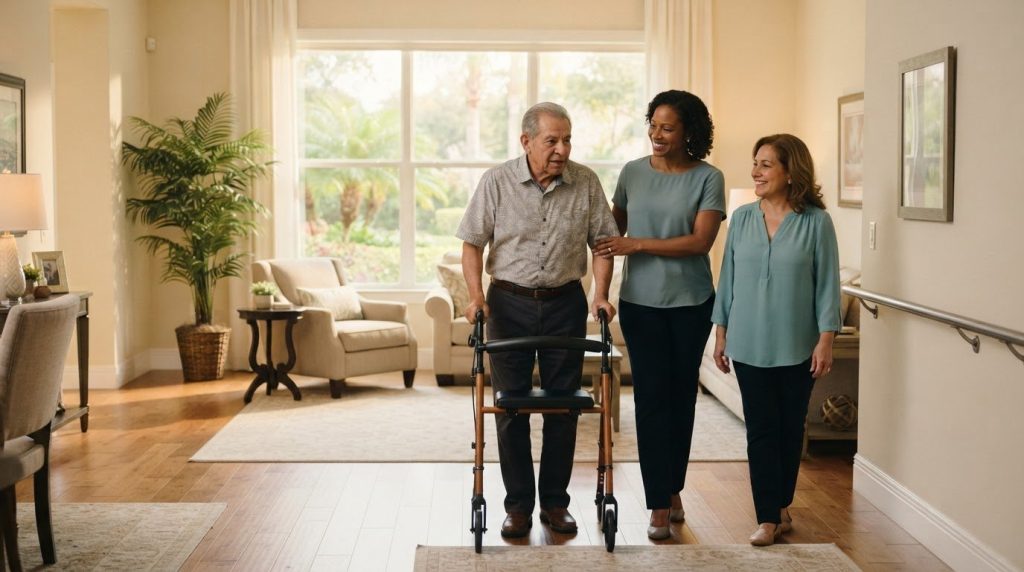
What if the right help with Parkinson’s mobility made daily routines feel more manageable without taking choice away from your loved one? Concern about falls, transfers, and getting around the house is understandable, especially when it’s not clear where family or caregiver assistance ends and clinical care begins. Parkinson’s care for mobility support can provide attentive, non-medical assistance with everyday activities while respecting the person’s abilities and preferences.
In-home caregivers may help with personal care, familiar routines, and companionship, but they don’t replace a physical therapist or the person’s healthcare team. Clinical professionals can assess mobility and recommend strategies. Caregivers can provide day-to-day support within their role and in line with the person’s preferences and clinician-provided guidance.
This guide explains where caregiver assistance may fit, when to consult a healthcare professional or licensed therapist, and how families can compare informal help, respite, and ongoing home care in Orlando. You’ll also find practical ways to record routines and preferences, discuss responsibilities, and consider support that respects dignity and independence.
Key Takeaways
- Identify everyday tasks where caregiver assistance may help your loved one feel more supported at home.
- Learn how Parkinson’s care for mobility support can complement, but not replace, guidance from clinicians and licensed therapists.
- Compare family help, scheduled caregiving, respite, and clinical therapy by the role each can play.
- Use a simple planning approach to clarify preferences, support needs, and responsibilities as routines change.
- Know what to ask when considering Orlando Parkinson’s home care, including questions about scope, communication, and caregiver fit.
Parkinson’s Care for Mobility Support: What Families Need to Know
Supporting movement at home is a careful balance. Families want daily activities to feel manageable while protecting their loved one’s comfort, dignity, and right to choose. Parkinson’s care for mobility support means practical, non-medical help with everyday routines, provided in a way that follows established care guidance and invites the person’s participation.
Parkinson’s affects people differently, and one person’s needs may vary from one situation to another. Someone may appreciate a steady presence while moving between rooms, while another may want help getting dressed or preparing for the day. Keep the person involved in decisions and let them do the parts of a routine they can manage comfortably.
Which everyday activities may call for mobility support?
Notice which moments make familiar routines feel difficult, tiring, or concerning. Examples may include moving around the home, getting ready and dressed, or gathering what’s needed to begin the day. The aim is not to take over. It is to offer the level of help the person welcomes while leaving room for them to do what feels comfortable.
Make a short list of specific tasks and situations to discuss together. For each one, note what the person prefers to do independently, when they would like someone nearby, and what feels uncertain. This gives family members and a prospective caregiver concrete information to discuss, without assuming every person needs the same support.
Why Parkinson’s mobility support should be individualized
Movement and support needs can differ among people and may change depending on the activity or circumstances. Some people experience changes such as shuffling steps, slowed movement, or freezing, described in this overview of Parkinsonian gait. Not everyone experiences these in the same way, so let the individual’s own experience and preferences guide conversations about assistance.
Share new concerns or noticeable changes in movement with the person’s healthcare team, who can advise on clinical questions and next steps. If a therapist has provided specific guidance, ask how to communicate it to caregivers, with the person’s permission.
Non-medical caregivers can assist with agreed daily activities, but they don’t diagnose Parkinson’s, provide treatment, or deliver physical therapy. Caregiver support also cannot guarantee that falls will be prevented or change how the condition progresses. Keeping these boundaries clear helps families seek the right kind of help while honoring the person’s routines and choices.
What a Parkinson’s Caregiver Can, and Cannot, Do for Mobility
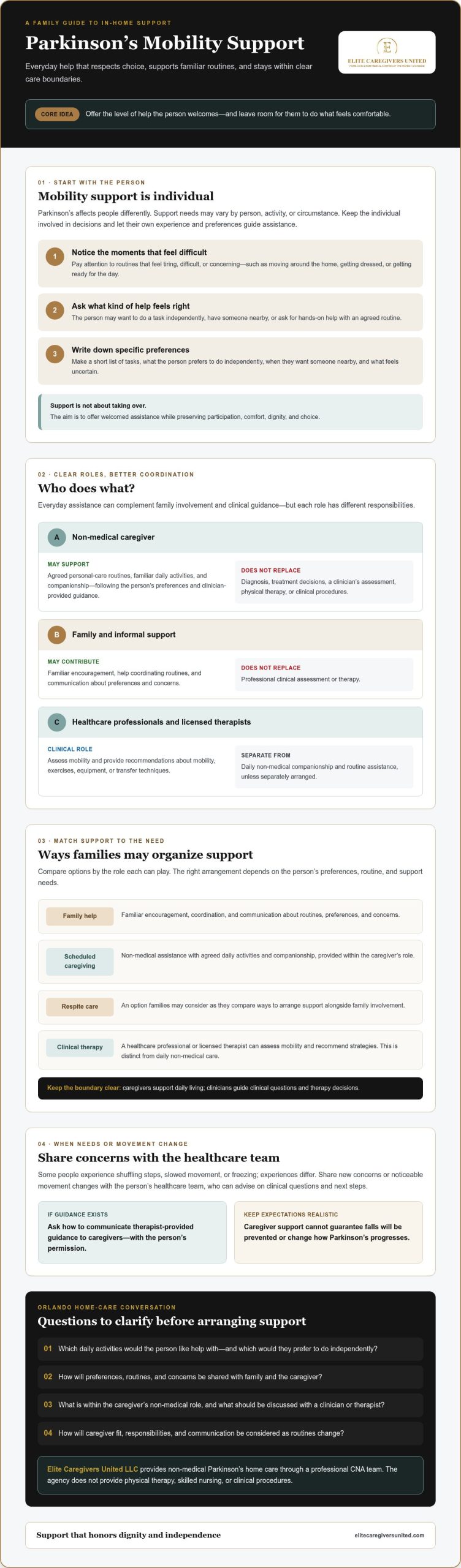
Clear roles make it easier to add support without confusing everyday assistance with clinical care. A non-medical caregiver can help with agreed daily routines and companionship. Relatives contribute personal knowledge and clinicians guide treatment and therapy decisions. The Parkinson’s Foundation offers practical information on managing daily activities, which families can discuss with the person’s healthcare team.
| Support role | What it may include | What it doesn’t replace |
|---|---|---|
| Daily caregiver assistance | Help with agreed personal-care routines and companionship, following the person’s preferences and established guidance. | Diagnosis, treatment decisions, physical therapy, or a clinician’s assessment. |
| Family support | Familiar encouragement, help coordinating routines, and communication about preferences and concerns. | Professional clinical assessment or therapy. |
| Clinician-directed therapy | Assessment and recommendations about mobility, exercises, equipment, or transfer techniques. | Daily non-medical companionship and routine assistance, unless separately arranged. |
Elite Caregivers United provides non-medical Parkinson’s disease home care through a professional CNA team. The agency does not provide physical therapy, skilled nursing, or clinical procedures. Caregivers don’t diagnose, prescribe, assess mobility needs, or independently develop a clinical plan. Their role is to support daily living in ways agreed upon with the person and family, within guidance provided by clinicians.
When non-medical home care may complement family support
A caregiver may assist with agreed daily-living needs and offer companionship, adding support while relatives remain involved in decisions and routines. Respite care may also be worth discussing when family caregivers need time for work, personal responsibilities, or rest. Families looking for a broader overview can read the guide Understanding Non-Medical Home Care in Orlando. To explore whether Parkinson’s disease home care may fit your family’s needs, visit Elite Caregivers United’s home care information.
When to ask the healthcare team about therapy or equipment
Bring new, worsening, or unexplained mobility concerns to the person’s healthcare team. Ask clinicians whether physical therapy, an assistive device, or specific transfer guidance is appropriate. A caregiver can’t assess these needs, prescribe equipment, or substitute for therapy. Questions about what’s causing a change or which mobility approach is appropriate belong with qualified health professionals, not a non-medical caregiver.
Compare Parkinson’s Mobility Support Options for Your Orlando Family
There isn’t one right arrangement for every household. Family help, non-medical caregiving, respite, and clinical therapy serve different purposes, and some families combine them. To compare options, list the daily tasks that need support, how often help is wanted, what the person prefers, and whether any concerns require clinical guidance.
- Family-only support: Relatives provide familiar help and coordinate routines, based on the time and support they can comfortably offer.
- Scheduled non-medical caregiving: A caregiver assists with agreed daily-living needs and companionship during planned visits.
- Respite care: Temporary support gives a family caregiver time for other responsibilities or rest.
- Clinical therapy: A licensed therapist assesses needs and provides therapy or professional guidance on mobility and transfers.
These options aren’t competing measures of commitment. Parkinson’s care for mobility support may include professional help alongside family involvement, while therapy remains a clinical service rather than a caregiver task.
How to decide whether family help is enough
Start with a practical inventory: list the tasks your loved one wants help with, when those tasks arise, how much time relatives can reliably offer, and which situations feel difficult or concerning. Then ask your loved one what matters to them, including privacy, preferred routines, and how they want assistance offered. Adding a caregiver can supplement family support; it doesn’t diminish the care relatives provide.
If you’re exploring scheduled care in Orlando, consider asking the provider:
- Can the schedule reflect the times and daily tasks where support is wanted?
- How is caregiver consistency handled, and how can the family share updates?
- What arrangements are currently available, and how are changes or concerns communicated?
- How will the person’s preferences and established routines be respected?
Confirm current availability and caregiver arrangements directly before making plans. If a new or changing mobility concern arises, discuss it with the healthcare team rather than relying on a caregiver to assess it.
How respite and ongoing home care differ
Respite arranges temporary support for a family caregiver, while ongoing home care is scheduled around agreed daily-living needs. Either may be considered alongside family help and clinical services, depending on the household’s circumstances. If your family is considering continuous support, the guide The Essential Guide to 24-Hour Home Care in Orlando may help you explore that option. The arrangement should fit the person’s preferences and the family’s needs, not a universal formula.
Plan a Safer, More Supportive Daily Routine at Home
A thoughtful routine begins with the person’s preferences, not assumptions about what they can or can’t do. A few clear conversations can help family members and caregivers understand where assistance is welcome, what should remain independent, and which questions belong with the healthcare team. Keep the plan flexible so it can reflect changing needs without losing sight of familiar routines.
- Discuss preferences: Ask which activities the person welcomes help with and where they prefer privacy or independence.
- List support needs: Note daily tasks, preferred routines, communication preferences, and concerns the person wants raised with clinicians.
- Agree on roles: Clarify who provides daily assistance and who handles clinical or therapy questions.
- Review changes: Revisit the plan together as routines, needs, or preferences shift.
Prepare for a conversation with your loved one
Choose a calm time to ask what support would feel useful. For example, would your loved one prefer a reminder, someone nearby, or hands-on help with a particular routine? Write down their own words where possible, including how they’d like assistance offered. Return to the conversation as preferences change, rather than treating an earlier plan as permanent.
A simple written note can help everyone follow the same approach. Include the person’s preferred routine, what they want to do independently, and how they like family or caregivers to communicate. Add any mobility concerns they want shared with clinicians. This practical record helps Parkinson’s care for mobility support reflect the individual, rather than a one-size-fits-all routine.
Coordinate caregiver support with professional guidance
Keep responsibilities clear: caregivers can provide agreed non-medical daily assistance, while clinicians address diagnosis, treatment, therapy, and clinical mobility questions. With your loved one’s permission, share relevant clinician-provided instructions with the caregiver and care team so everyone understands the guidance. If an instruction is unclear, ask the clinician to clarify it instead of relying on a caregiver to interpret or change it.
Before changing an established mobility routine, transfer approach, or use of equipment, seek guidance from the person’s healthcare team or therapist. Caregivers shouldn’t assess mobility needs or independently create clinical plans. A regular check-in with your loved one and family can help identify when the written plan needs review and whether professional advice is needed.
If your family is considering non-medical support in Orlando, discuss in-home support for your family with Elite Caregivers United.
Choosing Parkinson’s Home Care for Mobility Support in Orlando
Choosing support is easier when you begin with the tasks your loved one wants help with, then check whether a provider’s services and arrangements match those needs. A useful conversation should cover practical assistance, communication, schedule, and caregiver fit, while keeping clinical questions with the healthcare team. The goal is an arrangement that respects the person’s routines and preferences, not one that takes over decisions they can make themselves.
Questions to ask before arranging Parkinson’s home care
Before deciding, discuss these points with the provider and your loved one:
- Scope: Which daily-living tasks can a caregiver assist with under the agreed arrangement? Which needs fall outside non-medical home care?
- Schedule: What scheduling options are currently available, and how can the family ask about changes?
- Communication: How can relatives share preferences, concerns, or updates, and who should they contact?
- Preferences: How will the caregiver learn the person’s routines, privacy preferences, and preferred way of receiving help?
- Caregiver fit: How can the family discuss whether the caregiver’s approach feels comfortable to the person receiving care?
Be specific about the tasks under consideration, such as help with a morning routine or personal care. Also ask how the provider handles requests that require clinical judgment or a service beyond its scope. Physical therapy, skilled nursing, and clinical procedures require other providers; a non-medical caregiver can’t replace them.
How Elite Caregivers United may fit your family’s needs
Elite Caregivers United serves Orlando families with non-medical Parkinson’s disease home care and personal care through a professional CNA team. Its caregivers provide daily-living support, not diagnosis or treatment. The agency does not provide physical therapy, skilled nursing, or clinical procedures, so families should arrange those services separately when recommended by the healthcare team.
Respite care and 24-hour home care are also options to discuss with the agency if family support needs to be supplemented. Ask directly about current availability and caregiver arrangements, and explain which routines matter most to your loved one. A specific conversation can help clarify whether the services fit your family’s needs.
For a personal discussion about Parkinson’s care for mobility support, talk with Elite Caregivers United about care options.
Build Support Around Your Loved One’s Daily Life
Thoughtful Parkinson’s care for mobility support starts with the person: their routines, preferences, and the daily tasks where help feels welcome. Family assistance and non-medical caregiving can support everyday living, while questions about changing mobility, therapy, or equipment belong with the healthcare team. Keeping those roles clear helps families add support without setting aside their loved one’s independence.
In Orlando, Elite Caregivers United offers Parkinson’s disease home care through a professional CNA team. Families can discuss personal-care needs, respite, and 24-hour care options, then ask how current arrangements may fit their loved one’s preferred routines. The agency provides non-medical care, not physical therapy or skilled nursing.
A calm conversation can be a meaningful first step. Talk with Elite Caregivers United about care options and share what matters most to your family. With thoughtful planning and the right support, daily care can honor both safety and dignity.
Frequently Asked Questions
Can a caregiver help someone with Parkinson’s walk around the home?
A non-medical caregiver may assist with agreed daily routines that involve moving around the home, within the care arrangement. The person’s preferences matter, and clinician-provided guidance should be followed as appropriate. This support isn’t clinical gait training and can’t guarantee safe movement or prevent falls. If walking becomes more difficult or raises a new concern, discuss the specific change with the person’s healthcare team.
What does a Parkinson’s caregiver do for mobility support?
A caregiver may provide practical help with agreed daily-living activities and companionship, shaped around the person’s needs and preferences. Parkinson’s care for mobility support is non-medical assistance, not diagnosis or treatment. It doesn’t replace physical therapy or skilled nursing. Before arranging care, ask the provider which tasks are within its scope, and discuss clinical mobility questions with the person’s healthcare team or another qualified professional.
Is in-home care the same as physical therapy for Parkinson’s?
No. Non-medical in-home care can support daily living and companionship, while physical therapy is a separate clinical service provided by an appropriately qualified professional. A caregiver shouldn’t be relied on to assess mobility, prescribe exercises, or deliver treatment. If a therapist recommends activities or techniques, ask that professional how they should be carried out and clarify which support, if any, fits the caregiver’s agreed role.
When should a family consider Parkinson’s home care?
Consider home care when daily tasks, companionship, or the family’s need for respite is becoming difficult to manage with current support. There’s no single symptom or threshold that applies to every household. Start by discussing the person’s preferences and the tasks where help would be welcome. Bring changing or concerning mobility needs to the healthcare team, then ask a provider what non-medical assistance may be available.
Can a home caregiver prevent falls for someone with Parkinson’s?
No caregiver can guarantee that falls won’t happen. A non-medical caregiver may provide agreed assistance with daily routines, but this doesn’t replace a professional safety assessment or clinical advice. If your loved one has fallen, feels unsteady, or has another mobility concern, raise it with their healthcare team. Follow qualified recommendations about the home environment, mobility equipment, and support during everyday activities.
What should I ask an Orlando Parkinson’s care provider before hiring?
Ask which daily-living tasks caregivers can assist with, what scheduling options are available, and how the family can communicate preferences, concerns, or changes. Clarify whether caregiver continuity can be discussed and how the person’s routines will be shared respectfully. Ask which needs fall outside non-medical care, and whether respite or ongoing support may be considered. Confirm current availability and caregiver arrangements directly with the agency.
Does Elite Caregivers United provide physical therapy for Parkinson’s mobility?
No. Elite Caregivers United provides non-medical home and personal care, including Parkinson’s disease home care, but doesn’t provide physical therapy, skilled nursing, or clinical procedures. Families can discuss daily-living support with the agency and ask which tasks may fit an agreed care arrangement. Questions about therapy, assessment, or clinical mobility recommendations should go to the person’s healthcare team or a qualified therapy provider.