

What if the most important part of preparing your home for post-surgery recovery isn’t buying new equipment, but making everyday routines easier and safer? Before discharge, you may be wondering which rooms need attention, how to manage stairs, and where to place essentials if bending or reaching is difficult. A little planning can make the first days at home feel more comfortable and less rushed.
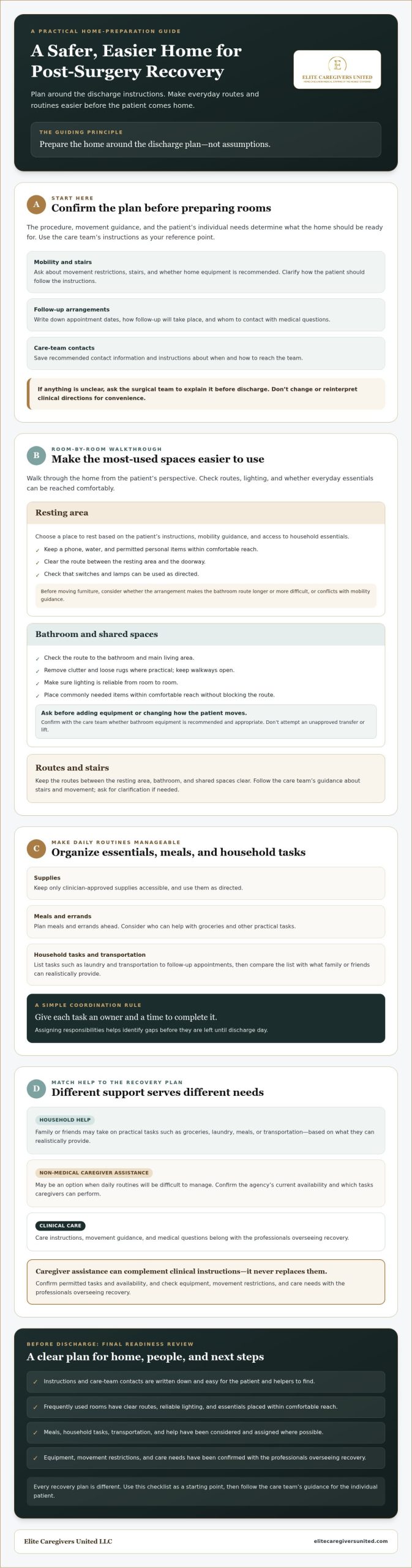
This room-by-room checklist covers setting up a place to rest, clearing pathways, organizing supplies, and coordinating meals, appointments, and household help. You’ll also find questions to ask before discharge and guidance on when non-medical caregiver support may help with daily routines. Every recovery plan is different, so use these suggestions as a starting point and confirm equipment, movement restrictions, and care needs with the professionals overseeing recovery.
Key Takeaways
- Start preparing your home for post-surgery recovery by reviewing discharge instructions and asking the surgical team about needs related to the procedure.
- Check the bedroom, bathroom, and main living area for clear pathways, reliable lighting, and essentials placed within comfortable reach.
- Plan meals and household tasks ahead, and keep only clinician-approved supplies accessible for use as directed.
- Assign each preparation task to someone and note when it should be completed, so important details don’t get left until discharge day.
- Match support to the recovery plan: household help, non-medical caregiver assistance, and clinical care serve different needs. Confirm permitted tasks and availability.
Preparing Your Home for Post-Surgery Recovery Starts with the Discharge Plan
Preparing your home for post-surgery recovery is easier when you break it into manageable tasks. Start with the discharge plan: the procedure, movement guidance, and the patient’s individual needs determine what the home should be ready for. A setup that works for one person may not suit another.
The period after surgery is part of the broader postoperative period, but practical needs at home depend on the care team’s instructions. Use those instructions as your reference point rather than relying on assumptions or a general checklist.
Prepare the home around the discharge plan, not assumptions.
What to confirm before the patient comes home
Before discharge, ask the care team to clarify anything that could affect daily routines. Write the answers down and keep them somewhere the patient and helpers can find them. A short pre-discharge note can include:
- Mobility guidance: Ask about movement restrictions, stairs, and whether home equipment is recommended. Confirm how the patient should follow the instructions instead of trying to interpret them yourself.
- Follow-up details: Record appointment dates, how follow-up will take place, and whom to contact with medical questions.
- Approved contacts: Save the care team’s recommended contact information and any instructions about when and how to reach them.
If an instruction is unclear, ask the surgical team to explain it before discharge. Don’t change or reinterpret clinical directions based on what seems convenient at home.
Who should help with the preparation?
Give each household task a specific owner. One trusted helper might arrange groceries while another handles laundry or transportation to follow-up appointments. Assigning a person to each task makes it easier to spot gaps before they become urgent.
Next, list the errands, meals, transportation, and everyday personal assistance the patient may need. Compare that list with what family or friends can realistically provide. If daily routines will be difficult to manage, non-medical caregiver support may be an option. Confirm the agency’s current availability and which tasks its caregivers can perform. Caregiver assistance can complement, but never replace, clinical instructions or care from the surgical team.
For a broader look at planning practical assistance, see this comprehensive guide to home care after surgery. With the discharge plan in hand and responsibilities assigned, you can prepare the rooms the patient will use most.
Make the Bedroom, Bathroom, and Main Living Area Easier to Use
Once you’ve reviewed the discharge plan, walk through the rooms the patient is most likely to use. Preparing your home for post-surgery recovery means checking ordinary routes and routines from the patient’s perspective: Is the path clear? Is the lighting reliable? Are frequently used items reachable without stretching or bending beyond their instructions? These checks help you identify practical concerns, but they can’t guarantee that falls or other complications will be prevented.
Set up a comfortable place to rest
Choose a resting area based on the patient’s instructions, mobility guidance, and access to household essentials. A familiar bedroom may be suitable, or the care team may advise considering another location based on the person’s needs. Before moving furniture, check that the new arrangement won’t make the route to the bathroom longer or more difficult, or conflict with mobility guidance.
Keep a phone, water, and permitted personal items within comfortable reach. Clear the route between the resting area and the doorway, and check that the patient can use switches and lamps as directed. Don’t add equipment or change how the patient moves without asking the surgical team first.
Prepare bathroom and shared spaces
Check the route to the bathroom and the main living area. Remove clutter and loose rugs where practical, keep walkways open, and make sure lighting is reliable from room to room. If the patient will spend time in a shared space, place commonly needed items where they can be reached comfortably without blocking the route through the room.
Ask the care team whether bathroom equipment is recommended and appropriate for this patient. Don’t assume a grab bar, raised seat, walker, or other aid is needed or appropriate without guidance. Likewise, don’t attempt an unapproved transfer or lift. If the patient needs help moving between spaces, ask the clinical team to explain the safe approach for their situation.
A repeatable room-by-room scan can help household members notice hazards before the patient returns. For additional guidance as you review the home environment, consult a trusted home-safety reference, then confirm patient-specific questions with the surgical team.
If extra help with daily routines would make the setup easier to manage, learn more about post-surgery recovery support from Elite Caregivers United LLC and confirm which tasks and scheduling options fit your needs.
Organize Meals, Essentials, and Household Tasks Before Recovery Begins
Once the main rooms are ready, take stock of the small daily needs that can become tiring to manage after discharge. A written plan for meals, laundry, groceries, and routine responsibilities can reduce last-minute decisions and help the household focus on the patient’s recovery instructions. Arrange what you can in advance, and leave medical questions to the care team.
Build a simple food and supply plan
Ask whether the patient has dietary instructions, then plan easy meals that fit those directions. You might prepare suitable dishes ahead, organize groceries for simple meals, or ask a trusted helper to shop. If no specific dietary guidance has been provided, don’t assume a new diet is needed.
Gather personal items and any supplies the clinician has approved, and keep them together in a clearly identified place. Follow the instructions for using them, and check with the care team before changing the patient’s diet, hydration, or medication routine. Don’t add unprescribed products or adjust medication based on a household checklist.
Reduce the everyday workload
List routine responsibilities that will still need attention while the patient recovers. Depending on the household, these might include:
- Preparing or arranging meals and grocery shopping
- Washing laundry and changing linens as needed
- Taking care of pets or handling household errands
- Coordinating transportation to follow-up visits
- Sharing appointment updates and practical information with family
Turn the list into a shared schedule. Name each helper, record the task they’ve agreed to take on, and note when it needs to happen. Choose one person to keep appointment details and family updates organized so messages don’t become scattered across conversations. If a task has no clear owner, discuss the gap before the patient comes home.
Household preparation supports daily routines, but it doesn’t replace medical care. Family or a non-medical caregiver may help with agreed-upon everyday needs. Questions about symptoms, medication, diet, or clinical instructions belong with the surgical team. If you’re comparing options for practical assistance, this guide to non-medical home care in Orlando offers additional context. Confirm an agency’s available support and permitted tasks directly before making arrangements.
Use a Recovery-Readiness Checklist to Coordinate People and Practical Support
A shared checklist turns preparation into clear, manageable steps. For each item, write down who owns it and when it should be completed. Review the plan with the patient, too. Their preferences and comfort matter, and they may have practical concerns others haven’t considered. Recovery needs vary by procedure and clinician guidance, so don’t assume a fixed timeline for help or household routines.
A practical checklist for the day before arrival
Use the day-before review to catch unfinished tasks and confirm who is responsible for the first day at home. Adapt this list to the discharge plan:
- Arrival: Confirm the expected arrival and transportation arrangements. Name a household contact who can coordinate updates and questions.
- Home setup: Check priority pathways, prepare the agreed resting area, and place clinician-approved essentials where they belong.
- Helper roles: Confirm each person’s assigned tasks, such as a meal, errand, or appointment ride. Make sure helpers know whom to contact if something is unclear.
- Clinical questions: Keep the surgical team’s contact details and written instructions accessible. Direct questions about symptoms, medication, or movement guidance to the appropriate clinician, not the household task list.
Mark an item complete only when it’s actually ready. If a task is still open, assign someone to follow up rather than leaving it as a general reminder.
When additional help at home may be useful
Consider whether family and friends can reliably cover meals, errands, transportation, and agreed-upon personal routines. A gap in the schedule is a reason to discuss what support might fit. Non-medical caregiver assistance may help with daily routines, while medical concerns or uncertainty about clinical needs should go directly to the surgical team.
If the household is considering overnight or extended assistance, review this guide to 24-hour home care in Orlando. Confirm the agency’s current availability and which requested tasks caregivers can perform before arranging support. Caregiver assistance can complement the discharge plan, but it doesn’t replace clinical care or instructions from the patient’s medical team.
For Orlando-area families weighing help with recovery routines, ask about post-surgery support options and discuss the tasks, schedule, and availability that may fit the household’s needs.
Choose Post-Surgery Home Support That Fits the Plan and Know What Comes Next
After preparing your home for post-surgery recovery, match the remaining support needs to the right person or provider. A family member may handle household routines, while personal assistance may call for non-medical caregiver support. Clinical questions, procedures, and therapy belong with qualified healthcare professionals. Keeping these roles distinct helps everyone understand what they can take on and where to ask for guidance.
How to decide what kind of help to arrange
Review each uncovered task with the patient’s discharge instructions in hand. This simple comparison can help start the conversation:
- Household support: Family or friends may be able to coordinate meals, errands, transportation, or other agreed-upon household responsibilities.
- Personal assistance: A non-medical caregiver may provide support within the agency’s permitted duties and the agreed plan. Confirm specific tasks directly with the agency.
- Clinical care: Discuss medical concerns, clinical procedures, and therapy with the surgical team or another qualified healthcare professional.
For every task without an owner, decide who is appropriate to help. Before making arrangements with an agency, ask which caregiver duties are permitted, what scheduling options are currently available, and where the service boundaries lie. Don’t assume a caregiver can perform a requested task simply because it’s related to recovery. If the need involves clinical care or you’re uncertain, check with the patient’s healthcare team.
How non-medical caregiver support can complement recovery
Elite Caregivers United LLC offers surgery recovery and post-hospitalization assistance, along with personal care services delivered by a CNA team. This is non-medical support, not skilled nursing, clinical procedures, or physical therapy. Caregiver assistance can complement the patient’s discharge plan, while the surgical team remains the source for clinical instructions and medical concerns.
For Orlando families, describe the practical support needed and ask about current availability and which tasks the agency can perform. Be specific about the routines that need coverage, then compare the agency’s answer with the discharge plan before deciding whether the arrangement fits.
There’s no need to solve every detail at once. Review your checklist with the patient, confirm unclear instructions with the care team, and arrange suitable help for tasks the household can’t reliably cover. To discuss non-medical home-care support, contact Elite Caregivers United LLC about your family’s needs and current availability.
Take the Next Step Toward a More Supported Recovery
Preparing your home for post-surgery recovery starts with the patient’s discharge plan, then becomes a series of practical steps: make frequently used spaces easier to access, organize meals and household responsibilities, and assign each task to someone who can follow through. Keep clinical questions and care decisions with the surgical team, and adjust your support plan to the patient’s needs and preferences.
If daily routines may be difficult to manage alone, caregiver support can complement the plan. Elite Caregivers United LLC is a Florida-licensed agency serving Orlando, with a professional CNA team providing personal-care and recovery assistance, as well as 24/7 home-care availability. Confirm current scheduling and which tasks caregivers can perform for your situation.
Talk with Elite Caregivers United LLC about practical recovery support. With clear instructions, thoughtful preparation, and suitable help in place, your family can approach the transition home with greater confidence and care.
Frequently Asked Questions
How do I prepare my home for recovery after surgery?
Start with the discharge instructions, then prepare the spaces and routines the patient will use most. Clear routes between the resting area, bathroom, and living room; check lighting; and place frequently used items within comfortable reach. Arrange meals, laundry, transportation, and household help in advance. Preparing your home for post-surgery recovery should follow the patient’s specific movement guidance and equipment recommendations, so ask the surgical team about anything that’s unclear.
What should I put in a post-surgery recovery area?
Set up a comfortable place to rest with a phone, water, and permitted personal items within easy reach. Keep only clinician-approved supplies nearby, along with the written instructions for using them. Make sure the route to the doorway and bathroom is clear, and arrange items to avoid unnecessary reaching or bending when possible. The right setup depends on the procedure and the patient’s mobility guidance, so confirm equipment needs with the care team.
Should someone stay with me after surgery at home?
Ask your surgical team whether someone needs to accompany you or stay with you after discharge. Recommendations depend on your procedure, instructions, and individual needs. Before coming home, make a realistic plan for transportation, meals, household tasks, and any personal assistance you may need. If family or friends can’t reliably cover those responsibilities, discuss non-medical caregiver support and confirm the provider’s duties and availability ahead of time.
How can I make my bathroom safer after surgery?
Keep the route to the bathroom clear and well lit, and remove loose rugs or clutter where practical. Place permitted personal items within comfortable reach without making changes that conflict with the patient’s mobility instructions. Ask the surgical team whether bathroom equipment is appropriate before choosing or using it. Don’t attempt an unapproved transfer or lift. Request guidance from a qualified healthcare professional if help moving is needed.
What supplies should I have at home after surgery?
Use the discharge instructions as your supply list. Gather only items recommended or approved by the clinician, and keep the instructions for their use accessible to the patient and helpers. You may also want everyday personal items, a phone, and water close to the resting area if permitted. Don’t add unprescribed products or change medication, diet, or hydration routines without checking with the care team.
Can a home caregiver help after surgery?
Yes, a non-medical home caregiver may help with agreed-upon daily routines, but specific duties depend on the provider and should be confirmed before arranging care. Elite Caregivers United LLC offers surgery recovery and post-hospitalization assistance, along with personal-care services through a professional CNA team. This support complements, rather than replaces, clinical instructions or medical care. Ask about current availability and whether the caregiver’s permitted tasks match the household’s needs.
When should I call the surgeon after surgery?
Call the surgeon or the contact named in your discharge instructions whenever you have a medical concern or aren’t sure how to follow a clinical direction. Before leaving the hospital, ask whom to contact and what symptoms or changes should prompt a call. Don’t rely on a caregiver or household checklist to assess medical concerns. If a situation seems urgent or severe, follow the emergency guidance provided by your care team.