
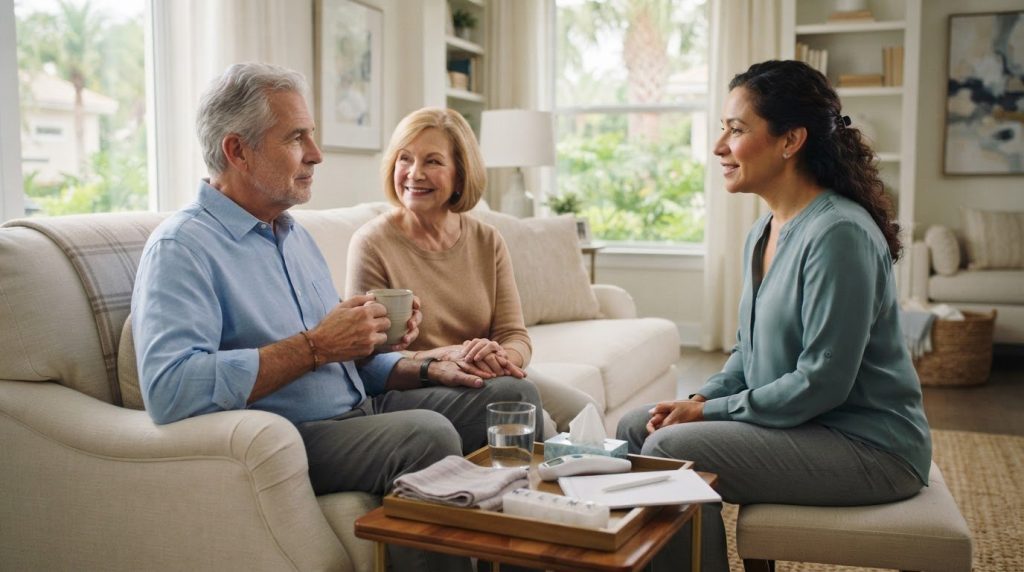
Caregiver support for chemotherapy side effects doesn’t mean managing every symptom yourself. It means knowing what practical help you can offer at home and when to contact the oncology team. With a clear routine, you can provide steady reassurance without taking over your loved one’s choices or making clinical decisions alone.
It’s understandable to feel unsure about what to watch for, what to write down, and when to call. This guide covers day-to-day assistance, factual symptom notes, and ways to share changes with the care team using the instructions they’ve provided.
You can also share responsibilities with others when coordinating routines and appointments starts to feel like too much. Non-medical cancer recovery and respite care may help with everyday needs, while treatment questions and symptom concerns remain with the oncology professionals. A practical plan can make care at home more manageable for both of you.
Key Takeaways
- Keep everyday support practical and guided by the patient’s preferences, treatment plan, and care-team instructions.
- Make caregiver support for chemotherapy side effects more organized by noticing changes, recording details, and sharing them with the oncology team.
- Family and friends, oncology professionals, and non-medical home caregivers can each provide different kinds of support without replacing one another.
- Use the oncology team’s written guidance to decide when and how to report symptoms, including instructions for urgent concerns and after-hours contact.
- Review the support plan together as needs change, making room for patient choice and caregiver breaks.
Chemotherapy Side Effects at Home: What Caregivers Can, and Cannot, Manage
At home, caregiver support for chemotherapy side effects means offering practical, emotional, and organizational help alongside the patient’s prescribed cancer treatment. You might help with an agreed-upon daily task, listen when the day feels difficult, or keep appointment notes together. Your role is to notice and share changes, not determine what caused them or decide whether treatment should change.
Side effects vary from person to person and depend on the treatment and the care team’s guidance. A general overview of common side effects of chemotherapy can provide context, but it can’t predict what one patient will experience or replace advice from their oncology team.
What chemotherapy side effects may affect everyday routines?
Fatigue, nausea, appetite changes, and other effects may make familiar routines harder for some people. These are examples, not a checklist or a prediction. Symptoms and their timing vary. Ask the oncology team which effects may be relevant to this person’s treatment and what changes they want you to report. Use the patient’s specific instructions rather than relying on general advice.
Where does a caregiver’s role begin and end?
Begin by asking what kind of help feels welcome. Depending on the patient’s preferences and care instructions, that might mean preparing a meal, arranging a comfortable place to rest, picking up everyday items, offering companionship, or helping prepare questions for an appointment. Some days, respectful support may mean giving the person privacy or letting them handle a task independently.
Caregivers can observe and report what they notice, including when a change began and how it affects daily activities. Don’t change medication doses, add remedies, or interpret a symptom as a diagnosis. Check with the oncology team before trying food, activity, or comfort measures that could conflict with the patient’s care instructions.
The oncology team directs medical decisions; caregivers support the person and help communicate what’s happening. This boundary doesn’t limit how much you care. It keeps treatment questions with the professionals who know the patient’s plan, while allowing you to provide steady, dignified support at home.
How to Support Someone Through Chemotherapy Side Effects, Step by Step
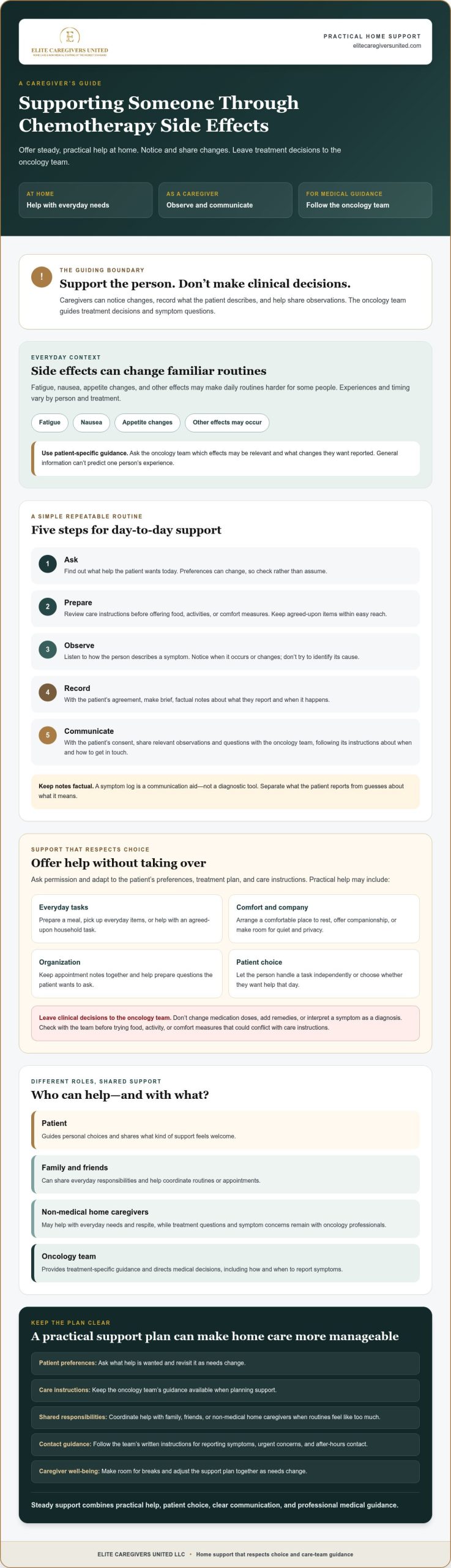
A simple routine can make caregiver support for chemotherapy side effects more consistent without turning every moment into a medical task. Use this sequence, adapting it to the patient’s wishes and the oncology team’s instructions:
- Ask: Find out what help the patient wants today. Preferences can change, so check rather than assume.
- Prepare: Review the patient’s care instructions before offering food, activities, or comfort measures. Keep agreed-upon items within easy reach.
- Observe: Listen to how the person describes a symptom and notice when it occurs or changes. Don’t try to identify its cause.
- Record: Make brief, factual notes that the patient is comfortable sharing.
- Communicate: With the patient’s consent, share relevant observations and questions with the oncology team. Follow the team’s guidance about when and how to get in touch.
The National Cancer Institute offers guidance for cancer caregivers, including support for understanding a loved one’s care and looking after your own well-being. Keep the patient’s treatment-specific instructions at hand. General resources can’t replace advice from their care team.
Create a patient-led daily support routine
Ask permission before helping with personal tasks, meals, rest, or household responsibilities. A brief question such as “Would you like help with this, or would you rather do it yourself?” leaves room for choice. Ask which commonly needed items the patient wants nearby, and offer company or a quiet space without pressuring them to eat, talk, or be active. The aim is to make the day easier while preserving independence and dignity.
Keep useful notes and prepare for appointments
With the patient’s agreement, record their own description of a symptom, when it happens, and any changes they report. Keep observations separate from guesses about what they mean. Before an appointment, gather the notes and list questions about symptoms, medication, or care instructions. Don’t recommend or make medication changes. Bring questions to the oncology team instead.
A symptom log is a communication aid, not a diagnostic tool. It can help the patient and care team discuss what’s happening, but the oncology team interprets symptoms and directs medical decisions.
After the appointment, ask whether the patient would like help writing down or organizing the team’s instructions. If help with everyday routines could also ease family responsibilities, explore non-medical cancer recovery support from Elite Caregivers United LLC. Keep treatment questions with the oncology team.
Family Help, Oncology Guidance, or a Professional Caregiver: Which Support Fits?
Caregiver support for chemotherapy side effects may involve several people, each with a distinct role. Family and friends can offer familiar company and practical help. The oncology team handles medical questions. A non-medical home caregiver may assist with agreed-upon daily routines. These forms of support can work alongside one another. Hiring a caregiver doesn’t mean handing over clinical decisions or stepping away from the patient’s care.
| Support person | What they can help with | Important limit |
|---|---|---|
| Family and friends | Companionship, errands, meals or household tasks the patient welcomes, and help organizing questions or getting to appointments. | They shouldn’t diagnose symptoms, change medication instructions, or replace the oncology team’s guidance. |
| Oncology team | Diagnosis, treatment decisions, medication instructions, and symptom-specific medical advice based on the patient’s care plan. | Use the team’s contact instructions to raise concerns. General online information can’t take the place of individualized advice. |
| Non-medical home caregivers | Practical support with daily living, companionship, routines, and respite for family caregivers, based on the person’s needs and the agency’s confirmed scope. | They don’t provide clinical treatment or take over medical decisions. |
What should stay with the oncology team?
Questions about what a symptom means, whether it may be related to treatment, or whether medication or the care plan should change belong with the oncology team. Follow the team’s instructions about whom to contact and how to reach them if a concern arises. Caregivers can share the patient’s observations clearly, but general online guidance shouldn’t replace that person’s medical plan.
When can non-medical in-home support help?
Practical assistance may help when daily routines or family responsibilities become difficult to manage. A non-medical caregiver could provide agreed-upon help at home and give family members time to rest or attend to other needs. The right fit depends on the patient’s preferences, support needs, and the specific services an agency confirms it can provide.
Elite Caregivers United LLC offers non-medical cancer recovery support in Orlando, but doesn’t provide skilled nursing or clinical procedures. Families can learn more about non-medical home care in Orlando and consider whether practical home support could complement their existing arrangements. The oncology team remains the point of contact for treatment questions and symptom concerns.
When to Contact the Oncology Team About a Side Effect
It can be difficult to judge whether a change can wait or needs prompt attention. The safest guide is the patient’s written care instructions. They should explain which symptoms call for contact, whom to reach, and what to do if the oncology team is unavailable. Don’t rely on a general online symptom list or a universal fever threshold. Instructions may differ according to the person’s treatment and health circumstances.
Treatment-specific escalation instructions should come from the patient’s oncology team. For a sudden or severe concern, follow the response the care team has specified. If the situation appears to be an emergency, contact emergency services. A non-medical caregiver can help follow the patient’s communication preferences, but isn’t a substitute for clinical guidance.
Make an escalation plan before symptoms become urgent
When the patient feels able, help identify the oncology team’s daytime and after-hours contact routes and keep those details with the current written care instructions. Ask whom they want contacted if they need help communicating, and confirm what information they’re comfortable sharing. Review the plan when instructions change so everyone supporting the patient knows where to look, rather than having to make assumptions during a stressful moment.
Share clear observations when asking for help
When contacting the team, describe what changed, when it began, and how the patient says it affects them. Share relevant observations accurately, separating what you saw or heard from guesses about the cause or seriousness. Symptom notes can help you communicate clearly, but the care team determines what they mean and what should happen next.
Listen carefully to the clinician’s instructions, ask for clarification if something is unclear, and write down the agreed next steps for the patient. Follow the team’s directions about further contact or care rather than changing medication or trying a new measure on your own. If the patient wants help with everyday routines alongside medical care, explore non-medical cancer recovery support from Elite Caregivers United LLC. That practical assistance doesn’t replace contacting the oncology team about symptoms.
Build a Chemotherapy Caregiver Support Plan That Includes the Family
A written plan can reduce confusion and help the patient stay involved in decisions about daily support. Keep it simple and flexible: note the patient’s preferences, the practical tasks that need attention, who will communicate with whom, and how family caregivers can take breaks. This gives everyone a shared starting point without assuming one routine will work every day.
Care needs and preferences may shift during treatment. Check in regularly and let the patient guide changes to the plan. A short conversation can clarify what feels helpful now, what they would rather manage independently, and whether someone needs to take on a different task.
Coordinate tasks, preferences, and family communication
Ask which tasks the patient would like help with and who may receive updates about their care. With their permission, assign practical responsibilities clearly so family members know who is handling errands, household needs, appointment preparation, or check-ins. Agree on a simple way to share relevant updates while respecting the patient’s privacy. Revisit the arrangement together if schedules, preferences, or support needs change.
Consider respite or ongoing in-home assistance
Non-medical in-home support may help with daily routines and give family caregivers time to rest or manage other responsibilities. Elite Caregivers United LLC’s professional CNA team provides non-medical personal care, cancer recovery support, and respite care in Orlando. The agency also offers 24-hour home care as a service option; this means caregiving support, not clinical monitoring or treatment. Confirm current service availability and scheduling options, and discuss whether the agency’s scope fits the patient’s needs.
For more context about this type of arrangement, see the guide to 24-hour home care in Orlando. Skilled nursing and clinical procedures are outside the agency’s services. The oncology team should continue to direct treatment decisions and respond to symptom concerns.
A thoughtful caregiver support plan for chemotherapy side effects includes support for the patient and the people caring for them. If practical daily-living or respite support may help your family, discuss caregiving support with Elite Caregivers United LLC.
Make Your Next Step a Supported One
Caregiving during chemotherapy doesn’t mean managing medical decisions alone. Helpful support starts with listening to the patient, respecting their choices, and following the oncology team’s instructions. A clear symptom record and shared family plan can also make it easier to communicate changes and coordinate everyday help.
Caregiver support for chemotherapy side effects can include practical assistance and emotional presence, while diagnosis, treatment questions, and symptom escalation remain with the oncology team. When daily routines become difficult to coordinate, non-medical home care may offer another layer of support for the patient and family.
In Orlando, Elite Caregivers United offers cancer recovery support through a professional CNA team, along with respite care and 24-hour home care options. These services provide non-medical support and don’t replace the patient’s oncology team.
If your family is considering help with daily needs or caregiver respite, discuss non-medical caregiving support with Elite Caregivers United. Patient-led choices, clear communication, and practical help can make the next steps feel more manageable.
Frequently Asked Questions
How can I support someone experiencing chemotherapy side effects at home?
Ask what kind of help feels welcome, then follow the patient’s care instructions. You might assist with an agreed-upon daily task, offer companionship, or help prepare questions for an appointment. Caregiver support for chemotherapy side effects also means noticing changes and sharing them with the oncology team, rather than trying to diagnose their cause. Respect the patient’s choices, and check with their care team before suggesting food, activities, or comfort measures.
Which chemotherapy side effects should a caregiver watch for?
Possible effects can include fatigue, nausea, appetite changes, and other changes that affect daily routines, but experiences differ by person and treatment. Don’t assume a symptom will occur or use a general list to judge whether it’s serious. Ask the oncology team what may be relevant to the patient’s treatment, which changes to report, and what instructions to follow if a concern arises.
When should I call the oncology team about chemotherapy side effects?
Follow the patient’s written care instructions for symptoms that need prompt attention and for contacting the team during or outside regular hours. Don’t rely on a universal fever threshold or online symptom list. The right guidance depends on the patient’s plan. For a sudden or severe concern, follow the response specified by the care team. If it appears to be an emergency, contact emergency services.
Can a home caregiver help with chemotherapy side effects?
Yes. A non-medical home caregiver may help with daily routines, personal care, companionship, and respite for family members, depending on the person’s needs and the agency’s confirmed services. Elite Caregivers United offers cancer recovery support and personal care through a professional CNA team in Orlando. Its caregivers don’t replace the oncology team or provide skilled nursing or clinical procedures, so direct medical questions and symptom concerns to the clinicians.
What should a caregiver include in a chemotherapy symptom log?
With the patient’s agreement, record their description of the change, when it began or occurs, and how they say it affects them. Note changes they report and questions they want to ask the oncology team. Keep the notes factual, without guessing about the cause or diagnosis. Bring them to an appointment or use them when contacting the team, then write down the clinician’s instructions so the patient can refer to them.
How can families share chemotherapy caregiving responsibilities?
Start by asking the patient which tasks they want help with and who may receive updates. Assign practical responsibilities clearly, such as errands, household tasks, appointment preparation, or check-ins, so family members know what they’ve agreed to handle. Make room for caregiver breaks and revisit the plan together as preferences and needs change. Keep treatment questions with the oncology team, and share health information only with the patient’s permission.
If your family needs help with daily routines or respite in Orlando, contact Elite Caregivers United LLC to discuss non-medical caregiving support.