

After a tummy tuck, ordinary tasks such as getting settled at home, preparing meals, and keeping up with household routines may feel more demanding than expected. A clear plan for post-operative care after tummy tuck Orlando patients can rely on helps organize practical support while keeping the surgeon’s instructions at the center.
Knowing what help may be useful, and where a caregiver’s role begins and ends, can make planning easier. This guide covers how to prepare for recovery at home, organize everyday assistance, and understand how a professional caregiver can complement but never replace the surgeon’s care plan. Elite Caregivers United LLC provides cosmetic surgery recovery support and personal care through a professional CNA team. Support can be planned around individual needs, household routines, and the help family members can provide.
Key Takeaways
- Plan practical help around the surgeon’s instructions, your home setup, and the support family can provide.
- Consider assistance with personal care, meals, light household tasks, and companionship while respecting the patient’s comfort and choices.
- Keep the roles clear: caregivers can help with daily living, while the surgeon and clinical team provide medical guidance.
- Use a preparation checklist to organize transportation, a recovery space, and support at home before surgery.
- Post-operative care after tummy tuck Orlando patients receive can include individualized daily-living support from a professional CNA team.
What Post-Operative Care After a Tummy Tuck in Orlando Can Involve
Planning for recovery at home involves more than arranging the day of surgery. Post-operative care includes practical help with daily living while the patient follows the surgeon’s recovery plan. For people arranging post-operative care after tummy tuck Orlando, that can mean assistance with personal routines, simple meals, and keeping frequently used items within easy reach.
At-home support helps with everyday needs; clinical care and recovery decisions remain with the surgeon and medical team. A caregiver can provide practical assistance and companionship, but does not replace medical guidance or provide clinical care. The general overview of Abdominoplasty (Tummy Tuck) provides background on the procedure. Individual instructions should always come from the treating surgeon.
What does at-home support after abdominoplasty mean?
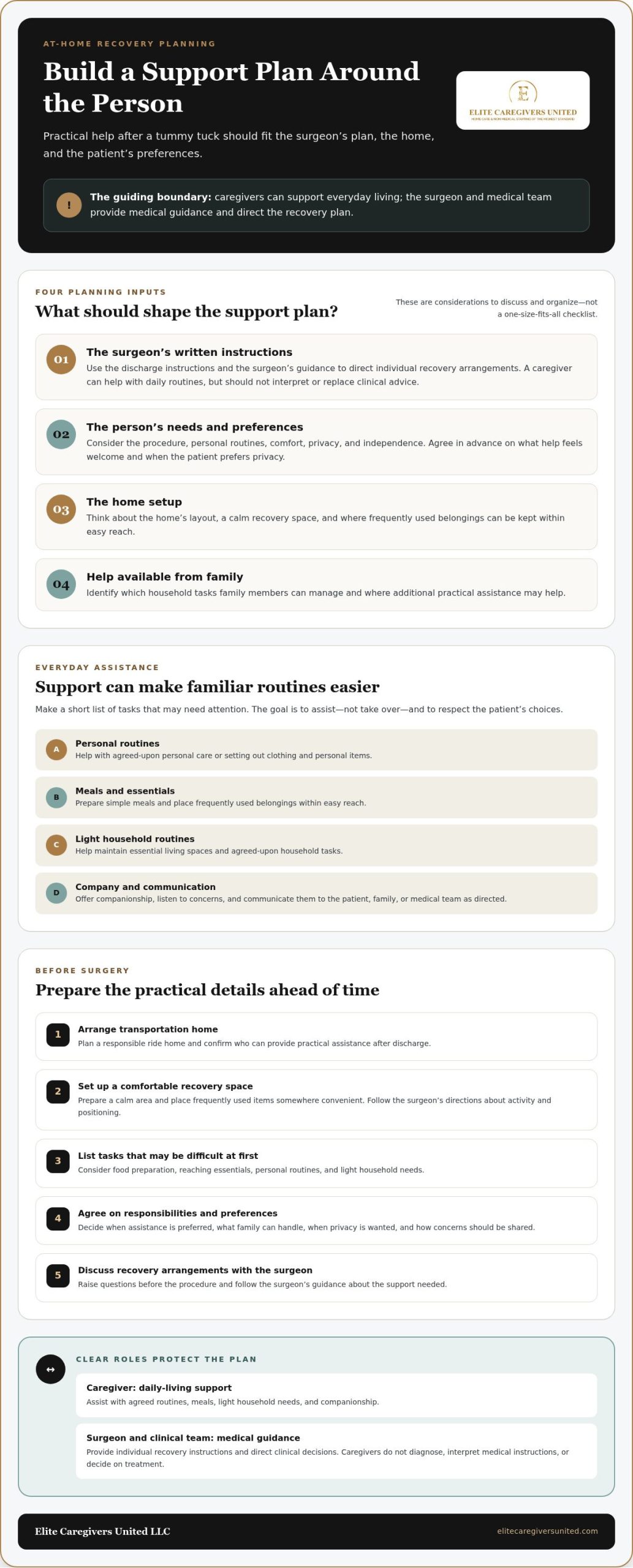
Support should fit the person rather than follow a one-size-fits-all checklist. Needs can depend on the procedure, the surgeon’s written discharge instructions, the home’s layout, and how much help family members can offer. A caregiver might assist with a personal routine, prepare a meal, or help maintain a calm and comfortable environment while respecting the patient’s preferences and privacy.
The surgeon’s instructions guide individual recovery. A caregiver can help the patient follow those directions in daily life, but should not interpret them as clinical advice or substitute a different plan.
Why plan recovery help before surgery in Orlando?
Making arrangements ahead of time can reduce uncertainty after discharge, when transportation and household tasks may feel harder to manage. Plan a responsible ride home and decide who can provide practical assistance. The right arrangement depends on the patient’s needs and the surgeon’s discharge plan.
Think through an ordinary day at home and list tasks that may be difficult at first, such as preparing food, reaching essential items, or keeping up with light household routines. Discuss concerns about recovery arrangements with the surgeon before the procedure, and follow their guidance about the support the patient will need.
For a broader look at organizing practical assistance and a comfortable home environment, read this comprehensive guide to home care after surgery. Planning these details in advance can help patients and families arrange day-to-day support while leaving clinical decisions with the surgeon and care team.
Everyday Recovery Needs After a Tummy Tuck: Support at Home
Recovery may make familiar routines feel less simple for a while. At-home support can include help with personal care, preparing meals, tidying essential living spaces, or keeping the patient company. The goal is not to take over. It is to make everyday needs easier to manage while respecting the patient’s privacy, preferences, and independence.
The right level of support is the level that fits the patient’s care plan, household routine, and available family help. A caregiver can assist with daily living and share observations with the patient or family, but should not diagnose a concern or provide treatment. Follow the surgeon’s instructions for recovery. The American Society of Plastic Surgeons’ tummy tuck recovery information can provide general context to discuss with the surgical team.
Which everyday tasks may be harder during recovery?
Rather than assume what the patient will or will not be able to do, make a short list of routine tasks that may need attention. This could include setting out clothing or personal items, arranging meals, or handling light household needs. Before surgery, put frequently used belongings somewhere convenient and prepare a calm recovery space. Follow the surgeon’s directions on activity and positioning, since recommendations are individual.
Caregivers can also offer companionship and listen to concerns the patient shares. If something seems concerning, the caregiver’s role is to communicate it promptly to the patient, family, or medical team according to the surgeon’s instructions, not to interpret symptoms or decide on treatment.
How can family and caregivers share responsibilities?
A simple division of responsibilities helps everyone know what to expect. Families can identify preferred times for assistance, decide which household tasks they can manage, and note where additional support would help. A caregiver can assist with agreed-upon routines and provide company, easing pressure on relatives without taking control away from the patient.
Discuss preferences in advance: what kind of help feels comfortable, when the patient wants privacy, and how they would like questions or concerns communicated. These details help support feel respectful rather than intrusive. If practical assistance would help your household, explore Orlando cosmetic surgery recovery support from Elite Caregivers United LLC.
Does a Caregiver Replace Medical Care After a Tummy Tuck?
No. A non-medical caregiver helps with daily living after discharge but does not replace the surgeon or clinical team. For post-operative care after tummy tuck Orlando, understanding this distinction helps everyone know where practical assistance ends and medical guidance begins.
Caregivers assist with daily routines; clinicians direct medical care. A caregiver may help the patient stay comfortable, prepare a meal, or follow the household routine described in the established care plan. They do not interpret medical instructions, diagnose concerns, or decide whether a change in symptoms requires treatment. For general medical background, see Mayo Clinic’s guide to tummy tuck recovery, while relying on the patient’s surgeon for individual instructions.
What can a non-medical caregiver help with?
Practical support can include assistance with personal care, meal preparation, companionship, and everyday tasks at home. A caregiver can help the patient and family keep the agreed-upon routine organized, while leaving clinical decisions to the medical team. Support should reflect the patient’s preferences and care plan, not assumptions about what everyone needs after surgery.
If the patient shares a concern or the caregiver notices something worrying, the caregiver’s role is to communicate it promptly to the patient or family and follow the surgeon’s directions for next steps. They should not diagnose the cause or attempt to treat it.
| Who is involved | Role during recovery |
|---|---|
| Non-medical caregiver | Helps with daily routines, personal care, meals, and companionship; supports the established plan without interpreting it. |
| Surgeon or clinical team | Provides the patient’s medical instructions and guidance, including how to address clinical questions or changes in symptoms. |
| Emergency services | Responds to urgent or life-threatening situations. |
When should the surgeon or emergency services be contacted?
Use the surgeon’s discharge instructions to determine which symptoms or changes call for contacting the surgeon or clinical team. If a concern arises and the instructions are unclear, contact the surgical team for direction rather than relying on a caregiver to assess it. In an urgent or life-threatening situation, contact emergency services.
A clear division of responsibilities can reassure everyone: the caregiver helps with daily routines, while the surgeon and clinical team remain responsible for medical guidance. Keep the discharge instructions accessible so the patient, family, and caregiver can follow that boundary.
How to Prepare Your Orlando Home and Recovery Support Plan
Preparing ahead can make the transition home more orderly for the patient and everyone helping. For post-operative care after tummy tuck Orlando, build the practical plan around the surgeon’s instructions, the patient’s preferences, and the support available at home. Keep medical decisions with the surgeon, and use this checklist to organize everyday arrangements.
- Review the written instructions. Read the surgeon’s discharge guidance together and keep it, along with relevant contact information, somewhere easy for the patient and support person to access. Direct clinical questions to the surgeon or clinical team.
- Arrange transportation. Confirm a responsible ride home and identify who will be available to help with practical needs after discharge, in line with the surgeon’s directions.
- Prepare the home. Set up a calm resting area, arrange meals, and place commonly used items where they are easy to find. Follow the surgeon’s guidance for clinical preparation, activity, or positioning.
- Schedule support. Decide which daily tasks family members can manage and where additional help would be useful. Share preferred support times, household routines, and communication preferences with the person assisting.
For support shaped around your household’s recovery needs, explore compassionate recovery support in Orlando.
What should families arrange before discharge?
Think through the first routines at home: who will accompany the patient, who can help with meals, and which household responsibilities may need attention. Make sure the support person knows where the surgeon’s written instructions and relevant phone numbers are kept. Sharing these details in advance can reduce confusion and help everyone follow the patient’s care plan.
How can a support schedule adapt to changing needs?
Support can be arranged hourly, daily, or for 24 hours, depending on the household’s circumstances and the assistance the patient needs. A clear handoff between relatives and caregivers helps prevent missed tasks. Agree on who is providing support, what practical help is planned, and how observations or questions should be communicated.
Needs may change, so revisit the practical schedule as the patient’s routine evolves, while following updated guidance from the surgeon or clinical team. A caregiver can provide ongoing help with daily living and companionship, easing pressure on family members without taking clinical decisions away from the medical team.
Tummy Tuck Recovery Care in Orlando with Elite Caregivers United LLC
Returning home after surgery can bring relief as well as uncertainty, especially when everyday routines still need attention. Elite Caregivers United LLC provides cosmetic surgery recovery and personal care support in Orlando, helping patients manage practical needs at home while following their surgeon’s guidance. The professional CNA team provides non-medical assistance, with support arranged around the patient’s routine and household needs.
What recovery support can look like at home
Depending on the patient’s preferences and care plan, support may include help with personal routines, meal preparation, light household needs, or companionship. Respite support can also give family members time to manage other responsibilities, sharing the demands of recovery while respecting the patient’s choices and privacy.
Support can be arranged hourly, daily, or for 24 hours, giving households options as they organize practical help. A caregiver assists with daily living, not clinical decisions, and does not replace the surgeon’s instructions. Families can learn more about the difference between practical assistance and medical care in this non-medical home care guide for Orlando.
Respectful communication helps make assistance comfortable and personal. Before support begins, the patient or family can explain preferred routines, privacy needs, and how they would like practical concerns shared. This gives the caregiver useful context while leaving recovery decisions with the patient’s medical team.
How to take the next step with a caregiver plan
Start with a practical picture of home life: which tasks may need help, when family members are available, and what kind of assistance would feel reassuring. Sharing these details helps shape support around the household routine and the surgeon-directed recovery plan. As needs or clinical guidance change, the family can revisit arrangements and adjust the daily support requested.
Planning support can start with a straightforward conversation about which home routines would be easier with help. Talk with Elite Caregivers United LLC about recovery support and discuss a practical plan for your household.
Make Your Recovery Support Plan with Confidence
A thoughtful plan for post-operative care after tummy tuck Orlando starts with the surgeon’s instructions and the practical help that will make home routines easier. Arrange transportation, identify daily tasks that may need assistance, and share preferences with the people supporting you. Keep responsibilities clear: caregivers can help with personal care, meals, and companionship, while the surgeon and clinical team guide medical decisions.
Elite Caregivers United LLC provides cosmetic surgery recovery and personal care support in Orlando through a professional CNA team. Hourly, daily, and 24-hour care options help families plan practical support around the patient’s routine and give relatives room to rest or manage other responsibilities.
If you’re preparing for surgery or arranging support for someone you care about, talk with Elite Caregivers United LLC about supportive recovery care in Orlando. Clear instructions and practical help with everyday needs can help you feel more prepared for the transition home.
Frequently Asked Questions
How long do you need help at home after a tummy tuck?
The amount of help needed varies. Follow your surgeon’s guidance and plan around your individual needs, home routine, discharge instructions, and available family support. Before surgery, consider which daily tasks may be difficult and who can help. Arrange support that fits your household, then revisit the practical plan if your needs or the surgeon’s guidance change.
Can a caregiver stay with me after tummy tuck surgery in Orlando?
Yes. Support can be arranged for the time and level of assistance that fit your household’s needs. Elite Caregivers United offers hourly, daily, and 24-hour care in Orlando, including cosmetic surgery recovery support. A caregiver can help with everyday routines and personal care while you follow your surgeon’s instructions. As you plan for returning home, consider your preferences, household routine, and practical support needs.
What does a caregiver do after tummy tuck surgery?
A caregiver can assist with personal care, meal preparation, light household needs, and companionship. This practical help can also ease pressure on relatives by sharing everyday responsibilities. Caregivers support the established household plan but do not make medical decisions or replace the surgeon’s instructions. Share your routines and preferences in advance so assistance respects your privacy and independence.
Is it safe to recover at home after a tummy tuck?
Whether home recovery is appropriate depends on the surgeon’s assessment, discharge plan, and individual circumstances. Follow the surgical team’s instructions about where to recover and what support is needed. Before discharge, arrange the recommended transportation and practical help at home. Caregivers can assist with daily living, but they do not assess medical safety or replace the surgeon. Contact the clinical team with questions about your recovery plan.
What should I prepare at home before a tummy tuck?
Prepare a calm resting area, organize meals, and place commonly used household items somewhere convenient. Confirm transportation home and decide who can help with practical routines after discharge. Keep the surgeon’s written instructions and relevant contact information accessible to the patient and support person. Follow the surgeon’s directions for clinical preparation, activity, and positioning rather than relying on general advice.
Can a non-medical caregiver provide wound care after a tummy tuck?
No. A non-medical caregiver should not provide clinical wound care or perform medical procedures. Their role is to help with daily living, such as personal routines, meals, and companionship, while the patient follows the surgeon’s plan. For questions about wound care or changes in symptoms, follow the surgeon’s discharge instructions and contact the surgical team as directed. In an urgent or life-threatening situation, contact emergency services.