

Your loved one says, “I’m scared,” and suddenly every reply feels as if it might be the wrong one. Offering emotional support for cancer patients at home doesn’t mean finding perfect words or trying to make fear disappear. Often, a calm presence and a willingness to listen can help someone feel less alone.
It’s natural to want to protect someone from discouragement while respecting their privacy, independence, and right to choose what they need. That balance can be difficult when practical care and family responsibilities are already taking so much energy.
This guide offers practical ways to listen, respond to difficult emotions, and create calmer routines without pressuring your loved one or taking over. It also explains when distress may need attention from the oncology team or a mental health professional, and how practical help, companionship, and respite can make daily care more manageable for the family.
Key Takeaways
- Emotional support for cancer patients at home can begin with patient-led conversation, not pressure to feel or respond a certain way.
- Choose validating words that acknowledge difficult feelings, and avoid dismissive reassurance or demands to stay positive.
- Build daily plans together by asking what would help, offering choices, and revisiting arrangements as needs change.
- Understand the difference between family companionship, nonmedical daily assistance, and clinical care so each kind of support stays within its role.
- A simple check-in plan can help families adjust support while making space for caregivers to rest and share responsibilities.
Home Emotional Support Starts with Listening
Cancer can bring fear, uncertainty, sadness, frustration, or feelings that shift from day to day. There’s no single emotional response that fits every patient, and one person’s needs may change over time. Emotional support for cancer patients at home begins with curiosity rather than assumptions: ask what the person is experiencing, then make room for the answer.
Emotional support at home is a steady, respectful presence that follows the patient’s lead rather than trying to fix every feeling. Listening without judgment can help someone feel heard and preserve a sense of choice during a time when much may feel outside their control. It doesn’t require a perfect response. Sometimes it means sitting nearby, staying quiet, and letting the patient decide whether to talk.
This kind of support complements, but doesn’t replace, oncology care. Questions about symptoms, treatment, or changes in emotional well-being should be shared with the patient’s oncology team. The interdisciplinary field of psycho-oncology considers the psychological, social, and behavioral aspects of cancer, underscoring that emotional concerns belong in the broader conversation about care.
What emotional support can look like during cancer treatment
Support might mean sharing a quiet cup of tea, listening attentively, or asking, “What would feel helpful today?” Helping with an everyday task can make room for conversation without requiring one. The patient may welcome company one day and prefer privacy the next. Follow their cues, and check in gently rather than treating yesterday’s preference as an ongoing invitation.
How to respect a patient’s feelings and choices
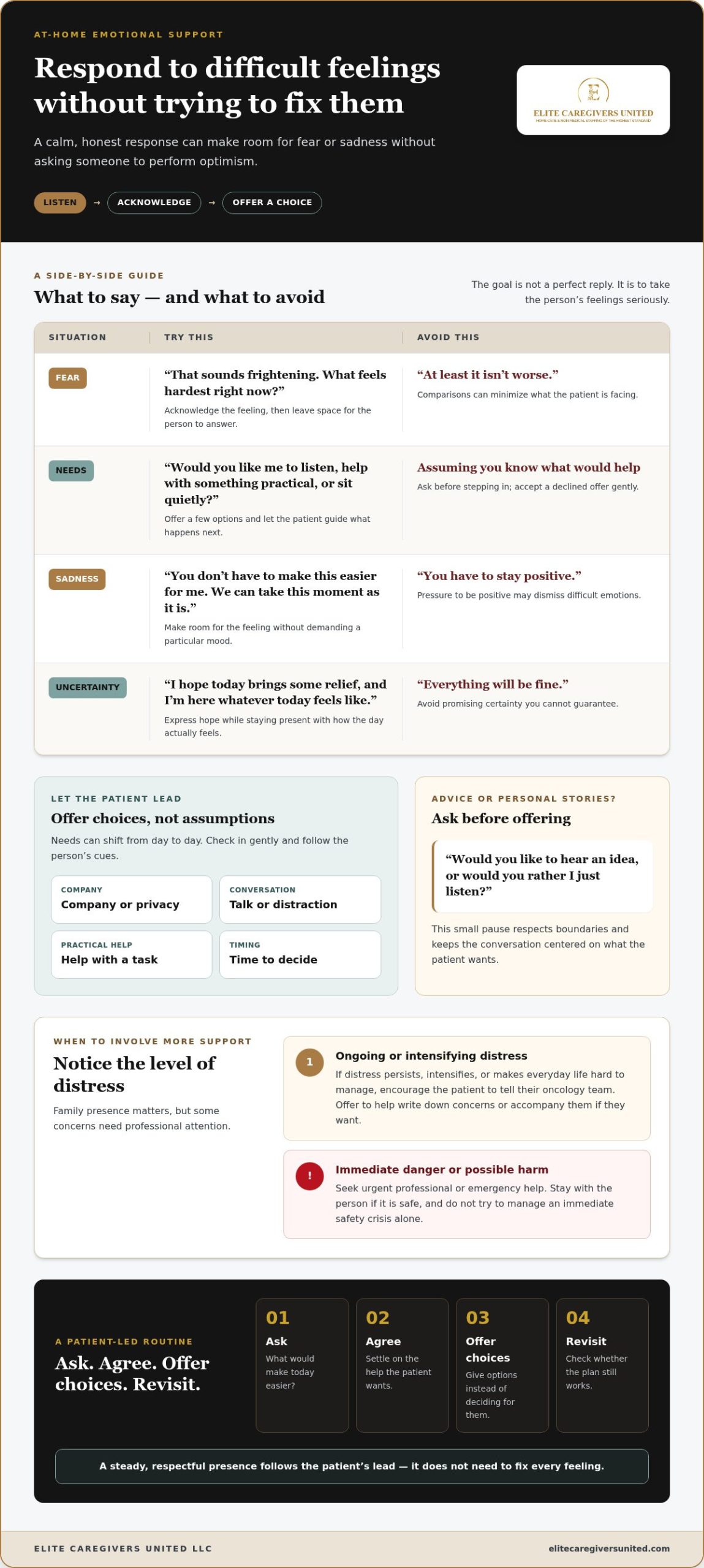
Ask open questions, then allow time for a response. “What feels hardest right now?” gives the patient room to choose what to share. Silence can be part of the conversation, too. If they express fear or sadness, try, “That sounds difficult,” instead of comparing their experience with someone else’s or rushing to reassure them that everything will be fine.
Advice and personal stories may be welcome, but ask first: “Would you like to hear an idea, or would you rather I just listen?” This small pause respects the patient’s boundaries and keeps the conversation centered on what they want. Listening isn’t passive. It shows that their feelings and choices matter, even when you can’t change the circumstances.
How to Respond to Fear, Sadness, and Uncertainty at Home
When someone shares a frightening thought or a discouraging day, you don’t have to solve the feeling to respond with care. Acknowledge what you hear without claiming to know exactly how the patient feels. A calm, honest response can make room for conversation without asking them to perform optimism for anyone else.
What to say when someone feels afraid or discouraged
Simple phrases can show that you’re present and taking their feelings seriously. Try:
- “That sounds frightening. What feels hardest right now?”
- “I’m here with you. Would you like me to listen, help with something practical, or sit quietly?”
- “You don’t have to make this easier for me. We can take this moment as it is.”
Avoid responses such as “You have to stay positive,” “At least it isn’t worse,” or “Everything will be fine.” Even when meant kindly, these phrases can minimize what the patient is facing or offer certainty you can’t promise. You can express hope without insisting on a particular mood: “I hope today brings some relief, and I’m here whatever today feels like.”
Offer choices and let the patient guide the next step. Ask whether they’d prefer company or privacy, conversation or distraction, help with a task or more time to decide. If they decline, accept the answer gently and leave the door open. Follow their cues as they change. Preferring quiet today doesn’t mean they won’t welcome company another day.
When distress may need additional support
Some difficult feelings call for more than family presence. If distress persists, intensifies, or makes everyday life hard to manage, encourage the patient to tell their oncology team. If they want, offer to help write down what they’ve been experiencing or accompany them to a conversation. The team can discuss appropriate support options.
If the patient may harm themselves or someone else, or appears to be in immediate danger, seek urgent professional or emergency help. Stay with them if it’s safe to do so, and don’t try to manage an immediate safety crisis alone. For less urgent but ongoing concerns, let the oncology team know promptly.
Family members also need support to sustain their care. The National Cancer Institute’s Support for Caregivers resource addresses caregiver challenges. Nonmedical cancer recovery support and daily assistance can also ease practical demands at home. Explore cancer recovery support at home to share everyday care while leaving emotional and clinical needs with the appropriate professionals.
Build a Supportive Home Routine Without Taking Away Independence
A helpful routine isn’t a schedule imposed on the patient. It’s a shared plan that makes everyday tasks more predictable while leaving room for personal choice and changing needs. Patient-led support means offering practical help in a way that protects the person’s right to choose. This balance is central to emotional support for cancer patients at home: care can be reliable without taking over.
Start with four steps: ask, agree, offer choices, and revisit. Ask what would make the day easier, agree on the help the patient wants, offer options rather than making decisions for them, and check later whether the arrangement still works. Instead of automatically preparing a meal or changing plans, ask whether they’d prefer help with food, a quieter afternoon, or no change today.
Agree on helpful support one day at a time
Ask permission before helping with personal tasks or changing a familiar routine. A brief check-in such as “Would you like help with this, or would you rather do it yourself?” communicates respect while making support available. The answer may differ from one day to the next, so revisit preferences without treating a change of mind as a problem.
Shared plans can reduce avoidable pressure around meals, rest, visitors, and errands. Keep them flexible. The patient might welcome a short visit in the morning but prefer quiet later, or want help with an errand only if they feel up to it. The American Cancer Society’s information on emotional and mood changes can help families understand why comfort and preferences may vary. A plan is a guide, not permission to make choices on the patient’s behalf.
Share caregiving responsibilities with family and friends
With the patient’s agreement, use a shared calendar or message thread to coordinate visits, errands, and practical tasks. Make offers specific, such as picking up groceries or bringing a meal, so the patient isn’t left managing everyone’s intentions. Before sharing updates about treatment, feelings, or daily needs, ask what information may be shared and with whom. Their health details are theirs to disclose.
Nonmedical home support can help with everyday assistance and companionship while family members stay connected in ways the patient welcomes. For an overview of practical support, explore non-medical home care in Orlando. As energy, comfort, and preferences shift, return to the same four steps and adjust the plan together.
Support the Family Caregiver While Staying Within a Nonmedical Role
Supporting someone through cancer doesn’t mean one family member must meet every need alone. Different kinds of help can work alongside one another, each with a clear purpose. Family and friends can offer familiar companionship, share everyday tasks, and help the patient feel connected. Nonmedical home caregivers can assist with personal care, daily living needs, and companionship. The oncology team and other clinical professionals address treatment, symptoms, and medical concerns.
These roles can complement one another, but they aren’t interchangeable. A nonmedical caregiver can provide attentive practical support without serving as a clinician, counselor, or substitute for skilled nursing or mental health professionals. Treatment questions, new symptoms, and concerns requiring clinical judgment belong with the patient’s care team. Clear boundaries help families know whom to involve and what kind of support each person can provide.
How respite and companionship can ease the daily load
Respite care can give a family caregiver planned time to rest, attend to personal responsibilities, or reconnect with other parts of life while agreed nonmedical support continues at home. Before a break, discuss the patient’s preferences, outline familiar routines, and clarify which tasks the caregiver has agreed to handle. This planning makes responsibilities easier to share and reduces the expectation that one person must always be present.
Companionship may include spending time together, offering a listening ear, or helping with daily activities, guided by the patient’s choices. It doesn’t promise a particular emotional result. It adds another respectful presence to the circle of care. For families considering continuous in-home support, learn more about 24-hour home care in Orlando.
What nonmedical home caregivers do, and when to involve clinicians
Nonmedical home care may include personal care, help with daily living, and companionship. The patient and family can discuss what assistance is welcome while keeping clinical decisions with the appropriate professionals. A caregiver may notice and communicate a concern, but shouldn’t diagnose a change or advise the patient about treatment.
Sharing responsibilities can make emotional support for cancer patients at home more sustainable for the whole family. If practical help and respite would support your family’s care plan, explore home care and respite support.
Create a Compassionate Plan for Emotional Support at Home
A supportive plan doesn’t need to be complicated. Start with one conversation, a few agreed ways to help, and the understanding that the plan may change. For emotional support for cancer patients at home to remain respectful, the patient should guide preferences. The oncology team remains the resource for treatment decisions, new symptoms, and emotional-health concerns that need professional attention.
A simple first conversation about support
Choose a calm moment and ask what would make home feel more manageable. You might say:
- “Would you like company today, or would you prefer some quiet time?”
- “Is there a daily task you’d like help with, or would you rather keep doing it yourself?”
- “What would help you feel comfortable with visitors and privacy?”
- “Would it be useful to make a simple plan for meals, rest, or errands?”
Listen before offering solutions, and be honest about what you can manage. A dependable offer is more helpful than promising support you may not be able to provide. If the patient wants, write down agreed preferences so family members can follow them. Ask permission first, and revisit the notes together if routines or wishes change.
When additional home-care support may help
Consider sharing practical responsibilities if one family member is coordinating most daily tasks, regularly rearranging work or personal commitments, or struggling to make time for rest. These are signs that the caregiving load may need attention, not a diagnosis of how anyone is coping. Talk with the patient about what kind of help feels welcome and what they would prefer to keep private or do independently.
A professional CNA team can provide nonmedical personal care and daily living assistance. Respite care can give family caregivers planned time away while agreed support continues at home. This assistance can complement family companionship, not take its place. Caregivers don’t replace skilled nursing or mental health professionals. Bring treatment questions, new symptoms, and persistent or worsening emotional concerns to the appropriate care team.
Plans work best when reviewed with care. A patient may want more help with daily routines at one point and less at another, so check in and adjust together. Respectful companionship and practical assistance can support the family’s care without taking away the patient’s voice. Orlando families seeking additional nonmedical help can Explore compassionate home care with Elite Caregivers United LLC.
Carry Compassionate Support Forward, One Day at a Time
Emotional support for cancer patients at home doesn’t depend on having the perfect words. A willing listener, respect for the patient’s choices, and practical help offered with permission can make everyday care feel more personal and manageable. Keep plans flexible as energy, comfort, and preferences change, and involve the oncology team with treatment questions or emotional concerns that need professional attention.
Families don’t have to carry every daily responsibility alone. Elite Caregivers United LLC’s professional CNA team provides nonmedical cancer recovery support, respite, and daily living assistance, with 24-hour care available for families who need ongoing help at home. These services complement the patient’s care team and the companionship of loved ones while giving family caregivers room to share responsibilities.
Begin with a simple check-in, listen to the answer, and agree together on what support would feel helpful now. Orlando families exploring practical support at home can explore compassionate home-care support with Elite Caregivers United LLC. Contact Elite Caregivers United LLC to discuss nonmedical care, respite, and daily assistance for your family.
Frequently Asked Questions
How can I emotionally support a cancer patient at home?
Offer patient-led emotional support for cancer patients at home by asking what would feel helpful, listening without judgment, and respecting a request for company or privacy. You might ask, “Would you like to talk, have help with something practical, or sit quietly together?” Keep checking in as preferences change. You don’t need to fix difficult feelings. A calm, dependable presence can show the person they don’t have to face the moment alone.
What should you say to someone with cancer who is scared?
Acknowledge the fear honestly without claiming you know exactly how the person feels. Try, “That sounds frightening,” or “I’m here with you. Would you like to tell me what’s on your mind?” You can also ask whether they want listening, practical help, or quiet company. Avoid promises about what will happen. If they have questions about treatment or symptoms, offer to help bring them to the oncology team.
What should you not say to a cancer patient?
Avoid comments that minimize feelings, compare experiences, or pressure someone to stay positive. Phrases such as “Everything happens for a reason,” “At least it isn’t worse,” or “You have to be strong” may leave the person feeling unheard, even when spoken with good intentions. Instead, acknowledge what they’ve shared and ask what kind of support they’d welcome. If you’re unsure what to say, “I care, and I’m listening” is a gentle place to begin.
Can a caregiver help with emotional support without being a counselor?
Yes. A caregiver can offer companionship, listen respectfully, and help with agreed daily tasks without acting as a counselor or mental health professional. Emotional support in this role means being present, following the patient’s cues, and respecting boundaries. Caregivers shouldn’t diagnose distress or provide therapy. If emotional concerns persist or intensify, the patient or family can share them with the oncology team, which can discuss appropriate professional support.
How can family caregivers avoid burnout while supporting someone with cancer?
Share responsibilities rather than expecting one family member to manage every task. With the patient’s permission, coordinate errands, visits, meals, and practical help with trusted family or friends. Make space for rest and personal commitments, and speak up when the care routine feels difficult to sustain. Respite care and nonmedical daily assistance can give family caregivers planned breaks while agreed support continues at home, helping the family organize care more thoughtfully.
When should a cancer patient get professional emotional support?
Tell the oncology team if emotional distress persists, worsens, or makes everyday life difficult to manage. The patient can describe what they’ve noticed and ask about support options. A family member may offer to help share concerns if invited. If there’s an immediate safety concern, such as a risk of harm to the patient or someone else, seek urgent professional or emergency help. Family companionship can continue, but it shouldn’t replace appropriate clinical support.
Can nonmedical home care support someone during cancer recovery?
Yes. Nonmedical home care can support cancer recovery with agreed personal care, help with daily living, and companionship. Elite Caregivers United LLC provides cancer recovery support through a professional CNA team, along with respite and daily assistance for families. These services complement family involvement, but don’t replace the patient’s oncology team, skilled nursing, or mental health professionals. Direct treatment questions, new symptoms, and clinical concerns to the appropriate care team.