
The first evening home after plastic surgery can bring practical questions into sharp focus: Who can help you get settled, prepare a simple meal, or manage everyday routines while you rest? If “caregiver after plastic surgery Florida” is guiding your search, it helps to know that non-medical support can ease daily demands without taking the place of your surgeon’s care.
It’s natural to wonder whether family should handle everything, what kind of help is appropriate, and when a task requires a medical professional. Start with your surgical team’s instructions, then plan respectful, dependable assistance around your needs and preferences.
This guide explains what non-medical caregiving may look like after surgery, how daily-living support differs from skilled clinical care, and how to coordinate help with your surgeon’s directions. It also covers ways Orlando families can arrange flexible support from a professional CNA team for personal care and recovery needs. A practical plan can leave you more room to rest while everyday tasks are covered.
Key Takeaways
- Plan practical help around routines that may feel harder during early recovery, while keeping comfort and dignity central.
- A caregiver after plastic surgery Florida families arrange can support daily living, but clinical decisions and medical care remain with the surgical team.
- Choose hourly, daily, or 24/7 support based on your surgeon’s guidance and the help available at home.
- Prepare for care by gathering written instructions, noting household routines and preferences, and mapping out coverage.
- Orlando families can arrange cosmetic surgery recovery support from Elite Caregivers United’s professional CNA team.
What Does a Florida Plastic Surgery Caregiver Do?
Even with a clear discharge plan, ordinary routines can feel more demanding after plastic surgery. Getting settled, arranging meals, and keeping up with household needs may take extra effort while you focus on rest. Plastic surgery includes cosmetic and reconstructive procedures, as outlined in this Plastic surgery overview, so recovery needs and restrictions differ from person to person.
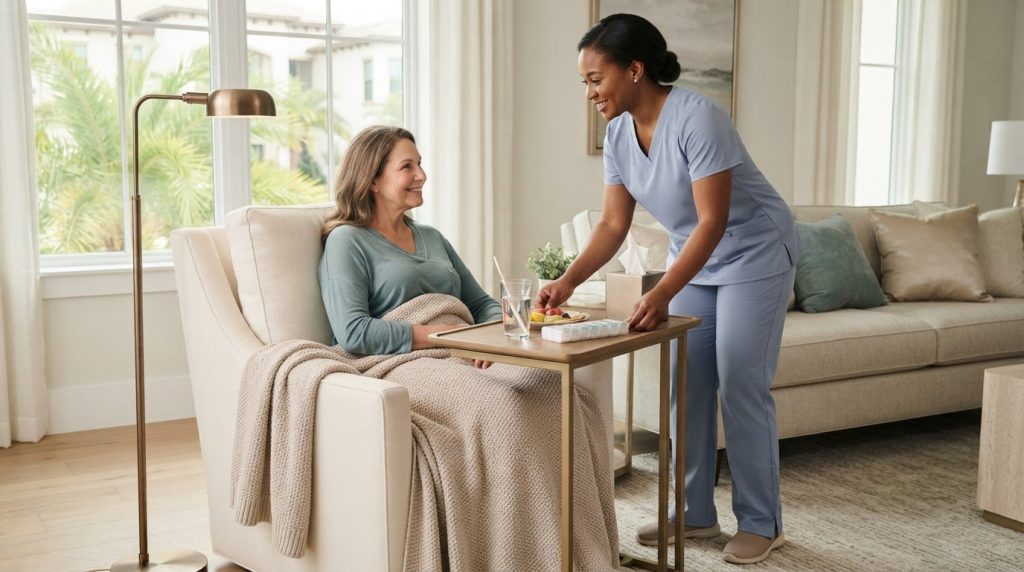
A recovery caregiver provides non-medical support with daily living and comfort at home, following the instructions from the surgical team. That may include help with personal care, preparing a simple meal, or keeping everyday routines organized. The support should reflect the client’s needs and preferences, not assumptions about what recovery should involve.
A recovery caregiver helps with everyday living and comfort after surgery. Caregiving does not replace the surgeon’s instructions, diagnosis, treatment, or clinical procedures.
When can in-home help make recovery feel more manageable?
Support may be useful when movement is limited, someone lives alone, or daily routines are difficult to manage during early recovery. A caregiver might assist with an agreed-upon personal care routine, help organize meals, or provide company while the client rests. The specific support should fit the person’s comfort and the surgical team’s guidance.
Scheduled help can also give relatives time for work, other caregiving responsibilities, or essential errands instead of asking them to manage every household task. Caregiving provides practical assistance and a reassuring presence, not a particular medical result. Families can plan around the clinician’s instructions and recommendations.
Caregiver support versus skilled medical care
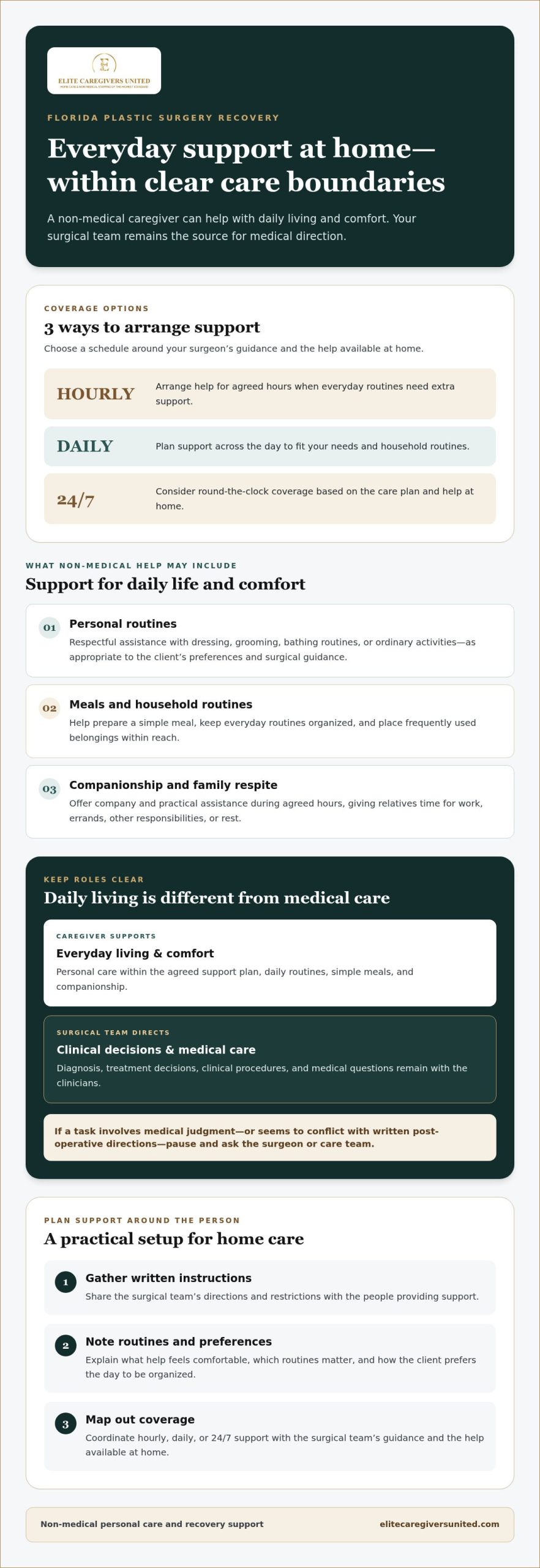
The distinction matters. A caregiver can assist with daily living and personal care within the agreed support plan. Diagnosis, treatment decisions, clinical procedures, and medical questions belong with the surgical team. Elite Caregivers United provides non-medical care, not skilled nursing or clinical procedures.
If a task involves medical judgment or appears to conflict with written post-operative directions, pause and seek guidance from the surgeon or care team. Caregivers can follow those instructions while supporting everyday routines, but they do not interpret symptoms or change treatment. Clear roles keep recovery decisions with the clinicians who know the procedure.
For someone searching for a caregiver after plastic surgery Florida, the key question is which everyday needs support can address safely and respectfully. A professional CNA team can provide non-medical personal care and recovery support, while the surgical team remains the source of medical direction. Agreeing on these roles helps the patient and family plan for the first days at home.
How a Plastic Surgery Recovery Caregiver Supports Daily Life
After returning home, familiar routines may need to change to fit the surgical team’s instructions. A caregiver can help make those routines easier to manage while respecting the client’s preferences and privacy. The support is individualized, not a fixed clinical recovery protocol. One person may need help organizing the day; another may value having a companion nearby while family members handle essential responsibilities.
Recovery caregiving supports everyday routines, comfort, and companionship at home. It is not medical treatment or a substitute for the surgical team’s instructions. Each task should fit the client’s written post-operative guidance. If directions change or a task raises a medical question, the surgical team is the right source for guidance.
Personal care and everyday routines during recovery
When personal care feels tiring or difficult, a caregiver can provide respectful assistance based on the client’s needs and preferences. Depending on the guidance provided, that may include help with dressing, grooming, bathing routines, or ordinary activities. A caregiver can also help with simple household routines, such as preparing a meal or keeping frequently used belongings organized and within reach.
Small details can make the day easier to manage. Before care begins, the client or family can explain which routines matter, what assistance feels comfortable, and what restrictions the surgical team has given. Caregivers follow those directions rather than suggesting procedure-specific techniques or providing wound care. This keeps support personal while respecting its non-medical role.
Companionship, respite, and support for family
Recovery can feel isolating, especially when a client spends long periods at home or family members cannot be present throughout the day. A caregiver can offer company, conversation, and help maintain a familiar rhythm. Scheduled support can also give relatives time for work, errands, or rest, knowing practical assistance is in place during the agreed hours.
Make that support more useful by sharing a simple outline of the day: preferred meal times, routines the client wants help with, and written restrictions to follow. The plan should reflect the client’s wishes and be updated when the surgical team provides new directions. For more ideas on organizing support at home, see the guide to home care after surgery.
A steady, individualized home routine
Caregiving can keep ordinary needs from becoming an added source of strain. A caregiver might assist with personal routines, provide companionship, and help the client stay oriented to the day. Family members can remain involved in the ways that work for them. The mix of support can change as needs change; it is not a prescribed schedule or a promise of a particular recovery outcome.
For Orlando households seeking non-medical cosmetic surgery recovery support, Elite Caregivers United’s professional CNA team can help with personal care and daily routines. Families considering recovery caregiving support can think about how assistance fits the client’s instructions and household needs.
Choosing the Right Care Schedule After Plastic Surgery
Care needs vary by person and household, so treat the schedule as a planning decision, not a rule tied to a particular procedure. Start with the surgical team’s guidance. Then consider what support is already available, which parts of the day are hardest to manage, and whether someone else can reliably be present. The goal is practical help that fits the household, without treating caregiving as clinical care.
| Care option | Availability | Household circumstances it may suit | Planning considerations |
|---|---|---|---|
| Hourly | Support during scheduled hours | A household with some existing help, but specific routines when an extra hand would be useful | Identify the tasks and times when assistance would be most helpful. |
| Daily | Care arranged on a daily basis | A client or family seeking a more regular presence in the home | Consider the household’s routine, family availability, and the instructions from the surgical team. |
| 24/7 | Caregiver support around the clock | A household that wants a caregiver present at all times | Discuss the arrangement in light of individual needs and clinical guidance. |
When might hourly or daily care fit?
Planned visits can help with specific parts of the day, such as getting started in the morning, managing personal routines, or giving family members respite while they handle essential responsibilities. Hourly support may suit a household with reliable help at other times. Daily care may fit when a more regular caregiving presence would make routines easier to organize. These are planning possibilities, not recommendations based on surgery type or predictions about recovery milestones.
Living alone, the availability of relatives or friends, and household responsibilities can all shape the plan. Map out who can be present and when, then compare that schedule with the support the client and surgical team consider appropriate.
When might 24/7 home care be considered?
Some families explore 24/7 home care when they want a caregiver present around the clock. Whether that arrangement fits depends on individual circumstances, household support, and clinical guidance, not a general rule about a particular procedure. Discuss the plan in light of the surgeon’s instructions and the client’s daily needs. A guide to non-medical home care in Orlando can also help families think through how in-home support may be organized.
Elite Caregivers United offers hourly, daily, and 24/7 caregiving for recovery support. If you’re looking for a caregiver after plastic surgery Florida, comparing these schedules can help clarify what level of presence may suit the home, while medical direction stays with the surgical team.
How to Prepare Your Orlando Home for Post-Surgery Care
Preparing ahead can help a caregiver provide practical, respectful support at home. Start with the surgical team’s written instructions, then share household details that will help caregiving fit the client’s routines. Keep decisions about movement, positioning, restrictions, and changes to the recovery environment anchored to those instructions. A caregiver can follow the guidance while assisting with daily living, but should not be expected to interpret or revise it.
Use this checklist before returning home in Orlando, and adapt it to the household and the support arranged.
Before care begins
- 1. Gather the written guidance. Keep post-operative instructions, follow-up details, and relevant contact information together in an accessible place. Share the instructions the caregiver needs to follow, and direct medical questions to the surgical team.
- 2. Note everyday routines. List activities where assistance may be welcome, such as personal care, meals, or organizing commonly used belongings. Describe the help the client prefers without adding medical directions.
- 3. Share preferences and household details. Explain communication preferences, accessibility considerations, routines, and personal boundaries that matter to the client. Include emergency contacts and clarify who should be reached with household or care-related questions.
- 4. Plan caregiver coverage. Write down when support is expected and who else may be at home. This helps relatives and the caregiver understand how responsibilities fit together, without assuming one schedule suits every recovery.
- 5. Prepare the shared space. Place frequently used personal items where they can be reached in a way consistent with clinician guidance, and clear everyday clutter from walkways. Avoid adding equipment or making changes that require professional advice unless the surgical team has directed them.
Organize information without creating a second care plan
Keep practical details in one simple note if that is helpful: the client’s preferred name, key household routines, communication preferences, emergency contacts, and where written instructions are kept. The note helps a caregiver understand the home and provide consistent daily support. It is not a treatment plan and does not replace the surgical team’s directions.
Before the client arrives, review the plan together if they wish. Make sure household arrangements reflect their preferences and that the caregiver knows which written instructions apply. If a new question concerns symptoms, treatment, or a restriction, contact the surgical team rather than guessing.
Preparing this way gives a caregiver after plastic surgery Florida families arrange a clearer picture of household needs while keeping clinical decisions with the appropriate professionals. For help planning non-medical recovery support in Orlando, connect with Elite Caregivers United.
Orlando Plastic Surgery Recovery Care with Elite Caregivers United
Planning home support can make the transition after plastic surgery more manageable for the client and family. Elite Caregivers United LLC is a Florida-licensed home care agency serving Orlando. Its professional CNA team provides non-medical cosmetic surgery recovery support, with hourly, daily, and 24/7 caregiving options. Families can consider the level of presence that fits household needs and the surgical team’s guidance.
Caregivers assist with daily living and follow the client’s relevant post-operative instructions. Medical questions, treatment decisions, and clinical care remain with the surgical team. This distinction helps families plan practical support without confusing caregiving with medical services or asking a caregiver to direct recovery.
What families can expect from the care relationship
Support should reflect the client’s daily needs, preferences, and comfort. Families can share useful details, such as preferred routines, communication arrangements, and the written instructions that guide caregiving. Clear, respectful communication helps caregivers understand how to assist while honoring the client’s privacy and choices.
If needs or instructions change, keep communication clear and direct medical concerns to the surgical team. Caregiving offers practical support at home, not a promise of a particular clinical outcome.
Taking the next step for recovery support in Orlando
To begin planning, describe where support is needed in Orlando, the anticipated schedule, and the daily routines where assistance may help. It can also be useful to share who else will be involved at home and what guidance the surgical team has provided. These details give the care discussion a practical starting point without assuming one schedule fits every person or procedure.
Hourly, daily, and 24/7 options offer different ways to arrange caregiver presence. The right plan depends on the client’s circumstances, household support, and clinical guidance. When considering a caregiver after plastic surgery Florida families can arrange for non-medical assistance, focus on daily needs and a respectful fit for the home.
Elite Caregivers United welcomes Orlando families ready to discuss a recovery-support plan. Connect with Elite Caregivers United to share your location, anticipated schedule, and the daily support that would help your household plan with greater confidence.
Make Your Recovery Plan Feel More Manageable
Turn expectations into a simple plan: note which daily routines may need assistance, decide when support would be most useful, and keep your surgeon’s written guidance close at hand. Sharing these details early helps everyone understand their role, respect the client’s preferences, and leave medical decisions with the surgical team.
If you’re considering a caregiver after plastic surgery Florida families can arrange for in-home support, focus on what would make the days at home feel more settled. A useful plan fits your household and works alongside, not in place of, direction from your surgical team.
Start by discussing the support that would help your household feel prepared. Explore recovery support with Elite Caregivers United and take a thoughtful next step toward a more supported time at home.
Frequently Asked Questions
What does a caregiver do after plastic surgery?
A caregiver helps with non-medical daily needs at home, such as personal care, simple meals, companionship, and everyday routines. Before care starts, the client or family can list preferred tasks and share relevant written instructions. For example, noting which personal items the client wants nearby helps the caregiver support comfort without making treatment decisions or changing the surgeon’s directions.
Is a caregiver after plastic surgery the same as a nurse?
No. A caregiver supports daily living, while a nurse provides clinical care within their professional role. Elite Caregivers United’s professional CNA team delivers non-medical personal care and recovery support; the agency does not provide skilled nursing or clinical procedures. For needs involving medical judgment, treatment, or a clinical task, follow the surgical team’s guidance rather than relying on a caregiver to assess or address the need.
How soon should I arrange a caregiver after plastic surgery?
Begin planning once you know the procedure date and have an initial understanding of your post-surgery instructions. Arranging support before returning home gives you and your family time to explain household routines, discuss the expected schedule, and share relevant written guidance. There is no single timeline for everyone, so coordinate plans with your surgical team and allow room to adjust if instructions or support needs change.
Can a caregiver stay with me overnight after surgery?
Yes. Overnight support can be part of an around-the-clock home care arrangement. Elite Caregivers United offers 24/7 caregiving for non-medical assistance, not clinical monitoring or nursing care. Before arranging overnight coverage, discuss your needs with your surgical team and identify the daily support that would be helpful. If your instructions call for clinical care, ask the surgical team how that need should be addressed.
How many hours of care should I arrange after plastic surgery?
There is no standard number of hours that suits everyone. Think through the day: when family can be present, which routines may need assistance, and when the client would value company. Compare those needs with the surgical team’s guidance. Elite Caregivers United offers hourly, daily, and 24/7 options for different levels of non-medical support.
Does insurance cover a caregiver after plastic surgery in Florida?
Coverage depends on your policy, the reason for care, and the services involved, so don’t assume private-pay caregiving will be reimbursed. Review your benefits and ask your insurer how it treats non-medical home care after an elective procedure. Keep any coverage decision with your care-planning documents. Discussing payment arrangements directly with Elite Caregivers United can help you plan without assuming insurance will cover the service.
What should I do if I have a concerning symptom during recovery?
Contact your surgical team promptly and follow the instructions they gave you for symptoms or unexpected changes. A caregiver can help you reach the right contact or share information, but should not diagnose the cause or decide on treatment. If symptoms seem severe or life-threatening, call 911. Keep the surgeon’s contact details and written discharge guidance easy to find so you are not searching for them in a stressful moment.