
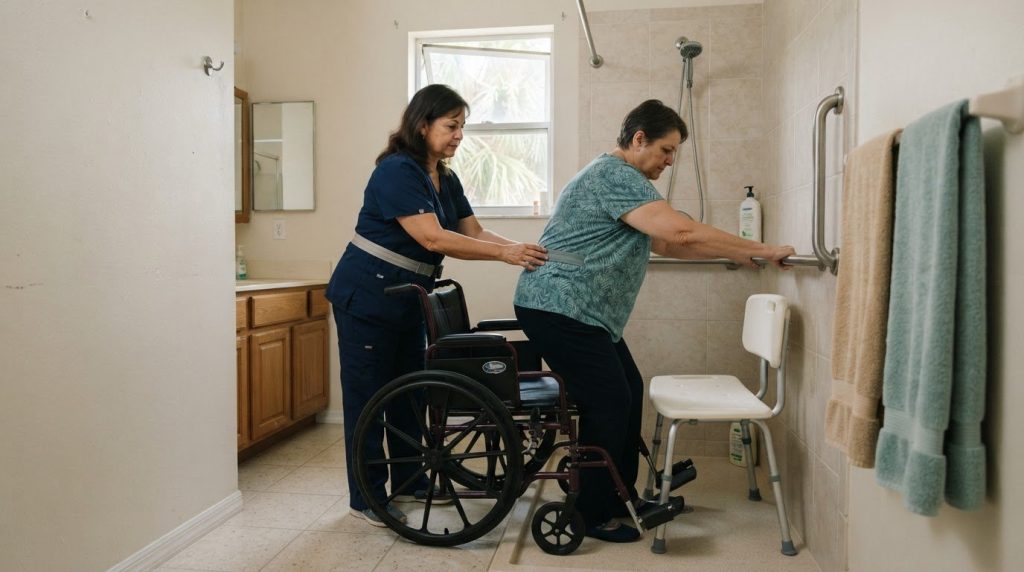
The right caregiver match depends on an adult’s needs, not simply a disability label. A caregiver for a disabled adult in Orlando should be prepared to support the person’s daily routines, mobility, communication, and personal care. Since preparation varies with the assistance required, start by identifying the specific care tasks involved.
It’s understandable to want reassurance that support will be both capable and respectful, especially when care involves intimate routines or getting around safely. This guide explains what to consider when assessing caregiver training, mobility and transportation help, in-home consultations, and caregiver fit. It also explores Orlando’s special-needs adult care listings, helping you understand the local options and identify the kind of support that may best suit your family.
Key Takeaways
- Match caregiver experience to the adult’s personal-care routines, communication needs, and daily living activities.
- Plan mobility and transportation support around the person’s individual routines and the assistance they need to move safely.
- Use an in-home consultation to describe care needs and assess whether a caregiver’s approach feels respectful and compatible.
- Compare Orlando listings by relevant experience and fit, then explore respite care when family caregivers need support.
Do caregivers have specialized disability training?
Caregiver support should reflect an adult’s specific daily living and personal care needs. In Orange County, Florida, eligibility for state assistance depends on disability-related limits to independent living and activities of daily living.
Personal Care and Daily Living Assistance
Personal care can include assistance with bathing, dressing, grooming, toileting, eating, and moving through daily routines. Describe what the adult manages independently and where hands-on assistance is needed. For example, a person who can dress but needs help transferring from bed may need a different plan from someone who needs support throughout a morning routine.
Ask how a caregiver supports each task while respecting the adult’s choices and privacy. Mobility assistance should reflect the person’s abilities and the help needed during transfers or movement around the home. A clear task list makes it easier to match home care experience to the actual support required.
Experience with Dementia and Autism
Dementia, autism, and other disabilities may call for different approaches to communication and daily care. Ask about relevant experience, such as supporting familiar routines for an adult with dementia or adapting communication for an autistic adult. The goal is to understand how a caregiver responds to the person, not to rely on a diagnosis alone.
Discuss what helps the adult feel comfortable, including preferred routines, sensory considerations, and ways to communicate choices. A caregiver supporting daily living should understand these preferences and follow the agreed care plan. Families can also clarify respite needs by noting the times or routines when they need additional support.
Florida’s Home Care for Disabled Adults program serves adults whose permanent physical or mental limitations restrict daily activities and independent living. The Community Care for Disabled Adults program requires a permanent disability that restricts at least one activity of daily living and impedes independent living. Eligible applicants seeking enrollment are placed on a statewide waiting list because the programs are fully encumbered.
Respite Care can provide planned support during specific routines, giving family caregivers time away while another caregiver assists with personal care and daily living. Note the adult’s tasks, mobility needs, communication preferences, and when family support is needed. This practical profile provides a clearer starting point for discussing care arrangements.
Mobility assistance and transportation
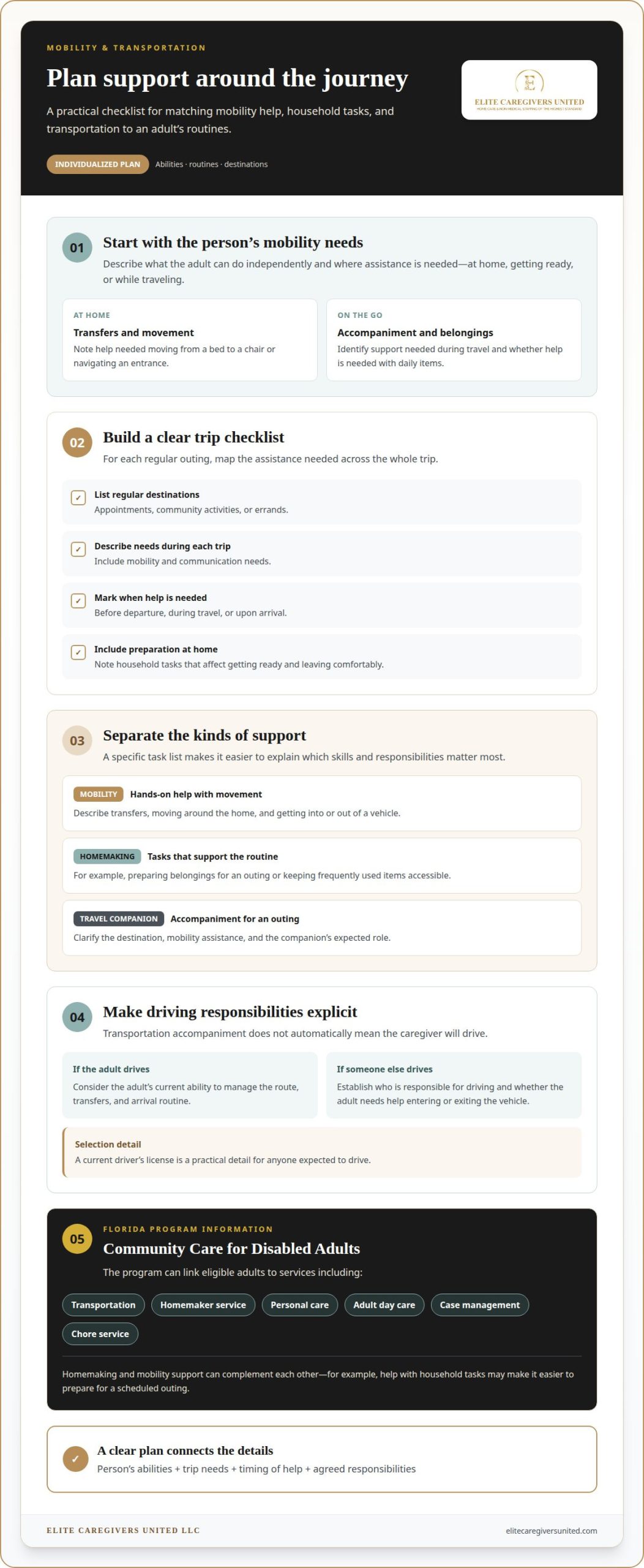
Plan mobility support around the adult’s abilities, usual routines, and destinations. Note where help is needed, such as transferring from a bed to a chair, navigating an entrance, or carrying daily items. These details clarify whether the person needs hands-on support at home or accompaniment during transportation.
Florida’s Community Care for Disabled Adults program can link eligible adults to transportation, homemaker service, personal care, adult day care, case management, and chore service. Homemaking and mobility support can complement each other. For example, help with household tasks may make it easier to prepare for a scheduled outing.
- List regular destinations, such as appointments, community activities, or errands.
- Describe the adult’s mobility and communication needs during each trip.
- Identify whether assistance is needed before departure, during travel, or upon arrival.
- Note household tasks that affect the person’s ability to get ready and leave comfortably.
If the adult drives, consider their current ability to manage the route, transfers, and arrival routine. If someone else will drive, establish who is responsible for driving and whether the adult needs help getting into or out of the vehicle. A current driver’s license is a practical selection detail for anyone expected to drive. Don’t assume transportation accompaniment includes driving.
For homemaking, identify tasks that support the adult’s routine, such as preparing belongings for an outing or keeping frequently used items accessible. Separate these from personal care and mobility assistance so each need is clear in the care plan. A specific task list also helps families explain which skills matter most.
For outings where accompaniment is the main need, travel companion support may fit the plan. Describe the destination, mobility assistance, and expected role so the arrangement centers on the adult’s needs rather than simply getting from place to place.
In-home consultation and caregiver selection
An in-home consultation can make care needs easier to discuss in the adult’s familiar surroundings. Walk through daily routines, entryways, bathroom access, and the places where personal care happens. Explain, for example, whether assistance is needed with dressing, preparing a meal, or moving between rooms. These details help shape a practical discussion of in-home care.
When comparing home care options in Orlando, use the same care outline for each: tasks, schedule, mobility support, communication preferences, and relevant experience. Compare the proposed approach and how clearly responsibilities are explained. A good fit respects the adult’s choices and reflects the support their routines require.
During the consultation, describe what the adult can do independently and where assistance is needed. Explain how the person prefers to communicate, including routines that make transitions easier. Ask how the caregiver would support a specific task, such as preparing for an appointment or maintaining a familiar morning routine. Concrete examples make it easier to assess fit.
Does Florida Medicaid pay for in-home caregivers for disabled adults? Coverage depends on Medicaid eligibility, the specific program, and whether the requested service is covered. Don’t assume every in-home care arrangement qualifies for payment.
What Florida Medicaid waiver programs help disabled adults get caregiver services? Florida’s Home Care for Disabled Adults and Community Care for Disabled Adults are named state programs for adults with disabilities. The program information does not identify them as Medicaid waivers, so distinguish these options from Medicaid waiver coverage.
Florida’s Home Care for Disabled Adults program serves adults with permanent physical or mental limitations that restrict daily activities and independent living. It includes case management and a small subsidy for approved caregivers for adults who would otherwise be placed in nursing homes or institutions. Florida’s Community Care for Disabled Adults program supports adults whose permanent disability restricts at least one daily living activity and impedes independent living. Both programs are fully encumbered, with eligible applicants placed on a statewide waiting list.
Before choosing care, write down the adult’s priorities: preferred routines, personal care tasks, and the support that promotes independence at home. Use this outline during the consultation to discuss and compare care approaches.
Orlando special-needs adult caregiver listings
Orlando listings offer starting points, not a substitute for matching experience to a client’s needs. Search filters show one elder care agency or company and 38 home care providers, reflecting different listing categories. Special-needs adult care providers have an average 5.0-star rating from 17 reviews. Use these details as context, then compare each profile’s stated experience and the support required.
Profiles illustrate how varied caregiver backgrounds can be. Tasha M. reports 10 years of home care experience and says she worked full time for two years with an adult with quadriplegia. Lidia D. describes caring for her 40-year-old daughter, who is blind and autistic. Norma S. reports four years of experience, while Paola C. reports 20 years. These examples help families identify relevant experience, not establish a universal standard.
Read each listing for the specific tasks and population described. For example, a profile mentioning quadriplegia may be relevant when mobility support is central, while experience with autism may matter for communication and routines. Compare those details with the adult’s priorities, preferred schedule, and need for independent living or respite. Reviews and years of experience add context, but don’t replace a discussion of the care plan.
What caregiver services and disability resources does Orange County offer? Florida’s Community Care for Disabled Adults program can link eligible adults to adult day care, case management, chore service, transportation, homemaker service, and personal care. The Home Care for Disabled Adults program offers case management and a small subsidy for approved caregivers supporting eligible adults who would otherwise be placed in nursing homes or institutions.
To make listings useful, create a short comparison record: note each caregiver’s relevant experience, the tasks described, and how the adult’s preferences align. Then use those specifics to guide the next conversation. For family support built around respite needs, explore caregiver support options.
Elite Caregivers United LLC: Respite Care
Elite Caregivers United LLC offers Respite Care for families who need support while caring for an adult at home. It can help when family caregivers need another person to assist with agreed daily routines and personal care.
The agency also provides Personal Care Services / CNA Team. For adults recovering after surgery or hospitalization, Surgery Recovery & Post-Hospitalization Care offers relevant support. Cosmetic Surgery Recovery is also available. The right service depends on the assistance needed and the family’s care priorities.
Share the adult’s routines, personal care needs, and the support family caregivers are seeking. This gives the conversation a clear focus and helps identify an appropriate service. Contact Elite Caregivers United LLC to discuss care needs and next steps.
Choose a Support Plan That Can Grow With You
Care needs can change as routines, abilities, and family circumstances shift. Keep a brief record of what matters most to the adult, what support feels comfortable, and which parts of daily care are becoming difficult. This can guide future conversations and help keep the adult at the center of decisions.
Choosing a caregiver for a disabled adult in Orlando means finding support that respects the person’s dignity while easing pressure on family caregivers. Elite Caregivers United LLC offers Respite Care, Personal Care Services / CNA Team, and Surgery Recovery & Post-Hospitalization Care. These services can help when families need support with personal care, respite, or recovery at home.
When you’re ready to discuss the care priorities that matter in your home, contact Elite Caregivers United LLC. A thoughtful next step can help your family move forward with greater clarity and confidence.
Frequently Asked Questions
What factors may affect how much disability care services cost?
Costs depend on the number of care days and hours, the tasks involved, and the person’s insurance coverage. A short visit for meal preparation differs from extended assistance with personal routines or recovery support. Before requesting an estimate, write down the expected schedule, whether needs change by day, and which tasks require hands-on help. This makes the service scope clearer and explains the factors shaping the estimate.
What is included in home care for people with disabilities?
Home care may include assistance with bathing, dressing, grooming, meal preparation, housekeeping, and daily routines. Depending on the care arrangement, support may also include medication reminders, companionship, or help coordinating transportation to appointments. For example, someone who manages personal care independently may primarily need meal support and companionship. The care plan should reflect the individual’s needs and preferences.
What types of in-home care services are available for disabled adults in Orlando?
In-home care in Orlando can include personal care, respite for family caregivers, companionship, and support during surgery recovery or after hospitalization. Specialized care can also support people living with dementia, Alzheimer’s disease, or Parkinson’s disease, and those recovering from stroke or cancer. These services serve different needs: companionship provides social support, while personal care assists with daily tasks. Choose based on the help needed at home.
How much does a caregiver for a disabled adult cost in Orlando per hour?
Elite Caregivers United LLC provides customized pricing, with estimates based on the person’s care needs. The estimate considers the requested schedule, tasks, and insurance coverage. Describe the expected days and hours and the assistance needed when requesting an estimate. This gives the agency useful context for discussing a suitable care arrangement. Contact Elite Caregivers United LLC for an estimate.