
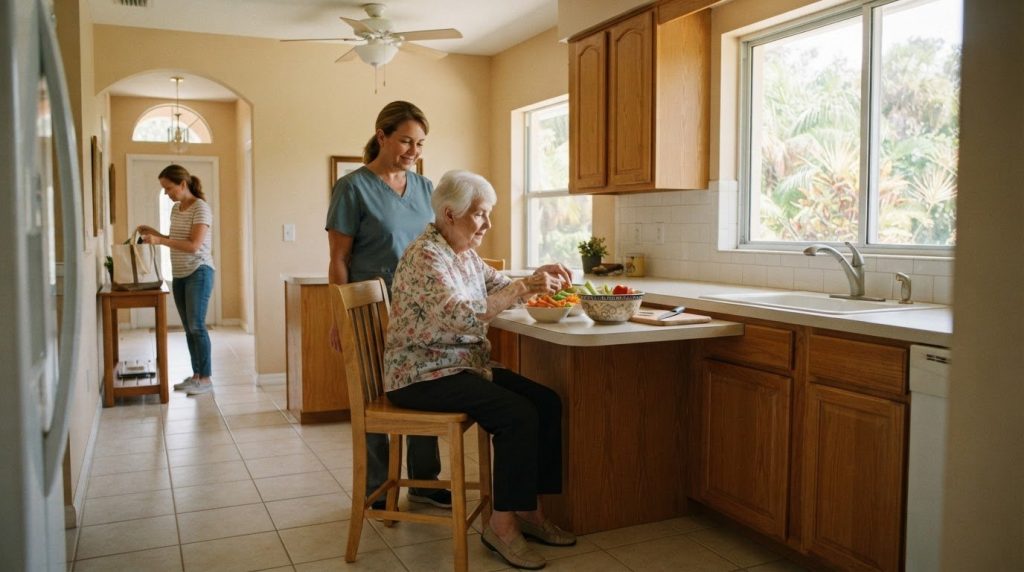
A weekend caregiver for an elderly adult can help with meals, errands, companionship, and daily routines at home, while giving family caregivers time to rest or manage other responsibilities. The support should reflect the older adult’s preferences and needs, so familiar routines can continue through the weekend.
It’s natural to want someone dependable who can offer practical help while treating your loved one with patience and respect. This article explains what weekend care may include, how caregiver experience and qualifications can guide your decision, and how respite care can support families during weekends or vacations. You’ll also learn what to consider when arranging care, from the tasks involved to the level of personal assistance needed, so you can make a thoughtful plan that feels comfortable for everyone.
Key Takeaways
- Plan respite around the older adult’s established routines and the family’s weekend responsibilities to make time away more manageable.
- Identify which meals, errands, and household tasks would make the greatest difference before arranging support.
- Include conversation and familiar activities in the care plan to help make companionship feel personal and comfortable.
- Consider a caregiver’s relevant experience and the older adult’s specific needs when deciding what kind of support is a good fit.
Temporary respite care for weekends and vacations
A weekend care plan can cover a family trip or a few hours away while helping an older adult maintain familiar routines at home.
Care Planning and Medication Reminders
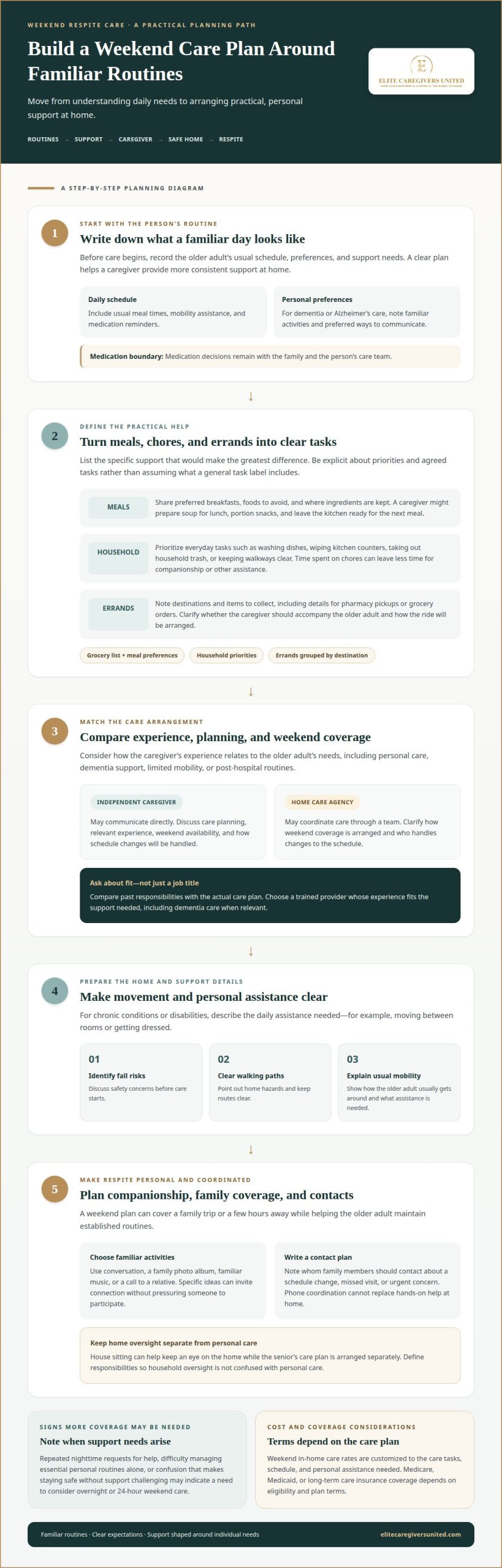
Before care begins, write down the older adult’s usual schedule, support needs, and preferences. Include meal times, mobility assistance, and medication reminders. For dementia or Alzheimer’s care, note familiar activities and preferred ways to communicate. Sharing these details helps caregivers provide consistent support; medication decisions remain with the family and the person’s care team.
Choosing a Caregiver or Agency
When comparing independent caregivers with home care agencies, consider relevant experience, care planning, and how weekend coverage is arranged. Independent caregivers may communicate directly, while an agency may coordinate care through a team. Ask how the caregiver’s experience relates to needs such as dementia support or personal care. Clarify the agreed tasks and how schedule changes are handled.
For chronic conditions or disabilities, describe the daily assistance needed, such as help moving between rooms or getting dressed. To support safer movement, identify home hazards, keep walking paths clear, and explain how the older adult usually gets around. Respite care can let family caregivers handle personal or work responsibilities while helping the older adult maintain an established routine.
Coverage through Medicare, Medicaid, or long-term care insurance depends on eligibility and plan terms.
Weekend in-home care rates are customized to the care tasks, schedule, and personal assistance needed. Contact Elite Caregivers United LLC for an estimate.
For weekend safety, discuss fall risks, mobility assistance, and the older adult’s support needs before care starts. Choose a trained care provider whose experience fits those needs, including dementia care when relevant.
Meal preparation, errands, and light housekeeping
Build the weekend plan around the older adult’s usual meals and household routine. List preferred breakfasts, foods to avoid, and where ingredients are kept. For example, a caregiver might prepare soup for lunch, portion snacks, and leave the kitchen ready for the next meal. Clear instructions help keep meal preparation familiar and easy to coordinate.
Focus housekeeping on everyday tasks that support comfort at home. A written list might include washing dishes, wiping kitchen counters, taking out household trash, or keeping walkways clear. Identify priorities, since time spent on chores can leave less time for companionship or other assistance. Spell out the agreed tasks rather than assuming “light housekeeping” covers every household job.
Plan errands by noting each destination, the items to collect, and details for pharmacy pickups or grocery orders. For transportation, clarify whether the caregiver should accompany the older adult and how the ride will be arranged. Even when a caregiver has experience supporting older adults, a clear schedule and expectations help avoid confusion.
- Share a grocery list and meal preferences.
- Prioritize household tasks that affect daily comfort.
- Group errands by destination and explain what assistance is needed.
Respite care may include help with these practical routines, giving family caregivers time for other responsibilities. If a family will be away, house sitting can address a different need: keeping an eye on the home while the senior’s care plan is arranged separately. Defining these responsibilities prevents household oversight from being confused with personal care. Families considering house sitting support can include it in their planning when travel and home oversight are relevant.
Social engagement and emotional support
Make social time part of the weekend care plan. Choose activities the older adult already enjoys, such as looking through a family photo album, listening to familiar music, or calling a relative. Specific ideas can help a companion encourage conversation without pressuring someone to participate.
Signs that overnight or 24-hour weekend care may be needed include repeated nighttime requests for help, difficulty managing essential personal routines alone, or confusion that makes staying safe without support challenging. Note when these needs arise and what assistance is required; the pattern helps families plan the right level of senior care.
Distinguish between phone support for family coordination and an in-home caregiver’s presence. Before the weekend begins, write down whom family members should contact about a schedule change, missed visit, or urgent concern. A contact plan can help coordinate care, but it cannot provide hands-on assistance when someone needs support at home.
After surgery, practical companionship might mean staying nearby during meals, helping the person settle comfortably, or accompanying them to a planned appointment. Keep support focused on nonmedical tasks and the recovery instructions the person has received. Share the day’s planned activities and explain which household tasks need attention.
For someone living with Alzheimer’s, familiar conversation may feel easier than a new activity. Use a photo, favorite song, or simple shared task to invite connection, then allow time for a response. A companion can follow the person’s communication preferences and offer calm company. Family members can note which activities feel comfortable and meaningful.
Caregiver experience and qualifications
Relevant experience matters when it matches the older adult’s daily needs. Supporting someone with limited mobility may call for different practical skills than helping someone stay socially engaged. Compare a caregiver’s past responsibilities with the care plan, including personal assistance, dementia support, or post-hospital routines. A broad job title alone does not show whether their experience is a good fit.
Ask how a caregiver would handle familiar situations. For example, what would they do if an older adult hesitates to get dressed, or if a planned activity becomes tiring? Their answers can reveal their patience, communication style, and respect for personal preferences. Consider personality as well: someone who enjoys conversation may appreciate a sociable companion, while another person may prefer quiet company.
Review the services being arranged and clarify the caregiver’s responsibilities. A CNA-led personal care team may suit someone who needs personal assistance, while companionship focuses on social connection and daily engagement. Make sure the planned tasks fit the caregiver’s role, and include the older adult’s preferences, routine, and support needs in the care plan.
- Match experience to the specific care tasks.
- Discuss examples involving communication and changing routines.
- Describe the older adult’s personality and preferred approach to companionship.
Before a first weekend shift, walk through the home together and discuss the care plan. Point out where essential items are kept, which routines help the older adult feel comfortable, and how the family prefers updates. A clear handoff gives the caregiver useful context without expecting them to guess. For personal care needs, explore CNA-led personal care support as part of planning appropriate help at home.
Elite Caregivers United LLC: Respite Care
Elite Caregivers United LLC offers respite care for families who need support while caring for an older adult at home. It may suit families who need time away while maintaining familiar routines for their loved one. Personal Care Services/CNA Team can support personal-care needs, while Surgery Recovery & Post-Hospitalization Care can assist during recovery at home. Cosmetic Surgery Recovery is also available for people needing support after a procedure.
When planning care, share the older adult’s routine, preferred assistance, and family priorities. These details help shape support around the person’s needs and the kind of help the family is seeking.
Contact Elite Caregivers United LLC to discuss Respite Care and home support, or visit elitecaregiversunited.com.
Make the Next Step Feel Manageable
Choosing a weekend caregiver for an elderly loved one can help create a steadier routine for your family. Start by identifying what you want weekend support to make possible, such as time to recharge, help during recovery, or personal care assistance. Then consider what would help your loved one feel respected and at ease, including communication style, familiar routines, and preferred support. These priorities can guide a thoughtful conversation about care.
Elite Caregivers United LLC offers Respite Care, Personal Care Services through a CNA team, and Surgery Recovery & Post-Hospitalization Care. Sharing your family’s priorities can help you explore which support best fits the situation. Contact Elite Caregivers United LLC to discuss care for your family. Taking one considered step can help make a more supportive weekend routine possible.
Frequently Asked Questions
What does a weekend caregiver for an elderly person do?
A weekend caregiver for an elderly person provides agreed support at home based on the person’s needs and schedule. That may include help with personal routines, preparing a simple meal, companionship, or accompaniment to an appointment. Before care begins, clarify which tasks are included and which decisions remain with family members, so everyone understands the caregiver’s role.
Where can I find and hire a weekend caregiver for an elderly parent?
In Orlando, Elite Caregivers United LLC provides in-home Respite Care and Personal Care Services / CNA Team. When you get in touch, describe your parent’s daily needs, the days and times help is needed, and the tasks involved. This gives the care team useful context for discussing an arrangement that suits your family’s situation and your parent’s preferences.
What qualifications and background checks should I require for a weekend caregiver?
Look for experience that relates to your parent’s needs, such as personal care, memory support, or mobility assistance. Ask about relevant training and how the agency reviews a caregiver’s identity, work history, and references. If your parent has dementia, discuss how the caregiver communicates during confusion or changes in routine. Focus on demonstrated experience and respectful care.
What questions should I ask when interviewing a weekend caregiver?
Ask for a specific example of how the caregiver handled a change in someone’s routine, then discuss how they would respect your parent’s preferences. Clarify how they share updates, which tasks they’re comfortable handling, and what they do if a planned activity becomes difficult. Ask what information they need from your family before care begins.
How do I create a weekend care schedule and handoff plan?
Write the schedule in the order the day usually unfolds, including activities, meals, appointments, and preferred rest times. Add family contact names and explain how updates should be shared. At handoff, point out relevant supplies and review any changes since the schedule was written. Keep the plan easy to update as your parent’s needs or preferences change.
How much does weekend in-home senior care cost per hour in the United States?
Weekend in-home care rates depend on the care tasks, schedule length, and personal care needs.