

What if protecting your own well-being is part of caring well for someone you love? When daily needs fill nearly every hour, it can be hard to notice your own strain, let alone know how to avoid caregiver burnout before exhaustion takes hold. You may worry that taking a break means letting someone down, or feel uncomfortable asking family members for help. Those feelings are understandable, but you don’t have to carry every responsibility alone.
A sustainable care plan starts with noticing changes such as ongoing fatigue, irritability, disrupted sleep, or withdrawing from people and activities you value. From there, you can make realistic room for rest, divide responsibilities more clearly, and explore support that fits your loved one’s needs. This article covers practical steps, from setting up a weekly schedule to considering respite care, caregiver support groups, and community resources. Small, planned changes can make care more manageable for both you and your loved one before a difficult stretch becomes a crisis.
Key Takeaways
- Learn how to avoid caregiver burnout by noticing changes in your energy, mood, sleep, and everyday habits without treating them as a diagnosis.
- Consider whether your routine leaves enough time to recover, since an occasional short break may not address ongoing care demands.
- Compare family help, community support, support groups, and professional respite to find options that suit your circumstances.
- Build a flexible weekly care plan by listing responsibilities, setting priorities, asking for specific help, scheduling rest, and reviewing what needs to change.
- Explore how planned respite and non-medical personal care in Orlando may support your loved one’s daily needs while giving you time to recharge.
How to Avoid Caregiver Burnout by Recognizing Early Signs
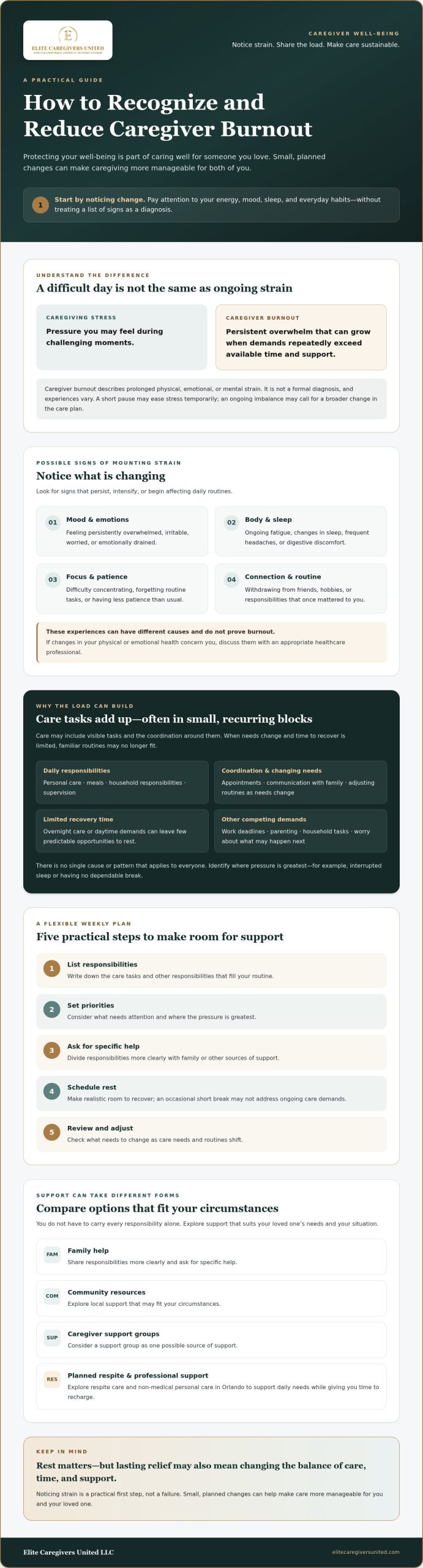
Needing support doesn’t mean you’ve failed or love your family member any less. Caregiving can ask a great deal of you, and noticing strain is a practical first step toward making it more sustainable. If you’re wondering how to avoid caregiver burnout, pay attention to changes in how you feel and function instead of waiting until you can’t keep up.
What caregiver burnout can look and feel like
Caregiver burnout is often used to describe prolonged physical, emotional, and mental strain related to caregiving. It isn’t a formal diagnosis, and no checklist can determine exactly what you’re experiencing. The overview of Caregiver burden describes broader pressures and impacts associated with caring for someone over time.
Feeling tired after a demanding day is different from feeling depleted week after week or finding that rest no longer helps you recharge. Possible signs of mounting strain include:
- Feeling persistently overwhelmed, irritable, worried, or emotionally drained.
- Ongoing fatigue, changes in sleep, frequent headaches, or digestive discomfort.
- Difficulty concentrating, forgetting routine tasks, or having less patience than usual.
- Withdrawing from friends, hobbies, or responsibilities that once mattered to you.
These experiences can have different causes and don’t prove that you have burnout. Notice whether they persist, intensify, or start to affect daily routines. If changes in your physical or emotional health concern you, discuss them with an appropriate healthcare professional.
Which caregiving pressures may increase strain
Strain can build when care needs leave little time to recover. For example, helping someone overnight and managing appointments during the day can leave few predictable opportunities to rest. Changing needs can add uncertainty, especially when a loved one needs more assistance than before or familiar routines no longer work.
Limited backup can make everyday responsibilities feel heavier. Work deadlines, parenting, household tasks, and worry about what might happen next can add to the demands on your time. Other caregivers may face different pressures, such as living far away, coordinating help from relatives, or adjusting to a sudden change in a loved one’s condition.
There’s no single cause or pattern that applies to everyone. Instead of judging yourself for feeling stretched, consider what has changed and where the pressure is greatest. Naming a specific challenge, such as interrupted sleep or having no dependable break, makes it easier to discuss practical next steps with someone you trust or a healthcare professional.
Why Caregiver Burnout Builds and Why Rest Alone May Not Be Enough
A demanding day can be stressful, but one difficult day doesn’t necessarily mean you’re experiencing lasting burnout. Caregiver burnout describes prolonged physical, emotional, or mental strain that can build when care responsibilities continue with too little support or time to recover. It isn’t a formal diagnosis, and individual experiences vary.
Caregiving stress is pressure you may feel during challenging moments. Caregiver burnout is persistent overwhelm that can grow when demands repeatedly exceed the time and support available to meet them. The Cleveland Clinic’s overview of recognizing the signs of caregiver burnout also describes how caregiving demands and limited support can contribute to strain. The distinction matters because a short pause may ease stress temporarily, while an ongoing imbalance may call for a broader change in the care plan.
How ongoing responsibilities can add up
Care involves more than the tasks that are easy to see. Personal care, meals, household responsibilities, supervision, appointment coordination, and communication with family members can fill a day in small, recurring blocks. When a loved one’s needs change, familiar routines may no longer fit, and you may need to adjust tasks or seek additional help.
For example, someone who once helped a parent with errands may find that appointments and daily assistance now take more time, while work and other family responsibilities remain. That’s one possible experience, not a universal pattern. The important question is whether your current routine leaves enough room for rest, flexibility, and your other responsibilities.
Why boundaries and support matter alongside self-care
Personal habits such as taking a walk, eating regularly, or making time for an activity you find restorative can support well-being. But they can’t, by themselves, make an unsustainable workload manageable. If care demands continue to exceed your capacity, the plan may also need clearer boundaries, shared tasks, or outside assistance.
A short break can provide breathing room, but it may not resolve a recurring shortage of backup. Consider which responsibilities could be shared, postponed, simplified, or covered by someone else. Then explain what you can realistically manage. This won’t prevent every difficulty, but it can help make care more responsive to both your loved one’s needs and your own limits.
If additional help at home could be part of that plan, Orlando families can learn about respite and non-medical personal care as possible sources of support.
Caregiver Burnout: Compare Support Options Without Feeling Guilty
Accepting help doesn’t mean abandoning responsibility. Sharing the work can make care more manageable while helping your loved one continue to receive support from people they know and trust. Different options address different needs, and they can complement one another.
Family task-sharing
A relative may be able to take on a specific duty, such as an appointment ride, a meal, or a scheduled visit. Family help depends on people’s availability and abilities, and may not replace professional support for tasks beyond their capacity.
Trusted community support
A friend, neighbor, or faith community may offer companionship or practical help. Be specific about the task, agree on what they’re comfortable doing, and don’t assume they can provide ongoing or specialized care.
Support groups
A support group can offer a place to talk with people who understand caregiving and exchange ideas. It doesn’t provide hands-on care or make decisions for your family.
Professional respite
Respite may provide planned, temporary relief, including non-medical support at home. Discuss care needs and the service scope first. Respite doesn’t replace family relationships or clinical care.
Think of these options as parts of a support plan. A relative might handle a weekly errand, a support group may offer connection, and planned respite may give you a more dependable period away from caregiving tasks. The right mix depends on your loved one’s needs, preferences, and safety, as well as what each helper can realistically provide.
How to ask family and friends for specific help
Broad requests can be difficult to answer. Name a task and a time: “Could you bring dinner on Thursday?” or “Can you drive Dad to his appointment next week?” You could also ask someone to spend an agreed period with your loved one while you run an errand or take a break. A shared calendar or clear handoff can show who is coming, when they’ll arrive, and what support is expected.
When respite care could fit into a support plan
Respite is temporary relief that can be arranged around a caregiver’s need for a break. Non-medical in-home care may help with agreed-upon daily personal care needs, but it isn’t skilled nursing or clinical treatment. Before arranging support, discuss routines, preferences, safety concerns, and the provider’s service scope. Orlando families considering dementia-related support can also look for the guide Compassionate Respite Care for Dementia Patients in Orlando: A Guide for Families. A thoughtful plan can share responsibilities without diminishing the care and connection you provide.
How to Build a Weekly Plan to Reduce Caregiver Burnout
A weekly plan can turn a long list of responsibilities into a clearer picture of what needs attention, what could be shared, and where recovery time might fit. It doesn’t have to run perfectly. Treat it as a flexible guide shaped around your loved one’s preferences and safety, and adjust it as needs change. One practical way to consider how to avoid caregiver burnout is to build support into the routine instead of waiting until you’re at a breaking point.
- Step 1: List the demands. Write down recurring tasks such as personal care, meals, supervision, appointments, household responsibilities, and work or family commitments. Include tasks that happen at set times and those that tend to interrupt the day.
- Step 2: Identify priorities. Separate essential daily responsibilities from tasks that might be rescheduled, simplified, or handled by someone else. Keep your loved one’s routines, preferences, and safety in view as you decide what can shift.
- Step 3: Ask for specific help. Match tasks with people who have agreed to take them on. For example, one person might handle an appointment ride while another brings a meal. Confirm the time, responsibility, and handoff so everyone knows what to expect.
- Step 4: Schedule recovery time. Add realistic breaks, personal appointments, or quiet time to the calendar, even if you begin with a brief, regular window. Identify a backup person or service in advance in case the plan changes or your usual helper can’t come.
- Step 5: Review and adjust. At the end of the week, notice what worked, what felt too demanding, and where responsibilities weren’t covered. Revise the plan as your loved one’s needs or your own capacity changes.
Turn caregiving tasks into a shared, realistic schedule
Build the schedule around actual commitments rather than filling every open space. Mark essential tasks first, then note what can be delegated or moved. Assign responsibilities by agreement, including who will step in if plans change. Leave some unscheduled time for unexpected needs. A schedule with no flexibility can add pressure instead of easing it.
Make breaks and personal appointments part of the plan
Rest is easier to protect when it has a place on the calendar. Choose times that fit your circumstances and confirm who will support your loved one during each break. If a dependable handoff isn’t available yet, consider what backup options you could explore. Orlando families can explore respite care and personal care support as possible parts of a weekly plan. Check current availability and discuss care needs and service arrangements before making plans.
How Respite and Professional Support Can Help Sustain Care
Planned respite can give a family caregiver time to rest, attend to personal responsibilities, or step away for a while, while a loved one continues to receive agreed-upon support. It isn’t a universal solution, and it doesn’t replace the relationship or judgment of family members. Rather, it can be one part of a wider plan that includes shared tasks, trusted contacts, and routines suited to the person receiving care.
Elite Caregivers United LLC offers respite and non-medical personal care in Orlando. Its team includes CNAs who provide non-medical support. These services aren’t skilled nursing, clinical procedures, or physical therapy, so clarify what assistance is included and whether it matches your family’s needs.
What families can clarify before arranging respite
A clear conversation with a provider can help you decide whether the service fits. Prepare notes about your loved one’s everyday routines, preferences, and support needs, along with information a caregiver would need for a safe, comfortable handoff. You might ask:
- Which non-medical tasks are included, and which are outside the service scope?
- How will routines and preferences be shared with the care team?
- How can the arrangement be reviewed if needs or circumstances change?
- What availability and care arrangements can the provider currently confirm?
Discussing these points in advance helps set practical expectations. Confirm current service availability and arrangements directly with the provider before making plans.
How to take a first step toward more support
Start with one specific need. Perhaps you’d value help during a regular part of the day, or support while you attend an appointment or take a restorative break. Naming the task and time period can make it easier to compare options and explain what would help.
When appropriate, involve your loved one in the conversation so their preferences and comfort remain central. A trusted relative may also help identify routines, concerns, or useful handoff details. Exploring options doesn’t commit you to a particular arrangement. It gives you a chance to consider what could make caregiving more sustainable. If you’re considering how to avoid caregiver burnout, asking about support before you feel depleted can give you more room to plan.
Orlando families can Explore caregiver support in Orlando through Elite Caregivers United LLC and discuss whether respite or non-medical personal care may suit their circumstances.
Build a More Sustainable Path Forward
Caregiving can be meaningful and demanding at the same time. Noticing persistent strain, sharing specific responsibilities, and making a flexible weekly plan can help you respond before your own needs disappear from the schedule. Rest matters, but lasting relief may also require adjusting the support around you.
Learning how to avoid caregiver burnout doesn’t mean preventing every difficult moment or managing everything perfectly. It means noticing what’s becoming hard to sustain, asking for help without treating it as failure, and exploring options that respect your loved one’s needs and preferences.
For Orlando families, Elite Caregivers United LLC offers respite and non-medical personal care supported by a CNA-led team. The agency operates 24/7. Confirm current service availability and care arrangements directly when exploring support. Respite can complement family care, giving caregivers planned time to attend to other responsibilities or recharge.
If you’re considering additional help, start with one task or time period where support would make a difference. Explore caregiver support in Orlando and discuss whether respite or non-medical personal care may suit your family’s circumstances. You deserve a care plan that makes room for your well-being, too.
Frequently Asked Questions
What are the early signs of caregiver burnout?
Possible early signs include persistent exhaustion, irritability, feeling overwhelmed, withdrawing from others, or finding everyday tasks harder to manage. These experiences don’t establish a diagnosis, and caregivers may notice different changes. Pay attention to how long the changes continue and whether they affect sleep, concentration, or daily routines. If your health or safety is affected, consider speaking with a healthcare professional or someone you trust about what support may help.
How can I avoid caregiver burnout when I have no family nearby?
Start by identifying which caregiving tasks or times of day create the most strain. Then consider what could be simplified, shared, or supported by others. Local caregiver organizations, support groups, and respite providers may offer options to explore. Relatives who live far away might still help with calls, planning, or coordinating appointments. You don’t need to solve everything at once. Choose one practical first step that fits your circumstances.
Is it selfish to take a break from caregiving?
No. A planned break is a reasonable way to make caregiving more sustainable, and it doesn’t mean you care less about your loved one. Time away may let you rest, manage personal responsibilities, or attend an appointment. Plan a safe handoff by sharing relevant routines and confirming who will provide support. The right arrangement depends on your family’s needs, but asking for help is a practical caregiving decision, not a failure.
How can respite care help prevent caregiver burnout?
Respite care provides temporary support so a family caregiver can step away for an agreed period. Depending on the provider and care plan, it may help cover some non-medical daily support needs while you rest or attend to other responsibilities. Respite isn’t a complete answer to every source of strain, so consider it alongside shared tasks, boundaries, and ongoing support. Ask providers what’s included and confirm current availability and arrangements.
What should I do if I think I am experiencing caregiver burnout?
Start by acknowledging what has changed and naming one source of pressure you could address. Tell someone you trust, request specific help, and consider speaking with a healthcare professional if your well-being is affected. You can also review whether responsibilities might be shared or supported through respite. You don’t have to create a complete plan immediately. If there’s an immediate safety concern, seek appropriate urgent assistance.
Can professional home care replace a family caregiver?
Professional home care may support some daily living needs, but it doesn’t automatically replace a family caregiver or suit every situation. Services depend on the provider’s scope, the care arrangement, and your loved one’s needs. Elite Caregivers United offers non-medical home and personal care delivered by a CNA team in Orlando. Ask which tasks are included, how scheduling works, and what falls outside the service before deciding how support could complement family involvement.
How do I ask someone to help with caregiving?
Make your request specific, time-limited, and clear. Instead of saying you need more help, ask whether someone can bring a meal, cover a particular appointment, or spend an agreed period with your loved one. Explain any routines or handoff details they’ll need, then confirm the timing and responsibility. If several people can help, a shared schedule can make assignments easier to see and reduce confusion about who is covering each task.