
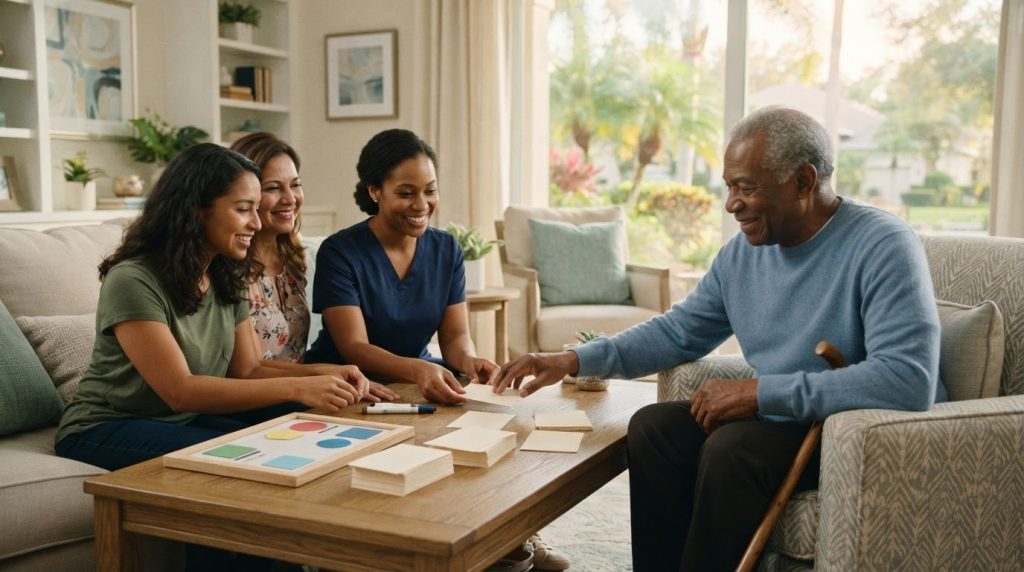
Supporting a loved one after a stroke doesn’t have to mean carrying every responsibility alone. Returning home can bring relief, along with questions about daily routines, safety, and how to share caregiving tasks. A plan for at-home care for stroke patient’s family can make the transition more manageable by balancing family involvement with dependable help.
It’s natural to want to do everything possible while also feeling tired or unsure about what comes next. This guide offers practical ways to organize family responsibilities, prepare questions for the clinical care team, and understand how non-medical personal care and respite can help with day-to-day needs.
You’ll also learn how daily living support differs from clinical treatment and rehabilitation, which remain guided by qualified healthcare professionals. A clear plan and the right support can help make home life steadier while recovery follows the care plan set by the clinical team.
Key Takeaways
- Begin with the discharge instructions, then shape a flexible daily plan around your loved one’s preferences and changing needs.
- Use a shared task list to clarify family roles and make caregiving responsibilities easy to review and adjust.
- Accepting help doesn’t lessen your involvement. At-home care for stroke patient’s family can help relatives stay present without taking on every task alone.
- Include the stroke survivor in home-care decisions as appropriate, with dignity, familiar routines, and clear communication in mind.
- CNA-led non-medical personal care and respite can support daily living while clinical treatment and rehabilitation remain guided by the care team.
Home Care for Stroke Families: Post-Discharge Changes
Leaving the hospital can bring welcome relief, but returning home often begins a new phase of questions and daily responsibilities. Family members may be coordinating routines, helping with personal care, arranging transportation, and keeping track of instructions while adapting to changes in their loved one’s abilities. Recovery varies from person to person, so home support should reflect the individual and the guidance of their healthcare team.
Family support can be practical, emotional, and organizational. It may include helping with everyday tasks, offering encouragement, or keeping relatives informed and connected with the care team. These efforts can complement clinical care, but they don’t replace it or make family members responsible for directing treatment. For a broad overview of recovery and rehabilitation, see the Stroke recovery process.
What families may need to coordinate at home
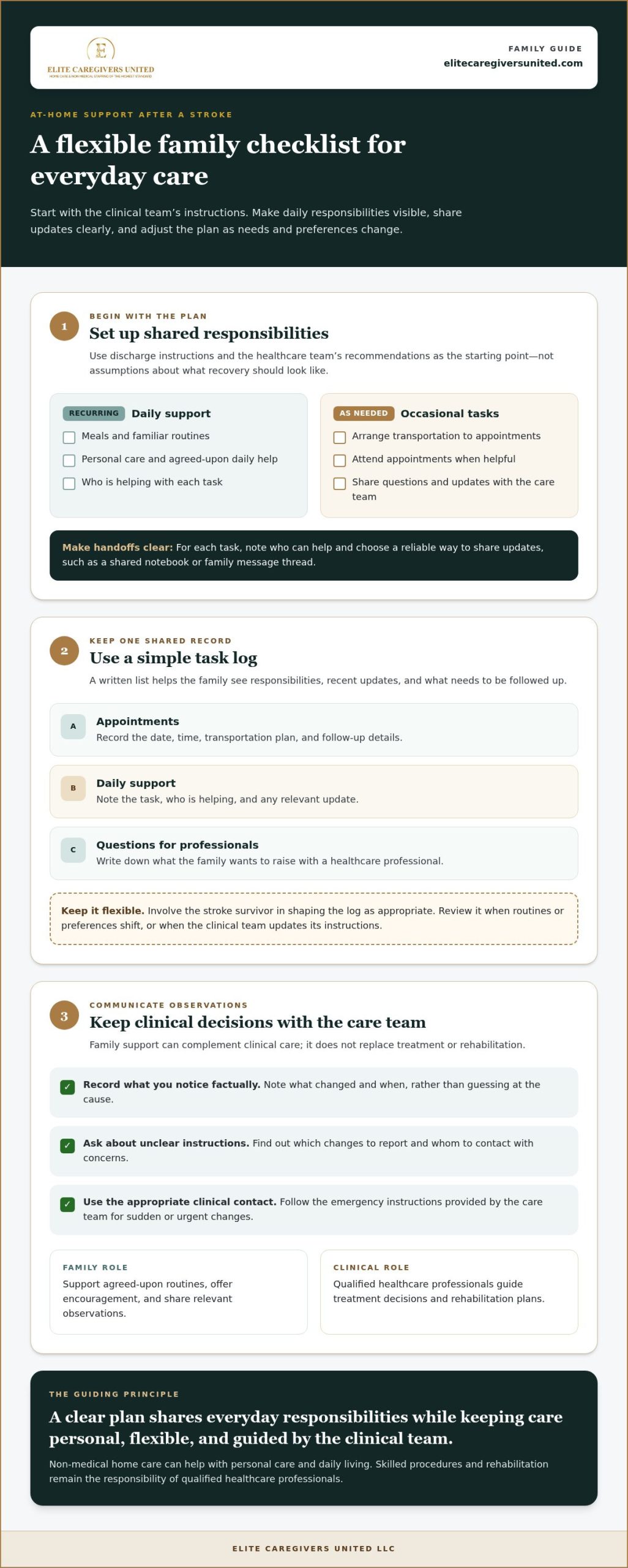
Start by reviewing the discharge instructions and noting the recommendations from the healthcare team. Then list the everyday details that need attention: meals and routines, personal care, transportation to appointments, household tasks, and who will share questions or updates with the care team. A written list makes responsibilities visible and easier to divide. Leave room to revise it as needs change.
Ask the clinical team about any instructions you don’t understand, including which changes to report and whom to contact with concerns. Each person’s abilities, preferences, and support needs differ. Avoid comparing progress with someone else’s experience or assuming recovery will follow a fixed schedule.
How family caregiving differs from clinical recovery care
Healthcare professionals make treatment decisions and establish rehabilitation plans. Family members can support those plans by offering encouragement, helping with agreed-upon daily routines, and sharing relevant observations with the care team. If something concerns you, describe what you’ve noticed rather than trying to diagnose the cause or change treatment on your own.
Non-medical home care provides practical help with personal care and everyday living, supporting a person at home without replacing clinical treatment or rehabilitation. A non-medical caregiver can assist with daily routines and personal care. Skilled procedures and rehabilitation remain the responsibility of qualified healthcare professionals. Knowing the difference helps families understand where everyday support fits and when clinical guidance is needed.
A clear, compassionate plan can make at-home care for stroke patient’s family feel more manageable. Family members can stay involved while sharing everyday responsibilities to create a steadier home routine, without taking the place of the clinical care plan.
How families can organize everyday support after a stroke
A workable plan doesn’t need to answer every future question at once. Begin with the healthcare team’s instructions, then build a routine the family can adjust as the stroke survivor’s needs, preferences, and abilities change. Aim for clarity rather than a rigid schedule.
Build a family care plan that can change over time
Separate recurring daily support from occasional responsibilities. Daily tasks might include help with a routine or personal care. Occasional tasks might include arranging transportation or attending an appointment. For each task, note who can help and choose a reliable way to share updates, such as a shared notebook or family message thread. A written plan helps everyone see assigned responsibilities and recent updates, making handoffs clearer.
Keep a simple shared task log and involve the stroke survivor in shaping it as appropriate. For example, include:
- Appointments: Date, time, transportation plan, and follow-up details.
- Daily support: The task, who is helping, and any relevant update.
- Questions: What the family wants to raise with a healthcare professional.
Review the plan when routines or preferences shift, or when the clinical team updates its instructions. A flexible plan is more useful than a schedule that no longer fits the household.
Coordinate questions and observations with the care team
Use the log to prepare concise questions for conversations with healthcare professionals. Record observations factually, noting what changed and when instead of guessing at the cause. Share concerns through the appropriate clinical contact, and follow the emergency instructions provided by the care team for sudden or urgent changes.
It can also help to understand how rehabilitation fits into the wider care plan. The National Institute of Neurological Disorders and Stroke’s Post-Stroke Rehabilitation guide describes rehabilitation and the roles of healthcare professionals. This context can help relatives keep their responsibilities clear: support the agreed routine, communicate observations, and leave treatment decisions and rehabilitation direction to qualified professionals.
Non-medical support with daily living can complement the plan without taking the place of clinical care. Explore home care support for stroke recovery to learn how help with everyday responsibilities can fit alongside family communication and the clinical care plan.
Does accepting help mean the family is doing less for a stroke survivor?
No. Accepting support can help relatives stay involved without being responsible for every task every day. After a stroke, family members may feel guilty about needing a break, protective of familiar routines, unsure about welcoming someone new into the home, or relieved that another person can help. These feelings can coexist, and none means a family cares less.
Respite care offers planned relief while a loved one continues receiving personal support. A caregiver can assist with daily living while a family member rests, attends an appointment, or takes care of an essential personal commitment. A pause doesn’t replace family connection. It can give relatives time together that isn’t shaped entirely by caregiving tasks. Support can make caregiving more manageable, but it shouldn’t be presented as a way to guarantee or speed up medical recovery.
Recognize signs that caregiving responsibilities need to be shared
Notice whether exhaustion is persistent, social contact has become difficult to maintain, or ordinary responsibilities are increasingly hard to manage. These are reasons to consider support, not evidence of failure. A trusted healthcare professional or caregiver support organization can help you discuss the strain and available resources. The American Stroke Association’s Caregiver Guide to Stroke offers information for families, including guidance related to caring for yourself while supporting a stroke survivor.
Use respite while keeping family relationships central
First, identify what kind of break would help most. You might need time to rest, run errands, or focus on another family responsibility. Agree on which daily routines matter to the stroke survivor and how updates will be shared. This helps relatives stay connected and involved, while clear expectations can make it easier for everyone to welcome support into the household routine.
If your family is considering broader coverage, this guide to 24-hour home care in Orlando explains one option for ongoing support at home. The right arrangement depends on the person’s needs, preferences, and clinical care plan. With at-home care for stroke patient’s family, sharing practical responsibilities can help relatives protect their energy while preserving the personal connection that matters to them.
How to plan practical, respectful at-home support in Orlando
A thoughtful home-support plan begins with the person, not a checklist of assumptions. In Orlando, families can arrange non-medical personal care and respite around their loved one’s needs while keeping clinical questions and treatment decisions with the healthcare team. The goal is daily help that feels respectful, familiar, and coordinated.
Prepare the home routine around dignity and personal preferences
Ask the stroke survivor, as appropriate, which routines feel important, what privacy they prefer, and where assistance would be welcome. Decide how family members and caregivers will share practical updates, such as a change in routine or a task needing follow-up. Keep the clinical care plan accessible and direct medical questions to the treating team. Avoid assuming one home setup or approach to mobility is right for everyone.
- Preferences: Note preferred routines, communication style, and privacy needs.
- Responsibilities: Clarify which daily tasks family members handle and where personal-care assistance may help.
- Updates: Choose a consistent way to share practical changes with the people involved.
- Clinical guidance: Keep care instructions available and direct medical concerns to the treating team.
Choose the right mix of family time and caregiver support
Map out when relatives can provide support, then identify parts of the day when additional help with personal care or everyday routines could make the plan steadier. Depending on the family’s circumstances, support may include scheduled visits, respite, or extended coverage. Include the stroke survivor in decisions as appropriate, and review the arrangement when preferences or needs change.
For a broader overview of non-medical options, read this guide to non-medical home care in Orlando. A clear division of responsibilities can help relatives make time for meaningful connection while personal-care support addresses agreed-upon daily needs. This is one practical way to make at-home care for stroke patient’s family responsive to the individual instead of relying on a one-size-fits-all routine.
Explore personal care and respite support for stroke recovery as you plan a respectful balance of family involvement and help at home.
How Elite Caregivers United supports stroke patients’ families at home
Family members don’t have to manage every daily responsibility alone. Elite Caregivers United LLC provides CNA-led, non-medical personal care and stroke recovery support in Orlando, helping families share practical caregiving tasks while keeping the clinical care plan central. Caregivers assist with personal care and daily living; qualified healthcare professionals continue to direct treatment decisions and rehabilitation.
What non-medical stroke recovery support can look like
Support can be shaped around the person’s routine and the family’s needs. A caregiver may help with agreed-upon personal-care tasks, provide companionship, and assist with everyday activities. This can give relatives more time to focus on being together or to manage other responsibilities. These services do not include clinical treatment, skilled procedures, or physical therapy. They complement the care plan by supporting daily life at home.
Families can use respite when a caregiver needs time to rest or take care of personal commitments, while their loved one continues receiving personal support. Assistance can be arranged around daily needs or as 24-hour care, depending on the family’s circumstances. For a broader explanation of the service category, see this guide to non-medical home care in Orlando.
Take the next step toward dependable family support
A helpful conversation can start with a few details: which routines matter most, which daily tasks are difficult to manage, when family members are available, and what kind of respite would help. Sharing questions and preferences can clarify where non-medical personal care fits alongside family involvement and the clinical team’s instructions.
Exploring support doesn’t mean stepping away. It’s a planning step that can bring more structure to caregiving while respecting the stroke survivor’s dignity and preferences. For families seeking at-home care for stroke patient’s family, CNA-led daily living assistance and respite can provide a dependable layer of non-medical support without replacing clinical care.
Contact Elite Caregivers United LLC in Orlando to discuss your family’s support needs and the routines you’d like help coordinating. You don’t have to carry every part of caregiving alone.
Build a Supportive Plan for the Next Step
Stroke recovery at home asks families to balance practical help, emotional connection, and communication with the clinical team. A flexible plan can clarify everyday responsibilities. Sharing tasks or accepting respite doesn’t diminish a family’s care or involvement. Non-medical support can help with personal care and daily living, while treatment and rehabilitation remain guided by qualified healthcare professionals.
For families considering at-home care for stroke patient’s family, Elite Caregivers United is a Florida-licensed home care agency serving Orlando. Its CNA-led team provides non-medical personal care and recovery support, including respite and daily living assistance. Support can be arranged for daily needs or 24-hour care, based on the family’s circumstances.
Every family’s routines and needs are different. Discussing what feels challenging, which tasks need support, and when respite would help can be a gentle first step toward a more manageable plan. Talk with Elite Caregivers United about supportive care at home. With dependable help around you, your family can continue showing up for one another without managing every responsibility alone.
Frequently Asked Questions
How can family members help a stroke patient at home?
Family members can support daily routines, offer encouragement, and help coordinate appointments while following the healthcare team’s instructions. Ask the stroke survivor what assistance feels helpful, then agree on who will handle recurring tasks such as transportation, household responsibilities, or personal-care support. Keep questions and observations organized for clinical conversations. Share changes with the appropriate care professional rather than making treatment decisions at home.
What does a caregiver do for a stroke patient at home?
A non-medical caregiver can help with personal care, everyday routines, and companionship, sharing practical responsibilities with relatives. The support should reflect the person’s preferences and the family’s needs. A caregiver can follow agreed-upon household routines and communicate practical observations, but does not diagnose, provide clinical treatment, or direct rehabilitation. Medical questions and changes to treatment or rehabilitation plans belong with qualified healthcare professionals.
Can a family caregiver get respite care for a stroke patient?
Yes. Respite care can give family caregivers planned relief while their loved one continues receiving personal support at home. A break might give a relative time to rest, attend an appointment, or manage an essential responsibility. Discuss the routines that matter to the stroke survivor and how updates should be shared. This helps preserve family involvement while adding dependable non-medical assistance.
How do families divide stroke caregiving responsibilities?
List recurring daily tasks and occasional responsibilities, then identify who can help with each one. A shared calendar or written task log can track appointments, assigned support, and questions for the clinical team. Choose one reliable way to share updates, and review the plan as routines or needs change. A flexible written plan for at-home care for stroke patient’s family can help reduce missed handoffs.
When should a family seek professional help after a stroke?
Consider additional support when caregiving demands leave family members persistently exhausted, isolated, or struggling to manage ordinary responsibilities. Non-medical personal care and respite can help with daily living while relatives remain involved. For medical concerns, contact the treating healthcare team. For sudden or urgent changes, follow the team’s emergency instructions. Asking for help is a practical response to changing needs, not a sign of failure.
Does home care after a stroke include physical therapy?
Non-medical home care and physical therapy are different forms of support. Non-medical caregivers can assist with personal care and everyday living, while physical therapy and other rehabilitation are directed by qualified healthcare professionals. Follow the clinical team’s rehabilitation plan and bring treatment questions to them. This distinction helps relatives see how daily assistance can complement clinical care without replacing or directing it.
How can Orlando families arrange at-home support after a stroke?
Orlando families can start by describing the stroke survivor’s routines, personal-care needs, preferences, and the times relatives could use assistance or respite. Elite Caregivers United is a Florida-licensed home care agency serving Orlando, with CNA-led non-medical personal care, recovery support, and respite. Support can be arranged for daily or 24-hour needs based on family circumstances, while clinical treatment and rehabilitation remain with the healthcare team.