

What if the most loving thing you could do for a family member with Alzheimer’s isn’t to provide every ounce of care yourself, but to step back into your role as a spouse or child while a professional handles the rest? When you begin the journey of hiring a CNA for dementia care Orlando families often feel a heavy weight of responsibility, yet finding the right specialist can transform a home from a place of anxiety into a sanctuary of peace. You likely feel that no one can care for your loved one quite like you can, and the fear of wandering or a sudden fall keeps you awake at night. It’s exhausting to balance complex clinical needs with the emotional heart of your family.
This 2026 guide will show you how to hire a Certified Nursing Assistant with the specific expertise needed to manage dementia with dignity and grace. We’ll explore Florida’s latest training requirements, including the 2026 compliance standards, and explain how to create a stable environment that lets you focus on being a family member again. You’ll gain the confidence to invite a professional protector into your home, ensuring your loved one remains safe, comfortable, and cherished.
Key Takeaways
- Understand the vital distinction between general companionship and the specialized support provided by a Certified Nursing Assistant trained in memory loss protocols and safety.
- Discover how the “Aging in Place” philosophy fosters a stable, familiar environment that reduces anxiety and preserves the dignity of your loved one.
- Master the essential criteria for hiring a CNA for dementia care Orlando families can trust, focusing on specialized skills like validation therapy and managing late-afternoon confusion.
- Learn to conduct a comprehensive room-by-room safety assessment to mitigate risks of wandering and falls while establishing an organized caregiver station for seamless support.
- Explore how professional 24/7 respite care provides a reliable extension of your family’s support system, allowing you to reclaim your role as a spouse or child.
What is a Specialized CNA for Dementia Care?
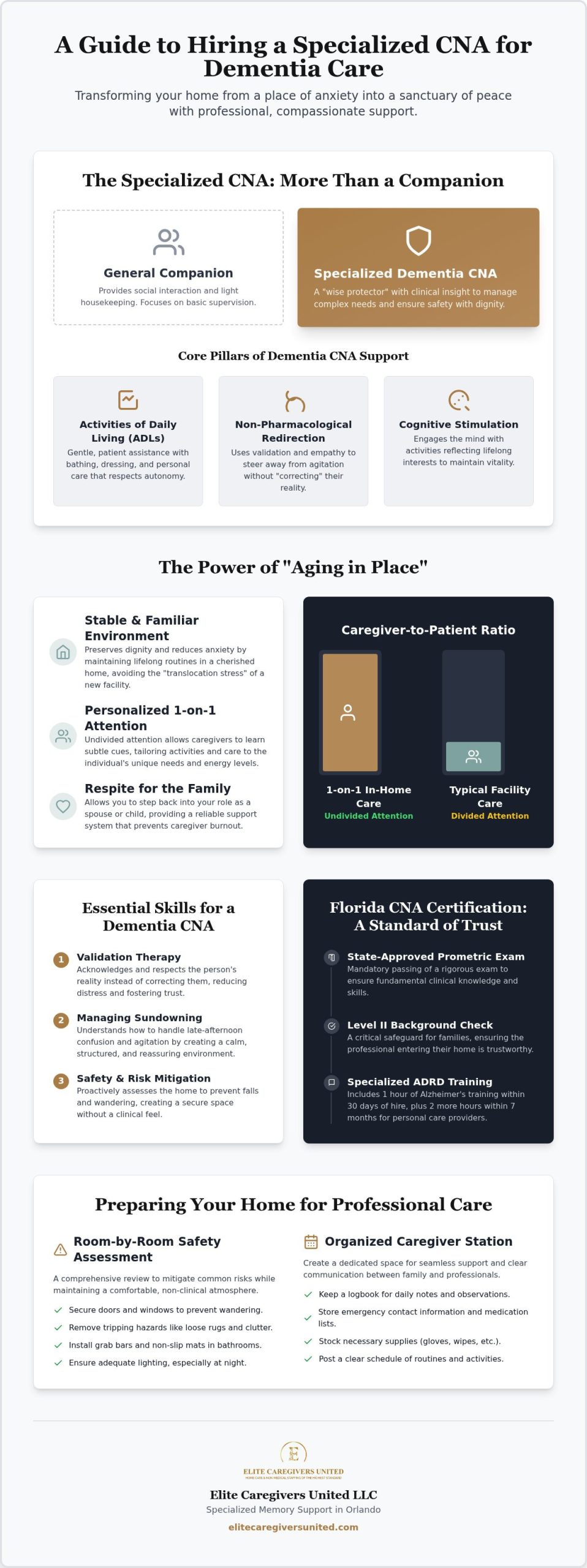
A specialized Certified Nursing Assistant is far more than a helper; they’re a professional dedicated to preserving the quality of life for those facing memory loss. While a companion might provide social interaction or light housekeeping, a CNA possesses the clinical insight to recognize subtle changes in behavior that signal deeper physical or emotional needs. By understanding dementia as a complex neurological journey, these caregivers provide a layer of safety that goes beyond basic supervision. When you begin the process of hiring a CNA for dementia care Orlando families often discover that this professional acts as a “wise protector,” shielding the family from the crushing weight of clinical management while ensuring the loved one remains in a dignified, familiar setting. They’re trained to see the person behind the diagnosis, ensuring that every interaction is rooted in respect rather than just task completion.
Core Responsibilities of a Dementia CNA
A dementia-specialized CNA focuses on three primary pillars of support to maintain a calm home environment. First, they assist with Activities of Daily Living (ADLs) like bathing and dressing, performing these personal tasks with a gentle patience that respects the individual’s autonomy. Second, they’re experts in non-pharmacological redirection. When a loved one becomes agitated or confused, the CNA uses validation and empathy to steer them toward a sense of security without relying on “correcting” their reality. Finally, they provide structured cognitive stimulation. This isn’t just about passing time; it’s about engaging the mind through social interactions and activities that reflect the person’s lifelong interests, helping to maintain vitality and connection.
Why Certification Matters in Florida
In Florida, certification represents a rigorous standard designed to protect vulnerable seniors. Every CNA must pass the state-approved Prometric exam and undergo a Level II background check, which is a critical safeguard for families inviting a professional into their private space. Beyond the initial license, Florida mandates specific training for Alzheimer’s and related dementias (ADRD). This includes an initial hour of specialized education within 30 days of hire and an additional two hours within seven months for those providing personal care. This structured oversight ensures that your caregiver is equipped to handle the complexities of memory loss, resulting in significantly better safety outcomes and a higher standard of living for Orlando seniors who wish to age in place.
The Benefits of In-Home Memory Care for Orlando Families
For many seniors, their home is a tapestry of memories that provides a vital sense of grounding when the world begins to feel uncertain. Choosing to keep a loved one in their familiar Orlando neighborhood preserves their dignity, allowing them to wake up in their own bed and follow a lifelong rhythm. This “Aging in Place” philosophy isn’t just a preference; it’s a therapeutic strategy that prioritizes emotional stability. Routine serves as the best medicine for memory loss, offering a predictable structure that reduces the confusion and agitation often triggered by new environments. By Understanding Non-Medical Home Care in Orlando, families can bypass the trauma associated with moving to a residential facility. Such moves often cause “translocation stress,” which can accelerate cognitive decline due to the overwhelming sensory changes of a clinical setting.
Personalized 1-on-1 Attention
In a facility, even the most dedicated staff members are often stretched thin, managing multiple residents at once. When you prioritize hiring a CNA for dementia care Orlando services offer, your loved one receives undivided attention that adapts to their unique needs. This 1-on-1 ratio allows the caregiver to learn the subtle “language” of the patient, recognizing the tiny facial cues or shifts in posture that signal discomfort before a crisis occurs. Care is tailored to the individual’s specific high-energy times, ensuring cognitive activities happen when they’re most receptive. A professional also understands home safety for dementia care, carefully adjusting the living space to prevent falls while maintaining a warm, non-clinical atmosphere.
Respite for the Family Caregiver
Caregiver burnout is a silent crisis among Central Florida families, often leading to emotional exhaustion and physical health issues for the primary provider. Bringing a professional into the home provides the essential relief needed to sustain the family bond over the long term. It allows adult children to step away from the stressful duties of a clinical provider and return to being “children” again, focusing on shared moments and emotional connection. For those requiring more intensive support, The Essential Guide to 24-Hour Home Care in Orlando offers a path toward constant security. This steady, guiding presence acts as a reliable extension of your support system, helping you find peace of mind through specialized Alzheimer’s and dementia care.
Key Skills to Look for When Hiring a Dementia Caregiver
Identifying the right professional involves looking beyond a certificate to find a “wise protector” who understands the emotional nuances of memory loss. When you are hiring a CNA for dementia care Orlando families must prioritize specific behavioral management techniques that ensure daily life remains calm and predictable. A primary skill to look for is experience with “sundowning,” a phenomenon where late-afternoon confusion can lead to heightened anxiety. A skilled CNA knows how to soften the environment, using lighting and soothing activities to ease this transition, rather than reacting with frustration. This proactive approach minimizes the stress that often leads to difficult behavioral episodes.
Validation and redirection are equally critical. Instead of correcting a loved one’s reality, which often triggers distress, an expert caregiver validates their feelings and gently redirects their focus toward a comforting activity. This approach preserves dignity while maintaining safety. Additionally, a deep understanding of wandering prevention is non-negotiable. A dedicated CNA remains vigilant for exit-seeking behaviors, implementing subtle home safety protocols that prevent a loved one from straying into danger. They act as a steady, guiding presence, ensuring that the home remains a secure sanctuary even during periods of restlessness or confusion.
Technical vs. Soft Skills
While the ability to assist with mobility and physical safety is a necessary technical skill, empathy is the bridge that builds a foundation of trust. During the interview, assess the caregiver’s communication style and their capacity for active listening. These soft skills are essential for de-escalating agitation, as a calm and steady voice can often resolve a tense moment more effectively than any clinical intervention. A caregiver who remains emotionally regulated during repetitive questioning demonstrates the patience required for long-term memory support. They don’t just perform tasks; they provide a sense of security through their gentle and attentive presence.
Specific Experience with Neurodegenerative Conditions
It’s vital to distinguish between general elder care and specialized support for conditions like Alzheimer’s or Parkinson’s. Each condition presents unique challenges, from the cognitive shifts of memory loss to the physical tremors associated with Parkinson’s. When vetting Dementia Home Care Agencies in Orlando, ask detailed questions about a candidate’s previous experience with different stages of the disease. Understanding how they have managed specific symptoms in the past will give you confidence in their professional expertise. Finding a caregiver with these specific skills is the most important step in hiring a CNA for dementia care Orlando families can take to ensure long-term stability and peace of mind.
How to Prepare Your Orlando Home for Professional Dementia Care
Preparing your environment is a transformative step that turns a private residence into a supportive care setting. When you move forward with hiring a CNA for dementia care Orlando professionals will need a workspace that prioritizes both the safety of your loved one and the efficiency of the care provided. Start with a room-by-room safety assessment. Focus specifically on areas where falls or wandering might occur, such as unsecured rugs, slippery floors, or dim hallways. By identifying these risks early, you empower the caregiver to act as a proactive guardian rather than a reactive observer, creating a foundation of trust before the first shift begins.
Establishing a dedicated “Caregiver Station” is equally important for maintaining a calm and organized household. This area should house essential documents, including medication schedules, emergency contacts, and a detailed communication log. A log is a vital tool for tracking daily activities, sleep patterns, appetite, and subtle behavioral changes, ensuring that every family member stays informed. Setting clear boundaries and expectations from day one fosters a professional relationship built on mutual respect. It’s helpful to outline specific household rules and preferences, which allows the CNA to integrate seamlessly into your family’s unique rhythm while acting as your steady, guiding partner.
Safety and Navigation Aids
To assist with cognitive challenges, use high-contrast colors and clear signage to mark important rooms like the bathroom or bedroom. Removing tripping hazards such as area rugs and ensuring adequate lighting in every corner can significantly reduce fall risks. In the kitchen and laundry room, consider safety locks for appliances or cabinets to prevent accidents during periods of confusion. These small, deliberate adjustments create a “forgiving” environment that supports your loved one’s independence while maintaining a high standard of professional security.
The First Week: Setting the Tone
The initial transition can be delicate, especially if a loved one is resistant to accepting help from a stranger. Introduce the new caregiver as a “friend of the family” or a “special assistant” to lower emotional defenses and reduce anxiety. Building a consistent routine during this first week is crucial, as it helps the patient associate the caregiver’s presence with comfort and stability. For families who need a gradual transition, Compassionate Respite Care for Dementia Patients in Orlando offers a gentle way to introduce professional support into the home. If you’re ready to create a safer and more nurturing home environment, contact Elite Caregivers United for a personalized home care consultation.
Elite Caregivers United: Specialized Memory Support in Orlando
Choosing a partner for memory care is one of the most significant decisions a family can make, and at Elite Caregivers United LLC, we don’t take that responsibility lightly. Our Kirkman Road headquarters serves as the heart of our mission, providing specialized Alzheimer’s and dementia care across Central Florida with a focus on professional excellence. By prioritizing a CNA-led approach, we offer a higher standard of non-medical support that ensures your loved one is looked after by a trained expert who understands the nuances of neurodegenerative conditions. When you’re hiring a CNA for dementia care Orlando services from our team provide the 24/7 peace of mind you need, knowing that a “wise protector” is always present to maintain a stable and nurturing home environment.
We believe that every individual deserves to age with dignity, which is why we go beyond basic assistance to focus on vitality and comfort. As you consider hiring a CNA for dementia care Orlando families often find that our matching process is the most critical step, ensuring that the caregiver we place in your home aligns with your family’s unique personality and specific care requirements. This personalized connection is what transforms professional support into a reliable extension of your own family, allowing for a seamless integration that respects your household’s existing rhythms. It’s about more than just safety; it’s about fostering a sense of joy and belonging in the place they love most.
Expert Care for Complex Needs
Our team specializes in supporting those with complex neurodegenerative needs, offering a level of expertise that general companion services simply can’t match. We understand that Alzheimer’s and Parkinson’s require a patient, informed approach, and our CNAs are trained to handle the evolving challenges these conditions present. Starting a personalized care plan with us involves a thorough assessment of your loved one’s history and current needs, ensuring that every intervention is purposeful and supportive. It’s this commitment to professional standards that has made us a trusted name for families seeking reliable home care that doesn’t feel cold or clinical.
Supporting the Entire Family Unit
We don’t just care for the patient; we care for the family as a whole. Our respite services are designed to alleviate the emotional weight of caregiving, giving you the time and space to focus on your own well-being. By acting as a steady, guiding presence, we allow you to step back from the role of a clinical provider and return to being a supportive daughter, son, or spouse. This partnership is built on a foundation of trust and heartfelt dedication, ensuring that you’re never alone on this journey. If you’re ready to find a sustainable solution for your family, schedule a compassionate consultation with our Orlando team today and discover how we can help your loved one thrive at home.
Embracing a Future of Safety and Connection
Navigating the complexities of memory loss requires more than just supervision; it demands a dedicated partner who understands the emotional and clinical needs of your loved one. By prioritizing specialized skills like validation therapy and preparing your home for professional support, you create a foundation where safety and dignity can coexist. The process of hiring a CNA for dementia care Orlando families trust is the first step toward restoring peace to your household, allowing you to step back from clinical duties and return to your vital role as a family member.
As a licensed Florida home health agency, Elite Caregivers United offers a CNA-led professional memory care team committed to providing 24/7 respite and daily living support. Our “wise protectors” act as a reliable extension of your family, ensuring your loved one remains in the familiar, nurturing environment they cherish. You don’t have to face the weight of caregiver burnout alone. Schedule a Compassionate Consultation for Alzheimer’s Care in Orlando to discover how we can support your family with sincerity and expertise. We’re here to help you move forward with confidence and grace.
Frequently Asked Questions
What is the difference between a CNA and a regular home health aide for dementia?
A Certified Nursing Assistant holds a state-issued license that requires formal clinical training and rigorous testing, while a home health aide typically focuses on basic companionship. In Florida, CNAs must complete specific training on Alzheimer’s and related dementias to manage safety and behavioral protocols effectively. This higher standard of professional expertise ensures that your loved one is cared for by a wise protector who can recognize subtle shifts in well-being that others might miss.
How do I know when it is time to hire professional help for Alzheimer’s?
It’s often time to seek support when the primary caregiver feels the weight of emotional exhaustion or when the loved one’s safety is compromised by wandering or frequent falls. If you find yourself focusing more on clinical tasks than on your family relationship, bringing in a professional can restore a sense of peace. Early intervention helps maintain a calm home environment, preventing the sudden crises that often lead to a loss of independence for the patient.
Can a CNA help with aggressive behaviors or wandering in a dementia patient?
Yes, a CNA trained in memory support uses non-pharmacological redirection and validation techniques to de-escalate moments of agitation or aggression. They’re proactive in identifying environmental triggers that lead to exit-seeking behaviors, implementing subtle safety measures to prevent wandering before it occurs. When hiring a CNA for dementia care Orlando families benefit from a caregiver who remains emotionally regulated, providing a steady and reassuring presence that helps the patient feel secure and understood.
Is 24-hour in-home care more affordable than a memory care facility in Orlando?
The choice between home care and a facility often depends on the specific level of personalized attention your loved one requires. While facilities have shared staffing ratios, 24-hour in-home care provides undivided one-on-one support in a familiar setting. Many families find that the emotional benefits of “aging in place” and the ability to maintain a lifelong routine make home care a more sustainable and dignified long-term choice for their family’s unique needs.
What questions should I ask when interviewing a CNA for dementia care?
Ask candidates about their specific experience with “sundowning” and how they manage repetitive questioning without losing their sense of patience. It’s vital to inquire about their familiarity with Florida’s latest training requirements and how they’ve handled exit-seeking behaviors in the past. Always ask for concrete examples of how they’ve used redirection to calm an agitated patient, ensuring their communication style aligns with your loved one’s personality and your family’s standards of care.
How do you help a loved one who refuses to let a caregiver into the house?
Introducing a professional as a “friend of the family” or a “special assistant” can often lower emotional defenses and reduce the anxiety associated with losing independence. Start with shorter shifts focused on companionship rather than personal care, allowing the bond of trust to grow naturally over time. A professional CNA is skilled at integrating themselves into the household rhythm with humility, slowly becoming a welcomed and reliable extension of your family’s support system.
Does Florida insurance or Medicare cover non-medical dementia care?
Medicare typically does not cover non-medical personal care or respite services provided in the home. However, many long-term care insurance policies and certain Florida Medicaid waiver programs may provide coverage for these essential services. We recommend reviewing your specific policy or consulting with a professional to understand the financial resources available for hiring a CNA for dementia care Orlando families can rely on for long-term stability and professional memory support.
How many hours of care are typically recommended for a middle-stage dementia patient?
Most families find that 20 to 40 hours of weekly support is a helpful starting point for middle-stage dementia, though 24/7 care is often recommended as symptoms progress. This schedule provides the family with significant respite while ensuring the loved one has a consistent routine and professional supervision during their most active or confused hours. Each plan should be personalized to reflect the individual’s specific behavioral patterns and the family’s unique safety requirements.