

What if an Orlando vacation could include the outings your family is looking forward to, without leaving one person to manage every care need? Crowds, long days, and a change in routine can make travel feel demanding for a loved one who needs extra support. An Orlando vacation caregiver can provide individualized, non-medical personal care and companionship, helping your family plan a more comfortable trip.
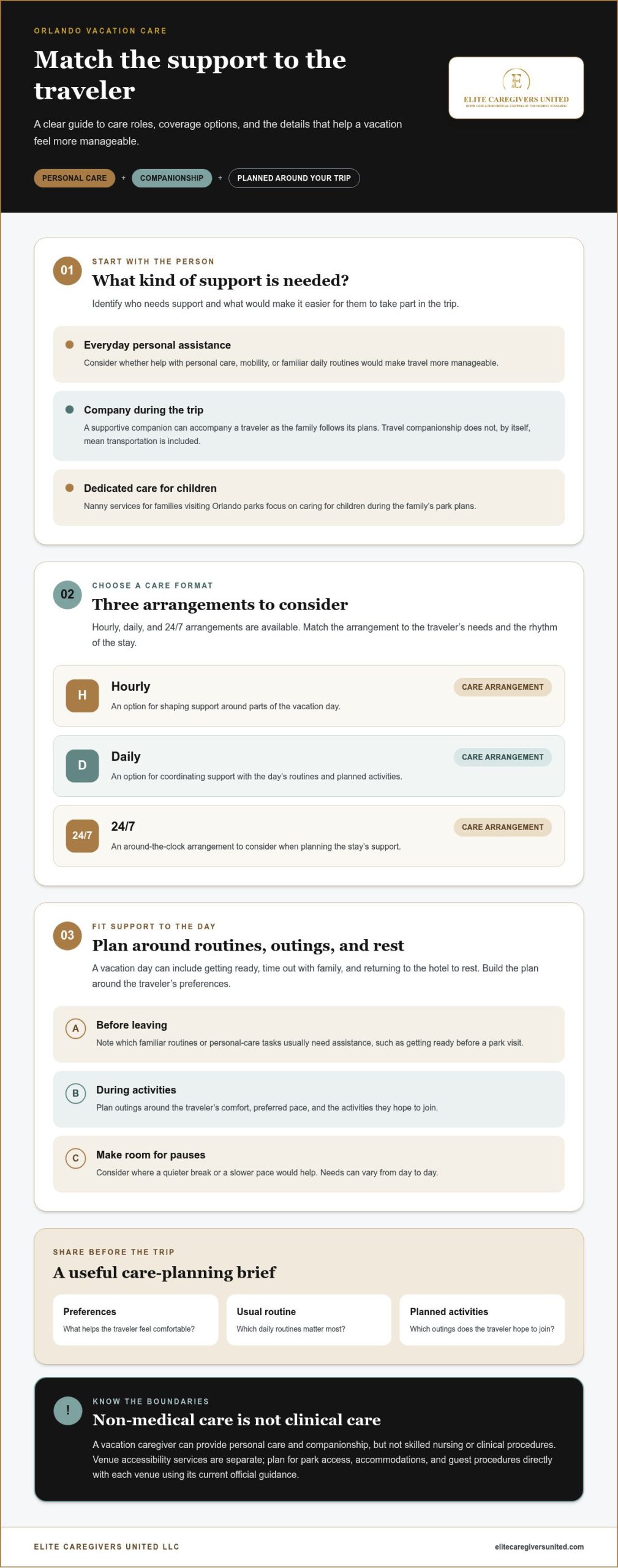
It’s understandable to wonder whether a caregiver, travel companion, or nanny is the right fit, and what support each can provide during a vacation. Start by identifying who needs support and what would help them take part in the trip: assistance with everyday routines, companionship during outings, or dedicated care for children at the parks. Then build the schedule around the traveler’s preferences, planned activities, and opportunities to rest.
This guide explains how vacation caregiving can support personal care, companionship, and theme-park outings, and clarifies what non-medical care can and can’t do. You’ll also find practical ways to share travel needs and coordinate support with your itinerary.
Key Takeaways
- Match an Orlando vacation caregiver’s support to your loved one’s daily needs and the activities on your itinerary.
- Compare hourly, daily, and 24/7 care arrangements to shape support around your family’s trip.
- Weigh family-managed care against scheduled caregiver support to identify where extra help or respite could make a difference.
- Use a step-by-step planning approach to coordinate care with outings at Walt Disney World Resort or Universal Orlando Resort.
- Elite Caregivers United provides travel companion and amusement-park caregiver services for Orlando visits.
What an Orlando Vacation Caregiver Can Add to Your Family Trip
An Orlando vacation can involve early starts, busy attractions, meals away from home, and long stretches of activity. For a loved one who benefits from assistance, keeping up with the family’s plans while maintaining familiar routines can take extra energy. Support doesn’t have to mean stepping away from the vacation. Thoughtful planning can make room for shared activities as well as needed pauses.
A vacation caregiver provides non-medical personal assistance and companionship to help a traveler take part in family plans while away from home. Support may include help with personal care, daily routines, or having company during an outing. The arrangement is shaped around the traveler’s needs and the family’s itinerary. It is not a clinical service or a substitute for a venue’s accessibility services.
Who may benefit from caregiver support while visiting Orlando?
Older adults and adults of different ages may appreciate support with mobility, personal care, companionship, or everyday routines that make travel more manageable. A traveler might want assistance getting ready before a park visit, company during a quieter break, or help staying comfortable as the day’s plans unfold. The practical question is what would help this person participate with greater ease.
Needs can vary from day to day. Someone may feel ready for a longer outing one morning and prefer a slower pace the next. Before the trip, consider what support is usually helpful, which routines matter most, and where flexibility would ease the pressure. For example, note whether the traveler prefers a quiet pause after an outing or wants to join the group for meals. A caregiver can complement the family’s involvement, giving relatives more opportunity to share the experience instead of coordinating every detail of care themselves.
Caregiver, travel companion, or nanny: what is the difference?
These terms describe different kinds of support, though needs can overlap. A caregiver’s role centers on personal assistance and supportive companionship. Travel companionship describes support during a trip, helping a traveler remain accompanied as the family follows its plans. The term doesn’t, by itself, mean transportation is included.
Dedicated nanny services focus on families visiting Orlando parks, with care centered on children during the family’s park plans. That differs from caregiver support for an adult who benefits from help with personal care or daily routines. Start by identifying who needs support and the main tasks or companionship they need. This makes it easier to distinguish between the types of care involved in a family trip.
Caregiving also has clear boundaries. Non-medical caregivers provide personal care and companionship, not skilled nursing or clinical procedures. Venue accessibility services are separate: a caregiver’s presence doesn’t determine park access, accommodations, or guest procedures. Families should plan for those separately and consult each venue’s current official guidance for its policies. An Orlando vacation caregiver can support the traveler, while the venue remains responsible for its own services and procedures.
How Orlando Vacation Caregiver Support Can Fit Different Needs
Useful support starts with the traveler’s everyday routine, not a generic vacation checklist. Consider what helps the person feel comfortable at home, which parts of the day require assistance, and how those needs fit around outings. One family may value personal care support before leaving the hotel; another may prioritize a reassuring companion during a day with changing plans. Identify those priorities first, then match the care arrangement to them.
Personal care and companionship during vacation days
Personal care and companionship serve related but distinct needs. Personal care supports a traveler with everyday assistance, while companionship offers a supportive presence during the trip. Elite Caregivers United provides non-medical care through hourly, daily, and 24/7 arrangements, giving families options for matching support to the length and rhythm of their stay.
Think through a typical vacation day: getting ready, time out with family, and a return to the hotel for rest. Mark which parts of that day usually involve assistance and which routines the traveler prefers to keep. Keeping familiar routines in the plan can make transitions feel steadier, while downtime gives the traveler and family flexibility. When arranging support, share the person’s preferences, usual routine, and the activities they hope to join. A clear picture helps shape care around the individual, not just the itinerary.
Travel companionship supports a person during a trip through non-medical assistance and company; it is not skilled medical care. Families planning accessible travel may also find practical ideas in United Cerebral Palsy’s Accessible Travel Guide for Disabilities. That resource can complement care planning, while the caregiver’s role remains focused on personal care and companionship.
Support for Orlando theme-park visits
A park day can call for a different rhythm from a quiet day at the hotel. Elite Caregivers United provides dedicated caregiver or nanny support for families visiting Orlando amusement parks. Plan that support around the intended schedule, the traveler’s comfort, and opportunities to pause. Avoid assuming that every person will want the same pace or activities.
For example, a family might plan a shorter outing or build in a flexible break, then share the traveler’s routines and preferences when coordinating care. A caregiver or nanny provides a supportive presence within the agreed non-medical role. This doesn’t promise park entry, special access, or venue accommodations. Review current park policies separately as you prepare your plans.
For families considering dedicated support with children during park visits, the Orlando amusement park nanny guide explores that option in more detail. Think about the park schedule, who needs care, and when the family may want a rest period. These details help clarify what kind of support best fits the day. Families can also explore Elite Caregivers United’s Orlando care services as they shape their travel plans.
Vacation Caregiver or Family-Only Support: Choosing the Right Plan
Family-only care may feel comfortable when relatives can share responsibilities and the traveler’s usual support needs fit easily into the trip. But a full itinerary can leave little room for everyone to rest, enjoy an activity, or simply be present together. Scheduled caregiver support offers another way to divide the day, with non-medical assistance planned around the traveler’s needs and the family’s activities.
Use these questions to decide which approach may suit your Orlando visit. The goal isn’t to make a medical assessment or predict exactly how every day will go. It’s to identify where help would make the plan more manageable.
- Care needs: Can family members comfortably support the traveler’s usual daily routines, or would personal assistance from a caregiver be helpful?
- Planned outings: Do longer days or multiple activities make it harder to balance the traveler’s comfort with the group’s schedule?
- Family capacity: Can relatives share care responsibilities while still leaving time to enjoy the trip together?
- Desired respite: Would scheduled support give family caregivers a planned opportunity to pause or take part in another activity?
Signs your Orlando itinerary may benefit from extra support
Consider extra support if everyday routines or personal assistance could make a long outing harder to manage, or if relatives expect to take turns coordinating care throughout the day. The traveler’s preferences matter, too. Think about their energy, comfort, and interest in each planned activity. A flexible itinerary paired with scheduled support can help the family avoid making every decision on the spot.
Even when relatives are glad to provide care, a break can be valuable. If family members want to share responsibilities more evenly, enjoy part of an outing, or rest while the traveler has supportive company, an Orlando vacation caregiver may be a useful part of the plan. Schedule support for the parts of the trip where it would help most, rather than treating it as an all-or-nothing choice.
Understanding non-medical care boundaries
Elite Caregivers United provides non-medical personal care and companionship. That support can complement a family’s travel plans, but it isn’t skilled nursing, clinical procedures, or physical therapy. If a traveler’s needs require skilled nursing or therapy, a non-medical caregiver isn’t a substitute for that clinical care. Being clear about this distinction helps families match support to the type of need and plan with realistic expectations.
For broader context on the scope of this support, the non-medical home care guide explains how non-medical care can support everyday needs. Keep that distinction in mind when weighing family-only care against scheduled assistance. The right plan fits the traveler’s preferences, the family’s capacity, and the care required without asking a caregiver to provide clinical services.
Plan Orlando Outings with a Vacation Caregiver Step by Step
Coordination before the trip can make outings feel more considered and less rushed. Planning with an Orlando vacation caregiver means sharing the traveler’s support priorities, matching them to the itinerary, and leaving room for comfort and changing energy. Use these steps to prepare for a day at Walt Disney World Resort, Universal Orlando Resort, or another Orlando destination.
Plan by sharing the traveler’s needs, matching support to the itinerary, building in flexible breaks, and reviewing each venue’s current procedures.
- Outline the traveler’s everyday support needs. Note the routines and personal assistance that matter during a typical day, along with preferences that may help the traveler feel at ease away from home. Keep the information relevant to coordinating non-medical support, and avoid sharing unrelated sensitive details.
- Sketch the itinerary. List outing dates, likely activities, and the parts of the day the traveler especially wants to join. A theme-park day may have a different pace from a relaxed meal or a quieter afternoon, so consider each outing separately.
- Identify the family’s planning point person. Decide which family member will coordinate schedule details and communicate updates. This helps everyone understand who is organizing the day without placing all care coordination on one person.
- Discuss how caregiver support fits the plan. Share the itinerary, daily routines, and priorities with the care team so support can be planned in context. Be clear about the non-medical role and the family’s responsibilities during the outing.
- Review venue information and revisit the plan. Before visiting Walt Disney World Resort, Universal Orlando Resort, or another attraction, consult its official information for current accessibility services, caregiver entry procedures, and guest policies. Review the information again close to the visit because procedures can change.
Share the itinerary, routines, and support priorities
Make the plan specific enough to guide the day, but flexible enough to adapt. Include planned activities, the traveler’s preferred pace, rest preferences, and relevant everyday assistance needs. For example, if the group expects a full morning at a park, note where the family hopes to pause or adjust plans. A shared outline helps the family and caregiver understand priorities without assuming the day must follow a fixed schedule.
Coordinate outings, breaks, and venue procedures
Build in pauses that make sense for the traveler instead of following a universal timetable. A break could mean stepping away from an activity, slowing the pace, or revisiting the plan together. Venue policies and accessibility procedures are separate from caregiver support, so consult official guidance for the specific park. A caregiver provides non-medical assistance and companionship; family members remain responsible for coordinating the trip and venue arrangements.
Thoughtful preparation can help the care plan and vacation schedule work together. Coordinate Orlando travel caregiver support with Elite Caregivers United as you plan your outing.
Arrange Orlando Vacation Caregiver Support with Elite Caregivers United
Planning care for a trip is personal: the right support depends on the traveler’s routines, the family’s itinerary, and the assistance that would feel comfortable. Elite Caregivers United provides Orlando travel companion services and dedicated caregivers or nannies for amusement-park visitors. Its professional CNA team offers non-medical personal care and companionship through hourly, daily, and 24/7 care arrangements.
An Orlando vacation caregiver can complement family plans without taking over family decisions. Share practical trip details to focus the care conversation on the traveler’s preferences and the support the family needs. Care remains non-medical, focused on personal care and companionship rather than skilled nursing or clinical procedures.
What families can bring to an initial care conversation
A few clear notes can help you describe the trip without preparing an elaborate care plan. Consider bringing:
- Trip dates and a broad itinerary: Note the length of the visit and which days may include outings, park visits, or quieter plans.
- Typical support needs: Describe the everyday personal assistance or companionship the traveler usually uses, keeping the focus on practical non-medical care.
- Important routines and preferences: Share what helps the person feel at ease, how they like to balance assistance and independence, and whether they prefer a slower or more flexible pace.
- Family coordination: Identify who will organize schedule details and share updates, so communication has a clear point of contact.
These details can help distinguish between support for a particular outing and companionship across more of the trip. For instance, one family may want assistance during planned activities, while another may want support that fits around a broader daily schedule. Be specific about priorities and what the traveler values, while leaving room for the itinerary to change.
Take the next step toward a more supported Orlando visit
Care planning works best as a collaboration. Families know the traveler’s preferences and make decisions about the vacation; a caregiver provides agreed-upon non-medical support alongside those plans. As you prepare, consider which parts of the trip you most want to share together and where additional personal care or companionship would help.
You don’t need to have every detail settled before starting a conversation. Begin with the broad schedule, the traveler’s usual support, and the balance of assistance and independence that feels right for your family. Then discuss how Elite Caregivers United’s travel companion or amusement-park caregiver services can fit your Orlando plans.
If you’re ready to discuss support for your trip, Discuss vacation caregiver support in Orlando with Elite Caregivers United.
Make Room for the Kind of Trip Your Family Wants
Before finalizing your plans, consider what would make the visit meaningful for the person receiving support. It might be sharing a favorite attraction, enjoying time together without rushing, or having flexibility to change plans when energy shifts. Let that priority guide your choices so the trip feels personal rather than built around a packed schedule.
Care planning is one part of the preparation. An Orlando vacation caregiver can complement the family’s choices, while loved ones remain involved in deciding what feels comfortable and worthwhile. A useful first step is to describe the experience you hope to create and the assistance that could help support it.
When you’re ready to explore how care can fit your family’s travel plans, Talk with Elite Caregivers United about Orlando vacation caregiver support. Discuss the traveler’s routines, your itinerary, and where personal care or companionship would be most useful. With care and flexibility built into the plan, your family can focus on the moments you most want to share.
Frequently Asked Questions
Can I hire a caregiver for an Orlando vacation?
Yes. Elite Caregivers United LLC provides travel companion services and non-medical personal care in Orlando, including support arranged for a vacation. An Orlando vacation caregiver may help when a traveler benefits from assistance or companionship away from home. To plan, outline the trip dates, the traveler’s usual support needs, and the activities they hope to join. These details keep the conversation focused on practical care that complements your family’s plans.
Can a vacation caregiver accompany my family to Walt Disney World or Universal Orlando?
Elite Caregivers United offers dedicated caregiver services for families visiting Orlando amusement parks. Venue admission, accessibility services, and guest procedures are governed by each park’s current policies, so review official information for Walt Disney World Resort or Universal Orlando Resort before your visit. A caregiver’s role is separate from venue-provided services, and arranging care does not guarantee park access or accommodations. Include the intended outing in your care-planning conversation.
What is the difference between a vacation caregiver and a theme-park nanny?
A vacation caregiver generally supports an adult or other traveler who benefits from personal assistance or companionship during a trip. A theme-park nanny service is focused on families visiting Orlando parks and care for children during park plans. The best fit depends on who needs support and what kind is wanted. If both adults and children need help, describe each person’s needs separately when discussing the family’s arrangements.
Can an Orlando vacation caregiver provide skilled nursing or physical therapy?
No. Elite Caregivers United provides non-medical personal care and companionship, not skilled nursing, clinical procedures, or physical therapy. If the traveler requires clinical care during the trip, this service should not be treated as a replacement for it. Families can discuss non-medical support that complements their plans, such as companionship or daily living assistance, while keeping clinical needs and caregiver responsibilities clearly distinguished.
How many hours can a vacation caregiver work during a family trip?
Elite Caregivers United offers hourly, daily, and 24/7 care arrangements. The schedule that suits a trip depends on when support is wanted, such as during a planned outing, across a full day, or throughout the stay. Prepare a rough calendar showing travel dates and activities, then discuss the preferred coverage pattern. These options describe care arrangements, not a promise that a particular park or activity will be accessible.
Can a caregiver support a traveler with dementia during an Orlando vacation?
Yes. Elite Caregivers United provides Alzheimer’s and dementia care, and families can arrange non-medical support for a traveler with dementia during an Orlando trip. Share relevant routines, preferences, and what helps the person feel comfortable in unfamiliar settings. For example, explain how the traveler prefers plans to be introduced or what pace feels manageable. This keeps the discussion centered on personalized companionship and care, not clinical support.
Should I arrange a caregiver for the entire trip or only for park days?
Choose coverage based on when support would be most useful, rather than assuming it must cover every vacation day. If the traveler is comfortable with family support during quieter plans but would appreciate extra help on demanding outing days, scheduled care for those periods may fit. If support is needed across everyday routines throughout the stay, broader coverage may be more suitable. Compare the itinerary with the traveler’s preferences and the family’s capacity before deciding.