
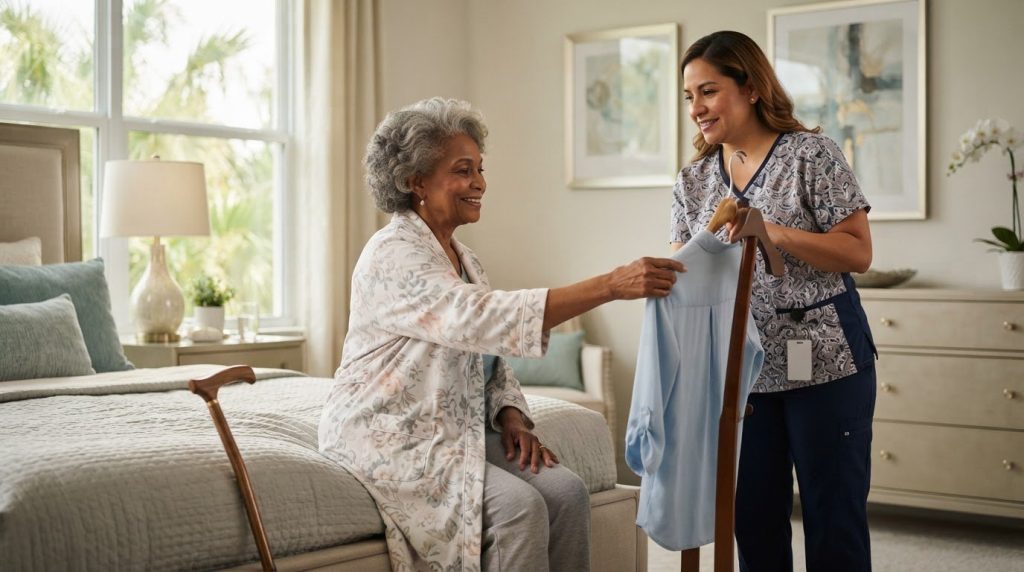
What if accepting help with activities of daily living could protect a person’s independence rather than take it away? It’s understandable to feel unsure when familiar routines become harder, especially when personal care, safety, privacy, and dignity all matter. Support doesn’t have to mean taking over. Thoughtful assistance can make everyday tasks more manageable while leaving room for the person to do what they can and choose how help is offered.
Daily living assistance may include support with bathing, dressing, eating, using the toilet, or moving safely between a bed and chair. Needs can change gradually, so noticing shifts in routines, confidence, or safety can help families plan before everyday challenges become overwhelming. This guide explains what common ADL support can involve, how to recognize changing needs, and how to shape assistance around your loved one’s preferences.
We’ll also explain how compassionate, non-medical in-home personal care from a professional CNA team can help maintain familiar routines and ease some of the responsibility families carry while supporting comfort and dignity at home.
Key Takeaways
- Daily living assistance can range from gentle reminders and task setup to standby or hands-on support, depending on the person’s needs.
- To make help with activities of daily living feel respectful, allow extra time, offer choices, and keep your loved one involved.
- Notice changes, ask how the person feels, record specific examples, and use those observations to plan next steps together.
- A simple home-care plan that outlines preferred routines, support needs, and family availability can make responsibilities clearer.
- Elite Caregivers United’s professional CNA team provides non-medical personal care in Orlando, supporting daily routines with attention to individual preferences.
What Does Help With Activities of Daily Living Mean?
It can be difficult for a family to tell whether a loved one needs a reminder, a little preparation, or direct help with a personal task. Help with activities of daily living is non-medical support with essential self-care tasks, tailored to what a person can do safely and comfortably. The aim is to assist where needed without taking over tasks the person can still manage.
Support can take several forms. A caregiver might offer a gentle cue to get dressed, set out clothing or toiletries, stay nearby while someone moves between a bed and chair, or provide hands-on help. The right approach depends on the person’s abilities, preferences, comfort, and privacy. Asking before assisting, explaining each step, and allowing time to participate can help preserve dignity.
Non-medical personal care focuses on everyday routines. It doesn’t include diagnosing a condition, performing clinical procedures, or providing skilled nursing. For a broader overview of personal assistance at home, see this non-medical home care guide.
Which everyday activities are commonly considered ADLs?
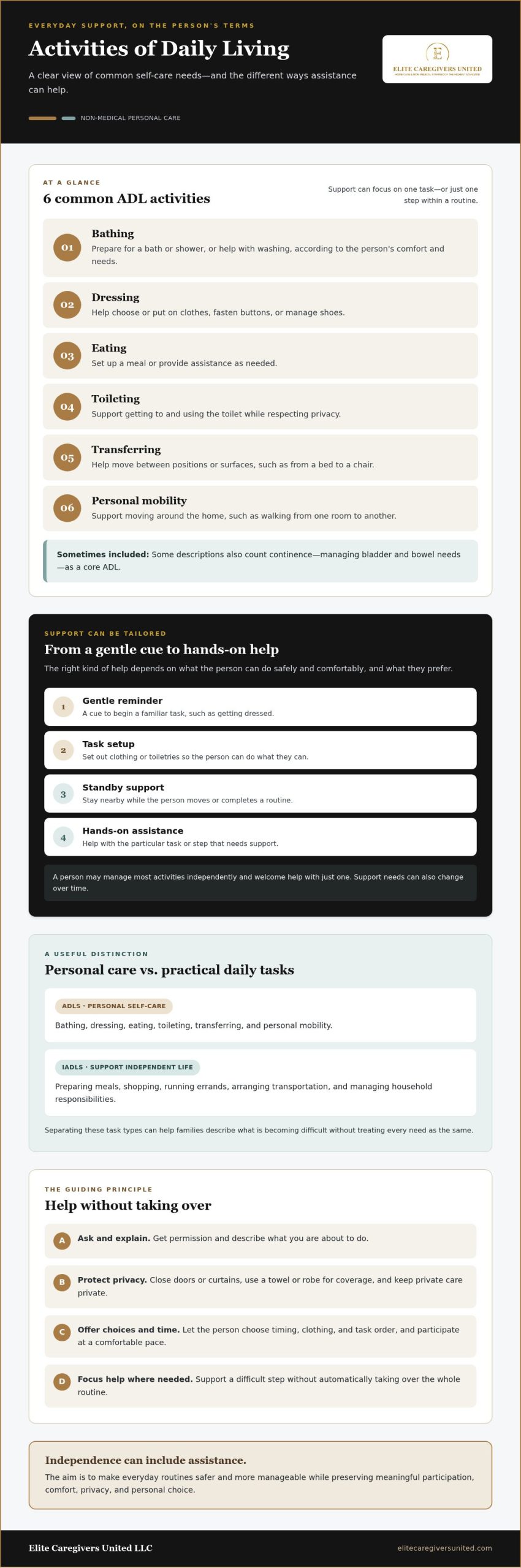
ADLs describe core personal-care activities. The Activities of Daily Living (ADLs) commonly include:
- Bathing: Help preparing for a bath or shower, or assistance with washing, according to the person’s comfort and needs.
- Dressing: Choosing or putting on clothing, fastening buttons, or managing shoes.
- Eating: Assistance with eating, such as setting up a meal or providing help as needed.
- Toileting: Support with getting to and using the toilet while respecting privacy.
- Transferring: Help moving between positions or surfaces, such as from a bed to a chair.
- Personal mobility: Support moving around the home, such as walking from one room to another.
Some descriptions also include continence, or managing bladder and bowel needs, among the core ADLs. A person may manage most tasks independently but appreciate help with one. The amount of support can also change over time.
How are ADLs different from household and community tasks?
ADLs focus on personal self-care. Instrumental activities of daily living (IADLs) are tasks that support independent life, such as preparing meals, shopping, running errands, arranging transportation, or managing household responsibilities. This distinction helps families describe what’s becoming difficult without treating every task as the same kind of need. This guide focuses on personal routines, while broader home support may address practical tasks beyond self-care.
How ADL Support Can Preserve Comfort and Independence
Good assistance helps a person continue familiar routines with only the support they need, rather than completing every task for them. A caregiver might prepare the bathroom and place needed items within reach, then let the person wash independently at a comfortable pace. If a step becomes difficult, the caregiver can offer help with that part instead of taking over the whole routine.
Time matters. Rushing can make a familiar activity stressful, while a patient pace gives the person space to try, pause, and ask for help. Small choices also help someone stay involved: deciding whether to get dressed before or after breakfast, choosing between two outfits, or selecting a preferred order for a morning routine.
Respectful assistance balances safety with personal choice, offering enough support to make a routine manageable while preserving the person’s independence.
What does respectful help with personal care look like?
Before assisting, explain what you’re about to do and ask permission. Close doors or curtains, use a towel or robe for coverage, and avoid discussing private care where others can hear. Offer simple choices about timing, clothing, and the order of tasks. These gestures show respect, while letting the person handle familiar steps at their own pace supports their abilities instead of prioritizing speed.
Example, not a prescribed care plan: A person who prefers an unhurried morning might choose their clothes while a caregiver sets out toiletries. They can wash the areas they’re comfortable managing, with the caregiver nearby if needed. Afterward, the person may dress independently except for a difficult fastening. The routine follows their preferences, with help focused on the steps that need it that day.
How can caregivers adapt when abilities change?
Notice which parts of a routine are becoming harder without trying to diagnose why. For instance, someone may need more time to button a shirt but still choose and put on other clothing comfortably. Adjust assistance to that specific task and ask how the person feels about the change. If a change is sudden or concerning, families should seek guidance from the person’s healthcare professional.
Describe support in practical terms: what the person prefers to do alone, where they welcome a cue or setup, and when they want someone close by. Revisiting these details as needs shift helps care remain responsive rather than fixed. Independence doesn’t have to mean doing everything unaided. The goal is to make room for meaningful participation, comfort, and choice in everyday life.
Families in Orlando can learn about daily living support from Elite Caregivers United.
How to Recognize When Daily Living Help May Be Needed
Noticing a loved one struggle with a familiar routine can be concerning, but one difficult moment doesn’t necessarily mean their needs have changed. Look for patterns, listen to the person’s perspective, and approach the conversation with curiosity rather than judgment. The goal is to understand where support could make daily life more comfortable, not to label what someone can or can’t do.
A calm observation process can turn uncertainty into a practical conversation:
- Notice: Pay attention to repeated difficulty or extra effort during familiar personal-care tasks.
- Ask: Check in privately and invite the person to describe what feels tiring, uncomfortable, or frustrating.
- Record examples: Note the task, what happened, and when or where assistance seemed useful.
- Discuss next steps: Use those examples to consider a small adjustment together, or seek professional guidance if the change concerns you.
What signs should families notice during everyday routines?
Notice whether getting dressed takes much longer, bathing is being skipped, meals are left unfinished, or someone increasingly relies on reminders for familiar steps. You might also observe hesitation when moving from a chair or walking through a particular area of the home. These are observations, not diagnoses. Record what you see and the context, such as the time of day or the task, rather than drawing conclusions from one instance.
Patterns matter. One tiring day may be different from recurring difficulty across several routines. Ask the person how the task felt and whether they noticed the same change. Their perspective may reveal preferences or concerns that aren’t visible from the outside.
How can families discuss support without taking away choice?
Choose a calm moment and begin with an open question, such as, “Which parts of getting ready have been feeling tiring lately?” Listen without correcting or rushing to solve the problem. Then suggest one manageable option, such as setting out clothing together or having someone nearby for one part of the routine, rather than presenting assistance as an all-or-nothing decision.
Keep your loved one involved in decisions about timing, privacy, and who provides assistance. Ask what would feel comfortable, and revisit the plan if it doesn’t work well. Respectful help with activities of daily living starts with the person’s own account of what they need and where they want to remain independent.
Routine planning and urgent changes call for different responses. Gradual, repeated difficulty can be discussed as part of planning daily support. A sudden or concerning change, such as a new inability to complete a familiar task, warrants prompt guidance from the person’s healthcare professional. If the situation seems immediately dangerous or life-threatening, contact emergency services. Caregivers can observe and share practical details, but they shouldn’t try to diagnose the cause.
How to Plan Daily Living Assistance at Home
A clear plan can make daily support more predictable for the person receiving care and the family coordinating it. Start with everyday tasks, then note what the person prefers, what kind of assistance feels useful, and when family members are available. This keeps the focus on the individual’s routine instead of applying a one-size-fits-all schedule.
A simple written plan can include:
- The task: Identify the specific personal-care routine where support may help.
- Preferred timing: Note when the person usually feels ready for the task and whether flexibility matters.
- Helpful assistance: Describe whether a reminder, setup, nearby presence, or direct help is preferred.
- Personal preferences: Include details such as privacy needs, clothing choices, or the preferred order for routine steps.
- Family availability: Record who can help and when, along with times that may need dependable coverage.
For someone returning home after a procedure, daily routines may need temporary adjustments. A home care after surgery guide can help families think through how support fits into the transition home.
What should a practical ADL support plan include?
Keep instructions specific and easy to follow. Instead of writing “help in the morning,” note which task needs support, the person’s preferred time, and what assistance they welcome. Clarify who is responsible for each part of the routine so tasks aren’t missed or unnecessarily repeated. Share updates with everyone involved, and revisit the plan when the person’s abilities, schedule, or preferences change.
A written routine doesn’t need to be elaborate. A notebook or shared schedule can capture useful details, such as whether the person prefers to get dressed before breakfast or needs extra time for a particular task. Consistent timing can provide a reassuring rhythm, while clear responsibilities help family members coordinate without relying on memory or assumptions.
When might professional in-home support ease the routine?
Scheduled assistance may help when family members’ work, caregiving duties, or other responsibilities make consistent support difficult. Non-medical personal care can complement help from loved ones, while respite gives family caregivers time to attend to their own needs. For families supporting someone with dementia, respite care for dementia patients in Orlando may be relevant to their planning.
When additional help is part of the plan, share the person’s preferred routines and the specific tasks where support is welcome. This gives caregivers a practical starting point while keeping individual choices central. Families can explore in-home daily living assistance as part of a more manageable routine.
Help With Activities of Daily Living From Elite Caregivers United
Recognizing that a loved one needs assistance is only part of the process. Families also need to understand what support can look like at home and how it can fit the person’s established routines. Elite Caregivers United LLC provides non-medical personal care and daily living assistance through a professional CNA team, with support shaped around individual needs and preferences.
Help with activities of daily living may involve assistance with personal routines such as bathing, dressing, eating, toileting, or moving around the home. The appropriate level of help depends on the task and the person. Some may benefit from reminders or having items prepared, while others may welcome more direct support. A thoughtful approach makes room for the individual’s choices and participation instead of treating every routine the same way.
What can personal care support look like at home?
Personal care support can fit the daily rhythm that works for the person and family, whether assistance is needed hourly, daily, or 24/7. A caregiver can help with everyday personal-care routines while respecting preferences about timing, privacy, and how assistance is offered. Families can share which steps their loved one prefers to do independently and where support would make a routine easier.
This is non-medical care focused on daily living. It doesn’t include skilled nursing, clinical procedures, or physical therapy, and it doesn’t replace medical guidance. Instead, attentive personal care provides practical assistance with everyday routines while supporting comfort and dignity at home.
Sharing useful details helps make support more personal. Families might describe how the person likes to begin the day, which routines feel tiring, what kind of help is welcome, and any preferences that make personal care comfortable. These details give caregivers a clearer understanding of how to support daily life respectfully.
What is a helpful next step for families?
Before discussing support, write down the tasks that are difficult, the schedule that would be helpful, and the person’s preferences. Include what the person wants to continue doing independently, along with family members’ availability. This preparation can make a conversation more focused and help clarify which care arrangements may suit the household’s routine.
Families don’t need every detail settled before exploring support. A conversation can help them describe their loved one’s day, discuss the assistance they’re considering, and understand next steps. Include the person receiving care wherever possible, so their comfort, privacy, and priorities remain part of the plan.
Families considering personal care at home can speak with Elite Caregivers United about daily living support.
Begin With One Thoughtful Next Step
Planning help with activities of daily living doesn’t require your family to solve every question at once. Choose one part of the day that feels difficult or uncertain, and consider what would make it easier while keeping your loved one’s preferences at the center. A small, respectful change can be a useful place to begin, with room to adjust as the person’s needs and wishes evolve.
Bring your loved one into the conversation in a way that feels comfortable. Ask what they would like to keep doing on their own, where they might welcome support, and what would help them feel at ease. Their answers can guide a plan that feels collaborative rather than imposed.
To explore personal care at home, start a conversation with Elite Caregivers United about your family’s care needs. Sharing the routines and preferences that matter can help you take a thoughtful next step.
Frequently Asked Questions
Is help with activities of daily living only for older adults?
No. People of different ages may need help with activities of daily living because of a disability, illness, injury, or recovery from a procedure. A younger adult recovering at home, for example, might temporarily need support getting dressed or bathing safely. The type and duration of assistance depend on the person’s circumstances, not their age. Discuss changes in ability with the person and consider what support would make daily routines manageable.
Can a caregiver help with bathing and dressing?
Yes. A non-medical caregiver may assist with bathing and dressing as part of personal care, tailoring help to the person’s comfort and preferences. For example, someone might want help preparing clothing but prefer to dress independently, or welcome assistance with a specific step. Before personal care, agree on what help is wanted and how privacy will be maintained. The person should be able to express preferences and participate as much as they’re comfortable.
What is the difference between ADLs and IADLs?
ADLs are personal-care activities, while IADLs are practical tasks that support independent living. For instance, eating a meal is an ADL, while planning the menu, shopping for ingredients, or preparing the meal are IADLs. Managing appointments, transportation, and household finances are also common IADLs. The distinction can help families describe a need more precisely, especially when a person manages household tasks but needs assistance with personal care, or vice versa.
How can I talk to a loved one who refuses daily living assistance?
Begin by listening to what concerns them rather than arguing or insisting. They may worry about privacy, losing control, or having an unfamiliar person in their home. Ask which task feels hardest and whether they would consider a small, specific form of help, such as assistance with one part of a routine. Offer choices about timing and who is involved. If they decline, keep communication open and revisit the topic respectfully.
Does non-medical daily living assistance include nursing care?
No. Non-medical daily living assistance supports personal routines, but it doesn’t include skilled nursing, clinical procedures, or medical diagnosis and treatment. Elite Caregivers United provides non-medical personal care through a professional CNA team. If a person needs nursing care or medical guidance, their healthcare professional can explain what kind of clinical support is appropriate. Families can coordinate personal-care assistance alongside guidance from the person’s medical team.
What should I do if daily activities suddenly become difficult?
If a familiar task suddenly becomes difficult, contact the person’s healthcare professional promptly and describe what changed, when it began, and which activities are affected. Don’t assume the cause or treat a sudden change as a routine adjustment to the care plan. If the person appears to be in immediate danger or has a life-threatening emergency, call emergency services. Once urgent concerns are addressed, the family can reconsider what daily support is needed.