

Parkinson’s care works best when support is steady, practical, and shaped around what your loved one can still do. The main caregiver duties for Parkinson’s patients include organizing appointments and medication information, observing changes in symptoms or mood, helping with daily tasks, and making the home safer. Clearing throw rugs and extension cords from walking areas is one practical way to reduce hazards.
It’s natural to want to step in quickly, especially when movement or balance becomes more difficult. But preserving independence matters too. A calm routine, attentive observation, and respectful conversations can help you support your loved one without taking over unnecessarily.
This guide explains how to coordinate care, keep useful notes, recognize changes to share with the healthcare team, and adapt everyday assistance as needs evolve. It also covers practical household safety steps to help you build a manageable approach while protecting your loved one’s dignity and comfort.
Key Takeaways
- Bring an up-to-date medication list to appointments, and use a shared calendar to keep care information organized.
- Track changes in movement, sleep, swallowing, thinking, or mood, especially after treatment changes, and share relevant observations with the healthcare team.
- Offer help with daily routines while giving your loved one time to do tasks independently; caregivers of Veterans can call the U.S. Department of Veterans Affairs Caregiver Support Line at 1-855-260-3274 for information and help connecting with a local support team or coordinator.
- Review the home from your loved one’s perspective and adjust everyday spaces as mobility and balance needs change.
1. Organizing appointments and medication information
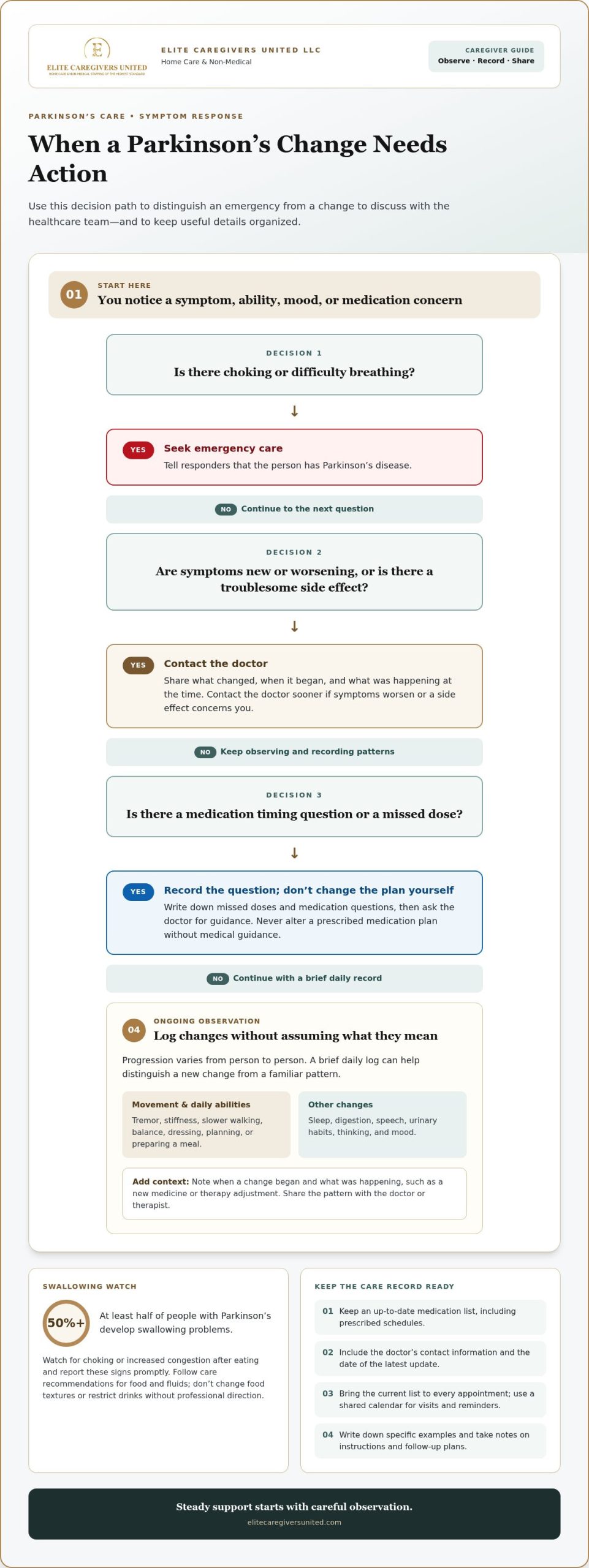
At diagnosis, create a shared record for appointments, medication details, and observations. Include each medicine’s prescribed schedule, the doctor’s contact information, and the date of the latest update. Keep the current list accessible at home and bring it to every appointment. A calendar planned with your loved one can provide reminders and track upcoming medical or therapy visits. Medication timing matters for symptom control, so record missed doses and questions rather than changing the schedule yourself. These are practical caregiver duties for Parkinson’s patients that help keep care organized.
Attend appointments when your loved one welcomes your support. Before seeing the doctor, write down specific examples, such as stiffness affecting dressing or a new symptom. During the visit, take notes on the care plan, instructions, and follow-up appointments. Invite your loved one to describe their experience first, then add observations they may have overlooked. This shared approach keeps their priorities at the center of care.
Track therapy sessions, medication use, and possible side effects in the same calendar or notebook. Note when a change began and what was happening at the time, such as a new medicine or therapy adjustment. Bring those details to the next appointment, or contact the doctor sooner if symptoms worsen or a side effect concerns you. Never alter a prescribed medication plan without medical guidance. Keeping this record is another of the caregiver duties for Parkinson’s patients that can support clear conversations with the care team.
Call the doctor about new or worsening symptoms, troublesome side effects, or questions about medication timing. Seek emergency care for choking or difficulty breathing, and tell responders that the person has Parkinson’s disease. If hospitalization occurs, inform staff about the medication schedule and contact the treating neurologist or movement disorder specialist to discuss the care plan. These steps help caregivers share useful information promptly.
2. Observing changes in symptoms, abilities, and mood
Parkinson’s symptoms can affect movement, thinking, sleep, digestion, and mood. Keep a brief daily log of tremor, stiffness, slower walking, constipation, sleep disruption, or difficulty planning. Compare abilities over time, such as dressing independently or preparing a meal. This can help distinguish a new change from a familiar pattern without assuming every difference signals disease progression.
Progression varies from person to person, and non-motor symptoms may appear up to 10 years before motor symptoms. Note changes in speech, sleep, urinary habits, mood, and thinking alongside physical symptoms. Record when changes happen and how they affect caring routines, then share the pattern with the doctor or therapist. A support group can also help caregivers discuss practical ways to manage changing needs.
For later-stage planning, note when walking, balance, or daily tasks become harder, and whether extra help is needed. Some people may need a wheelchair later in life, while others retain abilities for longer. Discuss changes with your loved one and care team, including what assistance feels helpful. Tell the physician about signs of depression. Mood changes deserve attention alongside physical symptoms.
Swallowing deserves close observation: at least 50% of people with Parkinson’s develop swallowing problems. Keep food and fluids consistent with the person’s care recommendations, and don’t change food textures or restrict drinks without professional direction. Watch for choking or increased congestion after eating, and report these signs promptly. To support consistent observation at home, consider additional support with daily routines.
3. Supporting daily tasks and emotional well-being
Start by asking which daily tasks your loved one wants to keep doing. Allow time for dressing, choosing clothes, or preparing a simple meal before stepping in. If responsibilities need to change, discuss the adjustment together to reduce confusion or resentment. A social worker or therapist can help you plan a respectful conversation about safety limits.
Emotional care matters alongside practical help. Depression affects approximately 40% of people with Parkinson’s, so report signs of depression to the physician. Notice changes such as withdrawing from familiar activities, then ask what support feels welcome. A support group can offer caregivers space to share concerns and learn how others handle difficult moments.
Caregiving can also strain the caregiver: 40 to 70% experience extreme stress, and about half of caregivers with extreme stress meet criteria for clinical depression. Protect time for medical needs, meals, sleep, and restorative activities. Plan backup support before exhaustion builds. Respite care can give a family caregiver time away while maintaining support for their loved one. A written schedule helps relatives coordinate visits and responsibilities.
Home-care pricing is customized to the type and amount of assistance. Contact Elite Caregivers United LLC for an estimate. Medicare coverage depends on the service. According to the Michael J. Fox Foundation, Medicare covers different types of portable medical equipment but not permanent installations. That distinction is separate from home-care services.
Caregivers of Veterans can call the U.S. Department of Veterans Affairs Caregiver Support Line at 1-855-260-3274 for information and help connecting with a local VA Caregiver Support Team or Coordinator.
4. Household safety and home modifications
Walk through the home with your loved one and notice where movement feels difficult. Clear throw rugs and extension cords from floors, especially along routes between the bedroom, bathroom, and kitchen. Ask which doorways or daily activities cause hesitation, then note specific concerns. Comfort and abilities can change, so revisit the walkthrough as needs evolve.
Look at each room in relation to a familiar task. In the kitchen, consider whether commonly used dishes and supplies are easy to reach. In the bathroom, note whether the route is clear and whether getting ready requires awkward turns. In hallways, check for furniture or other items that narrow the walking path. Use these observations as a practical list to discuss with your loved one and care team.
Changes should support independence, not make the home feel unfamiliar. Talk together before moving furniture or changing household routines, and make one adjustment at a time. For example, if a chair blocks a well-used route, ask whether repositioning it would make the path easier to navigate. A social worker can help families discuss safety concerns and adjustments when anxiety or disagreement makes decisions harder.
Include friends or relatives in the plan by explaining which routes should stay clear and where frequently used items belong. If treatment or changing movement affects everyday tasks, record the specific difficulty and raise it with the healthcare team. Keep the plan simple enough that everyone can follow it. For support with maintaining a familiar home while you’re away, arrange house sitting support.
Elite Caregivers United: Respite Care
Elite Caregivers United LLC offers Respite Care for families who need support while a primary caregiver rests or attends to other responsibilities. Bringing in help can make an ongoing care routine more manageable, especially when Parkinson’s affects everyday personal care.
Parkinson’s Disease Home Care and Personal Care Services/CNA Team can support daily care at home. Consider respite when caregiving responsibilities are difficult to balance or when you need planned backup support. The right assistance can complement the routines and preferences your loved one values.
For compassionate support with Parkinson’s care at home, contact Elite Caregivers United LLC to discuss your family’s needs.
Build a Support Plan That Can Grow With You
Your loved one’s needs may change, and the care plan can change with them. Consider what support would make the next stage more manageable, whether that means sharing everyday responsibilities or arranging time for yourself to rest. A thoughtful plan can respect your loved one’s preferences while helping you remain present as a caregiver.
Caregiver duties for Parkinson’s patients can feel demanding when one person carries every responsibility. Elite Caregivers United LLC offers Respite Care, Personal Care Services/CNA Team support, and Surgery Recovery & Post-Hospitalization Care. These services give families options for different care needs, including planned relief from caregiving duties.
When you’re ready to explore support for your family, contact Elite Caregivers United LLC. Taking one considered step can help you shape a care routine that feels more sustainable for everyone.
Frequently Asked Questions
How Can I Help Manage My Loved One’s Care?
Ask your loved one which parts of care they want help coordinating. Agree on a shared routine for household responsibilities, appointments, and backup support, then revisit it when needs change. Keep your loved one involved in decisions about future care preferences. A trusted relative or friend can help divide practical tasks so one person isn’t carrying every responsibility alone.
What are the daily caregiving duties for someone with Parkinson’s disease?
Daily support may include help with personal care, meals, getting around the home, and maintaining familiar routines. The right assistance depends on what the person can manage independently that day. For example, you might place clothing within easy reach while allowing your loved one to dress at their own pace. Offer help respectfully, and ask before taking over a task.
How do Parkinson’s symptoms change over time and affect caregiver responsibilities?
Parkinson’s symptoms and abilities can change differently for each person, so responsibilities should respond to observed needs rather than a fixed timetable. Someone who manages household tasks now may later need help completing them safely or consistently. Reassess routines together when a familiar activity becomes difficult, and discuss the change with the care team while preserving choices your loved one can still make.
How can caregivers help with medication schedules and Parkinson’s medication side effects?
Use a reminder system your loved one agrees to follow, and make sure everyone involved in care can find the current medication schedule. If a possible side effect appears, note what changed and when, then share those observations with the doctor. Don’t change, skip, or adjust prescribed medication based on a caregiver’s judgment. Share concerns with the doctor for clinical guidance.
How can caregivers reduce fall risks and make a home safer for someone with Parkinson’s?
Check the routes your loved one uses for everyday activities, including reaching commonly used items and entering or leaving rooms. Keep pathways open, make frequently used belongings accessible, and notice where turning or moving between spaces feels difficult. Ask your loved one what feels unsafe, then discuss practical adjustments with the care team. Review the layout again if mobility or balance changes.
What help does a person with Parkinson’s need with bathing, dressing, eating, and mobility?
The amount of assistance depends on the person’s abilities and preferences. Ask which step is difficult, then provide only the help needed, such as setting out clothing or staying nearby during a routine. Allow extra time rather than rushing. If eating becomes difficult or choking occurs, alert the care team promptly and follow their guidance about appropriate support during meals.