
The Brunnstrom recovery stages offer a framework for understanding changes in movement after a stroke, but recovery milestones after stroke vary from person to person. The first three months after a stroke are considered the most important period for recovery, when many patients see the most improvement. Progress, however, doesn’t follow one shared timetable.
It’s understandable to look for signs that recovery is progressing, especially when everyday abilities have changed. Understanding what recovery milestones after stroke describe can help families recognize progress without expecting every survivor to reach them at the same pace.
This article explains the Brunnstrom stages, the roles of physical, occupational, and speech-language therapy, and factors that can shape recovery. It also covers ongoing care and ways to reduce the risk of another stroke, helping you understand what may come next and how support can continue at home.
Key Takeaways
- Use the Brunnstrom stages as a way to understand changes in movement, not as a fixed timetable for recovery.
- Learn how physical, occupational, and speech-language therapy address different abilities and support greater independence.
- Recognize how stroke severity, overall health, and emotional well-being can shape progress and the support a survivor needs.
- Understand why follow-up care, a home recovery plan, and attention to risk factors matter after discharge.
What are the Brunnstrom Stroke Recovery Stages?
The Brunnstrom approach describes movement changes after a stroke, from very limited muscle activity toward more controlled voluntary movement. These stages explain patterns in recovery, but they aren’t a calendar: progress can differ across affected limbs and everyday activities.
Rehabilitation planning can begin on Day 1, once the patient is stable. Many patients leave the hospital for home or rehabilitation within four to seven days, depending on stroke severity and progress. Inpatient rehabilitation suits medically stable survivors needing close supervision who can participate in three hours of therapy daily, five days a week. A stay typically lasts two to three weeks.
Different care settings provide different levels of support. Skilled nursing facilities may offer a few hours of rehabilitation daily, with therapy sessions typically lasting two hours or less; the average stay for stroke rehabilitation is about a month. Home health therapists and nurses may provide one to two hours of care daily. After returning home, outpatient therapy may take a few hours per week.
Ischemic and hemorrhagic strokes don’t follow separate, predictable recovery timelines. The areas of the brain affected, the extent of the injury, and resulting changes in movement, thinking, or communication all shape each person’s rehabilitation goals.
During the first week, care teams put the initial recovery plan into practice, often focusing on tasks such as sitting, dressing, or eating. The first three months are considered especially important, and recovery is usually fastest during the first three to six months. Improvement can continue after six months, though progress may slow.
U.S. Medicare and private insurance coverage depends on eligibility, plan terms, care setting, and documented need. Inpatient, skilled nursing, outpatient, and home-based rehabilitation may each follow different coverage rules.
Therapy goals often relate to activities of daily living, such as bathing safely or preparing a simple meal. Sudden new or worsening weakness, facial droop, difficulty speaking, vision changes, severe imbalance, or confusion requires immediate emergency attention.
Physical, occupational, and speech-language therapy
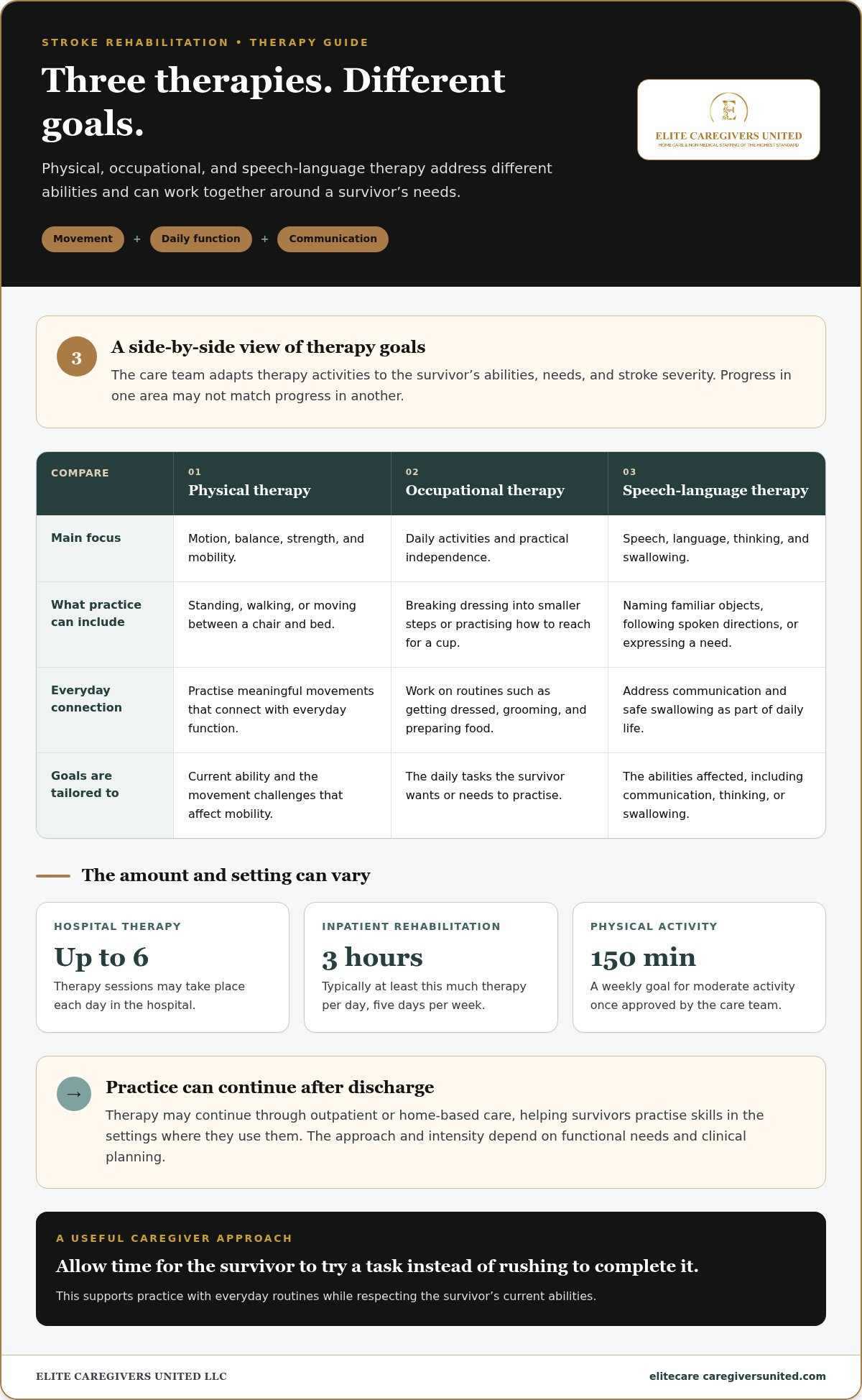
Stroke rehabilitation often combines therapies because movement, communication, and daily function can all change. In the hospital, therapy sessions may take place up to six times each day, with the care team adapting activities to the survivor’s needs and stroke severity. One session might focus on safely moving from bed to chair; another may involve practising how to follow spoken directions.
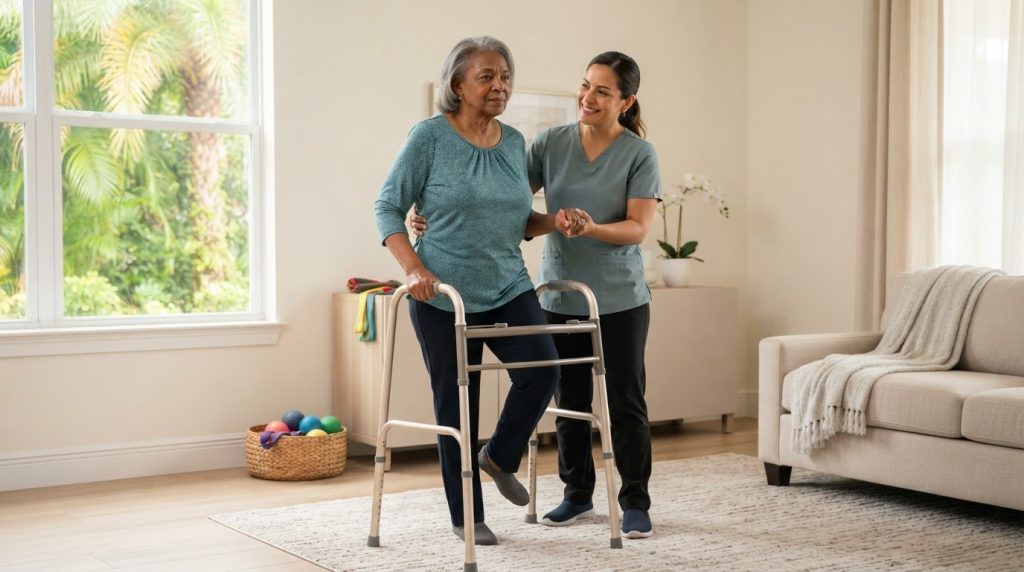
Physical therapy addresses motion, balance, strength, and mobility. A therapist may work with someone on standing, walking, or moving between a chair and bed, adjusting each task to current ability. Repeating meaningful movements helps connect practice with everyday function. Once the care team approves, survivors are advised to work toward 150 minutes of moderate physical activity per week.
Occupational therapy focuses on daily activities and practical independence. Getting dressed, grooming, preparing food, and using household objects can all become rehabilitation goals. For example, a therapist may break dressing into smaller steps or adapt how a survivor reaches for a cup. These exercises connect recovery to routines that matter at home.
Speech-language therapy can address speech, language, thinking, and swallowing concerns after a stroke. A survivor might practise naming familiar objects, understanding instructions, or expressing a need. Swallowing difficulties also warrant assessment and guidance, since eating and drinking safely are essential parts of daily life. Goals are tailored to the abilities affected.
Inpatient rehabilitation typically provides at least three hours of therapy per day, five days per week. Therapy may continue after discharge through outpatient or home-based care, helping survivors practise skills in the settings where they use them. The approach and intensity depend on functional needs and clinical planning.
Caregivers can support practice by allowing time for a survivor to try a task, rather than rushing to complete it. For help with everyday routines during stroke recovery, explore stroke recovery support at home.
What factors impact stroke recovery?
The recovery milestones after stroke depend partly on the injury’s severity and location, which influence the abilities affected. Someone with weakness on one side may face different challenges from someone whose main effects involve speech, attention, or planning. These differences shape which exercises feel manageable and which strategies can assist with daily tasks. Progress in one ability also may not match progress in another, so consider each area separately.
Overall health and abilities at the start of recovery can affect how a survivor participates in rehabilitation and daily routines. Balance changes, for example, can make it difficult to move safely around the home, while trouble following instructions can complicate practice. Compare a familiar activity, such as reaching for a cup, under similar conditions over time. This can reveal changes in control, effort, or support needs more clearly than broad impressions alone.
Emotional health is also an important part of recovery. Post-stroke depression affects about one in three stroke survivors. Low mood can make it harder to follow routines or stay interested in activities. Families can notice changes in motivation, enjoyment, or social participation and share them with the care team. Breaking a demanding task into smaller parts may make it easier to take part and help identify useful approaches.
Recovery varies between individuals, including two years after a stroke. Recovery milestones after stroke can involve different abilities for each survivor: one person may gain steadier movement, while another focuses on communication, concentration, or daily independence. Rather than comparing people, track specific tasks that matter to the survivor, including the effort and assistance each requires. These observations help clarify changing needs and keep goals practical and personally meaningful.
Ongoing medical care and prevention of another stroke
Hospital discharge begins a new phase of care, not the end of recovery planning. After discharge, the healthcare team creates a home recovery plan that connects follow-up care, rehabilitation, and daily support. Keep the plan accessible and note changes in symptoms, movement, communication, swallowing, or eating. These details help the care team understand how the patient manages between appointments and where the plan may need attention.
Prevention matters because a previous stroke makes ongoing medical care especially important. In the United States, one in four strokes each year occurs in someone who has had a previous stroke. About one in four stroke survivors will have another stroke. Follow-up visits give the care team a chance to review health concerns, discuss prescribed medicines, and address risk factors. Take medicines as directed, and share questions or difficulties with the healthcare team rather than changing a dose on your own.
Organize follow-up around specific observations. For example, record whether the patient can perform familiar activities, manage meals, or follow the home plan. Note new problems with swallowing or eating, since these can affect everyday care and should be raised with the healthcare team. A progress review after about 6 months can help assess recovery needs and adjust ongoing care. Bring questions and observations to that review, including changes in function or challenges with the plan.
Prevention also depends on maintaining contact with the care team and following the plan between visits. Keep appointments, understand the purpose of each prescribed medicine, and discuss barriers such as missed doses or difficulty managing routines. Family members can help by keeping the plan and medication schedule organized, while supporting the survivor’s independence where possible. For added help with day-to-day stroke recovery at home, explore stroke recovery support.
Elite Caregivers United: Respite Care
Elite Caregivers United LLC offers Respite Care and Personal Care Services / CNA Team to support families as a loved one continues stroke recovery at home. This help can give a family caregiver time to rest, attend appointments, or manage household responsibilities while the survivor receives assistance with everyday personal care.
For families adjusting to life after hospitalization, Surgery Recovery & Post-Hospitalization Care can support the transition home. These services complement the survivor’s established medical and rehabilitation plans while focusing on non-medical care and daily needs. They don’t replace clinical treatment or therapy.
If added help with daily care would ease your family’s routine, contact Elite Caregivers United LLC to discuss your needs.
Let the next step fit everyday life
A useful next step is to identify which parts of home life feel manageable and where extra support could make routines easier. Choose a practical focus, such as creating a calmer morning routine or making time for rest, and share that need with the people supporting recovery. Small, thoughtful adjustments can help the household adapt as abilities and responsibilities change.
Recovery milestones after stroke can be meaningful even when they differ from what a family first expected. Focus on the survivor’s priorities, involve them in decisions, and allow goals to evolve. Support should respect the person’s dignity while helping loved ones care for themselves, too.
For a conversation about support that fits your family’s needs, contact Elite Caregivers United LLC. Each step forward deserves patience, understanding, and a caring team beside you.
Frequently Asked Questions
What helps stroke patients recover faster?
Consistent practice guided by the care team is more helpful than trying to push through every task. Follow the prescribed exercise plan, attend scheduled therapy, and build practice into ordinary routines, such as standing safely before dressing. Break difficult activities into manageable parts, allow time for rest, and tell the care team when pain, fatigue, or confusion gets in the way. These steps can make practice safer and easier to sustain.
Can stroke recovery continue after the first year?
Yes. Improvement can continue after the first year, and functional recovery can continue five years or more after stroke. A survivor might gain steadier hand use, clearer communication, or greater independence well beyond formal therapy. Progress may slow and focus on specific goals, so revisiting meaningful activities, such as managing a phone call or preparing for an outing, can help identify useful next steps.
What are the common emotional challenges during stroke recovery?
Emotional challenges can include sadness, frustration, worry, grief over changed abilities, and feeling isolated from familiar routines. These experiences can affect motivation and relationships, not just mood. Families can offer choices, listen without rushing to solve every concern, and keep social contact manageable, such as arranging a short visit with someone familiar. Tell the healthcare team about persistent mood changes so emotional needs are included in care.
What are the signs of progress in stroke recovery?
Progress often shows up as greater consistency in familiar tasks, not only as a dramatic new ability. A survivor might need fewer reminders to follow a routine, feel steadier when standing, or communicate a need with less effort. Compare similar activities across days and note the assistance needed, safety, and fatigue. These practical observations show changes in function and help distinguish steady gains from a difficult day.
Which physical, speech, cognitive, and daily living abilities commonly improve after a stroke?
Physical gains can include steadier turning, improved hand coordination, or better control when reaching. Speech and language changes may show up as easier word retrieval and clearer expression; cognitive gains may include sustaining attention or organizing a short sequence of tasks. Daily living improvements might include using a phone, choosing clothes, or completing grooming with less assistance. Abilities can change at different rates, so note each area separately.
What factors affect the speed and extent of stroke recovery?
The speed and extent of recovery reflect the injury’s severity and location, the abilities affected, and the survivor’s overall health. Day-to-day conditions matter too: fatigue, emotional strain, a difficult home layout, or missed practice can make participation harder. For example, clear walking paths and a consistent place for essential items can reduce avoidable obstacles. Reviewing these practical barriers alongside therapy goals helps tailor support to current needs.