

Dementia can make conversation less predictable. A person may struggle to find words, repeat familiar phrases, lose their train of thought, or find it harder to understand others. Communication can change from one day, or even one hour, to the next. Helpful communication strategies for dementia caregivers include speaking calmly, offering reassurance, reducing distractions, and respecting the person’s autonomy.
If a conversation feels difficult, it doesn’t mean you’re doing something wrong. Changes in memory and understanding can make familiar exchanges harder. A patient response can help the person feel heard rather than rushed.
This article explains how dementia can affect communication and offers practical ways to make interactions more comfortable. Learn how to use clear, simple language, listen attentively, create a calmer setting, and support choice and dignity throughout a conversation.
Key Takeaways
- Recognize that understanding and speaking can fluctuate, and adjust your approach to the person’s needs in the moment.
- Allow time for a response, listen without rushing to correct, and offer calm reassurance when a conversation becomes difficult.
- Make it easier to focus by creating a quieter setting and limiting competing sounds or activity.
- Support dignity by respecting personal space and offering the person meaningful choices in conversations about their life and care.
1. How does dementia affect communication?
Dementia can affect how a person finds words, follows ideas, and understands conversation. Someone may repeat a familiar phrase, lose their train of thought, or need extra time to respond. Their ability to understand and express themselves can change from one day, or even one hour, to the next. If they respond slowly, start gently with a familiar topic and pause instead of filling the silence.
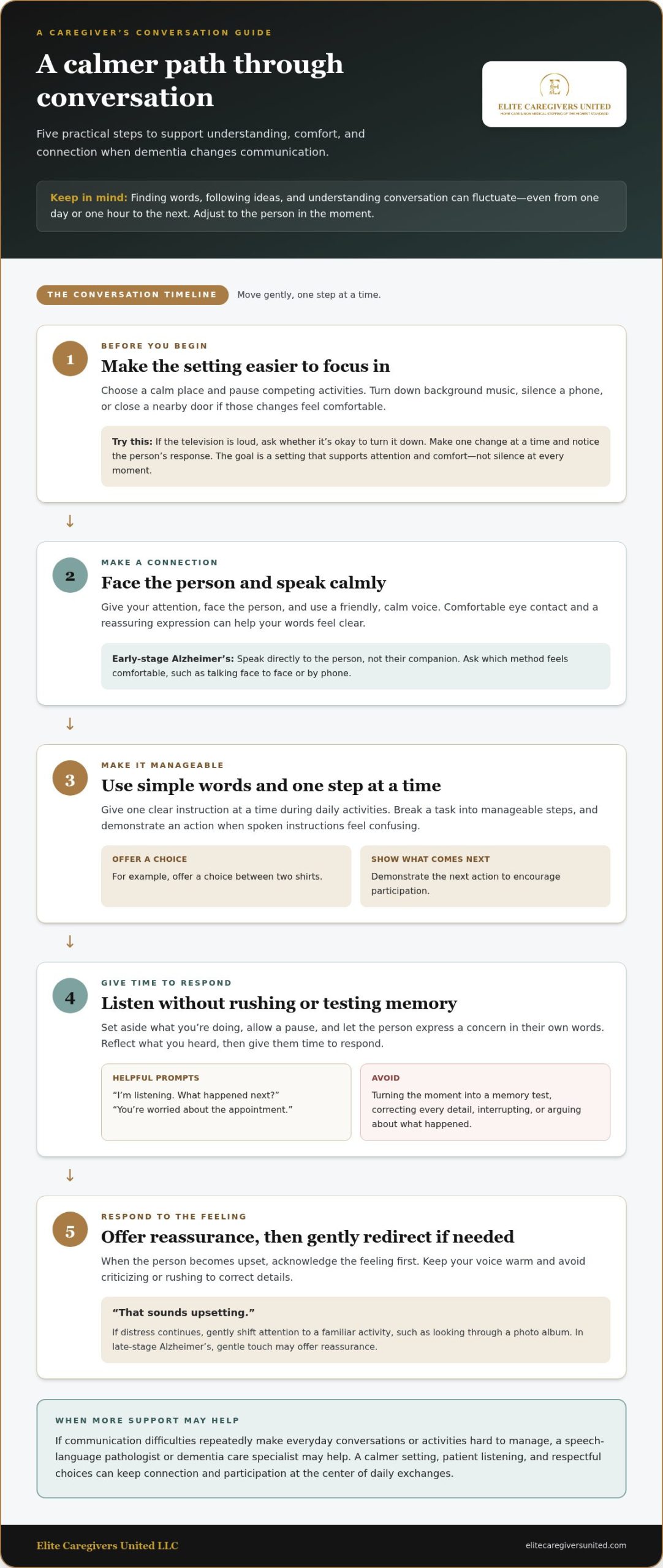
In early-stage Alzheimer’s, speak directly to the person, not their companion, as the Alzheimer’s Association advises. Ask which method feels comfortable, such as talking face to face or by phone. Invite them to share a view or memory, and allow time for a reply without interrupting. A two-way conversation can continue with simple follow-up prompts, such as, “Tell me more about that.”
Body language, tone, and facial expressions can carry meaning when words are difficult. Face the person, make comfortable eye contact, and use a friendly, calm voice. Match your expression and posture to your reassuring words. Notice the person’s response, since their expression or movement may show whether they understand or feel uneasy.
During bathing, dressing, meals, and other daily activities, give one clear instruction at a time. Break a task into manageable steps: offer a choice between two shirts, then show what comes next. Demonstrating an action can encourage participation when spoken instructions feel confusing.
Avoid testing memory with “Don’t you remember?”, correcting every inaccurate detail, or arguing about what happened. Instead, respond to the feeling behind the words and offer a gentle prompt. If communication difficulties repeatedly make everyday conversations or activities hard to manage, a speech-language pathologist or dementia care specialist may help.
U.S. caregivers can look for communication training through dementia-focused organizations, caregiver education programs, and local support groups. A speech-language pathologist or dementia care specialist can also help caregivers practice approaches suited to the person’s communication needs. These practical communication strategies for dementia caregivers can help keep connection and participation at the center of daily exchanges.
2. Patience, reassurance, and respectful listening
Give the person your attention before answering. Set aside what you’re doing, face them, and listen without interrupting, even when you think you know how the story ends. A pause gives them room to express a concern in their own words. If their words seem disconnected, acknowledge what you heard and invite them to continue: “I’m listening. What happened next?” This respects the meaning behind their words without turning the conversation into a memory test.
Reflect the person’s message to check your understanding. For example, say, “You’re worried about the appointment,” then allow time for a response. If you’re unsure, ask whether you understood correctly rather than guessing. Frustration may show in words, posture, or facial expression, so pay attention to each cue. Listening this way can help you understand whether they need comfort, help with an activity, or a quieter moment.
When someone becomes upset or agitated, acknowledge the feeling first: “That sounds upsetting.” Keep your voice warm, avoid arguing, and don’t criticize or rush to correct details. If distress continues, gently redirect attention to a familiar activity, such as looking through a photo album. In late-stage Alzheimer’s, gentle touch may offer reassurance. The Alzheimer’s Association notes that interaction can still be meaningful.
Respectful listening means taking concerns seriously, even when the person’s account seems out of context. Ask a gentle follow-up, such as, “Can you tell me what’s worrying you?” Then respond to the emotion, not just the accuracy of the story. If a concern relates to pain, discomfort, or a change in health, help the person share it with their doctor. Don’t speak over them when they can express their needs.
Practice these steps during ordinary activities, not only during difficult conversations. A caregiver can pause, listen, reflect, and respond with reassurance. Families seeking additional support with day-to-day interactions can explore dementia care support.
3. Reducing distractions
Before talking, choose a calm place and pause competing activities. Turn off background music, silence a phone, and close a nearby door if those changes feel comfortable. The Alzheimer Society of Canada recommends reducing distractions and speaking face to face. A quiet setting can make it easier for a person with dementia to focus on your words and expression.
Start with the main source of noise. If the television is loud, ask whether it’s okay to turn it down before adjusting the volume. A radio, running appliance, or nearby conversation can also compete for attention. Make one change at a time, then notice whether the person seems more settled or can follow the conversation more easily.
Timing matters, too. Build quiet periods into the day between activities, such as after a meal or before getting ready to go out. If the person seems tired or overwhelmed, pause rather than talking through several instructions. As dementia progresses, processing information can become harder, so a calmer environment may help the person keep pace.
Keep the setting simple and focus on one subject. For example, sit together at a clear table to talk about a family photo instead of speaking while the television plays and others move around. When helping with a task, keep only the needed items in view. This reduces visual distractions and makes the subject of the conversation clearer.
Let the person’s response guide your next step. If they look away, lose track, or seem unsettled, reduce another source of noise or move to a quieter space. If turning off a program would upset them, keep what feels comforting and adjust something else. The goal isn’t silence at every moment, but a setting that supports attention, comfort, and connection.
4. Respecting personal space and autonomy
Respect starts with how you approach. Come into view, say your name, and speak from a comfortable distance. If possible, sit at the person’s level rather than standing over them. Notice if they lean away or seem tense, and give them more room. These small adjustments can help preserve a sense of control and make conversation feel less intimidating.
Offer choices that let the person direct everyday life. Ask, “Would you like the blue sweater or the green one?” rather than choosing without asking. During conversations about health or welfare, invite the person to speak for themselves whenever they can. A family member can add context, but shouldn’t automatically answer in their place.
Use what you know about the person to make communication feel familiar. A preferred name, favorite music, or well-loved routine can offer a comfortable starting point. If they enjoy gardening, for example, mention a plant they cared for. Adapt the conversation to their mood and ability in the moment, rather than expecting the same response each time.
When memory loss leads to repeated questions, answer calmly and simply each time. The person may not remember your earlier reply, so avoid saying, “I just told you,” or asking, “Don’t you remember?” Try a brief answer, a written note, or a familiar visual reminder if it helps them feel oriented.
If someone recalls an event that didn’t happen, focus on the emotion rather than trying to prove them wrong. For example, if they say they need to go home, you might respond, “You’re missing home. What do you love most about it?” This validates their feelings without dismissing them. Respect also means checking before physical contact and following their verbal or nonverbal response. For support that keeps personal choices central, explore respectful personal care.
Elite Caregivers United LLC: Respite Care
Elite Caregivers United LLC provides respite care for families who need support while caring for a loved one with dementia. A break can help when daily responsibilities leave little time to rest or attend to other needs. The agency also offers Alzheimer’s and dementia care and personal care services from a CNA team to support non-medical needs at home.
Consistent, respectful interactions matter during everyday care. Families can share communication approaches that feel familiar to their loved one, such as allowing extra time to respond or offering simple choices. This keeps the person’s preferences and dignity in view.
For added support with dementia care or respite, contact Elite Caregivers United LLC to discuss your family’s needs.
Make room for steadier support
Caregiving conversations are part of a relationship that keeps changing. You don’t need perfect words every time. A steady, respectful approach can help preserve connection while honoring the person’s individuality. The communication strategies for dementia caregivers that work best are the ones you can adapt to the person and the moment, while keeping their preferences and your own well-being in mind.
If caregiving demands make it difficult to maintain that balance, added support can create breathing room. Elite Caregivers United LLC offers respite care, personal care services through a CNA team, and surgery recovery and post-hospitalization care. Consider what kind of help would make daily life more manageable for your family.
Contact Elite Caregivers United LLC to discuss support for your family. Each patient, conversation, and day is different, and patient care can begin with one thoughtful next step.
Frequently Asked Questions
How does dementia affect communication?
Dementia can make it harder to find words, follow a thought, or understand what someone else says. These changes may vary over time, so a conversation that feels easy today may be more challenging later. A person might remember a distant family story but struggle to recall a recent visit. Respond to the person in front of you rather than assuming their communication will always be the same.
Why is communication important?
Communication helps a person express preferences, share concerns, and stay involved in everyday relationships. It can also help caregivers notice needs that aren’t stated directly, such as discomfort or worry. For example, someone who turns away during a conversation may be tired or uncomfortable. Paying attention to words and nonverbal cues helps families respond with care and preserve a sense of connection.
What communication strategies work best for caregivers of people with dementia?
Effective approaches are simple, flexible, and tailored to the individual. Offer two clear options, such as, “Would you like tea or water?” If a question doesn’t work, rephrase it instead of repeating it more loudly. Familiar photos, objects, or routines may also prompt a response. Notice what makes conversation easier, and adapt as the person’s needs and abilities change.
How should caregivers speak to someone with dementia during conversations?
Speak to the person directly in a calm, respectful tone. Keep your phrasing clear, then leave space for an answer without finishing their sentences. If they seem unsure, try a different word or offer a visual cue. For example, show a coat while asking whether they’re ready to go outside. This adds context without turning the exchange into a test.
How do communication strategies change across stages of dementia?
Adapt your approach to the person’s current abilities rather than relying only on a stage label. In early-stage Alzheimer’s, invite them into the conversation and ask how they prefer to communicate. In middle-stage Alzheimer’s, one-on-one interaction and simple yes-or-no questions may help. In late-stage Alzheimer’s, approach from the front, identify yourself, and use gestures or familiar sensory experiences when speech is difficult.