

A familiar song can sometimes reach a person with Alzheimer’s when conversation feels difficult. The most useful music therapy ideas for Alzheimer’s often begin with songs the person enjoys, which may engage areas of the brain involved in memory, emotion, and movement. Music can’t reverse cognitive loss, but it can offer a meaningful way to connect and may help ease agitation or anxiety.
It’s understandable to hope that music might do more than fill a quiet room; a favorite melody can invite a hum, a tap, a smile, or a shared memory. This guide explains how music may support brain health, how to find songs that feel familiar and comforting, and how to shape a calm, simple session at home. You’ll find ideas for listening, singing, gentle movement, and responding when a song doesn’t feel right, so you can follow your loved one’s cues and make the experience personal.
Key Takeaways
- Choose songs that feel familiar and enjoyable, then notice which ones bring comfort rather than irritation.
- Use shared singing or simple rhythm activities to invite connection, participation, and nonverbal expression.
- Explore music from meaningful years in your loved one’s life, using personal memories to guide song choices.
- Create a calmer home session by reducing background noise, keeping volume comfortable, and following your loved one’s response.
1. How can music support a person with dementia?
Music may engage areas of the brain involved in memory, emotion, and movement. It can’t reverse cognitive loss, but familiar songs may ease anxiety or agitation and make connection easier when speech feels difficult. For someone with Alzheimer’s disease, a melody may prompt recognition even when names or words are harder to recall. Let the person’s response guide each listening session.
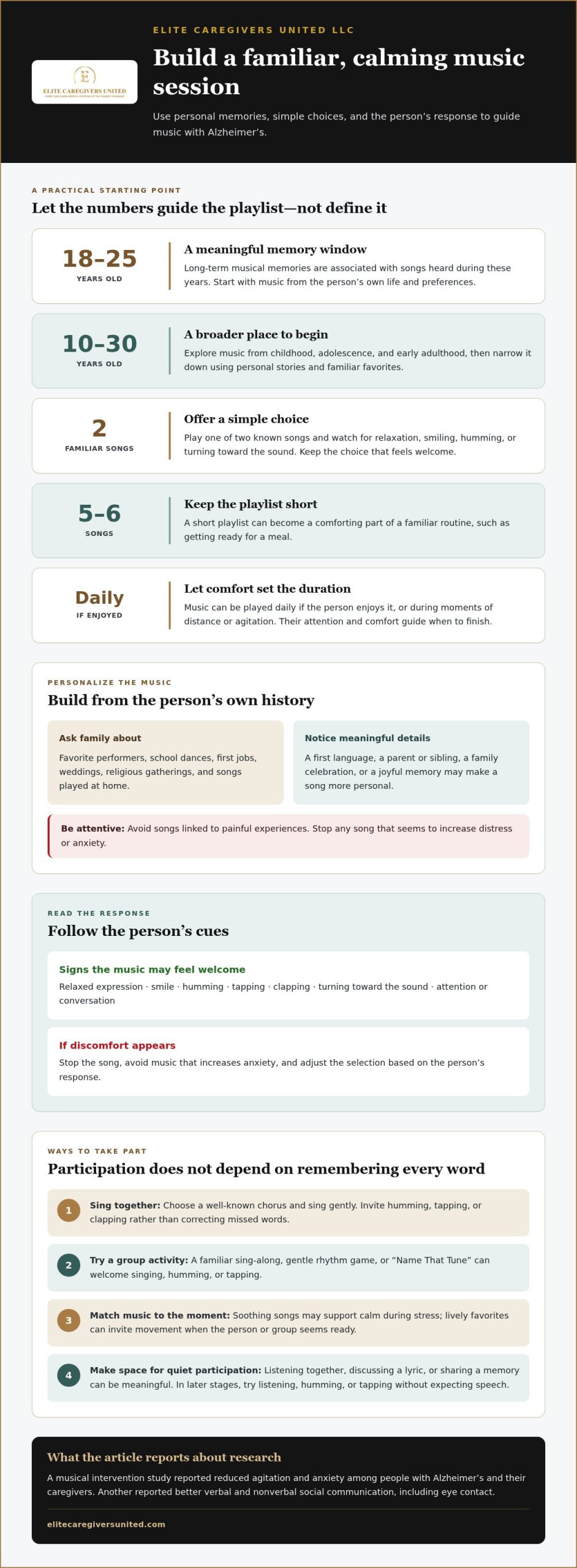
Begin with music from the person’s life, rather than choosing only by current age. Long-term musical memories are associated with songs heard between ages 18 and 25, while a broader starting point is music from ages 10 to 30. For example, Elvis may resonate with someone in their 80s, while the Beatles may suit someone in their 70s. Treat these as possibilities, then adjust to personal taste.
Family and heritage can make a playlist more meaningful. Ask relatives about songs from weddings, religious gatherings, dances, or family celebrations, then try one familiar selection at a time. A song in your loved one’s first language, or one associated with a parent or sibling, may prompt conversation or emotional memories. Avoid music linked to painful experiences, and watch for signs of discomfort.
For listening, offer a choice between two familiar songs and notice the response. Does the person look relaxed, smile, hum, or turn toward the sound? Keep selections that prompt a positive response, and stop a song that seems to increase distress. A short playlist of five or six songs can become a comforting part of a regular activity, such as getting ready for a meal.
Sing-alongs offer another way to participate, even when remembering every lyric is difficult. Choose a well-known chorus, sing gently, and invite humming, tapping, or clapping instead of correcting missed words. Printed lyrics may help some people follow along. These music therapy ideas for Alzheimer’s work best when caregivers follow the person’s pace and treat each response as useful guidance.
2. What Are the Best Ways To Use Music Therapy To Help Alzheimer’s and Dementia Patients?
Group music can create a shared activity for people living with dementia. Try a familiar sing-along, a gentle rhythm game, or “Name That Tune.” Everyone can join by singing, humming, or tapping. These activities encourage social expression without requiring people to speak or remember every song.
In memory care, caregivers can make listening or singing part of an everyday routine, such as a transition before lunch. Match the music to the moment: soothing songs may support calm during stress, while lively favorites can invite movement when the group seems ready. Watch for signs of agitation, and stop a song if someone appears distressed.
What research supports music therapy for Alzheimer’s disease? A study of a musical intervention found reduced agitation and anxiety among people with Alzheimer’s and their caregivers. Another reported better verbal and nonverbal social communication, including eye contact.
How much does music therapy cost, and does Medicare or insurance cover it? Costs vary by session format and location, and coverage depends on the plan’s benefits and how the service is classified. Review the policy’s therapy benefits and exclusions to understand potential coverage.
How often and how long should sessions last? Play music daily if the person enjoys it, or use it during moments of distance or agitation. Let their attention and comfort guide when to finish.
What precautions matter? Stop a song immediately if it causes distress, and avoid music that increases anxiety. How can activities change by disease stage? Invite conversation and lyric discussion when accessible. In later stages, try humming, tapping, or listening without expecting speech.
For a creative group option, pair music with an adult-level art activity, such as painting while a favorite song plays. Keep the project dignified, offer encouragement, and allow time for expression without requiring anyone to finish.
How do families find a certified music therapist in the United States? Look for a board-certified music therapist who can assess needs and preferences and plan music-based goals with the person and family.
3. Music from a person’s teenage years or early adulthood
Build a personal music timeline around songs heard during childhood, adolescence, and early adulthood. A useful starting range is ages 10 to 30, then narrow the choices using the person’s own memories. Ask relatives about favorite performers, school dances, first jobs, weddings, or songs played at home. A music history turns a broad age range into a playlist with personal meaning.
Personal preferences matter more than a decade label. One person may connect with jazz from family gatherings, while another remembers country songs from a long drive. Offer a choice between two familiar options, then notice which music encourages singing, attention, or conversation. Record songs that prompt engagement and those that seem unsettling, so caregivers can adjust the selection over time.
Music can create a shared moment through an in-person sing-along or a video call with family. For a virtual visit, ask a relative to sing a familiar chorus, play a meaningful recording, or talk about the memory behind it. In a group, offer printed lyrics or invite humming when words are difficult. Participation can be quiet: listening together still gives family members a point of connection.
Pair songs with familiar routines. A gentle favorite before a meal can make the transition feel more recognizable, while a well-loved tune during personal care may invite cooperation and ease tension. Keep the volume low enough for conversation, and let the person’s response guide whether the music continues. A song associated with a joyful family meal may feel more welcome than one chosen only for its tempo.
To encourage engagement without turning music into a test, ask an open question, such as, “Who did you hear this song with?” If the person doesn’t answer, share your own memory instead. Singing, listening, and discussing lyrics offer different forms of verbal and nonverbal expression. Choose music that respects the individual’s history and supports a comfortable moment.
4. At-home music therapy sessions
A home session can be simple, personal, and easy to adapt. Choose a familiar room, turn off the television, and close the window if outside noise is distracting. Play music without commercial interruptions, so sudden ads don’t disrupt the moment. Keep the volume comfortable, then pause to see whether your loved one seems relaxed, attentive, or ready for something different.
Set a gentle purpose for the session, such as sharing a song, easing into a meal, or inviting light movement. Begin by listening, then offer a choice: sing a chorus, hum, tap a hand, or simply enjoy the music. A familiar tune can foster connection, but participation should remain optional. Follow the person’s pace rather than treating the activity like a test.
Music during a familiar routine may make transitions feel more recognizable. For example, play a calm song before lunch or a favorite recording while preparing for personal care. If music seems to increase agitation or stress, stop it and reduce other stimulation. A positive response might include eye contact, a relaxed expression, humming, or movement, not only spoken words.
After each session, make a brief note of the song, activity, and what you observed. If a selection brings comfort, try it again in a similar setting. If the person turns away or seems uneasy, choose another song next time. This simple record helps caregivers shape dementia care around the individual’s preferences and responses.
At-home music activities can support everyday connection, but they don’t replace clinical music therapy with a trained therapist. Families can still create meaningful moments through listening, singing, or gentle movement. For additional support with daily routines, explore Alzheimer’s and dementia care as part of your family’s care plan.
Elite Caregivers United LLC: Respite Care
Elite Caregivers United LLC offers Respite Care for families when a caregiver needs time to rest, attend appointments, or manage other responsibilities. A familiar caregiver can continue everyday support while relatives take a pause, helping make home routines more manageable for someone living with Alzheimer’s or dementia.
The Personal Care Services/CNA Team can assist with personal care as part of non-medical home care. This support complements music activities families create; it does not replace clinical music therapy. Consider respite support when caregiving demands make it difficult to balance your loved one’s daily needs with your own well-being.
For a calm conversation about support, contact Elite Caregivers United LLC.
Build a Care Routine That Leaves Room for Connection
Let music be one small, adaptable part of the care routine, not another task that must be done perfectly. A song can open a moment of shared attention, and your loved one’s response can guide what you try next. Keep the focus on dignity, choice, and connection. These music therapy ideas for Alzheimer’s can complement the practical support that helps families make space for meaningful moments.
Caregiving also takes time, patience, and energy. Elite Caregivers United LLC offers Respite Care, Personal Care Services/CNA Team support, and Surgery Recovery & Post-Hospitalization Care. Respite may help when a family caregiver needs time away, while personal care can assist with daily needs. Recovery care supports a different situation, following surgery or a hospital stay.
For a thoughtful conversation about support for your family, contact Elite Caregivers United LLC today. A steady next step can help you continue caring with greater support and confidence.
Frequently Asked Questions
How Else Does Music Therapy Benefit Brain Health?
Music may engage attention, movement, and memory together. It may support autobiographical and episodic memories, psychomotor speed, executive function, and overall cognition, though it doesn’t reverse Alzheimer’s disease. A musical intervention studied by Northwestern Medicine neurologist Borna Bonakdarpour improved agitation and anxiety for participants and caregivers, illustrating how shared music may benefit both.
How can music support a person with dementia?
Music can offer a way to connect when ordinary conversation becomes harder. A familiar melody may prompt a facial expression, a gesture, or a brief exchange, giving family members another way to share attention. If words are difficult, respond warmly to humming or a change in expression rather than testing memory. Let the person’s comfort and interest guide whether to continue.
What Are the Best Ways To Use Music Therapy To Help Alzheimer’s and Dementia Patients?
Choose an activity that suits the person’s energy and ability to participate that day. A small group might take turns choosing songs, then share what they bring to mind. Someone who prefers less conversation can listen alongside others. Live or recorded group music can encourage social interaction. Keep participation flexible, so a person can join briefly, listen quietly, or leave the activity.
What music therapy activities are suitable for people with Alzheimer’s?
Suitable activities include singing, gentle dancing, tapping a beat, playing simple instruments, and discussing song lyrics. Songwriting or improvising may offer another form of self-expression for someone who enjoys creating. Choose an age-respectful, manageable activity, such as tapping a tambourine or moving hands to a familiar rhythm. The goal is participation and connection, not completing a performance.
How can caregivers create a personalized playlist for someone with Alzheimer’s?
Ask relatives about music tied to meaningful people, places, and occasions, then make a short selection to try. Include different moods, such as relaxing songs and more energizing favorites, and observe the person’s response to each. Note which tracks seem welcome and which bring discomfort. Avoid songs linked to distressing memories, and update the playlist as preferences or responses become clearer.
What are simple music therapy exercises to do at home?
Try a call-and-response activity: play or sing a short phrase, then pause for the person to hum, tap, or answer with a sound. Another option is a gentle seated rhythm, tapping hands or feet to a comfortable beat. Keep the space quiet and the volume manageable. Stop if the person appears distressed, then try another activity or enjoy a quiet moment together.